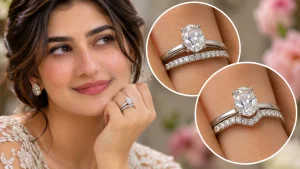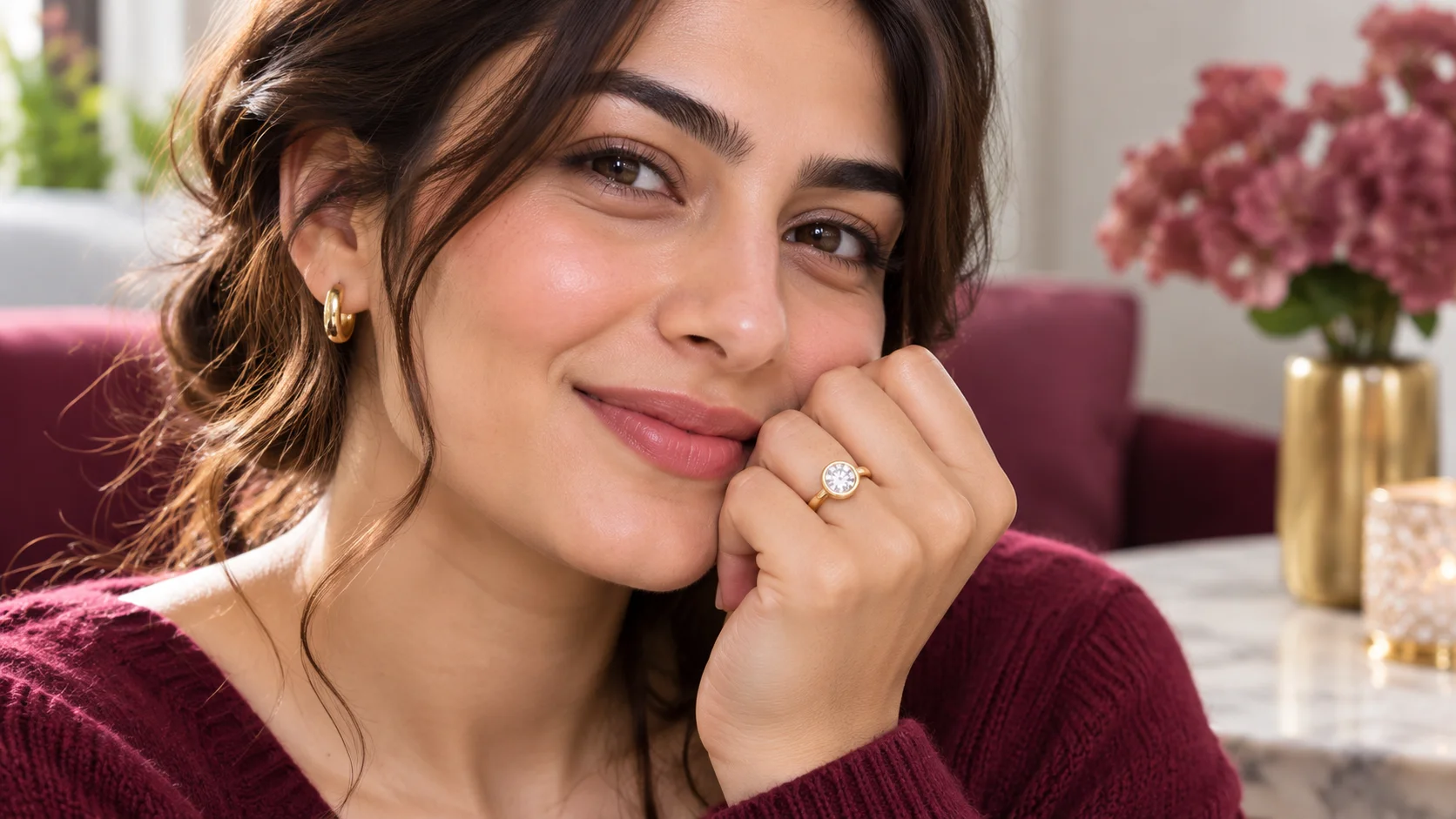
If you want an engagement ring you can wear every day without constantly worrying about scratches, loose stones, snagging, or damage, choose a low-profile bezel-set diamond ring with a sturdy band. It offers an excellent balance of gemstone protection, comfort, and practical everyday wear.
A traditional diamond solitaire can also work well if it has a secure setting and properly finished prongs. However, the gemstone alone doesn’t determine how durable your ring will be. Its setting, metal, construction, and your daily activities matter just as much.
This guide explains which engagement rings are worth considering, which designs require more care, and how to choose one that suits your everyday routine.
Which Engagement Ring Should You Buy for Everyday Wear?
For most people who want a ring that requires less attention, a bezel-set solitaire is an excellent starting point.
A bezel setting surrounds the center stone with a protective metal rim. This helps shield the gemstone’s edges from accidental impacts and creates a smooth outline that is less likely to catch on clothing.
However, the best choice depends on your lifestyle and personal preferences.
| Ring style | Everyday protection | Maintenance | Best for |
|---|---|---|---|
| Full bezel solitaire | Excellent | Relatively low | Everyday practicality |
| Flush-set ring | Excellent | Relatively low | Hands-on activities |
| Low-profile solitaire | Good | Moderate | Traditional appearance |
| Six-prong solitaire | Good | Periodic inspections | Classic diamond style |
| Half-bezel ring | Very good | Moderate | Protection and visibility |
| Pavé engagement ring | More delicate | Higher | Extra sparkle |
These are general design comparisons, not guarantees. Actual durability depends on the gemstone, metal thickness, craftsmanship, and setting construction.
If you want maximum practical protection, start with a full bezel or flush setting. If you prefer traditional styling, consider a low-profile solitaire with properly finished, secure prongs.
What Makes an Engagement Ring Durable Enough for Everyday Wear?
An engagement ring needs more than a hard gemstone to handle everyday use.
Four important factors determine how well a ring holds up.
1. Gemstone Hardness and Toughness
Hardness describes how well a gemstone resists scratches. Toughness describes how well it resists breaking, chipping, and cracking.
These are different properties.
Diamond ranks 10 on the Mohs hardness scale, making it the hardest natural gemstone. However, diamonds can still chip or fracture after a sufficiently hard impact.
The Gemological Institute of America (GIA) explains that diamonds have cleavage directions where the crystal can split more easily.
This means you shouldn’t assume that a diamond engagement ring is indestructible.
If you’re comparing gemstones specifically for durability, read our guide to the most durable gemstones for everyday wear.
2. Protective Setting Design
The setting holds the gemstone in place and protects its vulnerable areas.
A full bezel surrounds the gemstone’s edge with metal. A flush setting places the gemstone inside the band. Both designs reduce the amount of exposed gemstone.
Traditional prong settings leave more of the gemstone visible. They can still be durable, but the prongs need regular inspection.
You can also explore the differences between flush-fit and non-flush-fit engagement rings before choosing a design.
3. Metal Quality and Construction
The ring’s metal must support the gemstone securely.
Look beyond the metal’s name. Consider the band thickness, setting construction, prong quality, and overall finishing.
A beautifully designed ring can still be fragile if its supporting structure is too delicate.
4. Your Everyday Activities
Your daily routine changes which ring is practical.
Someone who spends most of the day typing may be comfortable wearing a traditional solitaire.
Someone who works with tools, handles heavy equipment, exercises frequently, or wears gloves may benefit more from a smooth, low-profile design.
If your work involves frequent hand movements, our guide to the best engagement rings for active lifestyles offers additional ideas.
Think about how you use your hands before choosing a setting.
5 Best Engagement Ring Settings for Everyday Wear
The setting is one of the most important decisions when buying a low-maintenance engagement ring.
Here are five styles worth considering.
1. Bezel Engagement Ring – Best Overall for Everyday Practicality
A bezel engagement ring is one of the strongest options for people who want to protect their center stone.
A thin metal rim surrounds the gemstone and holds it securely in place. Unlike a traditional prong setting, the bezel covers much of the gemstone’s outer edge.
Why choose a bezel setting?
- Protects the gemstone’s exposed edges.
- Reduces the chance of snagging on clothes.
- Creates a smooth, comfortable outline.
- Works well with several diamond shapes.
- Offers a clean and contemporary appearance.
Potential drawback: The metal surrounds the gemstone, which can change how much of the stone is visible. Some buyers also prefer the more open appearance of traditional prongs.
A full bezel is particularly worth considering if you want practicality without sacrificing an elegant appearance.
Explore the bezel-set lab-grown diamond engagement ring collection to see this setting style.
2. Flush-Set Engagement Ring – Best for a Low-Profile Design
A flush setting places the gemstone directly inside the metal band.
The stone sits close to the ring’s surface rather than rising above it.
This creates a smooth design that is less likely to catch on clothing, gloves, or surrounding objects.
Why choose a flush setting?
- The gemstone sits close to the finger.
- The design has fewer exposed edges.
- It offers a practical option for hands-on routines.
- It creates a minimalist appearance.
Potential drawback: Flush settings often need a wider or thicker band to accommodate the gemstone. The design may also allow less light into the stone than some open settings.
Choose this style if comfort and a smooth profile matter more to you than a traditional raised diamond appearance.
3. Low-Profile Solitaire – Best for Classic Engagement Ring Lovers
Not everyone wants a bezel or flush setting.
If you love the traditional appearance of a solitaire, consider a low-profile version.
A low-profile solitaire positions the diamond closer to the finger. This reduces how far the center stone protrudes and can make the ring more comfortable during everyday activities.
Why choose a low-profile solitaire?
- Keeps the classic solitaire appearance.
- Reduces the height of the center stone.
- Can be easier to wear with gloves and sleeves.
- Offers a simple design with fewer decorative details.
Potential drawback: The diamond still relies on its prongs or basket for protection. A low setting does not eliminate the need for regular inspections.
Ask the jeweler to show you the ring from the side. A ring can look low-profile from above while still having a tall basket underneath.
You can browse solitaire lab-grown diamond engagement rings if you prefer a timeless design.
4. Six-Prong Solitaire – Best for Traditional Diamond Security
A six-prong solitaire is another option for everyday wear.
Six metal prongs hold the center diamond rather than four. If one prong becomes damaged, the remaining prongs may help keep the stone in place.
Why choose a six-prong setting?
- Provides additional points of contact.
- Offers a classic diamond appearance.
- Keeps more of the gemstone visible.
- Allows easier access for inspection and cleaning.
Potential drawback: Prongs can wear down, bend, or become loose. They also leave more of the gemstone’s edge exposed than a full bezel.
This is a good choice if you prefer traditional engagement ring styling and are comfortable with periodic professional inspections.
5. Half-Bezel Engagement Ring – Best Balance of Protection and Style
A half-bezel setting protects selected sides of the gemstone while leaving other sections exposed.
It combines some of the protective features of a full bezel with a more open appearance.
Why choose a half-bezel?
- Provides additional protection around selected edges.
- Creates a contemporary appearance.
- Allows more of the gemstone to remain visible.
- Offers an alternative to traditional prongs.
Potential drawback: The exposed sections still need protection. The design must be properly constructed for the gemstone’s shape.
A half-bezel is worth considering if you like the look of a bezel but don’t want a complete metal border around the stone.
Which Gemstone Is Best for an Engagement Ring You Wear Every Day?
A diamond is an excellent choice for everyday wear, but it isn’t your only option.
Sapphire and ruby are also durable gemstones with strong wearability characteristics.
Here’s how they compare.
| Gemstone | Mohs hardness | Everyday suitability | Important consideration |
|---|---|---|---|
| Diamond | 10 | Excellent | Can still chip from hard impacts |
| Sapphire | 9 | Excellent | Consider treatments and stone condition |
| Ruby | 9 | Excellent | Consider treatments and stone condition |
| Spinel | 8 | Good | Still needs suitable protection |
| Morganite | 7.5–8 | More care required | More vulnerable to everyday wear |
| Opal | 5–6.5 | Not ideal for carefree daily wear | Vulnerable to scratches and chips |
| Tanzanite | 6–7 | Not ideal for carefree daily wear | More vulnerable to impact damage |
Hardness figures are approximate mineralogical ratings. Hardness alone does not determine a gemstone’s complete durability.
Diamond: Best for Traditional Everyday Engagement Rings
Diamond remains the leading choice if you want a traditional engagement ring.
Its exceptional hardness helps it resist everyday scratches and abrasions.
However, the shape and setting still matter.
Pointed shapes such as pear and marquise diamonds need suitable protection around their tips. Princess-cut diamonds also have vulnerable corners.
A protective bezel or properly positioned V-shaped prongs can help shield these areas.
Sapphire: Best for a Colorful and Durable Alternative
Sapphire is an excellent option if you want something different from a traditional white diamond.
It ranks 9 on the Mohs hardness scale and has excellent toughness with no cleavage.
According to GIA, sapphire is suitable for rings that experience everyday wear.
Blue sapphire is a classic option, but sapphire also comes in pink, yellow, green, and other colors.
Ruby: Best for a Bold Red Gemstone
Ruby belongs to the same mineral family as sapphire.
It also ranks 9 on the Mohs hardness scale and offers excellent toughness.
A ruby engagement ring can provide a distinctive alternative to a traditional diamond without choosing a particularly delicate gemstone.
What About Moissanite?
Moissanite is another popular diamond alternative.
It offers strong scratch resistance and a brilliant appearance.
However, don’t choose a gemstone based on its hardness number alone. Ask about the stone’s durability, setting compatibility, and care requirements.
Which Gemstones Should You Avoid If You Want Minimal Maintenance?
Opal and tanzanite are beautiful gemstones, but they need more care than diamond, sapphire, or ruby.
GIA describes opal as relatively soft, with a Mohs hardness of approximately 5–6.5. Its toughness also ranges from very poor to fair.
Tanzanite is less tough than sapphire and ruby.
You don’t necessarily have to avoid these gemstones. However, they are not ideal choices if your main priority is wearing your ring every day with minimal concern about damage.
Which Metal Should You Choose for Everyday Wear?
The gemstone and setting receive most of the attention, but the ring’s metal matters too.
Your metal choice affects the ring’s weight, surface appearance, maintenance, and long-term wear.
Platinum
Platinum is a popular choice for people who want a naturally white engagement ring.
It is dense and wear-resistant. It also develops a surface patina over time.
Best for: Buyers who prefer a naturally white metal and don’t mind a heavier ring.
14K Gold
14K gold contains 58.5% pure gold mixed with other metals.
The additional alloy metals help make it suitable for everyday jewelry.
It is available in yellow, white, and rose gold.
Best for: Buyers who want a balance of appearance, practicality, and budget.
18K Gold
18K gold contains 75% pure gold.
It offers a higher gold content than 14K gold, but its alloy composition also affects its physical properties.
Best for: Buyers who prioritize higher gold content and prefer its richer appearance.
Platinum vs. 14K Gold vs. 18K Gold
| Metal | Gold content | Main advantage | Consideration |
|---|---|---|---|
| Platinum | Not gold | Naturally white and wear-resistant | Heavier and develops patina |
| 14K gold | 58.5% | Practical everyday gold option | Alloy composition varies |
| 18K gold | 75% | Higher gold content | Softer than comparable lower-karat gold alloys in general |
White gold may also have a rhodium coating. That coating can wear away with time and may require replating.
Platinum does not need rhodium plating to maintain its naturally white color.
If you’re still comparing the two popular white metals, read Platinum vs. Gold before making your decision.
For more detailed guidance, explore the best ring metals for everyday wear.
The best metal depends on the ring’s construction, your skin sensitivity, preferred appearance, and maintenance preferences.
Which Engagement Ring Styles Should You Avoid If You Want Less Maintenance?
You don’t need to avoid every decorative engagement ring.
However, certain designs require more attention.
1. High-Set Engagement Rings
High-set rings position the center stone farther above the finger.
This can increase the chance of accidental contact with objects and snagging on clothing.
Choose a lower basket if you prefer a traditional prong setting.
2. Pavé Engagement Rings
Pavé rings feature multiple small diamonds set along the band.
They create additional sparkle, but each small stone needs secure setting work.
More individual stones can mean more places that need inspection.
3. Delicate Micro-Pavé Rings
Micro-pavé rings use very small accent diamonds.
These designs can look elegant, but their delicate construction may not be ideal for someone who frequently exposes jewelry to knocks and abrasion.
4. Tension-Set Engagement Rings
Tension settings hold the gemstone through pressure from the opposing sides of the ring.
They have a distinctive appearance, but the construction requires precise engineering.
If your main concern is carefree everyday wear, a conventional protective setting is generally a more straightforward option.
5. Rings With Exposed Gemstone Points
Pear, marquise, and heart-shaped diamonds have pointed areas that need additional protection.
This doesn’t mean you should avoid these shapes.
Instead, consider a full bezel, partial bezel, or suitable V-shaped prongs to protect the vulnerable points.
How Much Should You Spend on an Everyday Engagement Ring?
You don’t need to spend more simply because you want a durable engagement ring.
A practical ring can be created at different budgets.
The important thing is to prioritize construction and security rather than paying only for a larger center stone.
Consider these budget priorities:
- Limited budget: Consider a well-made 14K gold setting with a smaller diamond or a suitable alternative gemstone.
- Mid-range budget: Compare a quality diamond or sapphire in a secure bezel or low-profile solitaire.
- Higher budget: Explore platinum settings, custom construction, and carefully selected center stones.
The final price depends on gemstone type, size, quality, metal, craftsmanship, and retailer.
Before purchasing, compare the complete ring rather than comparing center-stone prices alone.
How to Keep Your Engagement Ring Looking Good for Years
Even a well-made engagement ring needs some care.
A few simple habits can help protect your investment.
- Remove your ring before heavy lifting, gardening, sports, and activities that could cause hard impacts.
- Avoid wearing your ring during activities involving harsh chemicals.
- Clean your ring with warm water, mild soap, and a soft brush when appropriate for its gemstones and metal.
- Store diamond jewelry separately to reduce the risk of scratches or damage from contact with other pieces.
- Have the setting and prongs professionally inspected at regular intervals.
- Address loose stones, bent prongs, or unusual movement as soon as you notice them.
If you want to make cleaning easier, read our guide to easy-to-clean engagement ring settings.
GIA recommends checking engagement ring settings regularly and taking care with activities that could expose diamonds to accidental impacts.
Remember that a protective setting reduces certain risks. It does not make a ring indestructible.
Your Everyday Engagement Ring Buying Checklist
Before purchasing, use this checklist to compare your options.
- Does the setting protect the gemstone’s vulnerable edges?
- Does the center stone sit at a comfortable height?
- Is the band constructed to support the setting?
- Are the prongs or metal rim properly finished?
- Does the design snag on clothing or gloves?
- Is the gemstone suitable for your intended wear?
- Does the metal suit your skin and maintenance preferences?
- Can the ring be cleaned and inspected easily?
- Will your future wedding band fit comfortably?
- Does the retailer explain its resizing, repair, return, and warranty policies?
Ask the jeweler to show you the ring from the top, side, and underside. These views can reveal construction details that are difficult to judge from a product photograph.
Frequently Asked Questions
What is the most durable engagement ring setting for everyday wear?
A full bezel setting is an excellent option for everyday wear because it surrounds the gemstone’s edge with protective metal. Flush settings also offer strong protection and a low-profile design.
Can I wear a diamond engagement ring every day?
Yes. Diamonds are highly resistant to scratches, making them suitable for everyday jewelry. However, diamonds can still chip or fracture after hard impacts, so the setting and wearing habits matter.
Is a bezel engagement ring better than a prong setting?
A bezel generally offers better edge protection and less snagging. A prong setting exposes more of the gemstone and allows a traditional, open appearance. The right choice depends on whether you prioritize protection or a more exposed diamond look.
Is platinum better than gold for everyday engagement rings?
Platinum offers a naturally white finish and good wear resistance. Gold offers more color and karat options. Both can make excellent engagement rings when properly designed and maintained.
Which diamond shape is best for everyday wear?
Round diamonds are a practical starting point because they don’t have pointed tips or sharp corners. Other shapes can also work well when their vulnerable areas receive appropriate protection.
Are sapphire engagement rings durable enough for daily wear?
Yes. Sapphire ranks 9 on the Mohs hardness scale and has excellent toughness. GIA considers sapphire suitable for jewelry that experiences everyday wear.
Are low-profile engagement rings more comfortable?
They can be. A low-profile design keeps the gemstone closer to the finger, which can reduce accidental knocks and snagging. Comfort also depends on band width, ring size, and the overall shape of the setting.
Should I remove my engagement ring when exercising?
For activities involving weights, equipment, impact, or pressure on your hands, removing your ring is the safer option. Jewelry can also become damaged or cause injury during certain activities.
Can a durable engagement ring still require maintenance?
Yes. Every engagement ring needs occasional cleaning and inspection. Prongs can wear, settings can loosen, and metal surfaces can develop scratches.
Final Recommendation: Which Engagement Ring Should You Buy?
If you want an engagement ring that you can wear regularly without constantly worrying about damage, start with a bezel-set diamond solitaire in a well-constructed platinum or 14K gold setting.
It offers a practical combination of gemstone protection, a smooth profile, and relatively straightforward maintenance.
If you prefer a more traditional design, choose a low-profile six-prong solitaire and arrange regular setting inspections.
If you want color instead of a traditional white diamond, consider sapphire or ruby.
Ultimately, the best everyday engagement ring isn’t simply the hardest gemstone or the most expensive metal. It’s a ring whose gemstone, setting, construction, and comfort all match the way you actually live.