Diamond Carat: Weight, Size, Chart & Complete Guide
Diamond carat measures a diamond’s weight, but carat weight is not the same as visible size. Learn how carat, measurements, shape, cut and proportions work together so you can choose a diamond with confidence.
What Does Diamond Carat Mean?
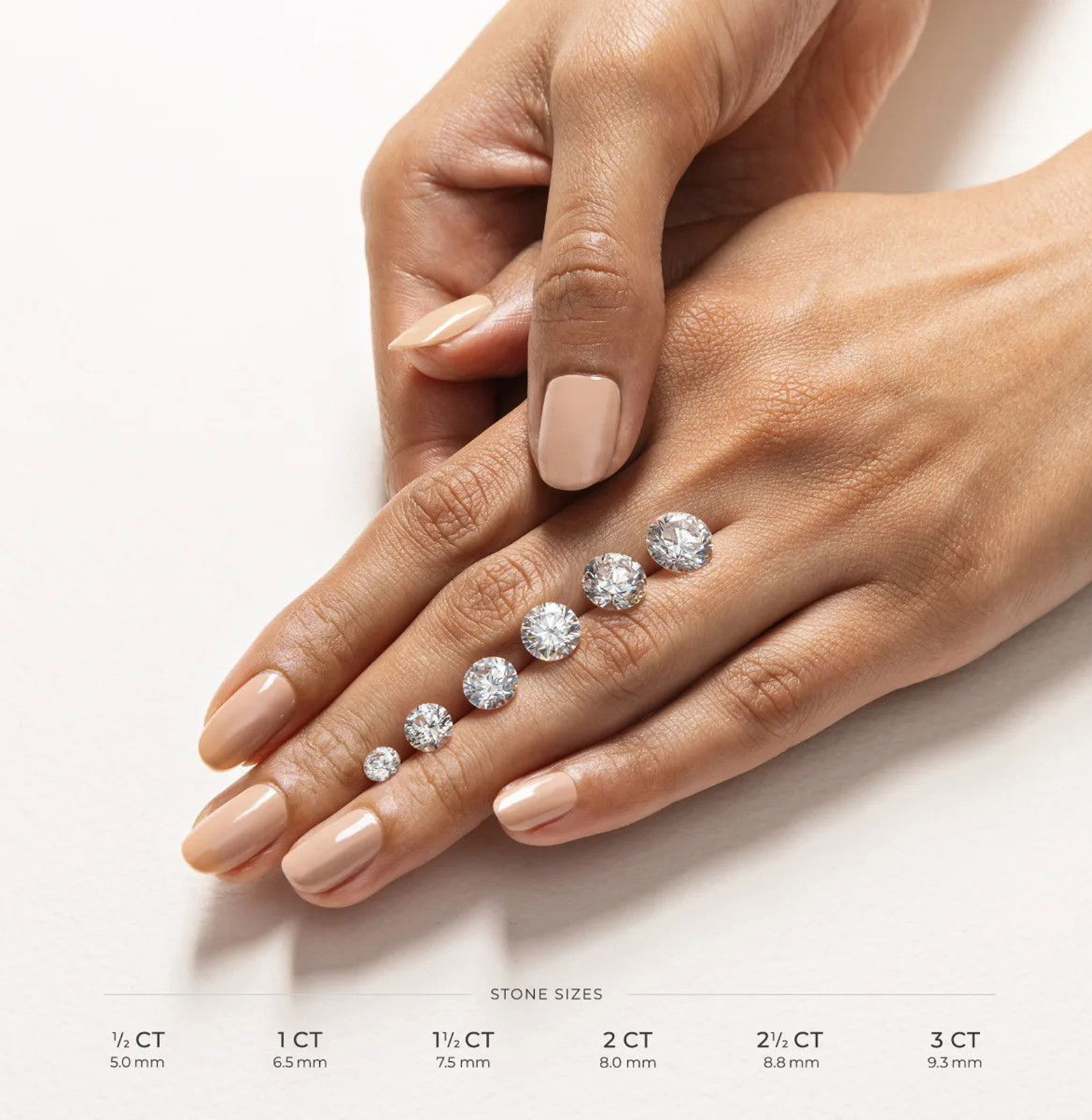
Diamond carat is a measurement of weight, not physical size. One carat equals 0.2 grams, and one carat contains 100 points. The visible size of a diamond also depends on its shape, cut, proportions, depth and actual millimeter measurements.
This is one of the most important things to understand before buying an engagement ring. Two diamonds can both weigh exactly 1.00 carat while having different dimensions and different face-up appearances.
Diamond Carat: Key Takeaways
Carat Means Weight
Carat measures how much a diamond weighs, not how wide it looks from the top.
1 Carat = 0.20 Grams
A one-carat diamond weighs 0.2 grams and contains 100 points.
Size Can Vary
Shape, depth and proportions can make diamonds of the same weight look different.
Bigger Isn’t Always Better
Cut, color, clarity, shape, setting and budget all matter.
What Is a Diamond Carat?
A carat is the standard unit used to express the weight of a diamond. The abbreviation is ct.
One carat equals 0.2 grams. A diamond weighing half a carat weighs 0.1 grams, while a two-carat diamond weighs 0.4 grams.
Diamonds can also be described using points. One hundred points equals one carat.
Diamond Carat vs Diamond Size
Carat weight and physical diamond size are related, but they are not identical. Carat tells you the weight of the diamond. Measurements tell you its physical dimensions.
Weight
How much the diamond weighs.
Dimensions
How large the diamond measures and appears face-up.
That’s why checking the actual measurements of a diamond is important when comparing stones with the same carat weight.
Carat Is Only One Part of the Diamond 4Cs
Carat is important, but it should be considered alongside cut, color and clarity. Explore each of the other diamond quality factors below.
How Diamond Measurements Work
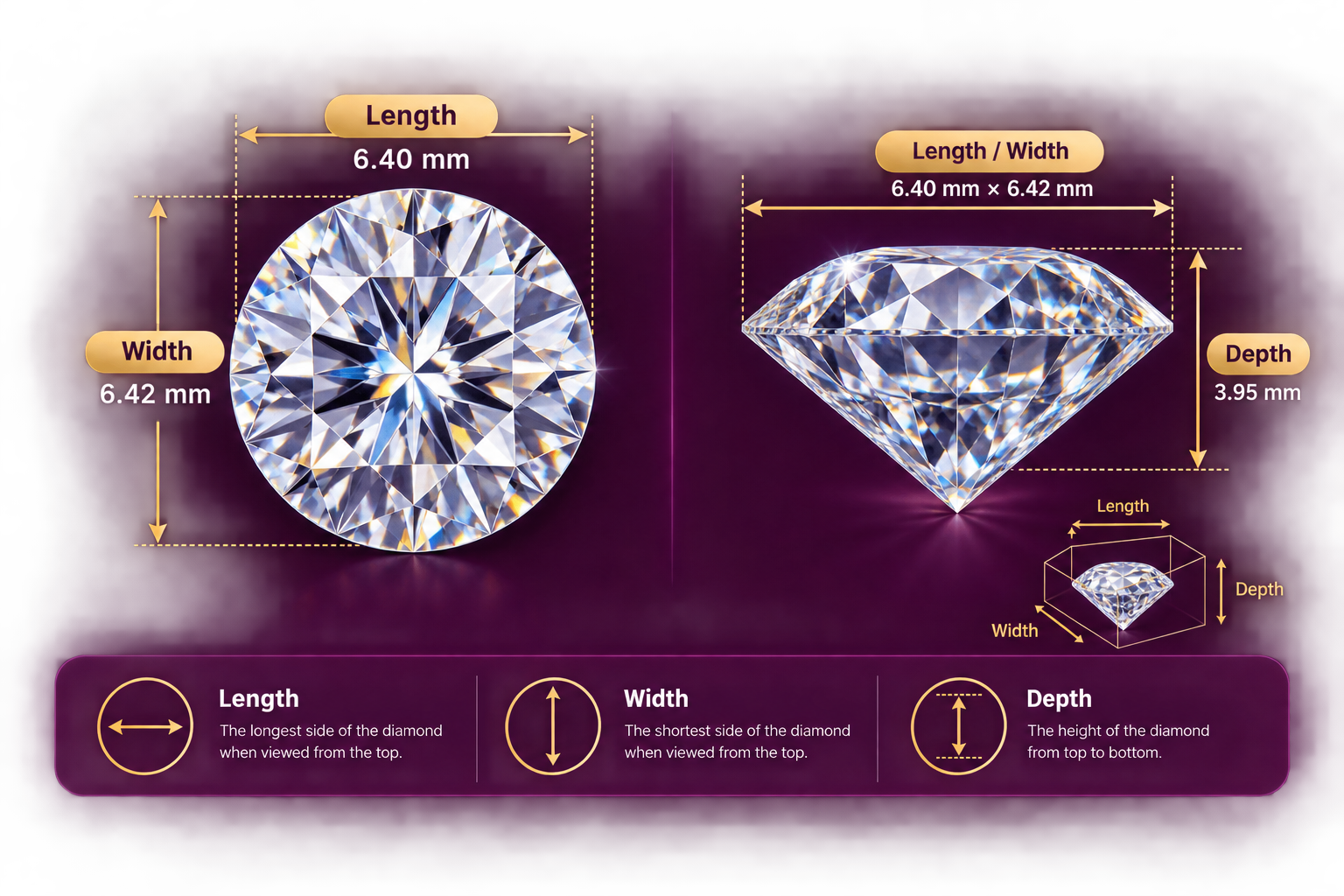
Diamond measurements are commonly listed as length × width × depth.
The first number represents length, the second width and the third depth. These measurements help shoppers understand how a diamond will appear from the top.
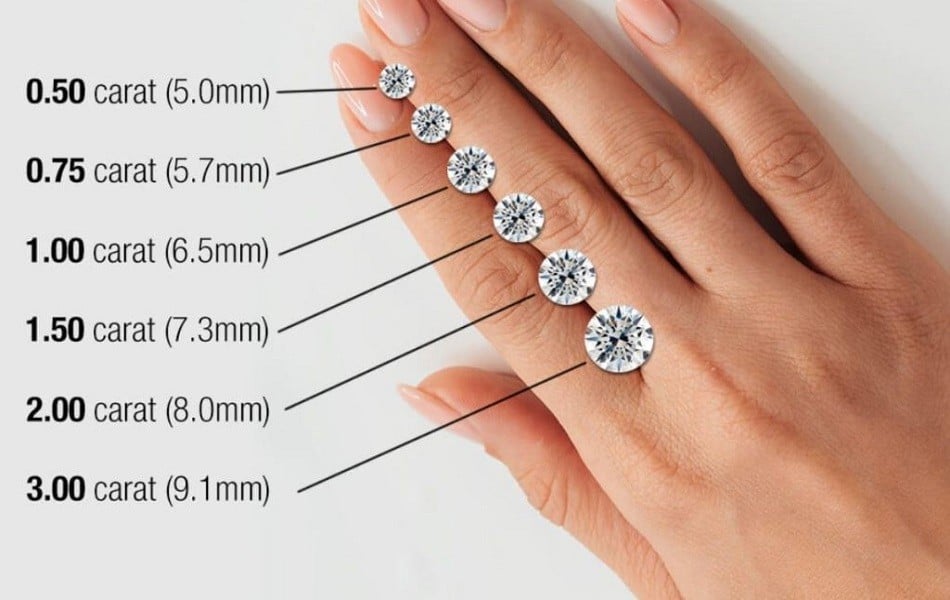
Diamond Carat Weight & Size Chart
Use this chart as a general reference when comparing popular diamond carat weights. Round-diamond dimensions are approximate because actual measurements vary according to cut and proportions.
| Carat | Points | Weight | Approx. Round Diameter | General Appearance |
|---|---|---|---|---|
| 0.25 ct | 25 | 0.05 g | ≈ 4.1 mm | Small and delicate |
| 0.33 ct | 33 | 0.066 g | ≈ 4.4 mm | Subtle presence |
| 0.50 ct | 50 | 0.10 g | ≈ 5.1 mm | Classic smaller center stone |
| 0.75 ct | 75 | 0.15 g | ≈ 5.8 mm | Balanced appearance |
| 0.90 ct | 90 | 0.18 g | ≈ 6.2 mm | Near the 1 ct milestone |
| 1.00 ct | 100 | 0.20 g | ≈ 6.4 mm | Classic center-stone size |
| 1.25 ct | 125 | 0.25 g | ≈ 6.9 mm | Noticeable upgrade |
| 1.50 ct | 150 | 0.30 g | ≈ 7.4 mm | Strong center presence |
| 1.75 ct | 175 | 0.35 g | ≈ 7.8 mm | Large visual presence |
| 2.00 ct | 200 | 0.40 g | ≈ 8.1 mm | Large statement stone |
| 2.50 ct | 250 | 0.50 g | ≈ 8.8 mm | Very noticeable |
| 3.00 ct | 300 | 0.60 g | ≈ 9.3 mm | High-impact appearance |
| 4.00 ct | 400 | 0.80 g | ≈ 10.2 mm | Very large statement stone |
| 5.00 ct | 500 | 1.00 g | ≈ 11.1 mm | Exceptional visual presence |
*Round diamond dimensions are approximate reference values. Actual measurements vary based on individual cut proportions and depth.
Compare Diamond Carat Sizes
Select a carat weight to see an approximate weight conversion and round-diamond diameter reference.
This interactive visual is an educational reference and not a professional diamond grading tool.
How Big Is a 1 Carat Diamond?
A well-proportioned 1-carat round diamond is often around 6.4 mm in diameter, although actual measurements vary between individual diamonds.
A 1-carat diamond can look different depending on its cut, proportions and shape. That’s why carat weight alone isn’t enough to predict visible size.
Learn how diamond cut affects appearance →
How Big Is a 2 Carat Diamond?
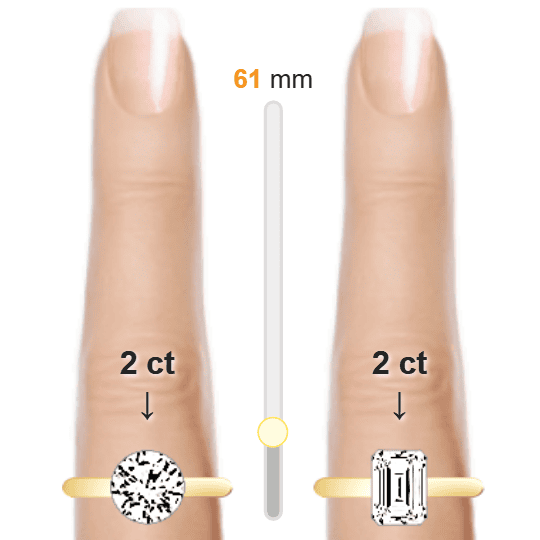
A well-proportioned 2-carat round diamond may measure around 8.1 mm across. Actual measurements vary by cut and proportions.
A 2-carat Oval, Emerald, Radiant or Marquise diamond can have very different length and width measurements from a 2-carat Round.
Compare diamond shapes →Diamond Carat Size by Shape
The same carat weight can create a very different visual appearance depending on the diamond shape. Click any shape below to explore Diamiv’s diamond shape resources.
Round Diamond
Round brilliant diamonds are known for their classic appearance and strong emphasis on brilliance. Their proportions can make them a useful reference point when comparing diamond carat and measurements.
Explore Diamond Shape Guide →Which Diamond Shape Looks Biggest for Its Carat Weight?
There isn’t one shape that always looks largest. However, elongated shapes can create substantial face-up coverage because of their length and proportions.
Its elongated outline can create strong finger coverage.
The long silhouette can make the diamond appear visually substantial.
Combines length with a tapered, distinctive outline.
Can provide strong visual presence with brilliant-style faceting.
Diamond Depth, Spread & Face-Up Size
Depth
Depth describes how far the diamond extends from its table to its culet. Excessive depth can place more weight below the surface.
Spread
Spread describes how large a diamond appears from the top relative to its carat weight.
Face-Up Size
Face-up size is the visible surface area you see when looking at the diamond from above.
How Does Carat Weight Affect Diamond Price?
Diamond prices do not increase in a simple linear relationship with carat weight. Larger diamonds can command significantly higher prices because suitable larger rough diamonds are less common.
Pricing can also change around popular carat thresholds. That’s why shoppers may want to compare diamonds slightly below and above major milestones.
Can sometimes provide a useful balance between visual size and price.
A highly recognizable weight that can have strong buyer demand.
Worth comparing against 2.00 ct options using actual measurements.
A popular larger center-stone weight.
How to Make a Diamond Look Bigger Without Increasing Carat
Compare Measurements
Look at length and width instead of relying only on the carat number.
Choose the Right Shape
Some elongated shapes can provide strong visual coverage.
Evaluate Proportions
Don’t choose a stone simply because it has a larger carat number.
Consider the Setting
Halo and other ring styles can influence perceived size.
Check Face-Up Size
Compare actual measurements between individual diamonds.
Don’t Sacrifice Cut
Chasing carat at the expense of appearance may not create the best overall diamond.
How Carat Weight Looks on Different Fingers
The same diamond can create a different visual impression depending on finger size, ring proportions and setting design.
Elongated diamond shapes can emphasize finger length, while wider shapes may create more horizontal coverage.
When shopping for an engagement ring, consider the diamond and the complete ring design together rather than evaluating carat weight in isolation.
How Ring Settings Affect Perceived Diamond Size
The center diamond isn’t the only factor that determines how large an engagement ring looks. The setting can change the visual balance of the entire ring.
Solitaire
Places most of the attention on the center diamond.
Halo
Surrounds the center stone with smaller diamonds and can increase the overall visual footprint.
Three-Stone
Side stones can create a wider overall appearance.
Pavé
Smaller diamonds along the band add additional sparkle.
Bezel
A metal rim surrounds the diamond and creates a distinctive profile.
Cathedral
Raised shoulders can frame and emphasize the center stone.
Does Carat Work Differently for Lab-Grown Diamonds?
No. Carat weight measures diamond weight regardless of whether a diamond is natural or lab-grown.
A 1-carat lab-grown diamond still weighs 0.2 grams. Its visible dimensions depend on its shape, cut and proportions in the same way.
Lab-Grown vs Natural Diamonds →
What Should You Check on a Diamond Grading Report?
When comparing diamonds, don’t look at the carat number alone. A grading report can provide important information about the individual stone.
Carat Weight
Verify the stated weight of the diamond.
Measurements
Review length, width and depth to understand physical size.
Cut Information
Where applicable, review the cut grade and related proportions.
Color
Check the diamond’s color grade and compare it with your preferences.
Clarity
Understand the diamond’s clarity characteristics.
Polish & Symmetry
Review these details when comparing the overall quality profile.
Common Diamond Carat Buying Mistakes
Choosing Carat Alone
Weight should be evaluated with shape, cut and measurements.
Ignoring Measurements
Two diamonds with the same carat can have different dimensions.
Assuming Bigger Means Better
A larger diamond isn’t automatically more beautiful or brilliant.
Ignoring Cut
Cut quality can strongly influence how a diamond interacts with light.
Comparing Price Only
Consider the complete quality profile instead of price alone.
Ignoring Certification
Review the grading report and verify the listed information.
How to Choose the Right Diamond Carat Weight
Set Your Overall Budget
Decide what you are comfortable spending before choosing a carat.
Choose Your Diamond Shape
Shape has a major effect on visual size and overall style.
Compare Actual Measurements
Look at length, width and depth for individual diamonds.
Evaluate Cut
Prioritize attractive proportions and desirable light performance.
Balance Color & Clarity
Choose quality levels appropriate for your visual preferences.
Compare Final Options
Compare appearance, certificate, price and seller policies.
Diamond Carat vs Points
Points are commonly used to describe diamonds weighing less than one carat. One hundred points equals one carat.
Carat vs Karat: Are They the Same?
Gemstone Weight
Used to express the weight of diamonds and other gemstones.
Gold Purity
Commonly used to describe the purity of gold.
Diamond Carat Buying Checklist
More Diamond Guides From Diamiv
Frequently Asked Questions About Diamond Carat
What does diamond carat mean?
Diamond carat refers to the weight of a diamond. One carat equals 0.2 grams. It does not directly describe the diamond’s physical dimensions or visible size.
How much does a 1 carat diamond weigh?
A 1-carat diamond weighs 0.2 grams.
Is carat the same as diamond size?
No. Carat measures weight, while physical size depends on length, width, depth, shape and proportions.
How big is a 1 carat diamond?
A well-proportioned 1-carat round diamond is often around 6.4 mm across, although actual measurements vary.
How big is a 2 carat diamond?
A well-proportioned 2-carat round diamond may be around 8.1 mm across. Fancy shapes can have very different dimensions.
Does a higher carat mean more sparkle?
Not necessarily. Carat measures weight. Cut quality, proportions and other characteristics strongly influence brilliance and sparkle.
Which diamond shape looks the biggest?
Elongated shapes such as Oval, Marquise and Pear can create strong face-up coverage, but the actual appearance depends on the individual diamond’s measurements and proportions.
Can two 1 carat diamonds look different in size?
Yes. Two diamonds with the same weight can have different dimensions because of differences in shape, depth and proportions.
Is 0.90 carat better value than 1 carat?
It can sometimes provide a useful value comparison, particularly when the visual difference is small. Always compare the actual measurements and overall quality of individual diamonds.
Does lab-grown diamond carat work the same way?
Yes. Carat measures diamond weight regardless of whether the diamond is natural or lab-grown.
What is the difference between carat and karat?
Carat is used for gemstone weight, while karat is commonly used to describe gold purity.
What carat weight is best for an engagement ring?
There is no universal best carat weight. The right choice depends on budget, shape, finger size, setting, desired appearance and overall diamond quality.
Choose a Diamond by More Than Carat
Carat weight is important, but it is only one part of the diamond buying decision. Compare carat, measurements, shape, cut, color, clarity and overall appearance before making your final choice.