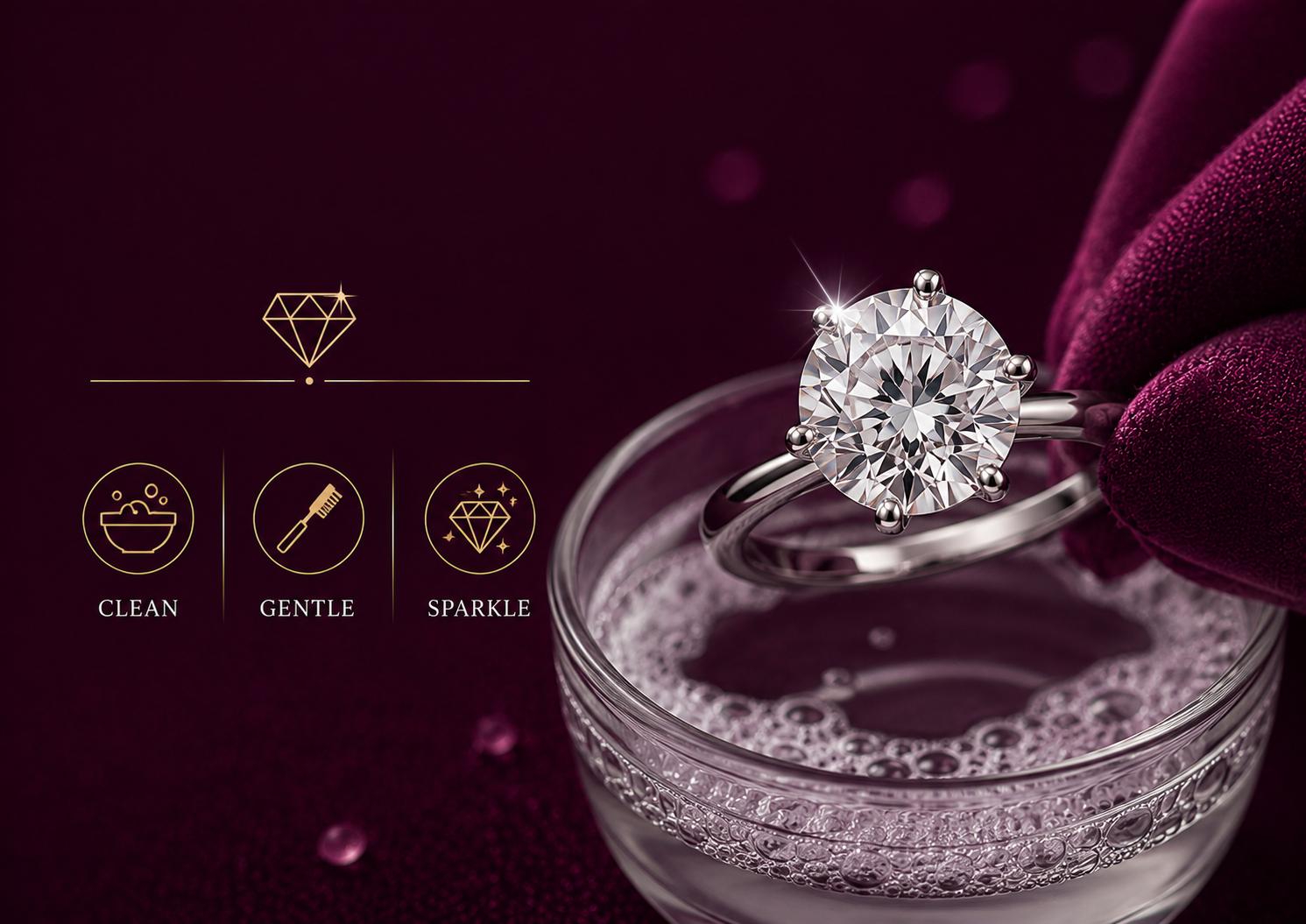
A lab diamond ring can sparkle just as brilliantly as a mined diamond – but only if it’s clean. Daily wear exposes your ring to hand lotion, soap, sunscreen, cooking oils, dust, and other residues that gradually dull its shine. If you’ve ever looked at your ring and wondered, “Why is my lab diamond not sparkling like before?”, the answer is usually simple: it needs a good cleaning.
The good news? You don’t need expensive products or complicated techniques. In most cases, the best way to clean a lab diamond ring involves items you already have at home: warm water, mild dish soap, a soft-bristled toothbrush, and a lint-free cloth.
In this guide, you’ll learn how to clean a lab diamond ring safely, which cleaning methods actually work, what products to avoid, and how to keep your ring looking as brilliant as the day you received it.
The safest way to clean a lab grown diamond ring is to soak it in warm water mixed with a few drops of mild dish soap for 15-20 minutes, gently brush around the stone and setting with a soft toothbrush, rinse thoroughly, and dry it with a lint-free cloth. This cleaning method is widely recommended by jewelry professionals and gem experts.
Do Lab Diamond Rings Need Special Cleaning?
No. Lab-grown diamonds have the same physical, chemical, and optical properties as natural diamonds. They are both made of crystallized carbon and rank 10 on the Mohs Hardness Scale.
That means cleaning lab created diamonds follows the same care routine used for natural diamond jewelry. The difference isn’t in the diamond itself – it’s in the ring’s setting. Whether your diamond sits in white gold, yellow gold, rose gold, or platinum, the metal and prong setting deserve just as much attention as the stone.
Although diamonds resist scratches well, they easily attract oils. Even a thin layer of lotion residue or fingerprints can reduce the diamond’s brilliance by blocking the light that creates its sparkle.
Why Does a Lab Diamond Ring Get Dirty?
Many people assume their diamond has lost its shine over time. In reality, the diamond usually remains unchanged. It’s the buildup on the surface that affects how light travels through the stone.
Here are the most common reasons your ring looks dull:
- Hand lotion and moisturizer
- Sunscreen
- Soap residue after washing hands
- Natural skin oils
- Cooking grease
- Dust and dirt
- Makeup products
- Hair products
If you wear your engagement ring every day, these substances collect around the diamond setting and underneath the stone. Over time, this buildup blocks light and makes even a flawless diamond appear cloudy.
That’s why many people search for how to make lab diamonds sparkle again. Thankfully, regular cleaning usually restores the sparkle within minutes.
What Is the Safest Way to Clean a Lab Grown Diamond?
If you’re looking for the safest cleaning method, professionals generally recommend a simple soap-and-water routine.
This approach works because mild dish soap breaks down grease without damaging the metal or gemstone.
You’ll Need
- Warm water (not boiling)
- Mild dish soap
- A small bowl
- Soft-bristled toothbrush
- Lint-free microfiber cloth
Avoid using paper towels because they may leave fibers behind or lightly scratch highly polished metal over time.
This simple combination is considered one of the best cleaners for lab diamond rings because it’s gentle, inexpensive, and effective.
How to Clean a Lab Diamond Ring at Home (Step-by-Step)
If you’re wondering how to clean a diamond ring at home, follow these easy steps.
Step 1: Prepare the Cleaning Solution
Fill a small bowl with warm water.
Add a few drops of mild dish soap and stir gently until it mixes evenly.
Avoid using hot or boiling water, especially if your ring contains other gemstones that may react differently to sudden temperature changes.
Step 2: Soak the Ring
Place your ring into the solution.
Allow it to soak for about 15 to 20 minutes.
This helps soften oil buildup, lotion residue, and everyday dirt so they’re easier to remove.
Think of it like soaking a baking tray before scrubbing it. A little patience saves a lot of effort.
Step 3: Gently Brush the Diamond
Using a soft-bristled toothbrush, carefully brush around:
- The diamond
- The underside of the stone
- The prong setting
- Small openings beneath the gallery
- The inside of the band
Most dirt hides underneath the diamond rather than on top.
Use gentle pressure. There’s no need to scrub aggressively.
Step 4: Rinse Thoroughly
Hold the ring under lukewarm running water.
Make sure you’ve closed the sink drain first. Diamonds may be hard, but they’re surprisingly good at disappearing down plumbing.
Rinse until every trace of soap residue disappears.
Step 5: Dry Properly
Pat the ring dry using a clean lint-free cloth.
Allow it to air dry for a few additional minutes before wearing it again.
Avoid using tissues or rough fabrics that can leave lint behind.
Can You Clean a Lab Diamond Ring With Dish Soap?
Yes.
One of the most common questions people ask is whether it’s safe to clean a diamond ring with dish soap.
The answer is yes – as long as you choose a mild dish soap without added moisturizers, abrasive particles, or harsh chemicals.
Dish soap works well because it cuts through grease and oils without affecting the diamond itself.
This makes soap and water for a lab diamond ring one of the easiest and safest cleaning methods recommended by many jewelers.
Homemade Jewelry Cleaner for Diamond Rings: Does It Really Work?
Many DIY recipes online promise amazing results, but not all are safe.
A simple mixture of:
- Warm water
- Mild dish soap
is often all you need.
This homemade jewelry cleaner safely removes common buildup without exposing your ring to unnecessary chemicals.
Some DIY recipes suggest mixing several household ingredients together. Unless the solution is recommended by a trusted jeweler or gemstone care expert, it’s better to keep things simple.
When it comes to jewelry care, complicated doesn’t always mean better.
How Often Should You Clean a Lab Diamond Ring?
The ideal cleaning schedule depends on how often you wear your ring.
As a general guideline:
- Weekly: Light cleaning with warm water and mild dish soap if you wear it daily.
- Monthly: A more thorough cleaning around the diamond setting and underneath the stone.
- Once or twice a year: Professional cleaning and a ring inspection by a trusted jeweler to check for loose prongs or wear.
Regular cleaning doesn’t just improve diamond sparkle. It also helps you notice potential issues before they become expensive repairs.
What Should You Avoid When Cleaning a Lab Diamond Ring?
Knowing how to clean a lab grown diamond ring is important, but knowing what not to do matters just as much.
Lab diamonds are extremely durable, but your ring isn’t made of diamond alone. The metal, prong setting, and any accent gemstones can be damaged by harsh chemicals or abrasive cleaning methods.
Here are some common cleaning mistakes to avoid.
1. Don’t Use Toothpaste
One of the most common myths online is that toothpaste makes diamonds sparkle.
It doesn’t.
If you’re wondering, “Can you clean a lab diamond ring with toothpaste?”, the safest answer is no.
Most toothpaste contains mild abrasives designed to remove stains from teeth. Those abrasives can leave tiny scratches on polished metals like white gold, yellow gold, rose gold, and even platinum. While the diamond itself is unlikely to scratch, the ring’s finish may lose its smooth shine over time.
A mild dish soap solution is a much safer choice.
2. Avoid Bleach and Chlorine
Bleach, chlorine, and other strong household cleaners should never touch your jewelry.
These chemicals can weaken certain metals over time and may affect soldered joints or delicate settings.
If you clean your home while wearing your ring, it’s a good idea to remove it first.
3. Skip Harsh Chemical Cleaners
Some all-purpose cleaners contain ammonia, acids, or abrasive ingredients.
Although diluted ammonia is sometimes used by professional jewelers in controlled conditions, it’s not the best option for routine home care.
Unless a jewelry cleaner for lab grown diamonds clearly states it’s safe for your ring’s metal and gemstones, stick with warm water and mild dish soap.
4. Never Scrub With Hard Brushes
A stiff cleaning brush may seem more effective, but it can scratch polished metal surfaces.
Instead, always use a soft-bristled toothbrush. It removes dirt without damaging the finish.
Can You Use Baking Soda on a Lab Diamond Ring?
This question appears frequently in search results.
Can you use baking soda on a lab diamond ring?
Technically, baking soda can remove grease and dirt. However, most jewelers don’t recommend using it on fine jewelry because it’s mildly abrasive.
Repeated use may dull highly polished precious metals, especially white gold finishes.
If your goal is simply to clean a lab diamond ring, there’s no reason to take that risk when soap and warm water work so well.
Can You Clean Lab Diamonds With Vinegar?
Another popular DIY suggestion involves vinegar.
So, can you clean lab diamonds with vinegar?
While diluted vinegar can dissolve mineral deposits on some household items, it’s generally not recommended for regular jewelry cleaning.
Its acidity may not harm the diamond itself, but it can affect certain jewelry components over time, particularly if the ring includes porous gemstones or delicate finishes.
Professional jewelers usually recommend avoiding acidic household cleaners unless the manufacturer specifically approves them.
Is an Ultrasonic Cleaner Safe for Lab Grown Diamonds?
Many people own ultrasonic jewelry cleaners and wonder whether they’re safe.
The answer depends more on the ring setting than the diamond.
How Ultrasonic Cleaners Work
An ultrasonic cleaner uses high-frequency sound waves to create tiny bubbles in a cleaning solution.
Those bubbles gently remove dirt from small spaces that are difficult to reach with a toothbrush.
This makes ultrasonic cleaning very effective for removing stubborn oil buildup and soap residue.
When Is It Safe?
If your lab diamond ring has:
- Secure prongs
- No loose stones
- No visible damage
an ultrasonic cleaner is often considered safe.
When Should You Avoid It?
Skip ultrasonic cleaning if your ring has:
- Loose prongs
- Cracked or damaged settings
- Multiple delicate gemstones
- Recently repaired components
The vibrations won’t damage the lab diamond itself, but they can loosen stones that are already insecure.
If you’re unsure, ask a professional jeweler before using one.
Professional Cleaning vs. DIY Cleaning
Cleaning your ring at home works well for routine maintenance.
However, it doesn’t replace a professional inspection.
Here’s how they compare.
| DIY Cleaning | Professional Cleaning |
|---|---|
| Removes everyday dirt and oils | Deep cleans hard-to-reach areas |
| Quick and inexpensive | Includes inspection of prongs and settings |
| Safe when done correctly | May include ultrasonic or steam cleaning when appropriate |
| Great for weekly care | Recommended once or twice a year |
A professional jeweler can also identify worn prongs, loose diamonds, or damaged settings before they become costly repairs.
That’s why professional cleaning for lab diamond rings remains an important part of long-term jewelry care.
Why Does My Lab Diamond Look Cloudy?
This is one of the most searched questions about diamond care.
Fortunately, the answer is usually simple.
Lab diamonds don’t naturally become cloudy over time.
Instead, the cloudy appearance usually comes from everyday buildup, including:
- Hand lotion
- Soap residue
- Skin oils
- Dust
- Makeup
- Cooking grease
These materials create a thin film that blocks light from entering and reflecting through the diamond.
After a proper cleaning, most rings regain their original brilliance.
If your diamond still appears dull after cleaning, visit a trusted jeweler. They can inspect the setting and check whether another issue is affecting the ring’s appearance.
How to Make Lab Diamonds Sparkle Again
If your ring has lost its shine, don’t panic.
Most of the time, you don’t need special products.
Follow these simple habits to keep your diamond looking bright.
Clean It Regularly
A weekly cleaning helps prevent heavy oil buildup.
Waiting several months allows dirt to collect in places that are harder to clean.
Remove Your Ring During Certain Activities
Consider taking your ring off when you:
- Apply lotion
- Use sunscreen
- Wash dishes
- Garden
- Exercise
- Clean with chemicals
- Cook with oils
This simple habit reduces buildup and lowers the chance of accidental damage.
Store It Properly
When you’re not wearing your ring, store it in:
- A soft jewelry pouch
- A fabric-lined jewelry box
- A separate compartment away from other jewelry
Although diamonds are highly scratch-resistant, they can scratch other jewelry pieces if stored together.
Schedule Regular Ring Inspections
Even if your ring still sparkles beautifully, regular inspections are worth the effort.
A professional jeweler can check:
- The prong setting
- Loose stones
- Metal wear
- Signs of damage
Small repairs today often prevent much larger repairs later.
Lab Diamond Ring Maintenance Tips
Good lab diamond ring maintenance isn’t complicated.
A few simple habits can keep your ring looking its best for years.
- Clean your ring weekly using warm water and mild dish soap.
- Dry it with a lint-free cloth after cleaning.
- Avoid harsh household chemicals.
- Remove your ring before messy activities.
- Store it safely when not in use.
- Schedule professional cleaning and inspections once or twice each year.
Think of your ring like a car. Regular maintenance takes less time – and costs far less – than fixing problems that develop after years of neglect.
By following these straightforward habits, you’ll preserve your ring’s diamond brilliance, protect its setting, and enjoy that eye-catching sparkle every time it catches the light.
Frequently Asked Questions
How do you clean a lab grown diamond ring at home?
Use warm water, mild dish soap, and a soft toothbrush to remove dirt, oil, and soap residue. Avoid harsh chemicals and abrasive cleaners that may damage the ring’s metal.
Can I use toothpaste to clean a lab diamond ring?
No. Toothpaste contains mild abrasives that can scratch polished metals like gold and platinum. Mild dish soap and warm water are safer alternatives.
Can you use Dawn dish soap on a lab diamond ring?
Yes. A gentle dish soap such as Dawn effectively removes grease and everyday buildup without harming the diamond or its setting.
Do lab diamonds get cloudy over time?
Lab diamonds don’t become cloudy naturally. Most dullness comes from oil, lotion, soap residue, and dirt that collect on the surface. Regular cleaning restores their sparkle.
Is an ultrasonic cleaner safe for lab grown diamonds?
Usually yes, provided the ring has secure prongs and no loose stones. If the setting is damaged or contains delicate accent gemstones, consult a jeweler before using an ultrasonic cleaner.
Why is my lab diamond not sparkling?
A layer of lotion, soap, skin oils, or dirt can block light from entering the diamond. Cleaning the ring properly usually restores its brilliance.
What should you avoid when cleaning a lab diamond ring?
Avoid toothpaste, bleach, chlorine, abrasive powders, harsh household cleaners, and stiff brushes. These can damage the ring’s finish or setting.
Conclusion
The best way to clean a lab diamond ring is also one of the simplest. Warm water, mild dish soap, a soft-bristled toothbrush, and a lint-free cloth are all you need to remove everyday dirt and restore your ring’s natural brilliance.
There’s no need for harsh chemicals or questionable DIY hacks. In fact, avoiding products like toothpaste, bleach, and abrasive cleaners can help protect your ring’s metal and setting for years to come.
Regular at-home care, combined with occasional professional cleaning for lab diamond rings, keeps your jewelry looking its best while reducing the risk of loose prongs or hidden wear.
Whether you’re learning how to clean a lab diamond ring, looking for the best way to clean a lab grown diamond engagement ring, or simply wondering how to make lab diamonds sparkle again, the answer is surprisingly straightforward: clean it gently, clean it regularly, and let the diamond do what it was made to do – catch the light and shine.