Shopping for an engagement ring is exciting, but choosing the right center stone can feel overwhelming. Should you invest in a natural diamond, choose a lab-grown diamond, or save money with moissanite? Each option has unique strengths, and the best choice depends on your budget, lifestyle, and personal values.
The debate around Lab Diamond vs Natural Diamond vs Moissanite has become more common as lab-created gemstones gain popularity. While all three can look beautiful in a ring, they differ in origin, composition, sparkle, durability, price, and long-term value.
This guide explains those differences using trusted information from industry authorities such as the Gemological Institute of America (GIA), the International Gemological Institute (IGI), and the U.S. Federal Trade Commission (FTC). By the end, you’ll know which stone fits your needs and why.
Lab Diamond vs Natural Diamond vs Moissanite: Quick Comparison
Before exploring each gemstone in detail, here’s a quick overview.
| Feature | Natural Diamond | Lab-Grown Diamond | Moissanite |
|---|---|---|---|
| Composition | Carbon crystal | Carbon crystal | Silicon carbide |
| Formation | Formed naturally over billions of years | Created in laboratories using HPHT or CVD processes | Laboratory-created gemstone |
| Hardness (Mohs Scale) | 10 | 10 | 9.25 |
| Sparkle | Balanced brilliance and fire | Same as natural diamond | More colorful fire than diamond |
| Diamond Tester | Yes | Yes | Some testers detect it differently |
| Certification | GIA, IGI and others | GIA, IGI and others | Usually certified by manufacturers or gem labs |
| Typical Price | Highest | Lower than natural diamonds | Lowest among the three |
| Investment Potential | Higher than alternatives | Limited resale value | Minimal resale value |
Quick takeaway: If you want the appearance of a real diamond at a lower cost, a lab diamond offers the closest match. If you value rarity and natural origin, a natural diamond remains the traditional choice. If affordability is your priority, moissanite delivers impressive sparkle for less.
What Is a Natural Diamond?
A natural diamond forms deep beneath the Earth’s surface under extreme heat and pressure over billions of years. Volcanic activity eventually brings these crystals closer to the surface, where they are mined.
Every natural diamond is a real diamond made entirely of carbon atoms arranged in a crystal structure. This structure gives diamonds exceptional hardness and durability.
Natural diamonds are graded using the famous 4Cs:
- Cut
- Color
- Clarity
- Carat weight
Independent organizations such as GIA and IGI evaluate these characteristics and issue diamond certification reports that verify a stone’s quality and authenticity.
Many buyers choose a natural diamond engagement ring because of its rarity, emotional significance, and long history as a symbol of commitment.
Pros
- Naturally formed over billions of years
- Excellent durability for everyday wear
- Strong emotional and historical appeal
- Generally better long-term resale value than alternatives
Cons
- Highest purchase price
- Mining can have environmental and social impacts depending on sourcing
- Larger carat sizes require a higher budget
What Is a Lab-Grown Diamond?
A lab-grown diamond is also a real diamond. The only difference is where it forms.
Instead of developing underground, scientists create these diamonds inside specialized laboratories using advanced technology. The two primary production methods are:
- HPHT (High Pressure High Temperature)
- CVD (Chemical Vapor Deposition)
Both methods produce diamonds with the same chemical composition, crystal structure, and physical properties as mined diamonds.
According to GIA and FTC guidance, lab diamonds are real diamonds, not diamond simulants. They receive grading reports that evaluate their cut, color, clarity, and carat weight using the same standards applied to natural diamonds.
One common question is:
Do lab diamonds look real?
Yes. Without specialized gemological equipment, even experienced buyers cannot visually distinguish a lab-grown diamond from a natural diamond. Jewelers typically identify them using advanced instruments and laser inscriptions included during certification.
Pros
- Identical chemical composition to natural diamonds
- Lower cost than comparable mined diamonds
- Available in larger carat weights for the same budget
- Suitable for buyers seeking ethical engagement rings
Cons
- Lower resale value than many natural diamonds
- Still requires significant energy during production
- Value depends on certification and market demand
What Is Moissanite?
Unlike diamonds, moissanite is not made of carbon.
It consists of silicon carbide, making it a completely different gemstone. Natural moissanite is extremely rare, so nearly all jewelry-quality moissanite available today is laboratory-created.
Moissanite often attracts buyers looking for the best diamond alternative because it offers impressive durability and exceptional sparkle at a much lower price.
Although some people mistake it for a diamond, moissanite is technically a diamond simulant, not a diamond.
Is moissanite a real diamond?
No.
Moissanite is a genuine gemstone, but it is not a diamond. Its different chemical composition creates distinct optical properties.
Pros
- Excellent affordability
- Very durable for daily wear
- Exceptional brilliance and colorful fire
- Larger stones cost significantly less than diamonds
Cons
- Different appearance under certain lighting
- Lower resale value
- Some buyers prefer the classic look of a diamond
Appearance & Sparkle Comparison
Sparkle often influences buying decisions more than any other factor.
While all three stones appear brilliant, they create light differently.
Natural Diamond
Natural diamonds produce a balanced combination of:
- White light (brilliance)
- Colored flashes (fire)
- Sparkling reflections (scintillation)
This balanced sparkle creates the timeless appearance many people associate with luxury jewelry.
Lab Diamond
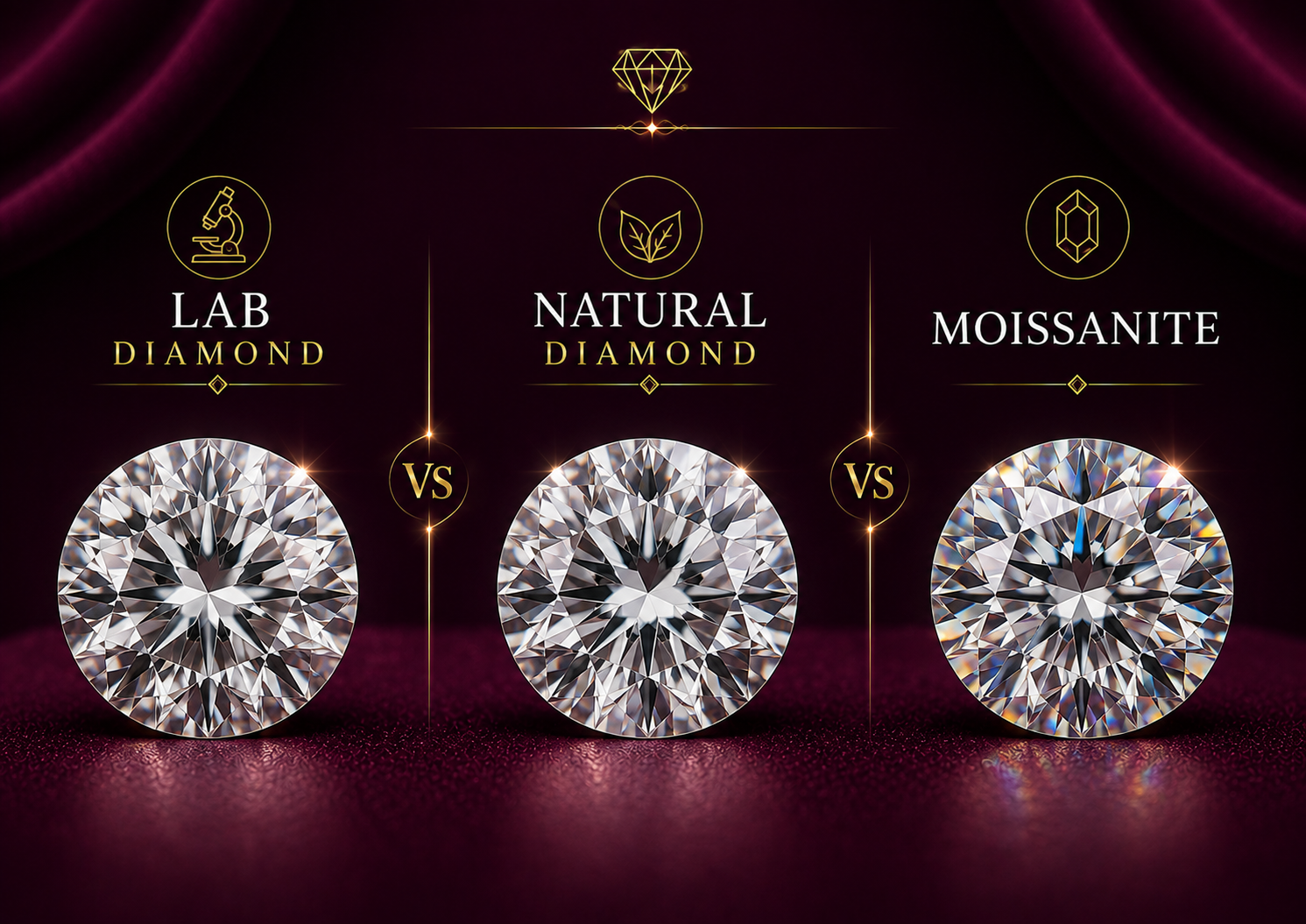
Since lab-grown diamonds have the same crystal structure as natural diamonds, they display virtually identical brilliance, fire, and scintillation.
When comparing lab diamond sparkle vs natural diamond, there is no visible difference under normal viewing conditions.
Moissanite
Moissanite has a higher refractive index than diamond, meaning it bends light more intensely.
As a result, moissanite vs diamond sparkle often comes down to personal preference.
Moissanite produces stronger rainbow-colored flashes, also called fire. Some buyers love this vibrant appearance, while others prefer the more balanced sparkle of diamonds.
If you’ve ever wondered, does moissanite sparkle more than diamond? the answer is yes – but in a different way. It produces more colorful flashes rather than the classic white brilliance associated with diamonds.
A helpful way to think about it is this:
- Want classic elegance? Choose a diamond.
- Want maximum sparkle? Moissanite certainly knows how to steal the spotlight.
Hardness & Durability
An engagement ring is something you’ll likely wear every day, so durability matters.
On the Mohs hardness scale, diamonds rank as the hardest known natural material.
| Gemstone | Mohs Hardness |
|---|---|
| Natural Diamond | 10 |
| Lab-Grown Diamond | 10 |
| Moissanite | 9.25 |
Because both natural and lab-grown diamonds share the same carbon crystal structure, they offer identical resistance to scratching.
Moissanite, with a hardness of 9.25, also performs exceptionally well for everyday wear. It resists scratches far better than most gemstones used in jewelry.
Whether you’re comparing moissanite hardness, lab diamond hardness, or overall gemstone durability, all three stones are suitable for daily use. However, diamonds remain the benchmark for lifetime durability, while moissanite offers impressive toughness at a more affordable price.
Lab Diamond vs Natural Diamond vs Moissanite Price Comparison
Price is often the deciding factor when choosing an engagement ring. While all three stones can look stunning, their costs vary significantly because of rarity, production methods, and market demand.
Natural Diamond
Natural diamonds are usually the most expensive option. Their value depends on the 4Cs – cut, color, clarity, and carat weight – as well as supply and consumer demand.
Because they are mined and naturally rare, larger, high-quality diamonds command premium prices.
Lab-Grown Diamond
One of the biggest reasons buyers choose a lab diamond engagement ring is affordability.
A lab-grown diamond with the same cut, color, clarity, and carat weight as a natural diamond generally costs much less. The lower price doesn’t reflect lower quality; it reflects a more efficient production process and greater supply.
This makes lab-grown diamonds appealing if you want a larger center stone without increasing your budget.
Moissanite
Moissanite is the most affordable option of the three.
Even large premium moissanite rings cost considerably less than comparable diamonds, making them popular among couples looking for affordable engagement rings without sacrificing beauty.
Which Is Cheaper: Lab Diamond or Moissanite?
Moissanite almost always costs less than a lab-grown diamond.
However, remember that you’re comparing two different gemstones. A lower price doesn’t necessarily mean better value – it depends on what matters most to you.
Quick Price Ranking
| Stone | Relative Cost |
|---|---|
| Natural Diamond | $$$$ |
| Lab-Grown Diamond | $$$ |
| Moissanite | $$ |
If your goal is to maximize size while staying within budget, both lab-grown diamonds and moissanite offer excellent value.
Resale Value
Another common question is whether these gemstones hold their value over time.
The answer depends on the type of stone and current market demand.
Natural Diamonds
Natural diamonds generally retain value better than lab-grown diamonds or moissanite, especially rare stones with excellent cut quality and strong certification.
That said, most retail diamonds still sell for less on the secondary market than their original purchase price.
If you’re buying primarily as an investment, speak with a qualified jeweler or gem expert before making assumptions about future value.
Lab-Grown Diamonds
A frequent question is:
Do lab diamonds hold value?
Lab-grown diamonds usually have lower resale value because production continues to increase, making supply more available.
Many buyers choose lab diamonds for beauty and affordability rather than investment potential.
Moissanite
Like many gemstone alternatives, moissanite resale value is generally limited.
Most buyers choose moissanite because they want a beautiful ring at a lower upfront cost – not because they expect it to appreciate in value.
Bottom line: If long-term value is your top priority, natural diamonds currently have the strongest resale market.
Ethical & Environmental Impact
Many modern buyers consider sustainability alongside beauty and price.
Natural Diamonds
The diamond industry has made significant improvements in ethical sourcing, traceability, and responsible mining practices.
Many retailers now offer conflict-free diamonds that comply with international standards such as the Kimberley Process.
However, mining still requires land, energy, and natural resources.
Lab-Grown Diamonds
Many consumers view lab-grown diamonds as a more sustainable choice because they avoid traditional mining.
However, their environmental impact depends on how the production facility generates electricity. Manufacturing diamonds through HPHT or CVD requires substantial energy.
Instead of assuming every lab-grown diamond is automatically eco-friendly, look for brands that provide transparency about renewable energy use and manufacturing practices.
Moissanite
Because nearly all jewelry-quality moissanite is laboratory-created, it avoids mining altogether.
Its production still consumes energy, but many buyers consider it a practical option for those seeking sustainable engagement rings and lower environmental impact.
Pros and Cons of Each Stone
Natural Diamond
Pros
- Naturally formed over billions of years
- Highest rarity
- Excellent durability
- Strong emotional and heirloom appeal
- Better resale value than alternatives
Cons
- Highest price
- Mining has environmental considerations
- Larger stones require a bigger budget
Lab-Grown Diamond
Pros
- Real diamond with identical physical properties
- Lower price than natural diamonds
- Excellent durability
- Available in larger carat sizes
- Certified by respected laboratories like GIA and IGI
Cons
- Lower resale value
- Production requires significant energy
- Less rarity than mined diamonds
Moissanite
Pros
- Most affordable option
- Outstanding sparkle
- Excellent durability for everyday wear
- Great choice for larger center stones
Cons
- Not a diamond
- Rainbow flashes may not suit everyone’s taste
- Limited resale value
Which One Should You Choose?
Choosing between a lab diamond vs natural diamond vs moissanite comes down to your priorities rather than finding one “perfect” option.
Choose a natural diamond if you:
- Value rarity and tradition
- Want an heirloom-quality gemstone
- Prefer stronger long-term resale potential
Choose a lab-grown diamond if you:
- Want a real diamond at a lower cost
- Prefer a larger stone within your budget
- Like the balance between beauty and affordability
Choose moissanite if you:
- Want maximum sparkle for your money
- Prefer a highly durable diamond alternative
- Have a limited budget but still want an eye-catching engagement ring
There isn’t a universal winner. The best engagement ring stone is the one that fits your budget, personal style, and long-term expectations.
Frequently Asked Questions
Which is better: lab diamond, natural diamond, or moissanite?
The best choice depends on your priorities. Natural diamonds offer rarity and stronger resale value, lab-grown diamonds provide the same appearance at a lower price, and moissanite delivers exceptional sparkle with the lowest cost.
Does moissanite sparkle more than a diamond?
Yes. Moissanite produces more colorful flashes of light (fire) than diamonds. Natural and lab-grown diamonds create a more balanced combination of white brilliance and colorful sparkle.
Can you tell the difference between a lab-grown and a natural diamond?
Not with the naked eye. Lab-grown and natural diamonds look identical. Jewelers use specialized equipment and grading reports to identify them.
Which is more expensive: lab diamond or moissanite?
Lab-grown diamonds generally cost more than moissanite because they are real diamonds. Moissanite is one of the most affordable alternatives for engagement rings.
Do lab diamonds hold their value?
Lab-grown diamonds usually have lower resale value than natural diamonds because supply continues to increase. Most buyers choose them for affordability rather than investment.
Which stone is best for an engagement ring?
There is no single best option. Natural diamonds are ideal for rarity, lab-grown diamonds offer excellent value, and moissanite is perfect for buyers seeking affordability and maximum sparkle.
Do lab diamonds pass a diamond tester?
Yes. Since lab-grown diamonds have the same physical properties as natural diamonds, they typically pass standard diamond testers.
Does moissanite pass a diamond tester?
Some basic thermal testers may identify moissanite incorrectly. Professional jewelers use advanced testing equipment to distinguish moissanite from diamonds.
Are lab-grown diamonds more ethical than natural diamonds?
Many buyers consider lab-grown diamonds more ethical because they avoid traditional mining. However, the environmental impact depends on how the diamonds are produced and the energy source used.
Which has better resale value: natural diamonds, lab diamonds, or moissanite?
Natural diamonds generally retain value better than lab-grown diamonds and moissanite. However, resale prices vary depending on quality, certification, and market demand.
Final Thoughts
When comparing Lab Diamond vs Natural Diamond vs Moissanite, it’s easy to focus only on price. But the right choice involves much more than cost.
Natural diamonds offer unmatched rarity and timeless appeal. Lab-grown diamonds deliver the same beauty and durability as mined diamonds while making larger stones more accessible. Moissanite stands out as a durable, affordable gemstone with exceptional brilliance.
Instead of asking which stone is objectively “better,” ask which one best matches your lifestyle and values. A beautiful engagement ring isn’t defined by its price tag – it’s defined by the story it represents.