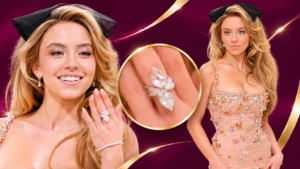
An oval diamond can look narrower than expected because of its length-to-width ratio, actual face-up measurements, outline, and the way it is set on your finger. A long, slender oval naturally has less width relative to its length, even when it carries a substantial carat weight.
The good news is that a narrow-looking oval isn’t necessarily a poorly cut diamond. Some shoppers love an elongated silhouette, while others prefer a fuller, rounder appearance. Understanding the difference can help you choose an oval that matches the look you actually want.
If your oval diamond looks too slim, here are seven possible reasons and practical ways to find a wider-looking stone.
Key Takeaways
- High length-to-width ratio: A ratio above 1.50 generally creates a longer, slimmer silhouette.
- Smaller face-up width: Two diamonds with the same carat weight can have different millimeter measurements.
- Weight distribution: A diamond can carry more weight in its depth or girdle without appearing wider from above.
- Outline and symmetry: Narrow shoulders or an uneven outline can make an oval look less full.
- Bow-tie effect: A dark central area can make the middle of the diamond look visually less open.
- Ring proportions: The band, setting, and finger size can influence how wide the center stone appears.
- Personal preference: A classic oval and a fuller oval are not necessarily the same thing.
1. Your Oval Diamond Has a High Length-to-Width Ratio
The most common reason an oval diamond looks narrow is its length-to-width ratio.
The length-to-width ratio compares the diamond’s longest measurement with its widest measurement. It helps describe whether an oval looks rounded, balanced, or elongated.
You calculate it by dividing the diamond’s length by its width.
Formula:
Length-to-width ratio = Length (mm) ÷ Width (mm)
For example, an oval measuring 9.00 mm long and 6.00 mm wide has a ratio of 1.50:1.
A higher ratio means the diamond is longer relative to its width. This creates a slimmer appearance when viewed from above.
What Is a Good Length-to-Width Ratio for a Fuller Oval?
There is no universally perfect oval ratio. However, GIA’s oval diamond buying guide provides useful reference points for understanding how different ratios affect appearance.
| Length-to-width ratio | General appearance |
|---|---|
| 1.20–1.29 | Shorter, rounder and fuller |
| 1.30–1.40 | Gently elongated with a fuller outline |
| 1.41–1.50 | Classic elongated oval |
| 1.51–1.60 | Noticeably longer and slimmer |
| Above 1.60 | Very elongated appearance |
These are visual guidelines, not official cut-quality grades or strict grading boundaries.
If you want an oval that looks wider and less stretched, start by comparing stones around 1.30–1.40.
If you prefer a more traditional elongated oval, explore ratios around 1.40–1.50.
GIA also recommends viewing the actual diamond or requesting a video because stones with similar ratios can have different visual appearances.
Source: GIA’s Oval Cut Diamond Buying Guide.
2. Your Diamond Has Less Face-Up Width Than You Expected
Carat weight measures a diamond’s weight, not its visible width.
This is one of the biggest reasons shoppers feel disappointed when their oval diamond arrives or see it in person.
Imagine comparing two oval diamonds with the same carat weight:
- Diamond A has a relatively balanced outline.
- Diamond B has a longer, slimmer outline.
Diamond B may appear noticeably narrower even though both diamonds have the same weight.
The reason is that carat weight doesn’t tell you how much surface area the diamond covers when viewed from above.
Compare the Actual Measurements
Consider these simplified measurement examples:
| Oval length | Oval width | Ratio | Appearance |
|---|---|---|---|
| 7.80 mm | 6.00 mm | 1.30 | Fuller |
| 8.40 mm | 6.00 mm | 1.40 | Balanced |
| 9.00 mm | 6.00 mm | 1.50 | More elongated |
| 9.60 mm | 6.00 mm | 1.60 | Slimmer |
These examples isolate the effect of changing length while keeping width constant. They are not specifications for diamonds of equal carat weight.
Buying tip: Before choosing an oval, compare its length and width in millimeters instead of relying exclusively on its carat weight.
3. Your Oval Diamond Carries More Weight in Its Depth or Girdle
A diamond’s weight does not always translate into a larger face-up appearance.
Some diamonds carry more of their weight below the visible surface. A thick girdle can also contribute additional weight without making the diamond look wider from above.
The girdle is the narrow edge separating the diamond’s crown from its pavilion.
According to GIA, a girdle that is too thick can make a diamond heavier without increasing its visible size.
This matters when comparing two oval diamonds with similar carat weights.
One may have more useful face-up spread, while the other carries additional weight in areas that contribute less to its visible dimensions.
What Should You Check?
Before purchasing, compare:
- Length in millimeters.
- Width in millimeters.
- Total depth and proportion information.
- Girdle thickness.
- Overall face-up appearance.
Don’t automatically choose the diamond with the highest carat weight.
A balanced stone with attractive proportions may give you the appearance you want without requiring a heavier diamond.
Source: GIA Oval Cut Diamond Guide.
4. The Oval Diamond Has Narrow Shoulders or an Uneven Outline
Not every oval diamond has the same outline.
Some have fuller shoulders and rounded sides. Others have flatter shoulders that create a more elongated, marquise-like appearance.
These differences can change how wide a diamond looks, even when two stones have similar length-to-width ratios.
GIA’s 2024 research on oval, pear, and marquise diamonds explains that their face-up appearance depends on more than length-to-width ratio. Outline curvature and faceting arrangements also influence how these diamonds look.
Look for These Outline Characteristics
Fuller shoulders: The curved sides should have a balanced, rounded appearance.
Smooth curves: The outline should flow naturally from one end to the other.
Balanced symmetry: Both halves should look reasonably consistent when viewed face-up.
No obvious flat spots: Flat areas can make an oval look more stretched or less rounded.
A fuller shoulder profile can create a broader-looking silhouette without requiring a substantially different carat weight.
However, don’t judge a diamond by ratio alone. Examine the actual stone.
Source: GIA’s 2024 Research on Fancy-Shaped Diamonds.
5. The Bow-Tie Effect Makes the Center Look Less Open
The bow-tie effect is another feature worth checking when evaluating an oval diamond.
A bow tie is a dark, bow-shaped area that appears across the center of an oval diamond. It results from the way the diamond’s facets reflect light and create contrast.
Some bow-tie contrast is common in oval diamonds.
However, a large, dark, persistent bow tie can make the center look less bright and visually interrupt the stone’s appearance.
This can make an oval look less balanced, even when its outline has attractive proportions.
How to Check the Bow-Tie Effect
Before purchasing:
- Look at the diamond directly from above.
- Examine the center under neutral lighting.
- Slowly tilt the diamond and observe how the dark area changes.
- Check whether the center remains noticeably dark.
- Compare the diamond with other ovals under similar lighting.
A subtle bow tie isn’t automatically a problem. The important distinction is whether the dark area overwhelms the diamond’s overall appearance.
GIA’s 2024 research also found that opinions about bow-tie patterns vary, although observers generally disliked broad, dark appearance problems.
Source: GIA Gems & Gemology: Observations of Oval-, Pear-, and Marquise-Shaped Diamonds.
6. Your Engagement Ring Setting Makes the Diamond Look Narrower
The setting doesn’t change the diamond’s actual measurements, but it can influence the overall visual proportions of the ring.
For example, a center diamond paired with a relatively wide band may look less prominent than the same diamond on a delicate band.
The metal surrounding the stone can also change how its outline is perceived.
Which Settings Can Create a Fuller Appearance?
Halo setting
A halo surrounds the center diamond with smaller accent stones. This can increase the apparent overall footprint of the ring and create a fuller visual outline.
However, the halo does not make the center diamond itself wider.
Thin solitaire setting
A delicate solitaire band keeps attention on the center stone. It can make the diamond appear more prominent relative to the band.
Bezel setting
A bezel surrounds the diamond with a metal rim. The rim can create a defined outer silhouette, although the visible metal should not be confused with additional diamond width.
Three-stone setting
Side stones can create a wider overall ring appearance. They add visual balance without changing the center oval’s dimensions.
Which Setting Should You Choose?
If your priority is making the center stone look more prominent, compare a delicate solitaire and a halo setting.
If you want a wider overall ring design, a three-stone setting may be worth considering.
For more inspiration, explore our guide to the best settings for oval diamonds.
7. Your Finger Size Changes How Wide the Oval Looks
An oval diamond doesn’t look exactly the same on every hand.
Finger width, ring size, and the amount of visible skin around the diamond all influence its appearance.
For example, a relatively narrow oval may look more substantial on a slender finger. The same stone may appear less wide on a broader finger.
This doesn’t mean one finger shape is better suited to oval diamonds.
It simply means that a diamond’s appearance depends partly on the proportions of the hand wearing it.
How to Choose an Oval for Your Finger
If you have broader fingers and want more visual coverage, consider comparing:
- A fuller oval with a lower length-to-width ratio.
- A slightly larger face-up width.
- A halo or three-stone design.
- A band proportion that complements the center stone.
If you have slender fingers and prefer an elegant elongated appearance, a higher ratio may suit your taste.
The best option is the one that looks balanced and comfortable on your hand.
How to Choose an Oval Diamond That Looks Wider
If you want a fuller oval rather than a long, narrow one, use this buying checklist.
| What to compare | What to look for |
|---|---|
| Length-to-width ratio | Start around 1.30–1.40 |
| Face-up width | Compare actual millimeter measurements |
| Outline | Smooth curves and fuller shoulders |
| Symmetry | Balanced appearance from above |
| Bow tie | Avoid distracting, persistent darkness |
| Girdle | Check for excessive thickness |
| Setting | Consider a halo or delicate band |
| Appearance on hand | Request a real-life viewing or video |
Should You Choose a Lower Oval Ratio?
If your main concern is width, a lower length-to-width ratio is a sensible starting point.
For example, an oval with a 1.35 ratio will generally look fuller than an oval with a 1.55 ratio, assuming the rest of their outlines are reasonably comparable.
But don’t purchase a diamond based on ratio alone.
A stone with a desirable ratio can still have poor symmetry, an unattractive outline, or distracting dark areas.
The best approach is to compare the actual diamonds rather than treating a single number as a guarantee of appearance.
Frequently Asked Questions
Why does my 2-carat oval diamond look small or narrow?
A 2-carat oval can look narrow if it has a high length-to-width ratio, limited face-up width, or an outline that appears particularly elongated. Carat weight measures mass rather than visible dimensions, so compare the diamond’s millimeter measurements before judging its size.
Is a 1.50 ratio too narrow for an oval diamond?
No. A 1.50 ratio is a common elongated oval proportion. It will generally look slimmer than a 1.35 oval, but that doesn’t make it a poor choice. The right ratio depends on whether you prefer a fuller or more elongated appearance.
What oval diamond ratio looks the widest?
A ratio around 1.20–1.30 generally produces a shorter, fuller oval silhouette. A ratio around 1.30–1.40 is a useful starting point if you want a balanced oval that still has noticeable elongation.
Does a higher carat oval always look bigger?
No. Carat weight measures diamond mass, not face-up size. A heavier oval can have a similar or smaller visible footprint than a lighter diamond if more weight is concentrated in its depth or girdle.
Can a setting make an oval diamond look wider?
A setting can change the overall visual appearance of a ring. A halo or three-stone design can create a wider overall footprint, while a delicate solitaire band can make the center stone more prominent. Neither setting changes the diamond’s actual measurements.
Does the bow-tie effect make an oval look narrow?
A bow tie doesn’t change the diamond’s physical width. However, a prominent dark area can interrupt the bright appearance of the center and make the stone look less visually balanced.
Should I choose a wider oval or a longer oval?
Choose a wider oval if you prefer a fuller, rounder appearance. Choose a longer oval if you like a slimmer silhouette and a more elongated look on your finger. Neither is objectively better.
How can I tell whether an oval diamond will look narrow before buying?
Check the length and width measurements, calculate the length-to-width ratio, and request a face-up photograph or video. Also inspect the outline, symmetry, bow-tie effect, and how the diamond looks in its intended setting.
Final Thoughts
If your oval diamond looks narrow, its length-to-width ratio is one of the first things worth checking.
A longer ratio generally creates a slimmer silhouette, while a lower ratio creates a fuller appearance. However, the diamond’s actual width, outline, symmetry, depth, faceting, and setting also contribute to the final look.
For shoppers who prefer a balanced and fuller oval, ratios around 1.30–1.40 are a useful starting point.
Before making your decision, compare actual measurements and view the diamond from above. A beautiful oval should match your preferred shape, not simply meet a particular carat weight or ratio.
The right diamond is the one whose proportions, sparkle, and appearance you genuinely love.