An engagement ring is more than a piece of jewelry. It can carry a promise, a family story, a personal style, and sometimes even a snapshot of the era in which it was chosen.
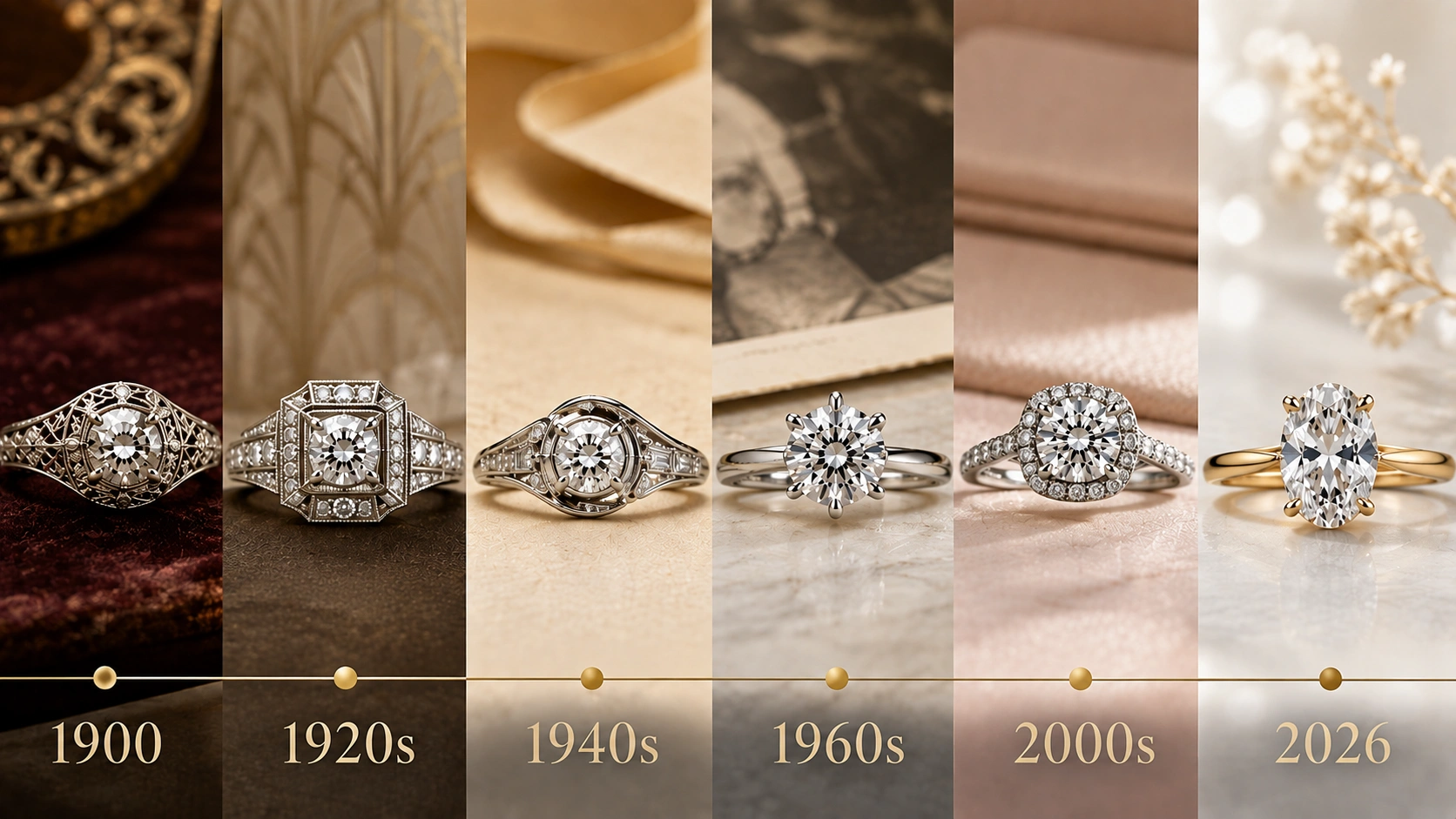
Look at an engagement ring from 1905 and compare it with one from 2026. The difference can be striking. One may feature intricate platinum filigree and an antique-cut diamond, while the other might showcase a large oval lab-grown diamond on a minimalist band.
Yet both serve the same purpose: marking a meaningful commitment.
Over the past 125 years, engagement rings have changed dramatically. Fashion, technology, diamond-cutting techniques, economics, popular culture, and changing ideas about individuality have all influenced what couples choose to wear.
From the delicate Edwardian rings of the early 1900s to the geometric glamour of Art Deco, the classic solitaire of the mid-century, the halo revival of the 2000s, and the personalized lab-grown diamond rings of the 2020s, every era has left its mark.
So, how did we get here?
Let’s take a journey through the evolution of engagement rings from 1900 to 2026.
Engagement Rings in the 1900s: Edwardian Elegance
At the beginning of the 20th century, engagement rings were often defined by craftsmanship rather than size.
The Edwardian era favored intricate, delicate designs that showcased the skill of the jeweler. Platinum was particularly desirable because its strength allowed artisans to create extremely fine details while securely holding diamonds and gemstones.
What Did Engagement Rings Look Like in the 1900s?
Common characteristics included:
- Platinum settings
- Intricate filigree
- Milgrain detailing
- Floral and scroll motifs
- Old European-cut diamonds
- Old Mine-cut diamonds
- Delicate openwork
- Cluster and halo-inspired arrangements
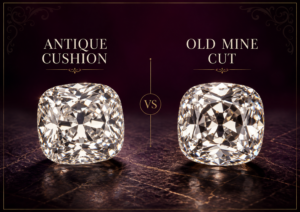
Antique diamond cuts played an important role during this period. If you want to understand how these early cuts differ, Diamiv’s guide to Old Mine vs. Old European diamonds offers a useful comparison.
Rather than relying on a large center diamond, many Edwardian rings created visual interest through detailed metalwork and multiple stones.
The result was romantic, intricate, and unmistakably handcrafted.
Why Platinum Mattered
Platinum played an important role in early 20th-century jewelry because its strength allowed jewelers to create fine, lace-like structures.
This helped produce the delicate appearance associated with Edwardian engagement rings.
In many ways, the Edwardian era established an idea that continues today: the setting can be just as important as the center stone.
The 1910s: From Edwardian Romance to Art Deco Geometry
The 1910s represented a transition.
Edwardian influences remained strong, but jewelry design gradually began moving toward more structured and geometric forms.
Engagement rings still featured platinum and intricate craftsmanship, but designers started experimenting with stronger lines and more symmetrical compositions.
Popular Characteristics
- Platinum
- Antique-cut diamonds
- Geometric details
- Symmetrical arrangements
- Diamond accents
- Transitional designs
The softer floral aesthetic of the Edwardian period slowly gave way to a more modern visual language.
Understanding the different types of diamond cuts can help explain why changing cutting techniques had such an important influence on ring design.
And then came the 1920s.
The 1920s: The Art Deco Revolution
Few movements influenced jewelry as dramatically as Art Deco.
The 1920s introduced a completely different approach to engagement ring design. Instead of delicate curves and romantic ornamentation, designers embraced geometry, symmetry, contrast, and bold structure.
Art Deco engagement rings commonly featured:
- Geometric shapes
- Strong symmetry
- Platinum settings
- Emerald-cut diamonds
- Asscher-style cuts
- Rectangular diamonds
- Calibré-cut gemstones
- Milgrain details
- Contrasting gemstones
The emerald cut became particularly compatible with the Art Deco aesthetic because its clean lines and rectangular outline worked beautifully with geometric settings.
Modern shoppers can see the difference between step-cut and brilliant-cut designs in Diamiv’s step-cut vs. brilliant-cut diamond comparison.
The result was sophisticated and architectural.
Why Art Deco Still Matters
More than a century later, Art Deco remains one of the most influential vintage jewelry styles.
Modern engagement rings featuring geometric halos, baguette side stones, emerald cuts, and symmetrical settings often borrow directly from this period.
The 1930s: Refinement and Changing Priorities
The 1930s continued the influence of Art Deco, but engagement rings gradually became more streamlined.
The economic uncertainty of the era also influenced jewelry design. While luxury remained desirable, many designs emphasized elegance without excessive ornamentation.
Round diamonds, geometric settings, and platinum remained popular.
Engagement Ring Trends of the 1930s
- Round diamonds
- Emerald cuts
- Platinum
- White metal settings
- Geometric designs
- Halo and cluster arrangements
- More streamlined silhouettes
The decade helped bridge the gap between highly decorative vintage jewelry and the increasingly classic styles that would dominate the middle of the century.
For shoppers comparing vintage designs with older antique pieces, the distinction is worth understanding. Diamiv’s guide to vintage vs. antique engagement rings explains how these categories differ.
The 1940s: The Center Diamond Takes the Spotlight
The 1940s brought major changes to jewelry design.
As the decade progressed, engagement rings increasingly focused attention on the center diamond.
Solitaire designs became particularly important because they offered a simple way to make the center stone the visual focal point.
Yellow gold also became more prominent.
Popular Engagement Ring Features
- Solitaire settings
- Round brilliant diamonds
- Yellow gold
- Platinum
- Simple prong settings
- Classic silhouettes
This was an important step in the evolution of the modern engagement ring.
The intricate craftsmanship of earlier decades was still appreciated, but the diamond itself increasingly became the star.
The 1950s: The Classic Diamond Engagement Ring
The 1950s helped cement the diamond engagement ring as a cultural symbol of love and commitment.
The classic round brilliant diamond solitaire became one of the most recognizable engagement ring designs.
What Made the 1950s Different?
The emphasis shifted toward:
- Round brilliant diamonds
- Solitaire settings
- Prong settings
- Yellow gold
- Platinum
- Timeless proportions
The engagement ring became less about displaying elaborate metalwork and more about showcasing the diamond.
This design philosophy remains incredibly influential today.
If you’re interested in why certain diamond characteristics remain important when choosing a ring, Diamiv’s 4Cs of diamond quality guide covers cut, color, clarity, and carat in more detail.
The 1960s: A New Appetite for Individuality
By the 1960s, engagement ring design began to feel more experimental.
Couples had more opportunities to select rings that reflected their individual tastes rather than simply following one traditional formula.
Popular Diamond Shapes
The decade saw interest in:
- Marquise diamonds
- Pear-shaped diamonds
- Emerald cuts
- Round diamonds
- Multi-stone arrangements
Yellow gold remained important, while distinctive settings helped create more personalized looks.
The marquise shape was particularly notable for its elongated silhouette, which could make the finger appear longer and offered a dramatic alternative to the round diamond.
Today, couples can compare unusual elongated silhouettes with more familiar shapes before choosing a style. Diamiv’s diamond shape guide provides a useful starting point.
The 1970s: Bold and Expressive Engagement Rings
The 1970s embraced individuality.
Engagement rings became more expressive, sculptural, and sometimes unconventional.
Common Characteristics
- Yellow gold
- Sculptural settings
- Three-stone designs
- Larger-looking arrangements
- Colored gemstones
- Unusual diamond combinations
The decade demonstrated an important shift in consumer behavior.
An engagement ring did not have to look like everyone else’s.
That idea would become even more important in the decades ahead.
The 1980s: The Princess Cut Arrives
The 1980s brought a strong preference for bold, contemporary-looking jewelry.
The princess cut became increasingly popular, offering a square or rectangular silhouette with brilliant-style faceting.
Engagement Ring Trends of the 1980s
- Princess-cut diamonds
- Round brilliant diamonds
- Yellow gold
- Cathedral settings
- Three-stone rings
- Bold bands
The princess cut offered something different from the traditional round diamond while still providing plenty of brilliance.
The relationship between different square and rectangular cuts is still relevant today. For example, Diamiv compares cushion, princess, and Asscher cuts to help buyers understand how their shapes and appearances differ.
The 1990s: Minimalism and Timeless Design
The 1990s moved toward cleaner, more understated aesthetics.
While elaborate designs remained available, many couples gravitated toward classic silhouettes.
Popular Styles
- Round brilliant diamonds
- Solitaire settings
- White gold
- Platinum
- Simple prongs
- Clean bands
The decade reinforced the idea that a beautifully proportioned solitaire could remain fashionable for decades.
It was simple, recognizable, and easy to wear.
That timeless quality is one reason solitaire rings remain relevant even as new trends emerge.
The 2000s: The Halo Era Begins
The arrival of the 21st century brought a noticeable change.
Engagement rings became more focused on visual impact.
One of the defining trends of the 2000s was the halo setting.
A halo surrounds the center diamond with smaller stones, creating a larger overall appearance and adding additional sparkle.
Popular Engagement Ring Trends
- Halo settings
- Cushion-cut diamonds
- Round brilliant diamonds
- Split-shank bands
- Three-stone rings
- White gold
- Platinum
- Vintage-inspired designs
The cushion cut also gained considerable attention because its soft shape combined vintage character with modern brilliance.
The 2000s proved that engagement rings could combine classic symbolism with a more glamorous aesthetic.
The 2010s: The Age of Personal Style
The 2010s brought an explosion of choice.
Instead of one dominant engagement ring style, couples began exploring a much wider range of shapes, metals, settings, and design influences.
Diamond Shapes Gained Attention
- Oval
- Pear
- Emerald
- Cushion
- Radiant
- Marquise
- Round
Oval diamonds became particularly popular for their elongated silhouette and brilliant faceting.
Emerald cuts appealed to buyers who preferred a sophisticated, understated appearance.
Pear and marquise shapes offered something more distinctive.
For shoppers trying to decide between two popular modern shapes, Diamiv’s Dutch Marquise vs. Oval engagement ring comparison explores how these elongated silhouettes differ.
The Rise of Rose Gold
Rose gold also became an important jewelry trend.
Its warm tone offered a softer alternative to traditional yellow gold, white gold, and platinum.
Vintage Revival
Another defining trend was the renewed appreciation for vintage-inspired designs.
Milgrain, filigree, halo settings, and antique-style details returned in modern interpretations.
The 2010s showed that engagement ring design was no longer about choosing between “traditional” and “modern.”
You could combine both.
The 2020s: Engagement Rings Become More Personal
The 2020s have taken personalization even further.
Today’s couples have access to an enormous variety of engagement ring designs.
Instead of asking, “What is the standard engagement ring?” many buyers are asking:
“What feels like us?”
That shift is one of the defining characteristics of modern engagement jewelry.
Popular Trends From 2020 to 2026
- Oval engagement rings
- Radiant-cut diamonds
- Emerald-cut diamonds
- Marquise diamonds
- Elongated cushion cuts
- East-west settings
- Hidden halos
- Bezel settings
- Vintage-inspired rings
- Mixed-metal designs
- Minimalist solitaires
- Custom engagement rings
- Lab-grown diamond engagement rings
Hidden halos are particularly interesting because they combine the clean appearance of a solitaire with additional detail beneath the center stone. Diamiv’s hidden halo vs. solitaire comparison explores this design difference.
Modern buyers can choose almost every aspect of their ring.
The diamond shape.
The carat weight.
The setting.
The metal.
The band profile.
The accent stones.
Even the proportions of the ring can be customized.
For shoppers beginning with the fundamentals, Diamiv’s guides to diamond carat, diamond color, diamond clarity, and diamond cut can help explain the characteristics that influence a diamond’s appearance.
The Rise of Lab-Grown Diamond Engagement Rings
One of the most significant developments in modern engagement rings is the growth of lab-grown diamonds.
Lab-grown diamonds are diamonds created using advanced technology rather than formed naturally beneath the Earth’s surface over geological timescales.
They have the same basic chemical composition and crystal structure as mined diamonds.
For many modern shoppers, the appeal comes down to choice and flexibility.
A buyer who previously had to compromise between diamond size, quality, and budget may have more options when considering lab-grown diamonds.
Diamiv’s lab-grown vs. natural diamonds guide provides a useful comparison for anyone considering both options.
Why Lab-Grown Diamonds Are Influencing Modern Ring Design
They can make it easier for buyers to consider:
- Larger center stones
- Elongated diamond shapes
- Custom designs
- Alternative cuts
- Unique settings
- More personalized ring proportions
The trend is especially relevant to modern interest in oval, radiant, emerald, cushion, and marquise engagement rings.
The technology has not simply introduced another diamond option.
It has expanded the design possibilities available to consumers.
How Diamond Shapes Have Evolved
The evolution of engagement rings is also the evolution of diamond shapes.
Different eras have favored different silhouettes.
Round
The round brilliant remains one of the most enduring choices.
Its symmetrical outline and strong brilliance make it a timeless option.
Emerald
Emerald cuts became strongly associated with Art Deco design and continue to appeal to buyers who prefer clean lines and a sophisticated appearance.
Modern shoppers can also compare radiant vs. emerald cuts when deciding between brilliant-style sparkle and the hall-of-mirrors appearance associated with step cuts.
Marquise
The marquise shape has a distinctive elongated profile and has experienced multiple periods of popularity throughout the 20th and 21st centuries.
Its historical character makes it particularly interesting when comparing it with other vintage-inspired shapes, including the Dutch Marquise vs. Old Mine engagement ring.
Oval
Oval diamonds have become a major modern favorite because they combine the brilliance associated with round diamonds with a more elongated silhouette.
Cushion
Cushion cuts blend vintage-inspired softness with modern diamond faceting.
Radiant
Radiant cuts offer a rectangular or square outline with brilliant faceting, making them attractive to buyers who want both geometry and sparkle.
Pear
Pear-shaped diamonds offer an instantly recognizable teardrop silhouette and can create a distinctive alternative to traditional round or oval rings.
For a broader overview of these silhouettes, Diamiv’s diamond shape guide brings the major diamond shapes together in one place.
How Engagement Ring Metals Have Changed
The metal surrounding the diamond can completely change the personality of an engagement ring.
Platinum
Platinum played a major role in early 20th-century jewelry and remains popular for its naturally white appearance and durability.
Yellow Gold
Yellow gold has moved in and out of fashion but has remained a classic throughout the past 125 years.
It experienced especially strong popularity during several mid-century decades.
White Gold
White gold became an important modern alternative to yellow gold, particularly during the late 20th century.
Rose Gold
Rose gold became particularly fashionable during the 2010s, offering a warm and romantic appearance.
Mixed Metals
Today, mixing metals allows designers to combine contrasting tones and create a more customized look.
Engagement Rings: 1900 vs. 2026
The difference between 1900 and 2026 is remarkable.
| Feature | Around 1900 | 2026 |
|---|---|---|
| Design philosophy | Intricate craftsmanship | Personal expression |
| Popular metal | Platinum | Platinum, gold, mixed metals |
| Diamond cuts | Old Mine, Old European | Round, Oval, Emerald, Radiant, Marquise, Cushion and more |
| Settings | Filigree, cluster, detailed | Solitaire, halo, bezel, hidden halo, custom |
| Shopping approach | Local jeweler | Online, in-store, virtual and custom |
| Customization | Limited | Highly customizable |
| Diamond options | Primarily mined | Mined and lab-grown |
| Style | Era-driven | Individual-driven |
| Inspiration | Traditional craftsmanship | Vintage, modern, celebrity, social media and personal style |
The biggest difference isn’t simply the way the rings look.
It is the amount of choice available to today’s buyer.
What Has Stayed the Same?
Despite all these changes, one thing has remained remarkably consistent.
The engagement ring is still a symbol of commitment.
The styles change.
The metals change.
Diamond shapes come and go.
Technology changes.
But the emotional meaning remains.
A delicate Edwardian ring and a contemporary lab-grown oval engagement ring may look completely different, but both can represent the same promise between two people.
That is perhaps the most fascinating part of engagement ring history.
Fashion changes. Meaning endures.
Why Engagement Ring Trends Keep Changing
Several factors have influenced the evolution of engagement rings over the last 125 years.
1. Fashion
Each generation develops its own visual preferences.
Art Deco introduced geometry. The mid-century favored classic solitaires. The 2010s brought vintage revival and alternative diamond shapes.
2. Technology
Advancements in diamond cutting have made new shapes and faceting styles possible.
Modern manufacturing and jewelry technology have also expanded the range of settings designers can create.
3. Popular Culture
Celebrity engagement rings have repeatedly influenced consumer preferences.
High-profile rings can introduce distinctive diamond shapes, settings, and design details to a much wider audience.
For example, modern celebrity engagement rings covered by Diamiv include Madison Beer’s engagement ring, Lainey Wilson’s engagement ring, Elsa Hosk’s engagement ring, and Dove Cameron’s engagement ring.
These examples show how celebrity jewelry continues to influence the conversation around modern engagement ring design.
4. Personalization
Modern couples increasingly want rings that feel unique.
That has encouraged demand for custom settings, unusual proportions, mixed metals, alternative diamond shapes, and personalized details.
5. Consumer Choice
Today’s shoppers can compare far more designs than previous generations could.
Online jewelry stores, virtual consultations, digital design tools, and custom manufacturing have made the buying journey more flexible.
The Future of Engagement Rings
If the past 125 years teach us anything, it is that engagement rings will continue to evolve.
Future designs may place even greater emphasis on:
- Customization
- Unique diamond shapes
- Lab-grown diamonds
- Sustainable-minded purchasing
- Vintage-inspired designs
- Alternative gemstones
- Mixed metals
- Personalized engraving
- Bespoke settings
- Technology-assisted customization
But there is unlikely to be one “perfect” engagement ring style for everyone.
The future will probably be defined by choice rather than conformity.
Final Thoughts: 125 Years of Changing Style
From the delicate platinum filigree of the Edwardian era to the geometric sophistication of Art Deco, from mid-century solitaire rings to 2000s halo designs and today’s personalized lab-grown diamond rings, engagement jewelry has never stopped evolving.
Every decade has added something new.
The early 1900s gave us intricate craftsmanship.
The 1920s gave us geometric Art Deco.
The mid-century established the iconic solitaire.
The 1970s encouraged individuali
Frequently Asked Questions
How have engagement rings changed over the years?
Engagement rings have evolved from intricate Edwardian and Art Deco designs to classic solitaires, halo settings, alternative diamond shapes, and highly personalized modern rings. Fashion, technology, diamond cutting, and consumer preferences have all influenced their development.
What did engagement rings look like in the early 1900s?
Early 1900s engagement rings commonly featured platinum, intricate filigree, milgrain details, floral motifs, and antique-cut diamonds such as Old European and Old Mine cuts.
When did Art Deco engagement rings become popular?
Art Deco engagement rings became particularly popular during the 1920s and 1930s. They were known for geometric shapes, symmetry, platinum settings, emerald cuts, Asscher-style designs, and contrasting gemstones.
When did solitaire engagement rings become popular?
Solitaire engagement rings became especially influential during the mid-20th century. Their simple design placed the focus directly on the center diamond and helped establish the classic engagement ring style that remains popular today.
What engagement ring styles were popular in the 1950s?
The 1950s favored classic round brilliant diamond solitaires, prong settings, platinum, and yellow gold. The era helped establish the traditional diamond solitaire as an iconic engagement ring design.
What engagement ring styles were popular in the 1980s?
The 1980s favored bold and classic designs, including princess-cut and round brilliant diamonds, yellow gold, cathedral settings, and three-stone rings.
What are the most popular engagement ring trends in 2026?
Modern engagement ring trends include oval, emerald, radiant, marquise, and elongated cushion diamonds, along with minimalist solitaires, vintage-inspired settings, hidden halos, bezel designs, mixed metals, custom rings, and lab-grown diamonds.
What engagement ring trends became popular in the 2010s?
The 2010s saw growing interest in oval, pear, emerald, cushion, radiant, and marquise diamonds. Rose gold, vintage-inspired settings, hidden halos, thin bands, and personalized designs also became popular.
Are vintage engagement ring styles still popular today?
Yes. Vintage-inspired engagement rings remain popular because they combine historical character with modern craftsmanship. Details such as milgrain, filigree, antique-inspired settings, and geometric Art Deco designs continue to influence contemporary rings.
How has technology changed engagement rings?
Technology has influenced diamond cutting, jewelry manufacturing, customization, online shopping, and lab-grown diamond production. Modern buyers can compare a much wider range of diamond shapes, settings, sizes, and designs than previous generations.
Final Thoughts: 125 Years of Changing Style
From the delicate platinum filigree of the Edwardian era to the geometric sophistication of Art Deco, from mid-century solitaire rings to 2000s halo designs and today’s personalized lab-grown diamond rings, engagement jewelry has never stopped evolving.
Every decade has added something new.
The early 1900s gave us intricate craftsmanship.
The 1920s gave us geometric Art Deco.
The mid-century established the iconic solitaire.
The 1970s encouraged individuality.
The 1980s and 1990s refined modern classics.
The 2000s brought glamour and the halo.
The 2010s expanded diamond shapes and vintage-inspired designs.
And from 2020 through 2026, personalization, customization, and lab-grown diamonds have opened even more possibilities.
Yet after more than a century, the most important part hasn’t changed.
An engagement ring isn’t valuable simply because of its style, carat weight, or setting.
Its real significance comes from the story behind it.
And perhaps that is why engagement rings will continue to evolve for another hundred years.