If maximum sparkle is your priority, the round brilliant cut is generally the strongest place to start. Its symmetrical shape and carefully designed facet arrangement are optimized for strong light performance, producing a combination of brightness, fire, and scintillation that has made it the benchmark for diamond sparkle.
But there is an important distinction: the round brilliant is not automatically the sparkliest diamond simply because it is round. Cut quality matters enormously. Proportions, symmetry, polish, and facet arrangement all influence how effectively a diamond interacts with light.
Other cuts, including oval, princess, radiant, cushion, pear, and marquise, can also look remarkably lively. Emerald and Asscher cuts create a different kind of light effect, with broad flashes and a hall-of-mirrors appearance rather than the rapid sparkle associated with brilliant-style cuts.
Here’s what you should know before choosing.
Quick Answer: The Round Brilliant Cut Sparkles the Most
For shoppers specifically looking for maximum traditional diamond sparkle, the round brilliant cut is the leading choice.
A standard round brilliant has 57 or 58 facets, depending on whether the culet is counted. Its facets are arranged to help return light through the crown of the diamond, creating the bright flashes and changing light-dark pattern commonly associated with diamond sparkle.
The round brilliant is also the only diamond shape for which GIA provides a formal cut grade under its standard system. That grade evaluates aspects of the diamond’s appearance, design, and craftsmanship.
If you’re comparing diamonds specifically for sparkle, you can learn more about the broader role of cut in diamond quality through this diamond cut guide.
Cut vs. Shape: Why the Difference Matters
People often use “diamond cut” and “diamond shape” as if they mean the same thing. They are related, but they are not identical.
Shape describes the diamond’s outline when viewed from above. Round, oval, pear, emerald, and marquise are examples of diamond shapes.
Cut describes how the diamond has been fashioned, including the arrangement, angles, proportions, symmetry, and finish of its facets.
GIA explains that cut determines how a diamond interacts with light, while shape describes its outline.
This distinction is important because two diamonds with the same shape can have noticeably different levels of sparkle.
A well-cut diamond can return a lot of light to the viewer, while poor proportions can cause light to escape through the bottom or sides of the stone.
So when you’re asking which diamond cut sparkles the most, you’re really considering two things:
- The inherent light performance of the cutting style
- How well the individual diamond was cut
What Makes a Diamond Sparkle?
Diamond sparkle isn’t actually one single optical effect. GIA breaks the appearance of a diamond’s light performance into several components, including brightness, fire, and scintillation.
Brightness
Brightness is the amount of white light reflected from the diamond back toward your eyes.
A diamond with strong brightness can look lively and illuminated across much of its face.
Fire
Fire is the colored light you see when white light is dispersed into spectral colors.
Those flashes can appear red, blue, yellow, orange, and other colors depending on the lighting and viewing conditions.
Scintillation
Scintillation is the sparkle you see when the diamond, light source, or observer moves.
It includes the flashes of light as well as the contrasting light and dark pattern across the diamond.
These three effects work together to create what most shoppers simply call “sparkle.”
Why Does the Round Brilliant Sparkle So Much?
The round brilliant was developed around the goal of maximizing light performance.
Its symmetrical outline allows cutters to arrange its facets in a highly regular pattern. The table, crown facets, and pavilion facets work together to collect, reflect, disperse, and return light through the top of the diamond.
That combination helps produce strong brightness, fire, and scintillation.
The design is also highly symmetrical, which gives cutters a relatively well-established framework for evaluating its proportions and overall performance.
GIA’s cut research has shown that the relationship between different proportions matters rather than any single measurement in isolation. Small changes to facet dimensions and angles can affect how a round brilliant handles light.
This is one reason the round brilliant remains the standard against which many shoppers compare diamond sparkle.
How Other Diamond Cuts Compare for Sparkle
The round brilliant may be the benchmark for maximum sparkle, but it isn’t the only option.
Different shapes produce different patterns of light, and the best choice depends partly on the appearance you prefer.
Oval Cut
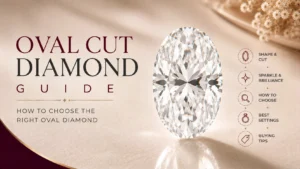
An oval diamond uses a brilliant-style faceting approach while giving you an elongated outline.
A well-cut oval can have strong brightness and lively flashes while appearing larger across the finger than a round diamond of the same carat weight.
One thing to watch for is the bow-tie effect, a darker area that can appear across the center of some oval diamonds.
You can explore the specifics in this oval cut diamond guide.
Princess Cut
Princess cuts are square or rectangular diamonds with angular corners and brilliant-style faceting.
They can produce strong sparkle with a crisp, geometric appearance. Their visual character is quite different from the softer outline of a round or oval.
If you like lots of sparkle but prefer a square shape, the princess cut is one of the cuts worth considering.
The princess cut diamond guide covers its proportions, clarity, color, and other buying considerations.
Radiant Cut
Radiant diamonds combine a rectangular or square outline with brilliant-style faceting.
This gives them a combination of strong sparkle and a more structured outline.
A radiant can be a particularly interesting choice if you like the shape of an emerald cut but want a much more active, brilliant-style light pattern.
See the radiant cut diamond guide for more information.
Cushion Cut
Cushion cuts have rounded corners and can produce a softer, broader type of sparkle.
Their appearance varies considerably because cushion diamonds can use different facet arrangements. Some have a more crushed-ice appearance, while others display larger, more distinct flashes.
That variation means you should evaluate an individual cushion rather than assuming every cushion diamond will sparkle in exactly the same way.
The cushion cut diamond guide covers the major factors to consider.
Pear Cut
Pear-shaped diamonds combine a rounded end with a pointed tip.
They use brilliant-style faceting and can produce lively flashes of light. Like oval diamonds, some pear cuts can show darker areas through the center, so examining the actual stone is important.
The pear cut diamond guide goes deeper into proportions and the bow-tie effect.
Marquise Cut
Marquise diamonds have two pointed ends and an elongated silhouette.
Their brilliant-style faceting can create plenty of sparkle, while their length gives them a distinctive appearance on the finger.
As with other elongated shapes, proportions and facet pattern have a significant effect on the appearance of an individual stone.
You can learn more in the marquise cut diamond guide.
Emerald Cut
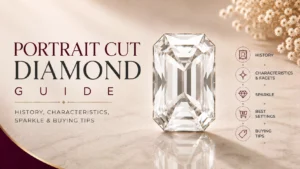
Emerald cuts are different from the brilliant-style shapes above.
They use step-cut facets, which are long, parallel facets that create broad reflections. Instead of producing lots of small, rapid flashes, a well-cut emerald diamond can display larger, mirror-like flashes across its surface.
This is sometimes described as a hall-of-mirrors effect.
Emerald cuts therefore tend to have a different type of visual appeal rather than simply being a less sparkly version of a round brilliant.
You can read more in the emerald cut diamond guide.
Asscher Cut
Asscher cuts also use step-cut faceting.
They have a square outline with cropped corners and are known for their geometric, symmetrical appearance.
Like emerald cuts, they generally emphasize broad reflections and pattern rather than the rapid scintillation associated with brilliant cuts.
That makes an Asscher a good example of why “more sparkle” isn’t the only way to evaluate a diamond’s appearance.
Sparkle Comparison at a Glance
| Diamond shape | Typical light pattern | Sparkle character |
|---|---|---|
| Round brilliant | Bright, dynamic flashes | Very high |
| Oval | Brilliant-style flashes | High |
| Princess | Crisp, angular flashes | High |
| Radiant | Lively brilliant-style flashes | High |
| Cushion | Broader, softer flashes | Moderate to high |
| Pear | Brilliant-style flashes | High |
| Marquise | Brilliant-style flashes | High |
| Emerald | Broad, mirror-like reflections | More subtle |
| Asscher | Geometric, mirror-like reflections | More subtle |
These descriptions are general. An individual diamond’s proportions, symmetry, polish, facet arrangement, and other characteristics can significantly change what you actually see.
Does More Sparkle Always Mean a Better Diamond?
Not necessarily.
Sparkle is only one aspect of a diamond’s appearance.
Someone who wants an extremely lively stone may prefer a round brilliant. Another buyer might prefer the broad reflections of an emerald cut or the softer flashes of a cushion.
There is also a practical consideration: diamond quality varies within every shape.
A beautifully cut fancy-shape diamond can be more visually appealing to you than a poorly performing round diamond.
This is why comparing the actual stones is important instead of choosing a shape based solely on its reputation.
For a broader overview of how cut fits into diamond quality, see the 4Cs of diamond quality.
How to Choose a Diamond That Sparkles
If sparkle is your top priority, start with the cutting style and then evaluate the individual diamond.
1. Start with a brilliant-style shape
Round brilliant is the clearest starting point for maximum traditional sparkle.
Oval, princess, radiant, cushion, pear, and marquise can also offer lively light performance.
2. Pay attention to cut quality
For round brilliant diamonds, GIA’s cut grade ranges from Excellent to Poor and considers factors including brightness, fire, scintillation, weight ratio, durability, polish, and symmetry.
For fancy shapes, there isn’t one equivalent GIA cut-grade scale, so evaluating the actual diamond becomes especially important.
3. Look beyond carat weight
A larger diamond isn’t necessarily a more brilliant diamond.
Two diamonds with the same carat weight can look very different because their proportions and measurements differ.
If sparkle matters more to you than simply maximizing carat weight, don’t sacrifice cut quality just to get a larger stone.
4. Examine the diamond in different lighting
A diamond can look spectacular under bright jewelry-store spotlights and less impressive in everyday lighting.
If possible, look at the stone under several types of lighting and while moving it.
Scintillation is specifically related to how the light pattern changes as the diamond, observer, or light source moves.
5. Consider the sparkle pattern you actually like
“Sparkly” can mean different things to different people.
Do you prefer:
- Lots of tiny flashes?
- Bright white light?
- Colorful fire?
- Large flashes?
- Broad mirror-like reflections?
- A combination of brightness and movement?
The answer can change which shape appeals to you most.
Round Brilliant vs. Fancy Shapes: Which Should You Choose?
If your only goal is maximum traditional sparkle, the round brilliant is the logical starting point.
But if you want maximum sparkle plus a particular shape, there are several alternatives worth examining.
An oval can give you brilliant-style sparkle in an elongated silhouette. A princess can provide a square outline with energetic flashes. A radiant offers brilliant-style faceting with a more rectangular or square shape. A cushion can provide a softer, broader appearance.
Step cuts such as emerald and Asscher are different again. They are generally chosen for their clean geometry, broad reflections, and hall-of-mirrors effect rather than maximum scintillation.
So the real question isn’t only “Which diamond cut sparkles the most?”
It is also:
What kind of sparkle do you want to see?
Frequently Asked Questions
Which diamond cut sparkles the most?
The round brilliant cut is generally considered the strongest choice for maximum traditional diamond sparkle. Its facet arrangement is designed for strong brightness, fire, and scintillation, and it is the only shape with a formal GIA cut-grading system.
Is a round brilliant more sparkly than an oval?
Generally, the round brilliant is the benchmark for maximum sparkle. However, a well-cut oval can still have impressive brilliance and scintillation. The actual quality of the individual diamond matters.
Which diamond cuts are the most sparkly after round?
Oval, princess, radiant, cushion, pear, and marquise can all produce lively sparkle when well cut. There is no single standardized cut ranking for these fancy shapes comparable to GIA’s round-brilliant cut grade.
Do emerald cut diamonds sparkle?
Yes, but their sparkle looks different. Emerald cuts use step-cut facets that create broader, mirror-like reflections rather than the rapid flashes associated with brilliant cuts.
Does a diamond with more facets sparkle more?
Not necessarily. Facet count alone doesn’t determine sparkle. The arrangement, proportions, angles, symmetry, polish, and interaction between facets all contribute to light performance. GIA’s research emphasizes that the relationships among proportions matter when evaluating a diamond’s appearance.
Is cut more important than carat for sparkle?
For light performance, cut quality is extremely important. A larger diamond with poor proportions can appear less lively than a smaller, well-cut diamond.
What should I look for if sparkle is my top priority?
Start with a round brilliant if you want maximum traditional sparkle. Then prioritize strong cut quality, appropriate proportions, symmetry, and polish. For fancy shapes, examine the actual stone because there is no single universal cut grade covering them all.
Final Takeaway
The round brilliant cut sparkles the most when maximum traditional diamond sparkle is the goal.
Its symmetrical design and carefully arranged facets are built to produce strong brightness, fire, and scintillation.
But shape alone doesn’t guarantee a beautiful diamond. Cut quality can make a major difference, and fancy shapes such as oval, princess, radiant, cushion, pear, and marquise can all produce impressive sparkle when well cut.
If you want the most intense, classic sparkle, start with a round brilliant. If you prefer a particular silhouette or a different pattern of light, compare the actual diamonds rather than assuming that one shape will always look better than another.