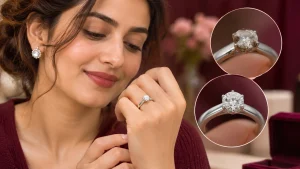
If your earrings make your ears itchy, red, swollen, or uncomfortable, switching to better-quality jewelry may help. For shoppers who suspect a nickel allergy, 18K solid yellow gold earrings with verified nickel-free alloys are a strong starting point. If you prefer a more durable everyday option, consider 14K solid yellow gold, but only when the manufacturer confirms that the alloy is nickel-free.
The important thing is not just the gold karat. You also need to check the earring posts, backs, and other metal components because even expensive-looking earrings can contain irritating metals.
This guide explains which gold earrings are worth considering, how 14K and 18K gold compare, and what to avoid before buying your next pair.
Which Gold Earrings Should You Buy If Your Ears Get Irritated?
If ordinary fashion earrings irritate your ears, start by looking for solid 18K yellow gold earrings with documented nickel-free alloy composition.
Here are the main options worth comparing:
| Earring material | Best for | What to consider |
|---|---|---|
| 18K solid yellow gold | Nickel-sensitive shoppers seeking fine jewelry | Verify the alloy composition |
| 14K solid yellow gold | Everyday durability and value | Confirm that it is nickel-free |
| 22K yellow gold | High gold purity | Softer and more prone to bending |
| Nickel-free white gold | People who prefer silver-colored gold jewelry | Ask whether palladium or another nickel-free alloy is used |
| Gold-plated earrings | Fashion-focused occasional wear | Plating can wear away and expose base metals |
| Titanium earrings | People who want a non-gold alternative | Choose a reputable, documented titanium grade |
My recommendation: If you want traditional gold earrings, prioritize 18K yellow gold with verified nickel-free construction. If you need greater durability for frequent wear, consider nickel-free 14K gold. If you have a confirmed metal allergy and still react to gold, titanium or another dermatologist-recommended material may be a better choice.
The American Academy of Dermatology lists 18K, 22K, and 24K yellow gold among jewelry options for people with nickel allergies.
However, no metal guarantees that every person will avoid irritation. Gold itself can also cause contact allergies in some individuals.
Why Do Your Earrings Irritate Your Ears?
Before replacing your earrings, it helps to understand what might be causing the problem.
One common reason is nickel allergy.
Nickel is a metal used in many jewelry alloys because it helps improve strength and changes the appearance of the finished metal. However, some people develop an allergic reaction when nickel comes into contact with their skin.
According to the American Academy of Dermatology, more than 18% of people in North America are allergic to nickel.
Common symptoms include:
- Itchy earlobes after wearing earrings.
- Redness around the piercing.
- Swelling or tenderness.
- Dry, irritated skin.
- Small bumps or blisters.
- Cracked or inflamed skin around the earring hole.
The reaction may appear within a couple of days after exposure.
Nickel is not the only possible cause. Friction, trapped soap, dirt, moisture, tight earring backs, and infections can also cause problems.
DermNet explains that jewelry-related irritation is not always an allergic reaction. This is why changing the metal without understanding the actual cause may not solve every problem.
If you repeatedly experience these symptoms, a dermatologist can help identify the cause through appropriate evaluation and patch testing.
14K vs. 18K vs. 22K Gold Earrings: Which Is Better for Sensitive Ears?
Gold purity is an important part of your buying decision, but higher karat gold is not automatically suitable for everyone.
The karat number tells you how much pure gold a piece contains.
According to the Federal Trade Commission, 24K represents pure gold, while other karat grades combine gold with additional metals to improve the jewelry’s physical properties.
Here’s how the main options compare.
1. 18K Gold Earrings: Best Starting Point for Sensitive Ears
18K gold contains 75% pure gold and 25% other metals.
It offers a balance between gold purity, appearance, and practical jewelry construction.
For shoppers with suspected nickel sensitivity, 18K yellow gold is worth considering because dermatology guidance identifies it as a suitable option for avoiding nickel exposure.
Why consider 18K gold?
- Contains more gold than 14K jewelry.
- Offers a rich yellow-gold appearance.
- Can be made with nickel-free alloys.
- Suitable for many fine jewelry designs.
- Provides a good balance of purity and everyday usability.
What should you check?
Ask the seller which metals make up the remaining 25%.
A nickel-free 18K alloy is preferable if nickel is your concern.
18K gold can still contain other metals that may cause reactions in people with different sensitivities.
Best for: Shoppers who prioritize higher gold purity and want classic yellow-gold earrings.
2. 14K Gold Earrings: Best for Everyday Durability
14K gold contains approximately 58.3% pure gold and 41.7% other metals.
Because it contains more alloying metals than 18K gold, its exact composition matters.
However, 14K gold is not automatically unsuitable for sensitive ears. A properly manufactured nickel-free 14K alloy can be a reasonable choice.
Why consider 14K gold?
- Generally harder than higher-karat gold.
- Suitable for frequent jewelry wear.
- Often more affordable than comparable 18K designs.
- Available in many stud, hoop, and huggie styles.
What should you check?
Ask whether the gold alloy is nickel-free.
Also confirm that the posts and earring backs use compatible, documented materials.
Best for: People who want durable gold earrings without paying the premium associated with higher gold purity.
3. 22K Gold Earrings: Best for High Gold Purity
22K gold contains approximately 91.7% pure gold.
It has a higher gold content than 14K and 18K jewelry.
This makes it an option worth considering if gold purity is your main priority.
However, 22K gold is relatively soft compared with lower-karat alloys.
Thin posts, delicate clasps, and lightweight decorative components may be more vulnerable to bending or damage.
Why consider 22K gold?
- Very high gold content.
- Rich yellow color.
- Less room for other alloying metals.
- Suitable for certain traditional and fine jewelry designs.
What should you check?
Confirm the complete alloy composition and construction quality.
Don’t assume that higher purity guarantees that you cannot develop a gold allergy.
Best for: People who prioritize gold purity and prefer traditional yellow-gold jewelry.
14K vs. 18K vs. 22K Gold: Quick Comparison
| Feature | 14K Gold | 18K Gold | 22K Gold |
|---|---|---|---|
| Pure gold content | 58.3% | 75% | 91.7% |
| Other metals | 41.7% | 25% | 8.3% |
| Relative hardness | Higher | Moderate | Lower |
| Gold appearance | Depends on alloy | Depends on alloy | Typically richer yellow |
| Nickel-free availability | Yes | Yes | Yes, but verify |
| Typical price | Lower | Higher | Higher |
| Best for | Everyday durability | Balanced purity | High gold content |
Which should you choose?
Choose 18K if you want a higher-purity gold option. Choose 14K if everyday durability and budget matter more. Choose 22K if gold purity is your priority and the earring construction suits your lifestyle.
For all three options, check the actual alloy composition rather than relying on the karat stamp alone.
What Type of Gold Earrings Are Best for Sensitive Ears?
After choosing the gold purity, the next step is selecting an earring design that feels comfortable.
The following styles are worth considering.
1. Gold Stud Earrings
Gold studs are a practical starting point if you want something simple and lightweight.
They sit close to the earlobe and are available in many designs, from plain gold balls to small gemstone settings.
Why choose them?
- Minimal, versatile appearance.
- Suitable for everyday outfits.
- Available in different post styles.
- Easy to pair with other jewelry.
When shopping, check that the entire post is made from the specified nickel-free material.
2. Gold Huggie Earrings
Huggie earrings are small hoops that sit close to the earlobe.
They offer a more decorative alternative to traditional studs without requiring large or heavy designs.
Why choose them?
- Compact appearance.
- Easy to style with casual and formal outfits.
- Available in simple and gemstone-accented designs.
- Suitable for people who prefer small hoops.
Check the hinge and clasp materials, not just the visible gold exterior.
3. Gold Small Hoop Earrings
Small gold hoops provide a classic appearance and can work well with everyday outfits.
Look for lightweight designs with smooth edges and secure closures.
A comfortable fit matters because hoops that are too tight can put unnecessary pressure on the piercing.
4. Gold Flat-Back Stud Earrings
Flat-back earrings have a flatter backing that rests against the back of the earlobe.
They are popular for certain piercing placements because they can reduce pressure from traditional butterfly backs.
However, the flat-back design itself does not make an earring hypoallergenic.
Check the material of the post, backing, and decorative front.
5. Gold Gemstone Stud Earrings
If plain gold feels too simple, consider gemstone studs.
Small diamonds, sapphires, and other gemstones can add detail without requiring large or heavy earring designs.
Choose settings with securely finished metal components and confirm that the posts are nickel-free.
Solid Gold vs. Gold-Plated vs. Gold-Filled Earrings: What Should You Buy?
This is one of the most important comparisons when shopping for sensitive ears.
Two earrings may look almost identical while having completely different metal construction.
| Type | Construction | Main consideration |
|---|---|---|
| Solid gold | Gold alloy throughout the metal component | Check the karat and alloy |
| Gold-plated | Thin gold layer over another metal | Coating can wear away |
| Gold-filled | Mechanically bonded gold layer over base metal | Base metal remains underneath |
| Gold vermeil | Gold coating over sterling silver | Confirm the silver base and coating details |
Solid Gold Earrings
Solid gold earrings are generally a better starting point if you want to avoid exposure to unknown base metals.
However, solid gold does not mean pure gold.
For example, 18K solid gold contains 75% gold and 25% other metals.
Ask the jeweler for the alloy composition, especially if you have a confirmed metal allergy.
Gold-Plated Earrings
Gold-plated earrings have a thin layer of gold applied over another metal.
The underlying metal may contain nickel.
As the coating wears away, the base metal can become exposed.
The Federal Trade Commission explains that gold plating eventually wears away, depending on how the jewelry is worn and the coating thickness.
If your ears react to ordinary fashion earrings, gold-plated designs are not the first option I’d recommend.
Gold-Filled Earrings
Gold-filled jewelry contains a mechanically bonded gold layer over a base metal.
It is different from ordinary gold plating.
However, the underlying base metal still matters.
If you have a nickel allergy, ask the seller to identify the base metal and confirm whether it can come into contact with your skin.
Gold Vermeil Earrings
Gold vermeil uses a gold coating over a sterling silver base.
It may be an alternative for shoppers who prefer the appearance of gold without purchasing solid gold.
However, the coating can wear down, and sterling silver can contain small amounts of other metals depending on its composition.
Ask for the exact material specifications before buying.
Yellow Gold vs. White Gold vs. Rose Gold: Which Is Better for Sensitive Ears?
Gold color is not just a design decision. It can also provide clues about the alloy metals used.
Yellow Gold
Yellow gold is often alloyed with metals such as copper and silver.
For shoppers with nickel sensitivity, verified nickel-free yellow gold is a sensible place to start.
18K yellow gold is particularly worth considering.
White Gold
White gold is created by combining gold with white-colored metals.
Some white-gold alloys use nickel.
Many white-gold earrings also receive rhodium plating to create a brighter white appearance.
However, the coating can wear away over time.
If you prefer white gold, specifically ask for nickel-free white gold, such as a suitable palladium-based alloy.
Rose Gold
Rose gold gets its pinkish appearance primarily from copper mixed with gold.
It is not automatically hypoallergenic.
If you have a known copper sensitivity, ask about the alloy composition before buying.
Which Gold Color Should You Choose?
| Gold color | Common alloy metals | Buying advice |
|---|---|---|
| Yellow gold | Copper and silver | Look for nickel-free construction |
| White gold | Palladium or nickel | Specifically request nickel-free white gold |
| Rose gold | Copper | Check for copper sensitivity |
If you’re still deciding between different gold colors, read this guide to yellow gold vs. white gold vs. rose gold.
What Should You Check Before Buying Gold Earrings for Sensitive Ears?
Buying the correct gold karat is only one part of the process.
Use this five-point earring metal check before placing an order.
1. Check the Earring Posts
The post passes through your piercing and remains in direct contact with the skin.
Ask whether the post is made from the same nickel-free gold alloy as the front of the earring.
Don’t assume the entire earring has the same material composition.
2. Check the Earring Backs
Earring backs can also contain nickel.
Ask whether the backs are made from solid nickel-free gold or another documented skin-compatible material.
A beautiful gold front does not guarantee a suitable backing.
3. Ask for the Exact Alloy Composition
Ask the seller these questions:
- Is the gold alloy completely nickel-free?
- What other metals are mixed with the gold?
- Are the posts and backs made from the same material?
- Is any part of the earring gold-plated?
- Can you provide documentation of the metal composition?
A clear answer is more useful than a vague hypoallergenic label.
4. Look for Proper Gold Markings
The FTC recommends checking the karat quality mark and the registered trademark associated with the gold jewelry.
Common gold markings include:
- 14K or 585 for approximately 58.3% gold.
- 18K or 750 for 75% gold.
- 22K or 916 for approximately 91.7% gold.
These markings indicate gold purity, not a guarantee that the alloy is nickel-free.
5. Check the Return Policy
Sensitive skin can react differently to different metals.
Before purchasing, check whether the retailer accepts returns or exchanges.
Ask about the policy for earrings specifically, because some retailers restrict returns on pierced jewelry for hygiene reasons.
How Much Should You Spend on Gold Earrings for Sensitive Ears?
You don’t necessarily need the most expensive earrings to find a suitable pair.
Your budget should depend on gold purity, weight, craftsmanship, gemstone details, and the type of construction.
Here is a practical way to approach the purchase.
| Budget priority | What to consider |
|---|---|
| Lower budget | Simple nickel-free 14K gold studs |
| Mid-range | Solid 14K or 18K gold studs and small hoops |
| Higher budget | 18K gold gemstone studs or detailed huggies |
| Gold purity priority | 22K gold designs with suitable construction |
These are shopping categories, not verified market price ranges. Actual prices vary between retailers and designs.
My advice is to prioritize verified materials over decorative details.
A simple pair of documented nickel-free gold studs is a more sensible purchase than expensive earrings with an unclear metal composition.
What If Your Ears Still Get Irritated After Switching to Gold?
Changing to better-quality earrings may not solve every problem.
Gold allergy is possible, and other metals such as copper or cobalt can also trigger reactions.
You may also be experiencing irritation from friction, trapped moisture, or an infected piercing.
If irritation continues:
- Stop wearing the earrings that trigger the reaction.
- Avoid repeatedly testing new metals on irritated skin.
- Keep the area clean and avoid unnecessary friction.
- Speak with a dermatologist if the reaction persists or keeps returning.
- Ask about patch testing to identify the specific metal responsible.
If the piercing becomes increasingly swollen, warm, painful, or develops pus, seek medical attention promptly. Difficulty breathing requires emergency care.
The Mayo Clinic provides additional guidance on nickel allergy symptoms, diagnosis, and prevention.
Frequently Asked Questions
Are 18K gold earrings better for sensitive ears?
18K yellow gold is a good starting point because it contains 75% pure gold and is recommended as an option for people with nickel allergies. However, you should still verify the remaining alloy metals.
Are 14K gold earrings safe for sensitive ears?
They can be suitable if the alloy is nickel-free. 14K gold contains more additional metals than 18K gold, so checking the composition is particularly important.
Is 24K gold better for sensitive ears?
24K gold has the highest gold purity, but it is very soft for many everyday earring designs. It is not automatically suitable for everyone because gold allergies are also possible.
Can gold-plated earrings irritate sensitive ears?
Yes. Gold plating can wear away and expose the underlying metal. If that base metal contains nickel, it may trigger an allergic reaction.
Is white gold safe for nickel allergies?
Not necessarily. Some white-gold alloys contain nickel. Look specifically for nickel-free white gold and ask whether the alloy uses palladium or another alternative.
Are rose gold earrings hypoallergenic?
Not automatically. Rose gold commonly contains copper, and some people are sensitive to copper. Always check the complete alloy composition.
Are gold-filled earrings better than gold-plated earrings?
Gold-filled jewelry has a mechanically bonded gold layer and is constructed differently from gold-plated jewelry. However, the base metal still matters if you have a metal allergy.
Can you suddenly develop an allergy to earrings?
Yes. A person can develop a metal allergy after years of wearing jewelry without problems. Nickel allergy can appear following repeated exposure.
Which earrings are best if I am allergic to both nickel and gold?
Ask a dermatologist for guidance on your specific allergy. Titanium or other suitable non-gold materials may be worth considering, depending on your test results.
Should I sleep in gold earrings if I have sensitive ears?
Not necessarily. Gold does not prevent pressure, friction, or irritation. Follow your piercer’s or healthcare professional’s advice, especially if the piercing is new or irritated.
Final Words
If ordinary earrings leave your ears itchy, red, or uncomfortable, don’t choose your next pair based on appearance or price alone.
Start with the metal composition.
For most shoppers looking for traditional gold earrings, 18K solid yellow gold with verified nickel-free alloys is a strong option. Nickel-free 14K gold is worth considering if everyday durability and budget are higher priorities.
If you prefer white gold, ask for a nickel-free alloy. If you continue experiencing reactions, consider non-gold alternatives such as titanium with guidance from a dermatologist.
The most important buying rule is simple: Check the gold, the posts, and the backs before you buy.