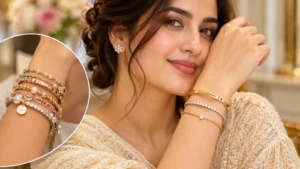
If your tennis bracelet looks too delicate on your wrist, upgrading from 2 mm to 3 mm or 4 mm can make a noticeable difference. A 3 mm tennis bracelet offers a balanced increase in presence without looking overly chunky, while a 4 mm design creates a more substantial sparkle. If you want a bold statement, consider 5 mm or wider.
However, the right upgrade depends on more than width alone. Diamond size, setting style, wrist proportions, bracelet length, and total carat weight all influence how substantial a tennis bracelet looks. Before buying another one, compare these details to make sure your next bracelet delivers the appearance you actually want.
Why Does My Tennis Bracelet Look Too Delicate?
A tennis bracelet can look beautiful in a jewelry display but appear much thinner once you wear it.
This usually happens because small diamonds create a fine, continuous line of sparkle rather than a prominent statement. The bracelet may also look more delicate when you wear it alone instead of stacking it with other jewelry.
Several factors influence its appearance.
- Small diamond size: Smaller stones create a finer and more understated look.
- Narrow overall width: A slim bracelet occupies less visual space on your wrist.
- Lightweight setting: Minimal metalwork can make the bracelet appear finer.
- Wrist proportions: A narrow bracelet may look more subtle on a larger wrist.
- Styling preferences: If you prefer noticeable jewelry, a delicate tennis bracelet may not match your personal style.
If you love the classic tennis bracelet design but want more visual impact, upgrading its width is worth considering.
Which Tennis Bracelet Width Should I Upgrade To?
For someone who finds a 2 mm tennis bracelet too delicate, 3 mm is a sensible first upgrade. Choose 4 mm if you want a more noticeable standalone bracelet, or 5 mm if you prefer a bold jewelry statement.
Here is a practical comparison.
Tennis Bracelet Width Comparison
| Bracelet width | Overall appearance | Best for |
|---|---|---|
| 1.5–2 mm | Very delicate and subtle | Minimalist styling and stacking |
| 2.5 mm | Slightly more noticeable | Everyday understated sparkle |
| 3 mm | Balanced and visible | Everyday wear with more presence |
| 4 mm | Noticeably substantial | Wearing alone as a statement |
| 5 mm | Bold and eye-catching | Larger visual impact |
| 6 mm or wider | Dramatic and prominent | Statement jewelry and special occasions |
These are approximate style categories, not universal industry standards. Retailers may measure the diamond diameter, gemstone width, or entire bracelet setting differently. Always confirm the actual finished width.
2 mm Tennis Bracelet: Is It Too Delicate?
A 2 mm tennis bracelet is a good choice if you prefer understated jewelry.
Its narrow profile makes it easy to wear with a watch, other bracelets, or everyday outfits. It also works well for people who prefer a subtle line of sparkle rather than a prominent diamond bracelet.
However, a 2 mm design may feel underwhelming if you want your bracelet to become the main feature of your wrist.
Upgrade recommendation: If your current 2 mm bracelet looks too delicate, compare 3 mm and 4 mm designs before purchasing.
3 mm Tennis Bracelet: The Best Middle Ground
A 3 mm tennis bracelet is a natural next step for someone who wants more visibility without moving into an oversized design.
It offers a stronger visual presence than a delicate bracelet while keeping the classic tennis bracelet appearance.
Consider 3 mm if:
- Your current 2 mm bracelet feels too thin.
- You want more visible diamonds.
- You prefer a bracelet suitable for everyday and occasional wear.
- You want to wear it alone without making it look excessively bold.
- You still enjoy a refined jewelry style.
Best for: People upgrading from a delicate tennis bracelet who want a noticeable but balanced change.
4 mm Tennis Bracelet: When You Want More Sparkle
A 4 mm tennis bracelet creates a more substantial appearance.
It is a good option when a 3 mm bracelet still feels too understated or when you want your bracelet to stand out without relying on additional layers.
Consider 4 mm if:
- You want your bracelet to become the focal point.
- You prefer larger-looking diamonds.
- You frequently wear your bracelet on its own.
- You want a more noticeable look for dinners, celebrations, and special occasions.
Best for: Buyers who want a visible upgrade and prefer a more luxurious, substantial appearance.
5 mm or Wider: Is Bigger Always Better?
A 5 mm tennis bracelet creates a much bolder look than a delicate diamond line.
It can be an excellent choice if you enjoy statement jewelry. However, a wider bracelet may feel heavier, occupy more wrist space, and cost more depending on its materials and diamond specifications.
Consider a wider design if you deliberately want your bracelet to attract attention.
It may not be the best choice if you prefer minimal jewelry, frequently stack multiple bracelets, or want something particularly discreet for everyday wear.
3 mm vs. 4 mm Tennis Bracelet: Which Upgrade Is Better?
If you are deciding between 3 mm and 4 mm, think about how noticeable you want the difference to be.
| Comparison | 3 mm | 4 mm |
|---|---|---|
| Visual presence | Moderate | More substantial |
| Styling | Versatile | More statement-oriented |
| Wearing alone | Yes | Excellent |
| Stacking | Easier | Can dominate a stack |
| Diamond appearance | Smaller-looking stones in many designs | Larger-looking stones in many designs |
| Budget | Usually lower for comparable construction | Usually higher for comparable construction |
The important distinction is that width alone does not determine quality or price. Diamond characteristics, total carat weight, metal, setting construction, and bracelet length also matter.
My recommendation: Choose 3 mm if you want a subtle upgrade from 2 mm. Choose 4 mm if you already know you want a bracelet that looks noticeably more substantial.
Does Wrist Size Affect Which Tennis Bracelet Width Looks Best?
Yes. Wrist proportions can influence how a tennis bracelet looks.
A bracelet that appears substantial on a smaller wrist may look more understated on a larger wrist. However, there is no universal width rule based on wrist circumference.
Instead of relying only on a size chart, consider the overall proportion of the bracelet against your wrist.
For Smaller Wrists
A 2.5 mm to 3 mm bracelet can provide a balanced increase in presence without overwhelming the wrist.
If you prefer a stronger statement, compare 4 mm designs in person or through accurate on-wrist product photographs.
For Average Wrists
A 3 mm or 4 mm bracelet offers two different styling directions.
Choose 3 mm for everyday versatility. Choose 4 mm if you want a more noticeable standalone piece.
For Larger Wrists
A 4 mm or 5 mm bracelet may create the stronger visual presence you want.
However, the best choice still depends on your personal style and how much wrist coverage you prefer.
Important: Bracelet length and bracelet width are separate measurements. A wider bracelet does not automatically require a longer bracelet. Measure your wrist independently to determine the correct fit.
Does Diamond Size Matter More Than Bracelet Width?
Diamond size plays a major role in how substantial a tennis bracelet appears.
Two bracelets advertised with similar overall widths can look different because they use different stone sizes, settings, and amounts of visible metal.
For example, one design may use individually prominent round diamonds, while another may use smaller stones with additional metalwork.
When comparing bracelets, check these details:
- Individual diamond size: Ask for the measurements of the stones.
- Total carat weight: Check the combined weight of all diamonds.
- Diamond count: More stones do not automatically mean larger-looking diamonds.
- Setting style: Prong, bezel, and channel settings create different visual effects.
- Finished bracelet width: Confirm the actual outside measurement rather than relying only on the product title.
The Gemological Institute of America explains that melee diamonds are used in bracelets and other jewelry to create sparkle and decorative patterns. It also highlights the importance of matching stone sizes and maintaining proper setting construction.
Read GIA’s guide: Melee: Building Blocks of Contemporary Design.
How Total Carat Weight Changes the Look of a Tennis Bracelet
Total carat weight, commonly written as CTW or TCW, represents the combined weight of the diamonds in a bracelet.
It is useful when comparing two similar designs, but it should never be your only buying criterion.
Imagine two bracelets with the same total carat weight.
One may contain many smaller diamonds, while another may contain fewer, larger diamonds. Their appearance can be quite different.
Before upgrading, compare:
- Total diamond carat weight.
- Individual diamond measurements.
- Number of diamonds.
- Overall bracelet width.
- Diamond shape and setting style.
A bracelet with a higher total carat weight is not automatically the better choice. The finished design needs to match the appearance you want.
Which Setting Style Makes a Tennis Bracelet Look More Substantial?
The setting affects how much of each diamond is visible and how the bracelet looks from different angles.
Prong-Set Tennis Bracelets
Prong settings use small metal supports to hold individual diamonds.
They allow more of the diamond to remain visible and are popular for traditional diamond tennis bracelets.
If you want a classic line of visible diamonds, compare prong-set designs.
Bezel-Set Tennis Bracelets
Bezel settings surround each diamond with a metal rim.
They create a more defined outline around the stones and offer a smoother profile.
This can be appealing if you prefer a modern look or want additional protection around the edges of the gemstones.
Channel-Set Tennis Bracelets
Channel settings secure diamonds between parallel metal walls.
They create a smooth, streamlined appearance without individual prongs projecting around each stone.
This style is worth considering if you prefer a cleaner design with less exposed metalwork.
GIA explains the visual and structural differences between these setting styles in its Tennis Bracelet Buying Guide.
Should I Upgrade to Natural or Lab-Grown Diamond Tennis Bracelet?
If you are replacing a delicate tennis bracelet with a wider design, diamond origin is another decision worth considering.
Both natural and lab-grown diamonds are real diamonds. Their origin differs, but their appearance can be comparable when their relevant quality characteristics are similar.
Natural Diamond Tennis Bracelets
Natural diamond bracelets appeal to shoppers who prefer diamonds formed naturally in the Earth.
Consider this option if natural origin is important to you and fits your purchasing budget.
Lab-Grown Diamond Tennis Bracelets
Lab-grown diamond bracelets can be attractive if you want to explore a wider design while managing your budget.
Some shoppers choose lab-grown diamonds because they want to allocate more of their budget toward larger stones or a more substantial overall design.
Which Should You Choose?
There is no universally better choice.
Compare the actual diamond specifications, metal, craftsmanship, warranty, and return policy.
Do not assume that a bracelet is a better purchase simply because it has a higher total carat weight or a lower price.
How Much Does It Cost to Upgrade to a Wider Tennis Bracelet?
The price of a tennis bracelet can increase as its width and diamond weight increase.
However, the difference depends on the construction and materials of the specific bracelet.
Important cost factors include:
- Natural or lab-grown diamond origin.
- Total carat weight.
- Individual diamond size.
- Diamond color and clarity.
- Gold or platinum setting.
- Metal weight and craftsmanship.
- Bracelet length.
- Clasp and safety mechanism.
A 4 mm bracelet may cost more than a comparable 3 mm bracelet because it can require larger or more substantial stones and additional metal.
However, two bracelets with the same advertised width may have very different prices.
Smart buying tip: Compare bracelets with similar metal, diamond origin, diamond quality, length, and setting before deciding which offers better value.
Can I Upgrade My Existing Tennis Bracelet Instead of Buying a New One?
Possibly, but it depends on the original bracelet’s construction.
A jeweler may be able to repair, resize, or modify certain bracelets. However, increasing the width of an existing diamond tennis bracelet is not always practical.
A tennis bracelet consists of multiple connected stone settings. Its proportions, links, and flexibility must work together.
Making it wider may require rebuilding the bracelet rather than simply replacing a few diamonds.
Before spending money on modifications, ask a qualified jeweler to inspect:
- The condition of the existing links.
- The security of the diamond settings.
- The metal thickness.
- The clasp and safety mechanism.
- Whether the existing design can accommodate larger stones.
- The total cost compared with buying a new bracelet.
If the modification requires extensive reconstruction, purchasing a new bracelet may be the more practical option.
Celebrity Tennis Bracelet Inspiration: Meghan Markle and Princess Diana
If you want inspiration for a more substantial diamond bracelet, celebrity jewelry offers interesting styling examples.
One particularly meaningful example is the Cartier diamond tennis bracelet associated with Princess Diana.
Meghan Markle wore the bracelet during her 2021 interview with Oprah Winfrey. CBS News reported that the bracelet belonged to Diana’s personal collection and that Prince Harry had previously removed two diamonds from it to create Meghan’s engagement ring.
This makes the bracelet more than a fashion accessory. It carries a personal connection between Diana, Prince Harry, and Meghan.
You can read the original reporting from CBS News.
For another perspective, British Vogue’s coverage of Meghan’s jewelry discusses the significance of wearing Diana’s bracelet.
The useful styling lesson is simple: a diamond tennis bracelet can work as a standalone jewelry piece rather than always needing to be stacked with other bracelets.
What Should I Check Before Buying a Wider Tennis Bracelet?
Before upgrading, compare more than the product photograph.
Use this checklist to avoid purchasing another bracelet that feels too delicate.
- Confirm the exact finished bracelet width in millimeters.
- Check the size of each individual diamond.
- Compare total diamond carat weight.
- Check the diamond origin: natural or lab-grown.
- Review the metal type and karat.
- Compare the setting style.
- Check bracelet length and wrist fit.
- Inspect the clasp and safety mechanism.
- Review the retailer’s return and resizing policies.
- Ask for additional on-wrist photographs or a video.
- Compare the bracelet against your current one.
If possible, view the bracelet from the top, side, and on a wrist. These angles help you understand its actual proportions.
Final Words
If your current tennis bracelet looks too delicate, moving up to 3 mm or 4 mm is a sensible place to start.
Choose 3 mm if you want a noticeable improvement while maintaining a refined everyday look.
Choose 4 mm if you want your bracelet to stand out more when worn alone.
Choose 5 mm or wider if you prefer bold statement jewelry and want a much more prominent appearance.
Most importantly, compare the finished width, individual diamond size, total carat weight, and setting construction. The right bracelet is not necessarily the widest or most expensive one. It is the one that delivers the visual presence, comfort, and quality you actually want.
Frequently Asked Questions
Is 2 mm too thin for a tennis bracelet?
No. A 2 mm tennis bracelet is a legitimate delicate jewelry style. It may simply feel too subtle if you prefer more visible diamonds and a stronger standalone appearance.
Is 3 mm a good tennis bracelet width?
Yes. A 3 mm tennis bracelet is a practical middle ground for someone who wants more presence than a delicate 2 mm design without choosing an especially bold bracelet.
Is a 4 mm tennis bracelet too big for everyday wear?
Not necessarily. A 4 mm bracelet can work for everyday styling if you enjoy more substantial jewelry and find the fit comfortable. Consider its weight, setting, and your daily activities before buying.
What is the difference between a 3 mm and 4 mm tennis bracelet?
A 4 mm bracelet has a greater advertised width and generally creates a more substantial appearance. However, the visual difference also depends on the diamond size, setting, and how the retailer measures width.
Does a wider tennis bracelet have more diamonds?
Not always. A wider bracelet may use larger diamonds, more metal, or a different setting arrangement. Check the diamond count and individual stone measurements rather than assuming width determines the number of diamonds.
Does a wider tennis bracelet have a higher total carat weight?
It often can, but not necessarily. Total carat weight depends on the size and number of diamonds, while overall width also depends on the setting and metal construction.
Can I wear a 3 mm tennis bracelet with a watch?
Yes. A 3 mm tennis bracelet can complement a watch and create a balanced wrist stack. Consider the watch case size and bracelet proportions to avoid an overcrowded appearance.
Should I buy a 3 mm or 4 mm tennis bracelet as an upgrade?
Choose 3 mm if you want a modest but noticeable improvement. Choose 4 mm if your main goal is a stronger visual presence and a more substantial standalone bracelet.
How do I know if my tennis bracelet fits correctly?
A tennis bracelet should move comfortably without sliding excessively around your wrist or becoming tight. Measure your wrist and check the retailer’s sizing guidance before ordering. The correct amount of movement depends on the bracelet design and your preference.
Is it worth replacing a delicate tennis bracelet?
It can be worth upgrading if you consistently find your current bracelet too subtle. However, compare repair or modification costs with the price of a new bracelet before making your decision.