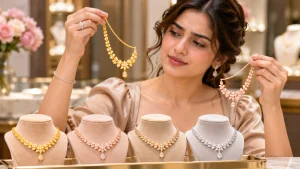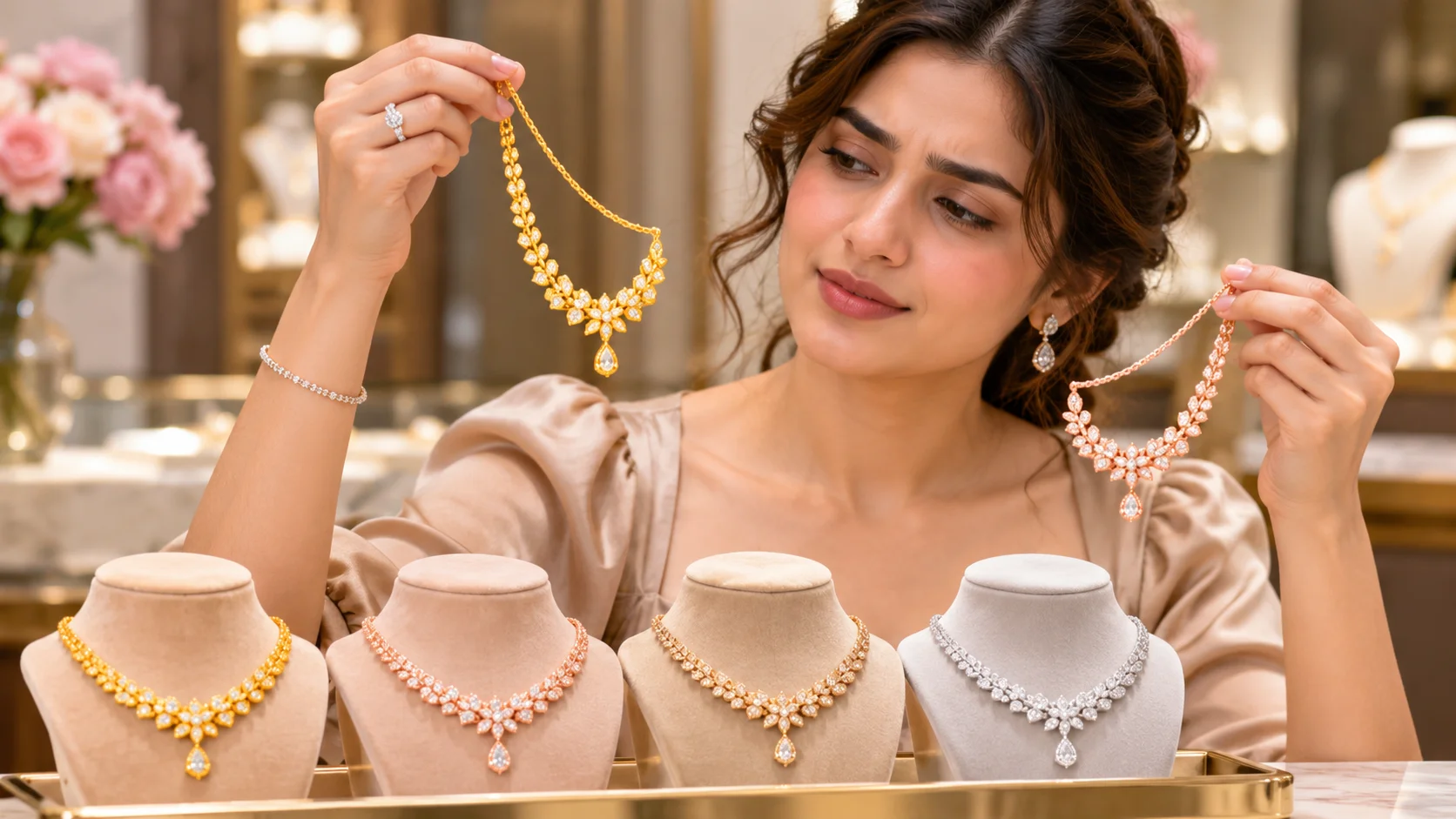
If your gold jewelry looks too yellow, you don’t necessarily need to stop wearing gold. You may simply prefer a softer or cooler metal color. White gold is a good choice if you want a bright, silver-like appearance. Rose gold offers a subtle pink warmth, while champagne gold provides a softer golden look. Platinum is another option if you want a naturally white precious metal.
The best choice depends on how much you want to move away from traditional yellow gold, what jewelry you already own, and how much maintenance you’re comfortable with. Before buying another ring, necklace, or bracelet, compare the different metal colors and consider how they will look together.
Which Gold Color Should You Choose If Yellow Gold Looks Too Yellow?
The right replacement depends on what you dislike about your current jewelry.
You might find traditional yellow gold too bright, too warm, or simply difficult to coordinate with your everyday outfits. Each alternative offers a different appearance.
Here is a quick comparison:
| Gold color | Overall appearance | Best for |
|---|---|---|
| White gold | Bright, cool, silvery-white | People who prefer silver-colored jewelry |
| Rose gold | Soft pink or blush | People who want warmth without strong yellow tones |
| Champagne gold | Muted, subtle golden shade | People who still like gold but want something less bright |
| Platinum | Naturally white or silvery | People who want a white precious metal without rhodium plating |
| Mixed metals | Combination of different metal colors | People who don’t want to choose just one |
My recommendation: If you want a noticeable change, start with white gold. If you still enjoy warm jewelry but dislike bright yellow, try rose or champagne gold instead.
Why Does Your Gold Jewelry Look Too Yellow?
Gold has a naturally yellow color. Jewelers mix pure gold with other metals to create alloys that are suitable for jewelry.
The metals used in the alloy influence both the jewelry’s strength and its final color.
For example:
- Yellow gold commonly combines gold with copper, silver, and sometimes zinc.
- White gold combines gold with white metals such as palladium or nickel.
- Rose gold gets its pinkish appearance from a higher proportion of copper.
- Champagne gold uses a different alloy formulation to create a muted golden appearance.
Gold purity also affects the final appearance.
A 24K piece contains approximately 100% gold, while 18K contains 75% gold and 14K contains approximately 58.3% gold.
Generally, higher-purity yellow gold has a richer yellow appearance. However, the exact shade also depends on the alloy recipe.
This means switching from 18K yellow gold to 14K yellow gold might give you a somewhat different shade, but it won’t necessarily create the cooler appearance you’re looking for.
If you want a completely different color, choosing another gold alloy is usually a more effective solution.
1. White Gold: Best If You Want a Cooler, Brighter Appearance
White gold is probably the most straightforward alternative if you no longer enjoy the strong yellow appearance of traditional gold jewelry.
It has a cool, silvery-white appearance that works well with contemporary jewelry designs.
White gold is created by mixing gold with white metals such as palladium or nickel. Most white gold jewelry also receives a rhodium coating to achieve a brighter, more reflective finish.
Why Choose White Gold?
- Creates a cooler appearance than traditional yellow gold.
- Pairs naturally with silver-colored and platinum jewelry.
- Works well with modern, minimalist, and diamond-focused designs.
- Offers a precious-metal alternative to platinum.
- Available in different karat options.
White gold can be particularly appealing if most of your wardrobe includes cooler colors or if you regularly wear silver jewelry.
What Should You Know Before Buying?
White gold requires more maintenance than unplated yellow or rose gold.
The rhodium coating can gradually wear away through everyday use. When this happens, the underlying white-gold alloy may appear warmer or slightly yellow.
A jeweler can restore its bright appearance through professional rhodium replating.
If you prefer a white-metal appearance but don’t want this additional maintenance, consider platinum.
For a closer comparison, read White Gold vs Yellow Gold: Which Is Better for an Engagement Ring?.
Best for: Anyone who wants to move away from yellow gold and prefers a bright, modern jewelry appearance.
2. Rose Gold: Best If You Still Like Warm Jewelry
If white gold feels too cool or similar to silver, rose gold might be a better alternative.
Rose gold has a pinkish or blush appearance. Its color comes primarily from copper mixed with gold.
Unlike traditional yellow gold, rose gold offers warmth without the strong golden-yellow appearance.
Why Choose Rose Gold?
- Offers a softer alternative to traditional yellow gold.
- Creates a distinctive pinkish appearance.
- Works beautifully with vintage-inspired and romantic designs.
- Pairs well with many gemstone colors.
- Can be combined with white and yellow gold.
Rose gold is also a useful choice if you want something different without moving completely toward silver-colored jewelry.
What Should You Know Before Buying?
Rose gold’s appearance depends on its alloy composition.
Some pieces have a subtle pink tone, while others have a more noticeable reddish or copper appearance.
Its copper content can also make the alloy somewhat harder than certain yellow-gold alloys of the same karat. However, durability depends on the complete alloy formulation and karat, not color alone.
If you have sensitive skin or known metal allergies, ask the jeweler about the exact alloy composition.
Best for: People who still enjoy warm jewelry but want something softer, more distinctive, and less yellow.
You can also compare Rose Gold vs Yellow Gold before deciding.
3. Champagne Gold: Best If You Want a Softer Golden Appearance
Not everyone who dislikes yellow gold wants to switch to white or pink jewelry.
Some people still enjoy gold’s warmth but prefer something more understated.
That’s where champagne gold becomes interesting.
Champagne gold generally refers to a muted, softer golden shade rather than the bright yellow appearance associated with traditional yellow gold.
Its exact color and composition can vary between jewelers and manufacturers.
Why Choose Champagne Gold?
- Offers a more subtle golden appearance.
- Keeps some of the warmth of traditional gold.
- Can complement understated and contemporary designs.
- Provides a middle ground between bright yellow and cooler white metals.
Champagne gold may be particularly appealing if your current jewelry feels too bright or visually dominant.
What Should You Know Before Buying?
Champagne gold is not a universally standardized alloy color.
Different manufacturers may use different metal combinations to achieve their preferred shade.
Before purchasing, ask the jeweler:
- Is the color achieved through a solid gold alloy or surface plating?
- What is the gold karat?
- Will the color change with regular wear?
- Is the piece available in different shades?
Don’t assume every jewelry retailer uses the same champagne-gold formulation.
Best for: People who want to keep the appearance of gold but prefer a more muted, understated shade.
4. Platinum: Best If You Want Naturally White Jewelry
If your main problem with yellow gold is its warm appearance, platinum deserves consideration.
Platinum is naturally white. Unlike most white gold jewelry, it doesn’t rely on rhodium plating to create its characteristic color.
This makes it an interesting alternative for people who want a consistent white-metal appearance.
Why Choose Platinum?
- Naturally white appearance.
- Does not need rhodium plating to maintain its color.
- Dense and substantial feel.
- Works beautifully with diamond and gemstone jewelry.
- Complements other cool-toned accessories.
What Should You Know Before Buying?
Platinum generally costs more than comparable gold jewelry, although the actual price depends on metal weight, design, purity, and retailer.
It also develops a surface patina as it experiences everyday wear.
Some people enjoy this softer, slightly aged appearance. Others prefer periodic professional polishing to restore a brighter finish.
Platinum is not completely maintenance-free, but it avoids the specific rhodium-replating requirement associated with most white gold.
For a detailed comparison, see White Gold vs Platinum: Which Is Better for an Engagement Ring?.
Best for: People who want a naturally white precious metal and are comfortable with a potentially higher purchase price.
5. Mixed Metals: Best If You Don’t Want to Give Up Yellow Gold
What if you like your existing yellow-gold jewelry but simply don’t want every new purchase to look the same?
You don’t have to choose one metal color for everything.
Mixed-metal jewelry combines different metal shades in one design or across multiple pieces.
For example, you could wear:
- A white-gold engagement ring with a yellow-gold necklace.
- Rose-gold earrings with a white-gold bracelet.
- A yellow-gold ring alongside a white-gold band.
- A combination of yellow, white, and rose-gold rings.
Why Choose Mixed Metals?
- Makes it easier to coordinate old and new jewelry.
- Creates contrast without looking completely disconnected.
- Gives you more flexibility when buying future pieces.
- Works with both classic and contemporary styling.
If you already own several yellow-gold pieces, mixed-metal jewelry can be a practical transition rather than replacing your entire collection.
For more ideas, explore the Ring Stacking Guide.
Best for: People who enjoy different jewelry colors and don’t want to commit to just one metal.
White Gold vs Rose Gold vs Champagne Gold: Which Should You Choose?
These three options are worth comparing because they offer different ways to move away from bright yellow gold.
| Feature | White Gold | Rose Gold | Champagne Gold |
|---|---|---|---|
| Main appearance | Silvery-white | Pink or blush | Muted golden |
| Warmth | Cool | Warm | Soft warm |
| Main alloy characteristic | White metals | Higher copper content | Varies by manufacturer |
| Rhodium plating | Usually | Not normally required | Depends on product |
| Maintenance | May need replating | Routine jewelry care | Depends on alloy and finish |
| Best style | Modern and minimalist | Romantic and vintage | Understated and contemporary |
Which Is the Best Overall Choice?
There isn’t one answer for everyone.
Choose white gold if your goal is to move as far away from yellow tones as possible.
Choose rose gold if you want a different color while keeping some warmth.
Choose champagne gold if you still love gold but prefer a softer appearance.
If you want a naturally white precious metal without rhodium plating, consider platinum instead.
Can You Change the Color of Your Existing Gold Jewelry?
Yes, sometimes. However, the right solution depends on the jewelry’s construction, material, and current condition.
If you have a yellow-gold ring that you no longer enjoy wearing, speak with a professional jeweler before replacing it.
Here are some possibilities:
1. Replating or Applying a Different Surface Finish
A jeweler may be able to apply a different metal coating to suitable jewelry.
For example, rhodium plating can create a bright white appearance over a suitable jewelry surface.
However, plating is a surface treatment, not a permanent change to the underlying gold alloy.
The coating can wear away over time, particularly on frequently worn rings.
2. Resetting the Gemstone Into a Different Metal
If you own a diamond or gemstone ring that you love but dislike its yellow-gold setting, resetting the stone may be worth considering.
A jeweler can assess whether the existing stone can be transferred into a new white-gold, rose-gold, or platinum setting.
This can preserve the gemstone while changing the overall appearance.
3. Selling or Replacing the Jewelry
Sometimes, replacing the piece makes more sense.
This may be the better option if the jewelry is damaged, unsuitable for modification, or simply no longer matches your style.
Before selling old gold jewelry, obtain an independent assessment and compare offers. The resale amount may differ from the original purchase price.
What Should You Check Before Buying Your Next Gold Jewelry?
Changing the color of your jewelry is only one part of the decision.
Before buying, consider these five things.
1. Check the Karat
Gold color and gold purity are two different things.
A 14K white-gold ring and a 14K yellow-gold ring both contain approximately 58.3% pure gold.
The difference is in their alloy composition and appearance.
Don’t choose a lower karat simply because you want a less yellow color. Choose the color and purity that match your priorities.
2. Consider Your Existing Jewelry
Look at the pieces you wear most often.
If you regularly wear silver watches, white-metal earrings, and platinum-colored accessories, white gold may fit naturally into your collection.
If you still enjoy warm colors, rose or champagne gold may be a better transition.
3. Understand Maintenance Requirements
Different metal colors have different maintenance considerations.
White gold commonly needs occasional rhodium replating.
Yellow and rose gold don’t need this coating to maintain their natural color, although they still require normal cleaning and care.
Platinum can develop a patina that some people prefer to polish.
4. Compare the Total Budget
The color alone doesn’t determine the final jewelry price.
Gold purity, metal weight, gemstones, craftsmanship, and brand can all affect the cost.
Rose and yellow gold of the same karat and comparable construction generally have similar underlying gold content.
White gold prices also depend on the alloy and finishing process. Platinum may require a higher budget.
If you are comparing actual products, look at the complete specifications rather than choosing based on metal color alone.
5. Ask About Allergies and Metal Composition
Some white-gold alloys contain nickel. Rose and yellow gold may also contain copper or other alloying metals.
If you have a known metal allergy, ask the jeweler for the exact alloy composition before purchasing.
Don’t assume a particular gold color is automatically hypoallergenic.
A Celebrity-Inspired Idea: Why Mixed-Metal Jewelry Can Work
If you’re unsure about moving completely away from yellow gold, look at the idea behind mixed-metal jewelry.
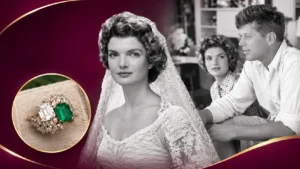
Audrey Hepburn’s engagement ring story is a useful example of how different gold colors can be worn together in a coordinated set.
Rather than relying on one metal color, a combination of white, yellow, and rose gold can create contrast while keeping the overall design cohesive.
The important lesson isn’t that you need to copy a celebrity’s jewelry. It’s that different metal colors don’t have to compete with each other.
A carefully balanced combination can give your collection more variety without making your existing yellow-gold pieces feel outdated.
You can read more about the Audrey Hepburn engagement ring for additional inspiration.
Frequently Asked Questions
What is the best gold color if yellow gold looks too yellow?
White gold is a strong choice if you want a cooler, brighter appearance. Rose gold is better if you still prefer warmth, while champagne gold offers a softer golden alternative.
Does 14K gold look less yellow than 18K gold?
Often, yes, because 14K gold contains a lower proportion of pure gold. However, the exact appearance depends on the alloy metals used. Switching karat alone does not guarantee a particular color.
Is white gold actually white?
White gold is an alloy made by mixing gold with white metals. Its natural appearance can retain a slight warm tone. Most white-gold jewelry receives rhodium plating to achieve a brighter white finish.
Does rose gold look yellow?
No. Rose gold generally has a pink, blush, or reddish appearance because of its copper content. However, the exact shade varies with the alloy formulation.
Is champagne gold better than yellow gold?
Neither is objectively better. Champagne gold is a good option if you prefer a softer, muted golden appearance. Traditional yellow gold is better if you enjoy a more recognizable golden color.
Is platinum better than white gold?
Platinum is a good choice if you want naturally white metal without rhodium replating. White gold may be more affordable, depending on the jewelry design and specifications. Both have different maintenance considerations.
Can I mix yellow gold with white gold?
Yes. Yellow and white gold can be worn together in rings, necklaces, bracelets, and earrings. Repeating one of the metal colors elsewhere in your outfit can help create a balanced appearance.
Will white gold turn yellow over time?
White gold can appear warmer as its rhodium coating wears away. A jeweler can restore its bright appearance by professionally replating the jewelry.
Can a jeweler turn yellow gold into white gold?
A jeweler may be able to apply rhodium plating to suitable yellow-gold jewelry, but this doesn’t turn the underlying alloy into white gold. The coating can wear away, and the original color may become visible again.
Which gold color is easiest to maintain?
Yellow and rose gold generally require less color-specific maintenance because their color comes from the alloy itself. White gold may need rhodium replating, while platinum can develop a surface patina.
Final Thoughts: Don’t Buy Another Yellow-Gold Piece If You Don’t Love the Color
If your gold jewelry looks too yellow, your next purchase doesn’t have to be another traditional yellow-gold piece.
Start by deciding how much you want to change the appearance.
White gold is a good direction if you prefer cooler jewelry. Rose gold offers a softer, warmer alternative. Champagne gold keeps the golden character but reduces the bright yellow appearance. Platinum is worth considering if you want naturally white precious metal.
And if you still enjoy your existing yellow-gold pieces, mixed-metal jewelry gives you the flexibility to wear different colors together.
The best next purchase is not necessarily the most popular metal. It’s the one whose color you will genuinely enjoy wearing.