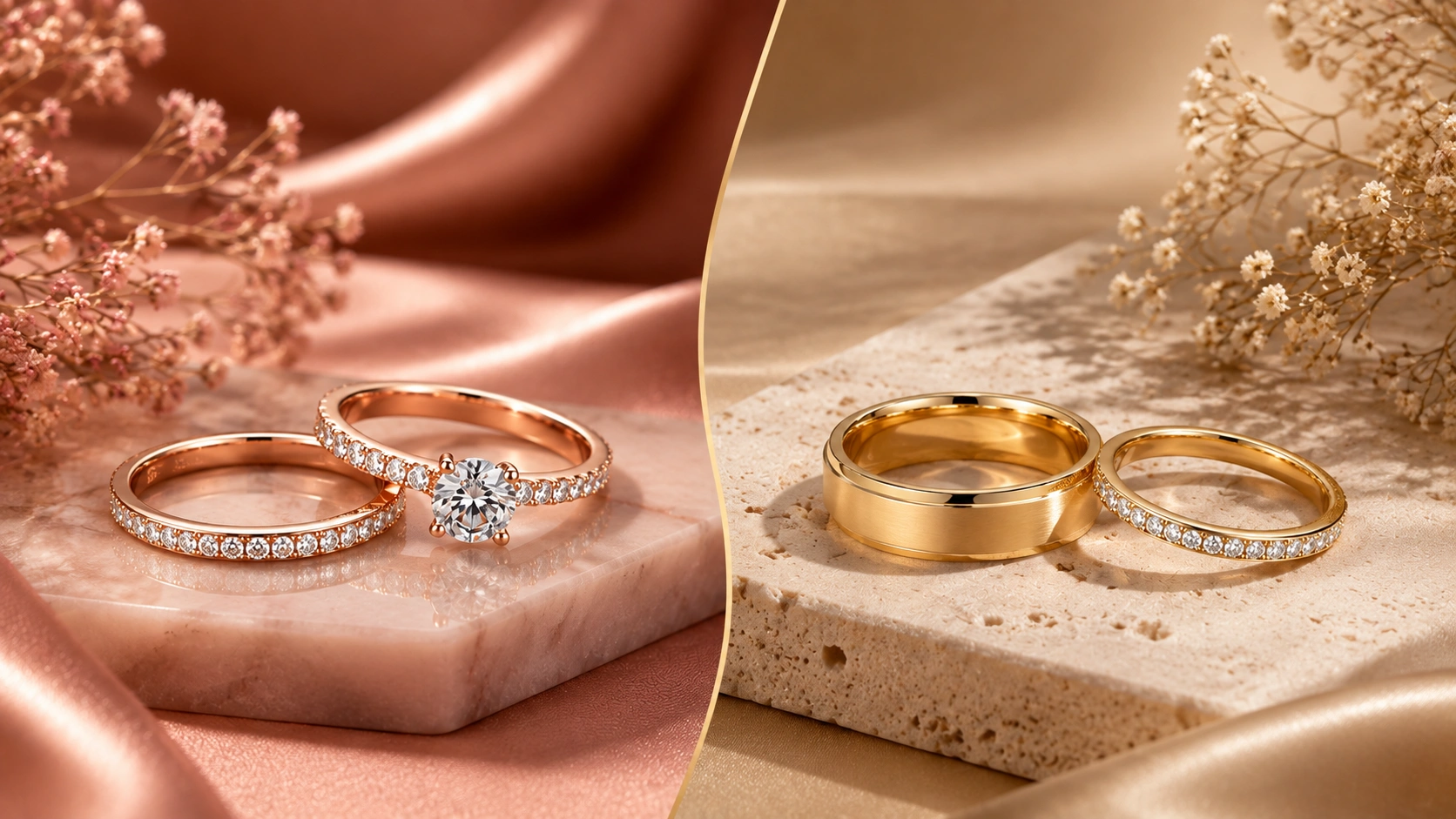
Choosing between rose gold and yellow gold comes down to more than color. The two metals have different alloy compositions, visual effects, styling characteristics, and practical considerations that can change how an engagement ring looks and wears over time.
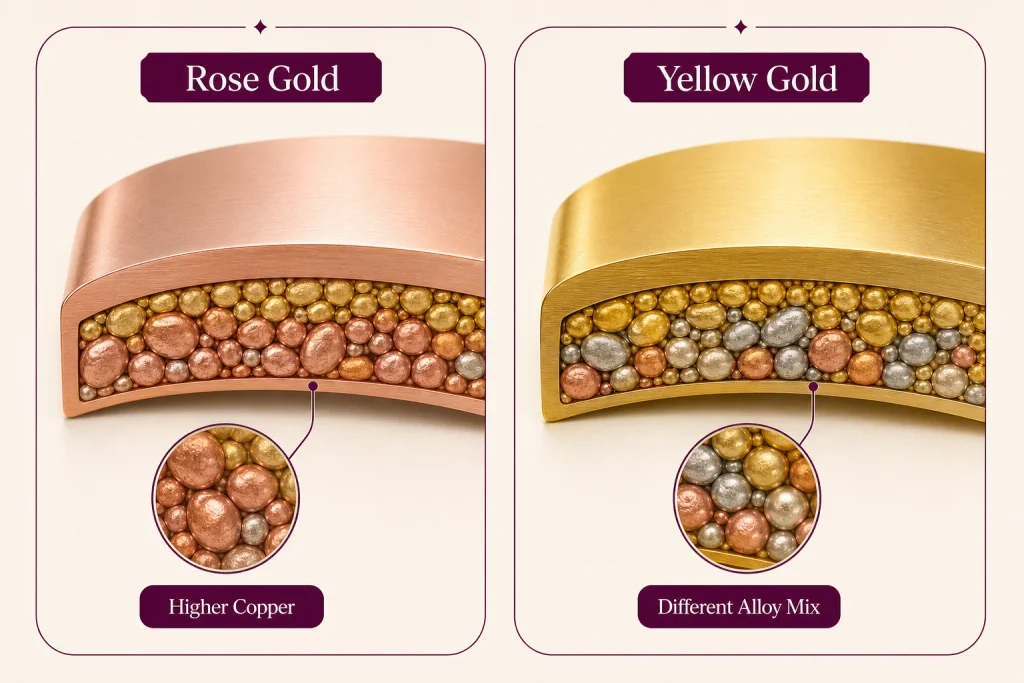
Rose gold has a pink or blush tone created by a higher proportion of copper in the alloy. Yellow gold keeps the traditional golden appearance associated with gold jewelry and is typically alloyed with metals such as silver, copper, and zinc. At the same karat, both contain the same amount of pure gold, so the choice is primarily about appearance, alloy composition, durability, and personal preference.
If you want a classic, traditional appearance, yellow gold is the natural choice. If you prefer something warmer but softer-looking and more distinctive, rose gold may be a better fit.
Rose Gold vs Yellow Gold at a Glance
| Factor | Rose Gold | Yellow Gold |
|---|---|---|
| Color | Pink, blush, or rosy | Warm yellow |
| Main alloy characteristic | Higher copper content | Typically a mix of copper, silver, and zinc |
| Overall style | Romantic, soft, distinctive | Classic, timeless, traditional |
| Durability at the same karat | Generally harder because of copper | Generally softer |
| Price at the same karat | Usually similar | Usually similar |
| Warm skin undertones | Works well | Especially complementary |
| Cool or neutral undertones | Often flattering | Creates stronger contrast |
| Diamond appearance | Can create warm or rosy reflections | Can create warm yellow reflections |
| Best for | Romantic, vintage-inspired, and unconventional styles | Classic, vintage, and traditional designs |
The most important point is that neither metal is universally better. The right choice depends on the look you want and how you want the ring to interact with the diamond and your existing jewelry.
What Is Rose Gold?
Rose gold is a gold alloy that gets its pinkish color primarily from copper. The exact shade depends on the proportions of gold and other alloy metals. More copper generally produces a stronger rosy or reddish appearance.
Rose gold is available in different karats, including 10K, 14K, and 18K. A 14K rose gold ring contains about 58.3% gold, while 18K rose gold contains 75% gold. The remaining material consists of alloying metals.
The result is a warm metal color that sits between traditional yellow gold and cooler white metals visually.
What Does Rose Gold Look Like?
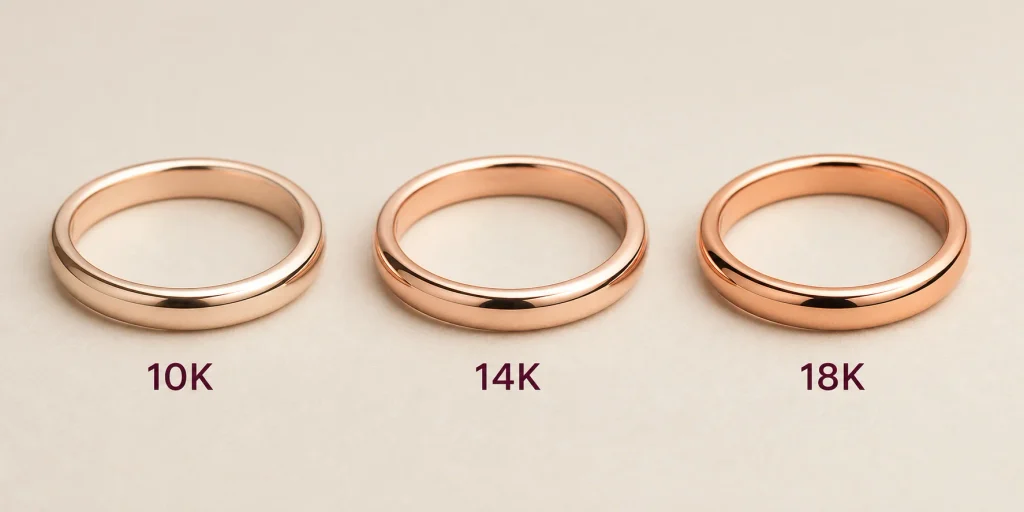
Rose gold can range from a subtle blush to a noticeably pink or coppery tone. Its appearance is influenced by the alloy mixture, karat, lighting, and the surrounding stones.
This makes it particularly useful when you want the metal to be part of the ring’s visual identity rather than simply a neutral setting for the diamond.
Rose gold also works well with warm-colored gemstones and pink-toned stones. It can create a softer overall appearance than yellow gold while still retaining the warmth associated with gold jewelry.
What Is Yellow Gold?
Yellow gold is the traditional gold color most people associate with fine jewelry. Pure gold is naturally yellow, but pure 24K gold is generally too soft for an engagement ring, so it is combined with other metals to increase strength and improve its suitability for everyday wear.
Common choices for engagement rings include 14K and 18K yellow gold.
For a deeper look at how purity affects the metal, compare 14K and 18K gold.
Yellow gold has remained popular because it works with a wide range of ring styles. It can look equally natural in a simple solitaire, a vintage-inspired setting, or a more elaborate design.
Rose Gold vs Yellow Gold: Main Differences
1. Color and Appearance
This is the most obvious difference.
Yellow gold has a rich golden appearance. It tends to make an engagement ring look traditional, warm, and visually recognizable as gold.
Rose gold has a pink or blush tone. It generally gives the same ring design a softer and more distinctive appearance.
If you put identical engagement rings next to each other and change only the metal, the difference can be surprisingly noticeable. The setting’s shape stays the same, but the overall personality of the ring changes.
Choose yellow gold if you want:
- A classic gold appearance
- A traditional engagement ring aesthetic
- Strong contrast between the metal and a lighter diamond
- A metal that coordinates easily with other yellow-gold jewelry
Choose rose gold if you want:
- A pink or blush-toned metal
- A softer visual effect
- A more individual look
- A romantic or vintage-inspired feel
2. Durability
Rose gold is often somewhat harder than yellow gold of the same karat because of its higher copper content. However, durability still depends heavily on karat.
For example, a lower-karat yellow gold can be harder than a higher-karat rose gold. So it is misleading to say that rose gold is always more durable than yellow gold.
For engagement rings that will be worn every day, karat is therefore just as important as color.
If you’re deciding between different gold purities, 10K vs 14K gold can help explain the trade-offs.
3. Price
Rose gold and yellow gold of the same karat generally have similar prices because the color itself does not determine the amount of pure gold in the alloy.
A 14K rose gold ring and a 14K yellow gold ring with otherwise identical specifications should therefore be relatively close in metal value.
Large price differences usually come from other factors, such as:
- Diamond size and quality
- Ring design
- Setting complexity
- Number of accent stones
- Brand or jeweler
- Amount of metal used
So choosing rose gold does not automatically mean paying more.
4. Skin Tone
Skin tone can be useful when choosing between the two, but it should not be treated as a strict rule.
Rose gold has a warm pink tone that can complement many complexions. Its softer color can blend naturally with the skin rather than creating a strong visual contrast.
Yellow gold has a stronger golden tone and is particularly harmonious with warm or golden undertones. It can also create striking contrast against cooler skin tones. GIA notes that yellow gold tends to complement warmer undertones, while rose gold works across a broad range of complexions.
The easiest test is still the most reliable: look at both metals against your hand in natural light.
5. How Each Metal Affects a Diamond
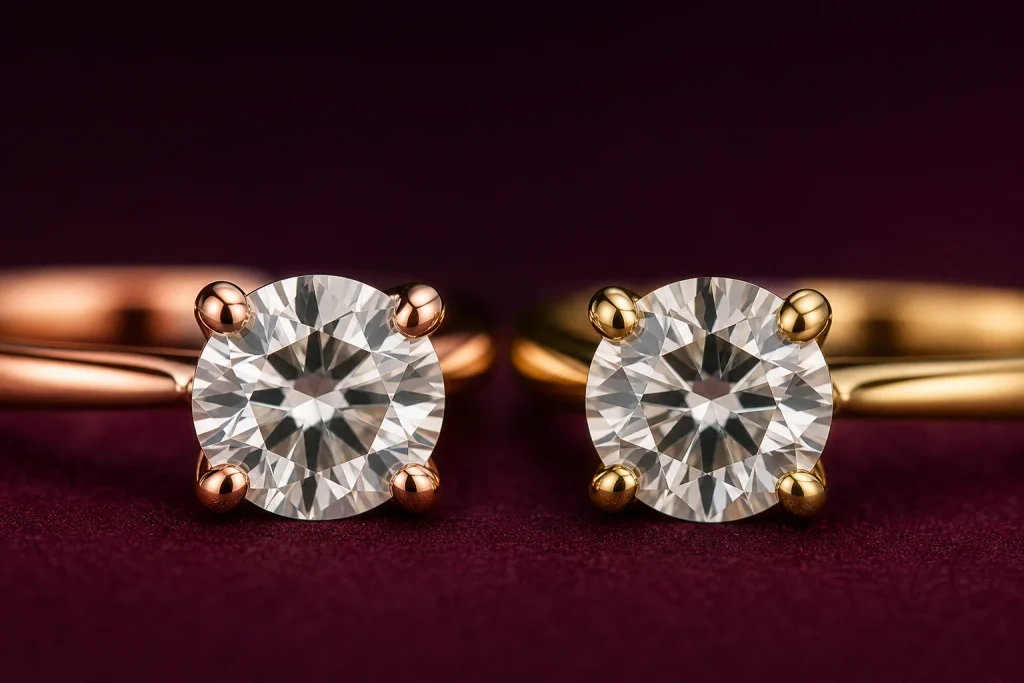
The metal surrounding a diamond can influence its appearance because diamond facets reflect nearby colors. Yellow gold can introduce warm yellow reflections, while rose gold can produce pinkish reflections.
This becomes particularly relevant when choosing a diamond with noticeable body color.
A colorless or near-colorless diamond can create strong contrast against either metal. A warmer diamond can look more intentionally coordinated when paired with a warm-toned setting.
If diamond color is part of your decision, see the best diamond color for an engagement ring before choosing the setting.
You can also learn more about how the stone itself is evaluated with the 4Cs of diamond quality.
Which Looks More Traditional?
Yellow gold wins if traditional style is your priority.
Its recognizable golden color has been used in jewelry for centuries, and it naturally suits classic engagement ring designs. It is particularly effective when paired with vintage-inspired details, simple settings, and traditional diamond shapes.
Rose gold is less conventional. It can still look timeless, but its pink tone makes the ring feel more distinctive.
That does not mean rose gold is only suitable for trendy designs. Its warm color can work beautifully with vintage-inspired settings as well.
Which Is Better for Vintage Engagement Rings?
Both can work, but they create different effects.
Yellow gold has a particularly natural connection with traditional and vintage jewelry. Its golden color can reinforce the aged or heirloom character of a ring.
Rose gold can produce a softer vintage appearance, especially when paired with intricate details, milgrain, filigree, or antique-inspired settings.
If you’re specifically comparing historical styles, vintage vs antique engagement rings offers a useful next step.
Which Is Easier to Maintain?
Neither metal is maintenance-free.
Everyday wear can lead to scratches, surface marks, and buildup of dirt and oils. Both benefit from regular cleaning and sensible care.
Rose gold’s copper content can contribute to a natural patina over time. Some people like this aged appearance, while others prefer the brighter finish of freshly polished jewelry.
For everyday care, follow appropriate cleaning methods rather than relying on abrasive products.
You can learn more about maintaining gold jewelry with how to clean gold rings.
If you’re specifically concerned about changes in rose gold’s appearance, see does rose gold tarnish?.
What About Allergies?
The alloy metals matter if you have known metal sensitivities.
Rose gold commonly contains a relatively high proportion of copper. Yellow gold can also contain copper, silver, zinc, or other alloy metals depending on the formulation.
If you have experienced reactions to jewelry before, check the exact alloy composition rather than choosing based only on the color of the metal.
Rose Gold vs Yellow Gold: Which Should You Choose?
There is no objective winner.
Choose rose gold if:
- You prefer pink or blush tones
- You want a less conventional engagement ring
- You like romantic or vintage-inspired styling
- You want a warm metal with a softer visual effect
- You already wear jewelry that complements rose tones
Choose yellow gold if:
- You want the classic gold appearance
- You prefer traditional engagement ring styling
- You like strong warmth and contrast
- You already wear yellow-gold jewelry
- You want maximum versatility across classic and vintage designs
If you’re still undecided, compare the metals alongside other common options in the engagement ring metals guide.
Can You Wear Rose Gold and Yellow Gold Together?
Yes. You do not have to choose one metal for every piece of jewelry you wear.
Combining rose gold and yellow gold can create contrast while keeping the overall look warm. This can work especially well with stacked rings, mixed-metal wedding sets, or jewelry collections that already contain both colors.
The key is consistency in the overall styling rather than trying to make every piece match exactly.
Final Words
Rose gold and yellow gold are both strong choices for an engagement ring, but they communicate different styles.
Yellow gold is the better choice for a classic, traditional, and unmistakably golden appearance. It is especially appealing if you want your engagement ring to feel timeless and coordinate naturally with other yellow-gold jewelry.
Rose gold is the better choice for a softer, warmer, and more distinctive appearance. Its pink tone gives familiar ring designs a different character without moving away from the durability and value associated with gold.
The best choice is ultimately the metal whose color you will still enjoy looking at years from now. Karat, diamond color, ring design, and lifestyle should then help narrow down the specific ring.
Frequently Asked Questions
Is rose gold more expensive than yellow gold?
Not necessarily. At the same karat, rose gold and yellow gold generally have similar metal values. Differences in the final ring price usually come from the design, diamond, craftsmanship, and amount of metal used.
Is rose gold stronger than yellow gold?
Rose gold is generally harder than yellow gold of the same karat because of its higher copper content. However, a lower-karat yellow gold can be harder than a higher-karat rose gold, so karat must also be considered.
Does rose gold look good with diamonds?
Yes. Rose gold creates a warm, pink-toned backdrop that can complement diamonds and create an especially attractive contrast with more colorless stones. The metal can also introduce subtle rosy reflections into the diamond.
Does yellow gold make a diamond look yellow?
It can introduce warm reflections into the diamond because diamond facets reflect nearby colors. The effect is most relevant when the diamond is viewed from different angles and depends on the stone’s own color and the design of the setting.
Which gold is better for everyday wear?
Both can work well for everyday engagement rings. The karat, ring construction, and lifestyle matter more than color alone. Lower-karat gold is generally harder, while higher-karat gold contains more pure gold but is softer.
Can rose gold and yellow gold be worn together?
Yes. Mixing the two creates a deliberate mixed-metal look and can work particularly well with ring stacks and wedding sets.
Final Words
Rose gold and yellow gold are both strong choices for an engagement ring, but they communicate different styles.
Yellow gold is the better choice for a classic, traditional, and unmistakably golden appearance. It is especially appealing if you want your engagement ring to feel timeless and coordinate naturally with other yellow-gold jewelry.
Rose gold is the better choice for a softer, warmer, and more distinctive appearance. Its pink tone gives familiar ring designs a different character without moving away from the durability and value associated with gold.
The best choice is ultimately the metal whose color you will still enjoy looking at years from now. Karat, diamond color, ring design, and lifestyle should then help narrow down the specific ring.