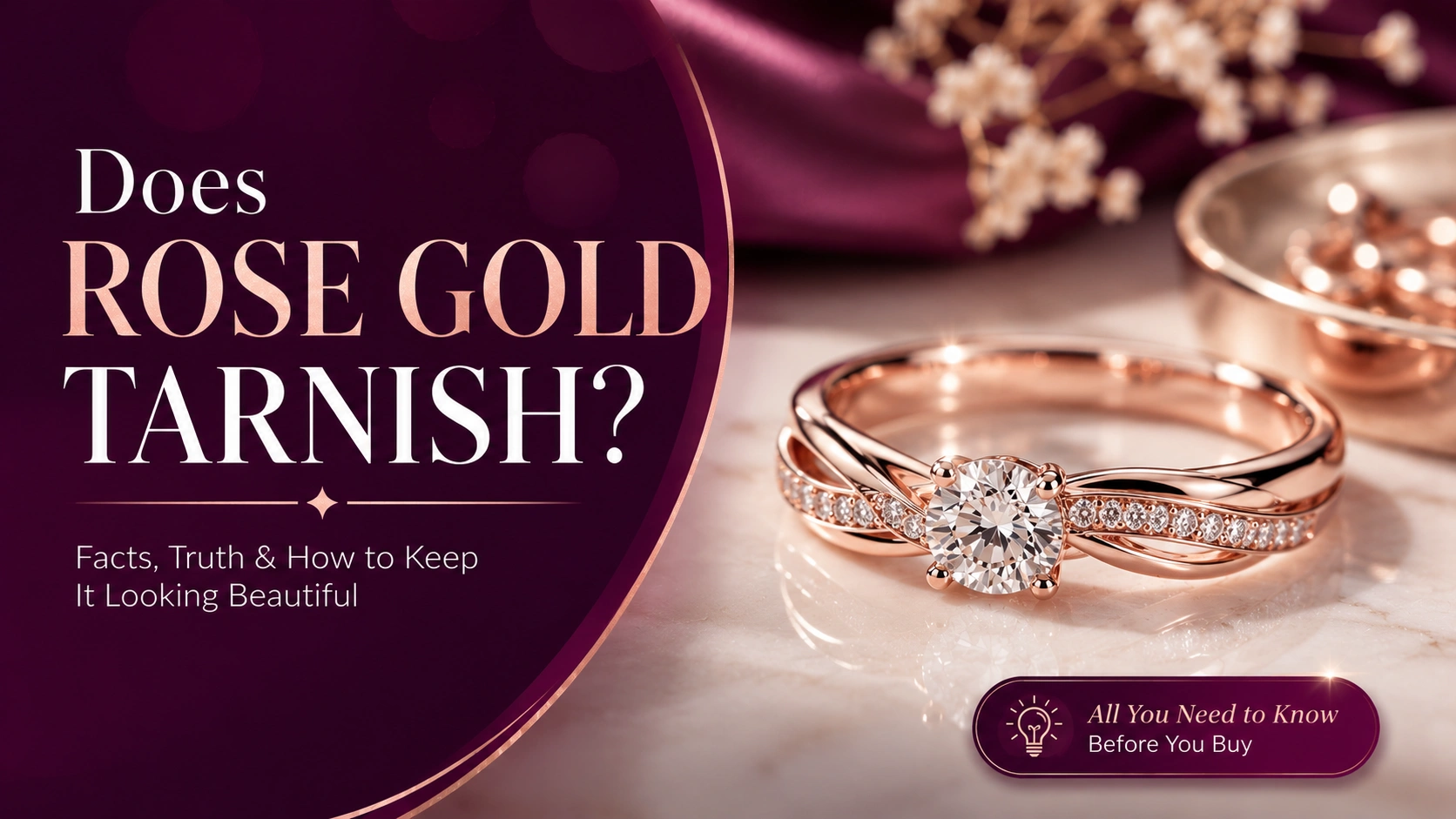
Solid rose gold does not tarnish in the same way that sterling silver does. However, rose gold can develop a subtle patina or become slightly darker over time because it contains copper.
That distinction matters. The warm pink color of rose gold comes from copper mixed into the gold alloy, so the color is part of the metal itself rather than a surface coating. With normal wear, the metal can gradually lose some of its original polish or develop a slightly deeper tone.
Rose-gold-plated jewelry is different. Its thin rose-gold-colored surface can wear away with friction, moisture, and chemicals, exposing the underlying metal.
So, does rose gold tarnish? Usually not in the traditional sense, but solid rose gold can develop a subtle patina or discoloration over time.
Why Does Rose Gold Change Color?
Rose gold is made by combining gold with other metals, primarily copper. The copper is what gives rose gold its characteristic pink, blush, or reddish color.
Gold itself is highly resistant to corrosion and tarnishing. Copper is more reactive, however, so the copper in a rose gold alloy can gradually react with its environment.
Factors such as:
- Sweat and skin oils
- Humidity and moisture
- Chlorinated water
- Perfume and cosmetics
- Harsh cleaning chemicals
- Everyday friction
can contribute to changes in the appearance of the metal.
The result is usually much more subtle than the obvious black tarnish associated with sterling silver. Solid rose gold may simply look a little darker, warmer, or less glossy with age.
For many people, this gradual patina is part of the appeal of rose gold because it can give the jewelry a slightly vintage appearance.
Does Solid Rose Gold Tarnish?
Solid rose gold is highly resistant to tarnishing.
A 14K or 18K rose gold ring is not simply gold-colored jewelry with a pink coating. The copper is mixed throughout the alloy, which means the rose color is inherent to the metal.
That is one reason rose gold behaves differently from rose-gold-plated jewelry.
A solid rose gold engagement ring can still become dull or develop a subtle patina, but this is generally not the same as the dramatic tarnishing that can occur with silver or inexpensive base metals. Jewelry experts commonly describe the change as patina or surface discoloration rather than conventional tarnish.
Does Rose-Gold-Plated Jewelry Tarnish?
Rose-gold-plated jewelry can show discoloration much sooner than solid rose gold.
The difference is that plated jewelry has a thin layer of rose-gold-colored metal over another material. As that layer wears down, especially on areas that experience frequent rubbing, the underlying metal can become visible.
This may make the jewelry appear:
- Faded
- Yellowish
- Darker
- Uneven in color
- Less pink than it originally looked
This is technically a plating-wear issue, rather than the same type of patina that can occur on solid rose gold.
For an engagement ring that will be worn every day, solid rose gold is generally a better choice if you want the rose color to remain part of the metal itself.
Does 10K, 14K, or 18K Rose Gold Tarnish?
The karat of rose gold affects its gold content and the proportion of other metals in the alloy.
| Rose Gold | Gold Content | General Appearance |
|---|---|---|
| 10K | 41.7% | Usually deeper pink or reddish |
| 14K | 58.3% | Strong pink tone and common for everyday jewelry |
| 18K | 75% | Softer, warmer pink tone |
Lower-karat gold contains a greater proportion of non-gold metals. Because copper contributes to rose gold’s color and can react with the environment, lower-karat alloys can be more susceptible to developing a noticeable patina.
That does not mean 10K rose gold will suddenly tarnish while 18K rose gold never changes. The difference is more gradual. Higher-karat rose gold generally contains more gold and less copper and other alloying metals, making it more resistant to noticeable discoloration.
If you’re comparing gold purity for an engagement ring, Our guide to 14K vs 18K Gold can help explain the broader differences between the two options.
What Does Tarnished Rose Gold Look Like?
When solid rose gold develops a patina, it typically does not suddenly turn black.
Instead, you may notice that the ring:
- Looks slightly darker
- Has a deeper reddish tone
- Appears less shiny
- Has a subtle brownish or warm surface tone
- Looks different from when it was freshly polished
Sometimes what appears to be tarnish is simply a layer of accumulated skin oils, lotion, soap, or dirt. Cleaning the ring can restore much of its original shine without any professional treatment.
If the jewelry is rose-gold plated, discoloration may instead indicate that the plating has started to wear away.
Can Rose Gold Turn Green?
Solid rose gold can occasionally contribute to greenish discoloration on the skin, but this is not typical of high-quality rose gold.
The possibility comes from the copper in the alloy. Under certain conditions, copper can react with sweat and other substances on the skin.
However, a green mark does not necessarily mean the rose gold itself has badly tarnished. Skin chemistry, moisture, cosmetics, and the particular alloy can all affect what happens at the surface.
If you’re experiencing persistent discoloration, irritation, or a major change in the jewelry’s appearance, having the ring inspected by a jeweler is the safest approach.
How to Clean Rose Gold
Most solid rose gold jewelry does not require complicated cleaning.
For routine cleaning:
- Mix lukewarm water with a small amount of mild soap.
- Let the ring soak briefly.
- Gently clean it with a soft cloth or soft-bristled brush.
- Pay particular attention to areas around the setting where dirt can accumulate.
- Rinse thoroughly.
- Dry the ring completely with a soft, clean cloth.
Mild soap and gentle cleaning are generally sufficient for removing oils and everyday buildup.
Avoid aggressive scrubbing and harsh household chemicals. Chlorine and bleach are particularly undesirable for gold jewelry because they can affect the alloy and potentially damage the jewelry over time.
For more general cleaning advice, see Our guide on how to clean gold rings.
How to Prevent Rose Gold From Discoloring
You do not need to baby a solid rose gold ring, but a few habits can help preserve its finish.
Remove it around harsh chemicals
Take your ring off before using bleach, strong household cleaners, or other aggressive chemicals.
Limit chlorine exposure
Pools and hot tubs contain chlorine, which can be particularly harsh on gold alloys containing copper.
Apply cosmetics before putting on your ring
Perfume, lotion, sunscreen, and other products can build up on jewelry and make the surface appear dull.
Let these products absorb before putting on your ring.
Clean it regularly
Routine gentle cleaning removes oils and residue before they accumulate.
Store it properly
When you are not wearing your ring, keep it in a clean, dry jewelry box or pouch rather than leaving it exposed to moisture and household chemicals.
Does Rose Gold Need to Be Replated?
Solid rose gold does not need rhodium replating.
This is an important difference between rose gold and many white gold rings.
White gold is often finished with a rhodium coating to give it a bright white appearance. That coating can wear away and may eventually need to be replaced.
The pink color of solid rose gold, by contrast, comes from the gold-copper alloy itself. It is not dependent on a rhodium or rose-colored surface coating.
A solid rose gold ring may eventually benefit from professional polishing if you want to restore a highly polished finish or remove accumulated surface scratches.
Is Rose Gold a Good Choice for an Engagement Ring?
Yes, rose gold can be an excellent choice for an engagement ring, especially if you want a distinctive color and relatively straightforward maintenance.
Its pink tone comes from the metal itself, so it does not simply wear away like a thin decorative plating.
Rose gold also has a warm appearance that works particularly well with diamonds and many colored gemstones. The copper alloy can make rose gold somewhat harder than yellow gold of the same karat, although all gold alloys remain susceptible to scratching with everyday wear.
If you’re comparing rose gold with other engagement-ring metals, Diamiv’s Engagement Ring Metals Guide is a natural next step.
Does Rose Gold Tarnish? Quick Answer
Solid rose gold does not typically tarnish like sterling silver. Its copper content can cause a gradual patina or slight darkening over time, particularly with prolonged exposure to moisture, sweat, chemicals, and other environmental factors.
Rose-gold-plated jewelry is different because its surface coating can wear away and expose the underlying metal.
For a solid rose gold engagement ring, regular gentle cleaning and avoiding harsh chemicals are usually enough to keep it looking beautiful for years.
Frequently Asked Questions
Does 14K rose gold tarnish?
14K rose gold is highly resistant to tarnishing, but its copper content can contribute to a subtle patina or change in surface appearance over time.
Does 18K rose gold tarnish?
18K rose gold is also highly resistant to tarnishing. Because it contains more gold and less alloying metal than 14K rose gold, it generally has less potential for noticeable copper-related discoloration.
Will rose gold turn black?
Solid rose gold does not normally turn black like heavily tarnished silver. Significant darkening should be inspected, particularly if the jewelry is plated or made from a base metal.
Does rose gold fade?
Solid rose gold does not fade in the same way plated jewelry does because its color comes from the alloy throughout the metal. Its surface can become less polished or develop a subtle patina.
Can you wear rose gold every day?
Yes. Solid rose gold is suitable for everyday jewelry and engagement rings. Regular cleaning and avoiding harsh chemicals can help preserve its appearance.
Is rose gold low maintenance?
Yes. Solid rose gold is generally a low-maintenance engagement-ring metal and does not require rhodium replating.