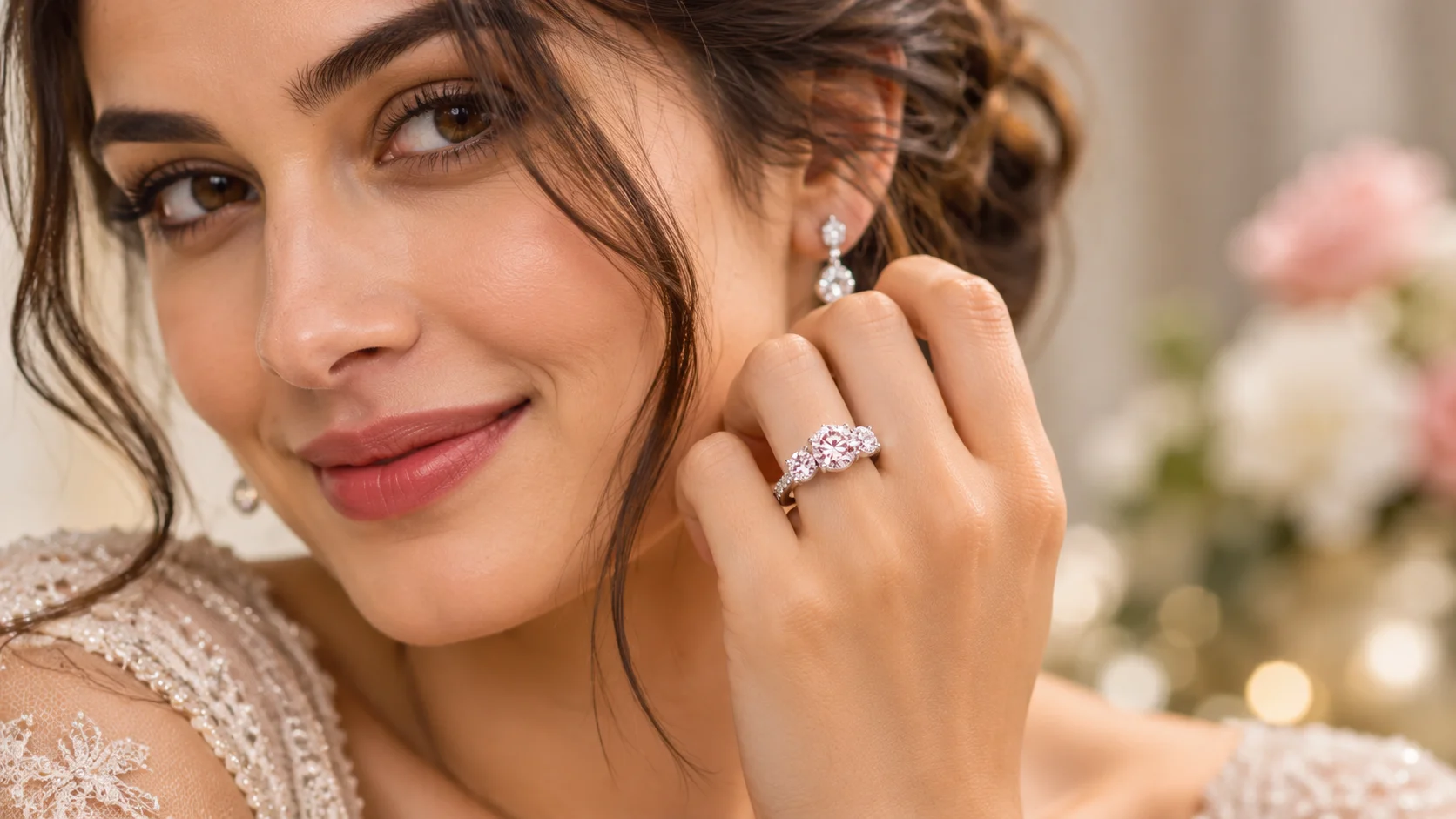
If you love your diamond but feel your solitaire engagement ring no longer reflects your style, you don’t necessarily need to buy a completely new diamond. You can give your existing stone a fresh look by resetting it into a halo, three-stone, bezel, vintage-inspired, or other distinctive engagement ring design.
The best replacement depends on what you want to change. Choose a halo if you want more sparkle, a three-stone ring for additional presence, a bezel for a sleek and protective design, or a vintage setting for more character. If you still love simplicity but want something different, a hidden halo or sculptural band may be enough.
Before choosing a new ring, consider whether you want to reuse your existing diamond, replace the setting, or start with an entirely new design.
Should You Replace Your Diamond Solitaire or Simply Reset It?
Before choosing a new engagement ring style, decide what you actually want to replace.
A solitaire ring features one main center stone without a surrounding halo or side-stone arrangement. Its simplicity makes the diamond the main focus.
However, your taste can change over time. You might want more sparkle, a wider appearance, additional diamonds, or a setting that feels more contemporary.
There are three main ways to approach this change.
1. Reset Your Existing Diamond
Resetting means removing your current center diamond and placing it into a new setting.
You keep the diamond but change the surrounding design.
For example, you could transform:
- A traditional solitaire into a halo engagement ring.
- A four-prong solitaire into a bezel setting.
- A plain solitaire into a three-stone design.
- A classic diamond ring into a vintage-inspired setting.
This option makes sense when you still love your diamond but want a completely different appearance.
2. Redesign Your Existing Ring
A redesign changes some or several parts of your current ring.
You might keep the center diamond and reuse certain metal or accent stones while changing the band, adding side stones, or rebuilding the setting.
For example, a jeweler might add a hidden halo beneath the center diamond or replace a plain band with a pavé design.
The final possibilities depend on the condition and construction of your existing ring.
3. Replace the Entire Engagement Ring
Sometimes, keeping the original diamond isn’t the right choice.
You might want a different diamond shape, a larger or smaller center stone, a different gemstone, or an entirely new design.
In that situation, replacing the complete ring may make more sense than resetting the existing diamond.
Quick recommendation: If you love your diamond but dislike the setting, start by exploring a reset. If you want a different center stone and a completely different design, compare the cost and options for a full replacement.
Which Engagement Ring Styles Are Best for Replacing a Solitaire?
The right replacement style depends on how dramatic a change you want.
Some designs add sparkle around your existing diamond, while others change the ring’s silhouette or create a more substantial appearance.
Here are seven styles worth considering.
1. Halo Engagement Rings – Best for More Sparkle
A halo engagement ring surrounds the center diamond with smaller accent diamonds.
This design creates a wider, more decorative outline around the original stone. It can also make the center diamond appear more prominent because of the additional sparkle surrounding it.
A halo is a good choice if your solitaire feels too simple or you want a more glamorous appearance without necessarily replacing the center diamond.
Why choose a halo?
- Adds sparkle around the center diamond.
- Creates a larger overall ring appearance.
- Works with several center diamond shapes.
- Offers a more decorative look than a traditional solitaire.
Potential drawback: Halo settings contain additional small stones that need periodic inspection and cleaning.
Best for: Someone who loves their existing diamond but wants a more noticeable, glamorous ring.
2. Three-Stone Engagement Rings – Best for a More Substantial Look
A three-stone engagement ring features one center diamond with two additional stones on either side.
This design changes the appearance of a solitaire by adding width and more visual interest.
You can keep your original diamond in the center and choose complementary side stones.
The side stones don’t have to be identical in shape to the center diamond. Some designs use matching shapes, while others combine different cuts for contrast.
For example:
- Round center diamond with tapered baguette side stones.
- Oval center diamond with pear-shaped side stones.
- Emerald-cut center diamond with trapezoid side stones.
- Cushion center diamond with smaller round diamonds.
Three-stone rings can also carry symbolic meaning. Many people associate the three stones with the past, present, and future.
Why choose a three-stone ring?
- Adds width to the original solitaire.
- Creates a more detailed design.
- Allows you to reuse your center diamond.
- Offers opportunities to combine diamond shapes.
Potential drawback: Side stones increase the total ring width and add more settings that require maintenance.
Best for: Someone who wants a more substantial engagement ring while keeping the original diamond as the centerpiece.
3. Hidden Halo Engagement Rings – Best for Subtle Extra Detail
If you like the clean appearance of a solitaire but want something more interesting, a hidden halo may be the right choice.
A hidden halo places small accent diamonds underneath the center stone rather than directly around its visible outline.
From above, the ring can still look relatively simple. From the side, the hidden diamonds add another layer of sparkle.
This design is particularly useful when you don’t want a traditional halo to change the appearance of your center diamond.
Why choose a hidden halo?
- Maintains a clean top view.
- Adds sparkle from the side.
- Keeps the center diamond visually dominant.
- Offers a subtle alternative to a traditional halo.
Potential drawback: The additional detailing can make the setting more intricate and may affect wedding band clearance.
Best for: Someone who loves solitaire rings but wants a small design upgrade.
You can also read our comparison of hidden halo vs. solitaire engagement rings to understand the differences.
4. Bezel Engagement Rings – Best for a Modern, Streamlined Appearance
A bezel setting surrounds the edge of the center diamond with a metal rim.
Unlike a traditional prong setting, the metal creates a defined outline around the stone.
This gives the ring a clean, contemporary appearance.
A bezel can be particularly attractive if your existing solitaire feels too traditional or you want a design with fewer exposed edges.
It can also help protect the diamond’s girdle, although the actual level of protection depends on the bezel’s construction and how well it fits the stone.
Why choose a bezel ring?
- Creates a sleek, modern appearance.
- Surrounds the diamond’s edge with metal.
- Offers a smooth outline.
- Can reduce snagging compared with exposed prongs.
Potential drawback: The metal surrounds part of the diamond’s edge, changing how much of the stone remains visible.
Best for: Someone who prefers minimalist jewelry, modern design, and a more enclosed setting.
5. Vintage-Inspired Engagement Rings – Best for Character and Detail
A vintage-inspired engagement ring can completely change the personality of your original solitaire.
These designs often feature decorative details such as:
- Milgrain edges.
- Filigree metalwork.
- Engraved bands.
- Antique-inspired prongs.
- Decorative galleries.
- Intricate side detailing.
You can retain your original diamond while giving it a setting that feels more distinctive.
Vintage-inspired designs are especially appealing if you want something less conventional than a plain solitaire.
Why choose a vintage-inspired ring?
- Adds decorative character.
- Offers intricate craftsmanship details.
- Creates a distinctive appearance.
- Can complement round, cushion, emerald, and other diamond shapes.
Potential drawback: Intricate settings may require more detailed cleaning and maintenance.
Best for: Someone who prefers romantic, antique-inspired, or Art Deco-style jewelry.
Explore vintage lab-grown diamond engagement rings for design inspiration.
6. Pavé Engagement Rings – Best for More Sparkle Along the Band
A pavé engagement ring features small diamonds set closely together along the band.
This design adds sparkle beyond the center stone.
If your current solitaire has a plain metal band, changing to pavé can create a noticeably different appearance without necessarily changing the center diamond.
Pavé can also be combined with other designs, including halo, hidden halo, and three-stone settings.
Why choose a pavé ring?
- Adds sparkle along the band.
- Creates a more decorative appearance.
- Works with several center diamond shapes.
- Can make a simple ring feel more elaborate.
Potential drawback: Small accent diamonds require regular inspection, and repairs can be more involved than those for a plain band.
Best for: Someone who wants additional sparkle without changing the basic shape of the center diamond.
7. Toi et Moi Engagement Rings – Best for an Unconventional Design
A Toi et Moi engagement ring features two prominent gemstones placed together.
The name translates from French as “You and Me.”
Unlike a solitaire, which focuses on one center diamond, this design creates two focal points.
You could potentially incorporate your existing diamond alongside another gemstone or diamond, provided the jeweler can accommodate the stones safely.
Popular combinations include:
- Oval and pear.
- Emerald and round.
- Pear and marquise.
- Diamond and sapphire.
The two stones don’t need to match. Their contrast can be part of the design.
Why choose a Toi et Moi ring?
- Creates a distinctive two-stone appearance.
- Offers opportunities for contrasting shapes.
- Can incorporate an existing diamond.
- Provides more creative design possibilities.
Potential drawback: The two stones need careful proportioning and a well-designed setting to avoid an unbalanced appearance.
Best for: Someone who wants a modern, artistic, or unconventional alternative to a traditional solitaire.
Solitaire Replacement Styles Compared
Not sure which design is right for you? Use this comparison to narrow down your options.
| Ring style | Main advantage | Possible drawback | Best for |
|---|---|---|---|
| Halo | More surrounding sparkle | More accent stones to maintain | Glamorous appearance |
| Three-stone | Added width and presence | Wider overall design | Substantial look |
| Hidden halo | Subtle extra sparkle | More intricate setting | Minimalist style |
| Bezel | Enclosed, streamlined design | Changes the visible stone outline | Modern everyday style |
| Vintage | Decorative character | Intricate maintenance | Antique-inspired look |
| Pavé | Sparkling band | Small stones need inspection | Extra band sparkle |
| Toi et Moi | Two-stone design | More complex proportions | Unconventional style |
There isn’t one universally best replacement. Your existing diamond, preferred appearance, daily activities, and budget should guide the decision.
Which Replacement Ring Style Should You Choose Based on Your Diamond Shape?
Your existing diamond shape can influence which replacement designs look balanced.
You don’t necessarily need to change the shape of your diamond to create a completely different ring.
If You Have a Round Diamond
Round diamonds offer considerable flexibility because their symmetrical outline works with many engagement ring designs.
Consider:
- Traditional halo.
- Three-stone with tapered side stones.
- Hidden halo.
- Vintage-inspired settings.
- Bezel settings.
A round diamond is particularly versatile if you want to move away from a traditional solitaire without changing the center stone.
If You Have an Oval Diamond
Oval diamonds have an elongated outline that can create an elegant appearance.
Consider:
- Oval halo.
- Hidden halo.
- Three-stone with pear-shaped side stones.
- East-west bezel.
- Pavé band.
If you want a more distinctive appearance, an east-west design can position the elongated diamond horizontally across your finger.
If You Have an Emerald-Cut Diamond
Emerald-cut diamonds have a rectangular outline and step-cut faceting.
Their appearance often emphasizes clean lines and geometric proportions.
Consider:
- Tapered baguette side stones.
- Three-stone settings.
- Geometric halos.
- Bezel settings.
- Art Deco-inspired designs.
For emerald-cut diamonds, pay particular attention to the proportions of the side stones and the overall symmetry of the setting.
If You Have a Pear-Shaped Diamond
Pear-shaped diamonds have a rounded end and a pointed tip.
The pointed end needs appropriate protection in the new setting.
Consider:
- Pear halo.
- V-prong or protective tip design.
- Three-stone with round side stones.
- Bezel setting.
- Vintage-inspired setting.
A well-designed setting should protect the pointed tip without hiding too much of the diamond’s outline.
If You Have a Marquise Diamond
Marquise diamonds have two pointed ends and an elongated silhouette.
Consider:
- Marquise halo.
- East-west setting.
- Three-stone with tapered side stones.
- Bezel setting.
- Vintage-inspired designs.
The pointed ends need suitable protection. Ask the jeweler how the new setting will secure both tips.
For more guidance, explore the diamond shape guide.
Which Replacement Ring Is Best for Your Lifestyle?
A ring should look beautiful, but it also needs to work with your everyday activities.
Consider these recommendations before choosing a new setting.
| Your priority | Styles worth considering | What to check |
|---|---|---|
| Active lifestyle | Bezel or low-profile designs | Edge protection and snagging |
| Maximum sparkle | Halo or pavé | Accent-stone security |
| Minimalist appearance | Bezel or hidden halo | Profile and band proportions |
| Vintage appearance | Vintage or filigree | Cleaning and maintenance |
| Larger overall presence | Halo or three-stone | Total ring width |
| Unique design | Toi et Moi or east-west | Stone proportions |
| Wedding band compatibility | Simpler or specifically designed settings | Flush fit and clearance |
No setting is automatically suitable for every wearer. The quality of the construction, the height of the center stone, the condition of the existing diamond, and the jeweler’s craftsmanship all matter.
The Gemological Institute of America explains that prongs can catch on fabrics and should be checked periodically. It also describes how bezel settings surround the gemstone’s edge with metal.
Read GIA’s guide to engagement ring settings before making your decision.
Should You Keep Your Existing Diamond When Replacing a Solitaire?
Keeping your original diamond can be a sensible option if you still love the stone and it is suitable for resetting.
However, a jeweler should inspect it before designing a new setting.
Ask the jeweler to check:
- Chips and damage: Look for existing damage, especially around the diamond’s edges and corners.
- Stone measurements: The new setting must accommodate the diamond’s actual dimensions.
- Existing treatments: Make sure any relevant treatment information is documented.
- Setting compatibility: Confirm that the stone’s shape and depth work with your preferred design.
- Insurance and documentation: Keep the grading report, appraisal, photographs, and relevant paperwork.
The Federal Trade Commission advises consumers to get important gemstone details, including weight or size, origin, treatments, and care requirements, in writing.
You can read its diamond and gemstone buying guidance.
Important: A diamond that looks perfect from the top may still have damage that requires attention before resetting. Do not assume an existing stone is ready for a new setting without a professional inspection.
How Much Does It Cost to Replace a Diamond Solitaire?
The cost depends on whether you are reusing the existing diamond, purchasing additional gemstones, or buying an entirely new ring.
There is no reliable universal price for a solitaire replacement because custom work varies by design and jeweler.
The main cost factors include:
- Type of metal.
- New setting design.
- Number and size of accent diamonds.
- Complexity of the craftsmanship.
- Whether the existing diamond can be reused.
- Whether additional stones need to be purchased.
- Labor, resizing, and any other modifications.
For example, a simple bezel reset may involve fewer design elements than an elaborate vintage-inspired ring with pavé diamonds and decorative metalwork.
A three-stone redesign may also require purchasing two additional side stones.
How to Keep Your Replacement Ring Within Budget
If you want a new appearance without overspending, consider these approaches:
- Reuse your existing center diamond.
- Compare a simple hidden halo with a traditional halo.
- Choose a plain band instead of pavé if you prefer lower complexity.
- Ask whether existing accent stones can be reused.
- Compare the total cost of resetting against buying a complete new ring.
- Request a written quotation that separates metal, stones, labor, and other charges.
Don’t compare ring prices based on appearance alone. Check the metal, stone specifications, construction, and included services.
What Should You Ask a Jeweler Before Replacing Your Solitaire?
Before approving a new design, ask the jeweler a few important questions.
Can my existing diamond be reused?
Ask for a professional inspection and confirmation that the diamond is suitable for the proposed setting.
Will the new setting fit my current diamond?
The jeweler should use the actual stone measurements when designing the setting.
What happens to my original setting?
Ask whether you can keep the original metal and any accent stones that are removed.
Will my wedding band fit against the new ring?
Some halo, cathedral, and decorative settings create gaps. Try the engagement ring and wedding band together before approving the design.
How long will the redesign take?
Ask for a realistic production timeline. Custom designs may require additional time for design approval, stone sourcing, and setting work.
What happens if the diamond is damaged during the process?
Discuss insurance, handling procedures, written terms, and the jeweler’s responsibility before handing over your diamond.
What warranty and maintenance services are included?
Ask about inspections, loose accent stones, prong maintenance, repairs, resizing, and the warranty’s exclusions.
Frequently Asked Questions
Can I turn my solitaire engagement ring into a halo ring?
Yes. A jeweler can often remove the center diamond from a solitaire setting and place it into a compatible halo design. The new setting must be made to accommodate the diamond’s shape and measurements.
Is it better to reset my diamond or buy a new engagement ring?
Resetting is worth considering if you still love your existing diamond and want a different setting. Buying a new ring may make more sense if you want a different center stone, diamond shape, or complete design.
Can I add side stones to my existing solitaire?
Sometimes. A jeweler can assess whether your existing diamond and ring structure can accommodate side stones. In many cases, adding side stones requires a new setting or substantial reconstruction.
What is the best alternative to a solitaire engagement ring?
Halo, three-stone, hidden halo, bezel, vintage-inspired, and Toi et Moi rings are all alternatives worth considering. A halo suits someone who wants additional sparkle, while a bezel suits someone who prefers a streamlined appearance.
Will resetting my diamond affect its value?
A change of setting does not automatically increase or decrease the diamond’s intrinsic value. However, the overall ring’s resale value may depend on its condition, materials, craftsmanship, documentation, and market demand. Custom work should not be treated as a guaranteed investment.
Can I change my solitaire ring without changing the diamond?
Yes. A reset can retain the original center diamond while changing the metal, setting, band design, or surrounding accent stones.
How long does it take to replace an engagement ring setting?
The timeline varies by jeweler and design. A straightforward reset may require less work than a fully custom three-stone or vintage-inspired design. Ask for a written estimate covering design, approval, production, and final inspection.
Can I use my existing diamond in a Toi et Moi ring?
Potentially. A jeweler can design a two-stone setting around your existing diamond and another gemstone or diamond. The final design must balance the stones’ dimensions, proportions, and setting requirements.
Final Recommendation
If you want to replace your diamond solitaire but keep the original center stone, start with the reason you want a change.
- Choose a halo if you want more sparkle and a larger overall appearance.
- Choose a three-stone ring if you want more width and visual presence.
- Choose a hidden halo if you love simplicity but want extra detail.
- Choose a bezel if you prefer a clean, modern design with a more enclosed setting.
- Choose a vintage-inspired ring if you want decorative details and distinctive character.
- Choose a pavé band if you want additional sparkle along the ring.
- Choose a Toi et Moi ring if you want a creative two-stone design.
Most importantly, don’t replace a diamond simply because your current ring no longer feels right.
Your original diamond may still be exactly what you want. Sometimes, changing the setting is all it takes to create a ring that feels completely new.