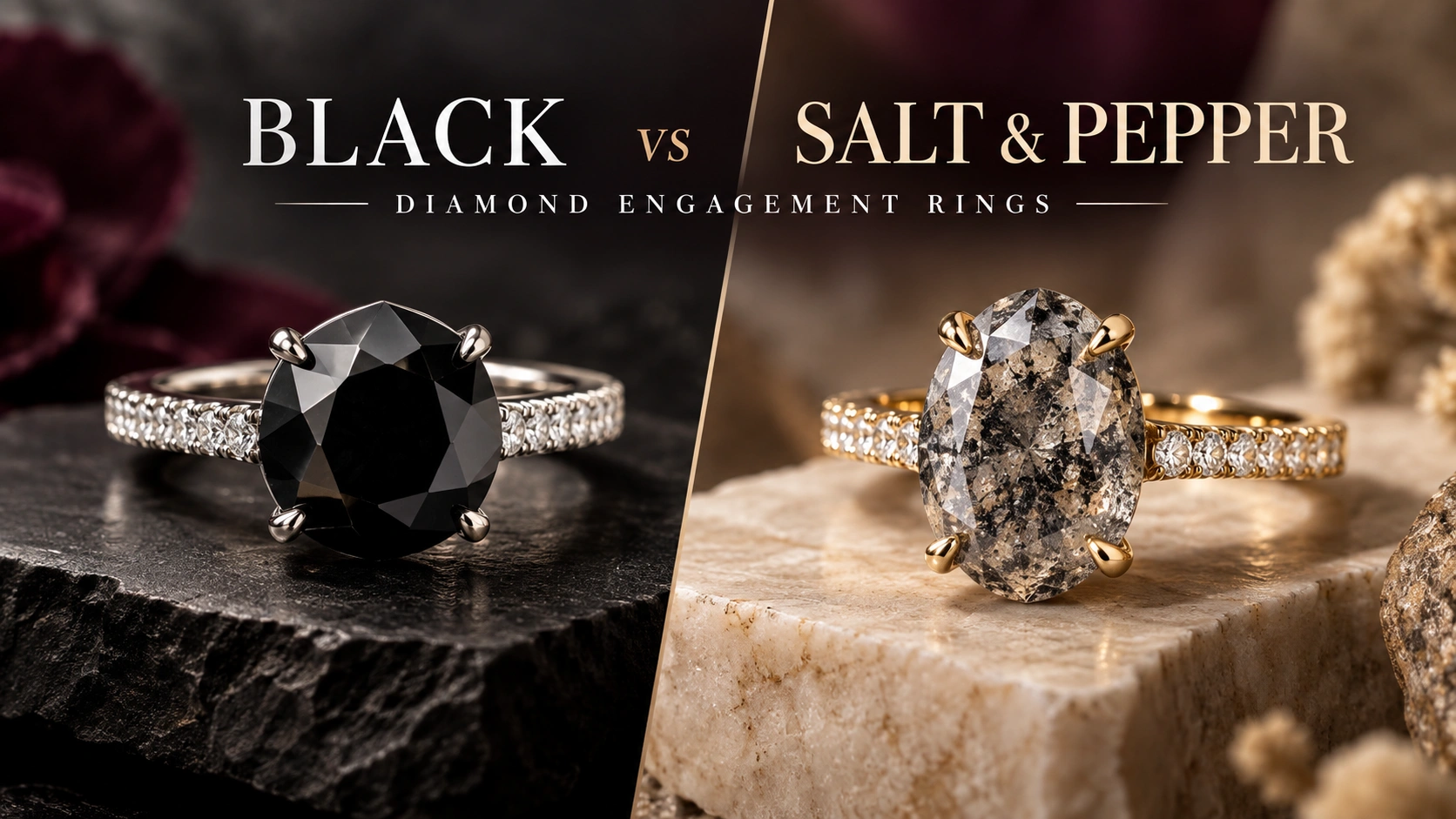
If you want an engagement ring that feels different from a traditional colorless diamond, both black diamonds and salt-and-pepper diamonds are compelling choices. But they create very different looks.
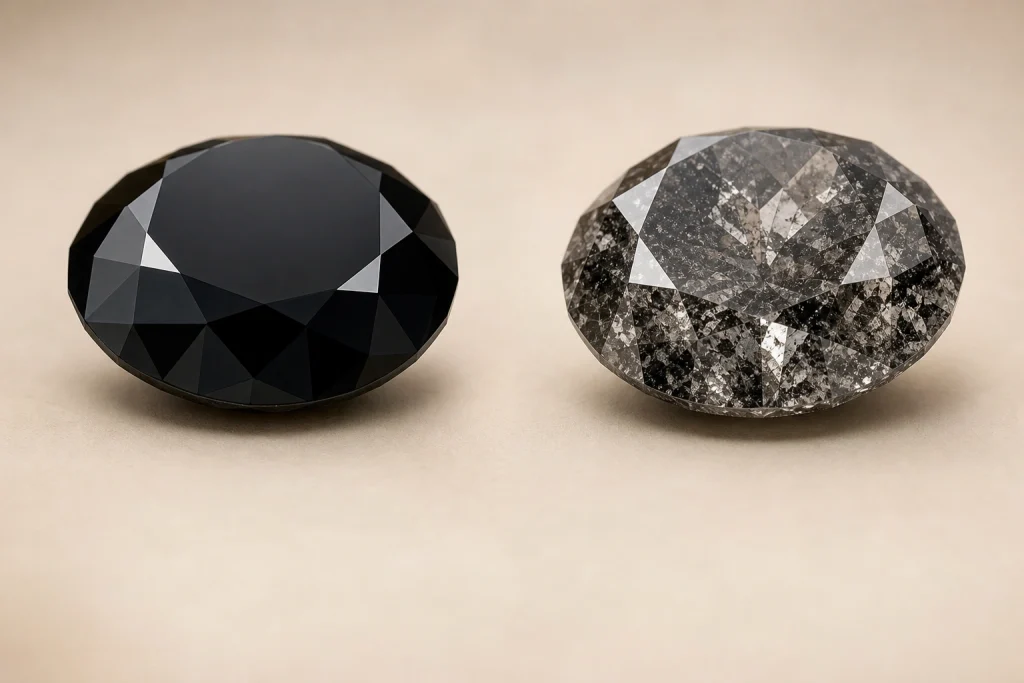
A black diamond delivers a bold, dark, dramatic appearance. A salt-and-pepper diamond has a more organic, speckled look, with visible black, gray, and white inclusions creating a pattern that is unique to the stone.
The biggest difference is simple: black diamonds are chosen for their dark, often opaque appearance, while salt-and-pepper diamonds are chosen for the character created by their visible inclusions.
Neither is automatically better. The right choice depends on how dramatic you want the ring to look, how much individuality you value, your preferred setting, and what you expect from the center stone.
Black Diamond vs Salt-and-Pepper Diamond: Quick Comparison
| Feature | Black Diamond | Salt-and-Pepper Diamond |
|---|---|---|
| Overall appearance | Deep black or very dark | Speckled black, gray, and white |
| Main visual feature | Dark, uniform color | Visible inclusion pattern |
| Transparency | Often opaque to translucent | Can range from lighter to darker and more translucent |
| Natural or treated? | Can be natural or treated | Typically valued for its natural inclusion pattern |
| Sparkle | More subdued than a traditional white diamond | Usually subdued, depending on cut |
| Personality | Bold, dramatic, mysterious | Organic, artistic, unconventional |
| Best for | Strong contrast and statement designs | One-of-a-kind and textured designs |
| Buying priority | Color origin and condition | Inclusion pattern, cut, appearance, and condition |
GIA explains that black diamonds can get their appearance from dark inclusions or from treatments that alter the diamond’s color.
Salt-and-pepper diamonds, meanwhile, are known for their eye-visible inclusions. GIA has documented diamonds with visible black, gray, and white inclusions being described in the trade as “salt and pepper” diamonds.
What Is a Black Diamond?
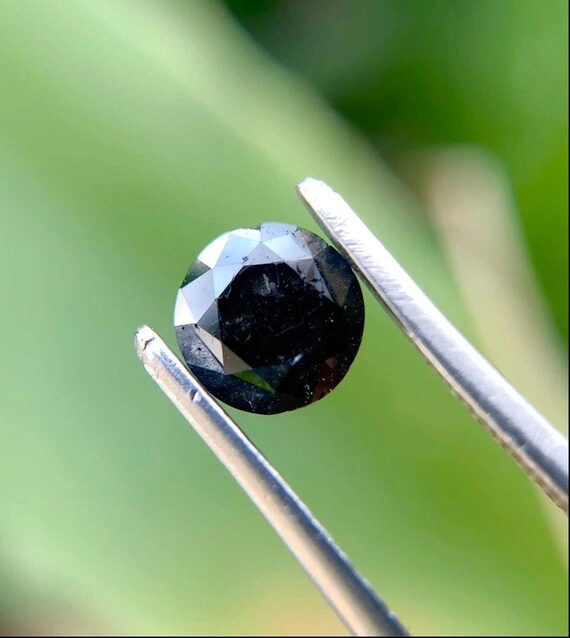
A black diamond is a diamond with a distinctly black or extremely dark appearance. Natural black diamonds can contain large concentrations of dark inclusions such as graphite and other minerals, while some black diamonds receive treatments that create or enhance their dark color.
This distinction matters when you’re shopping.
Two rings may both be advertised as black diamond engagement rings while having very different stones behind them. One could contain a natural-color black diamond, while another could feature a treated diamond.
That does not automatically make a treated diamond a bad choice. Treated black diamonds can offer the dramatic appearance many buyers want at a more accessible price. The important thing is knowing what you’re buying.
If you’re considering a black center stone, start with the broader black diamond engagement ring guide to understand the different types and buying considerations.
What Is a Salt-and-Pepper Diamond?
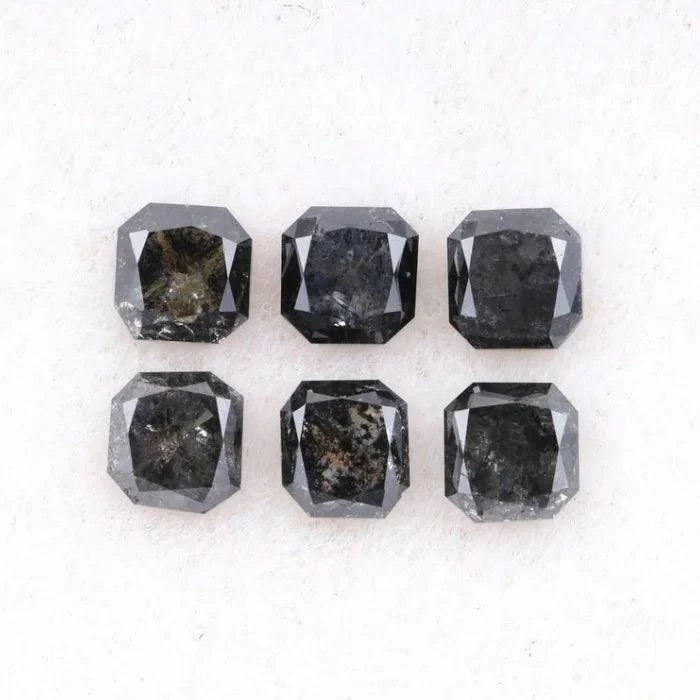
A salt-and-pepper diamond is a diamond with prominent visible inclusions that create a mixture of dark and light marks throughout the stone.
The result can look smoky, cloudy, speckled, or almost like a tiny night sky.
Unlike a traditional diamond-buying mindset where inclusions are generally something shoppers try to minimize, salt-and-pepper diamonds turn those inclusions into the main attraction.
The pattern is part of the stone’s identity. Two diamonds with similar carat weights and shapes can therefore look dramatically different because their inclusion patterns are different.
That individuality is one of the biggest reasons people choose them for alternative engagement rings.
Black Diamond vs Salt-and-Pepper Diamond: The Biggest Difference
The easiest way to understand the difference is to think about uniformity versus pattern.
A black diamond is generally intended to look black or very dark overall. The visual effect is bold and relatively consistent.
A salt-and-pepper diamond allows you to see the internal character of the stone. You may see black crystals, white inclusions, gray areas, clouds, or other patterns.
So:
Choose black if you want:
A strong, sleek, dramatic center stone.
Choose salt-and-pepper if you want:
A distinctive stone where the natural internal pattern is part of the design.
Appearance and Sparkle
Neither option is intended to imitate the bright, high-white appearance of a traditional colorless brilliant diamond.
Black diamonds
Black diamonds typically have a dramatic, almost mirror-like or metallic presence when polished. Their dark body absorbs much of the light, so their appeal comes more from contrast, luster, shape, and color than from traditional white-diamond sparkle.
This makes them especially effective when paired with bright metal or colorless diamond accents.
For example, a black diamond surrounded by a white-metal setting can create a sharp monochromatic contrast.
Salt-and-pepper diamonds
Salt-and-pepper diamonds have a more varied appearance.
Depending on the stone, the inclusions may appear subtle or extremely pronounced. Some look mostly gray with scattered dark marks, while others have dense black-and-white patterns.
The cut also matters. A large, open-looking cut can make the internal pattern easier to see, which is often exactly what salt-and-pepper buyers want.
The goal isn’t necessarily maximum sparkle. It’s character.
Natural vs. Treated Black Diamonds
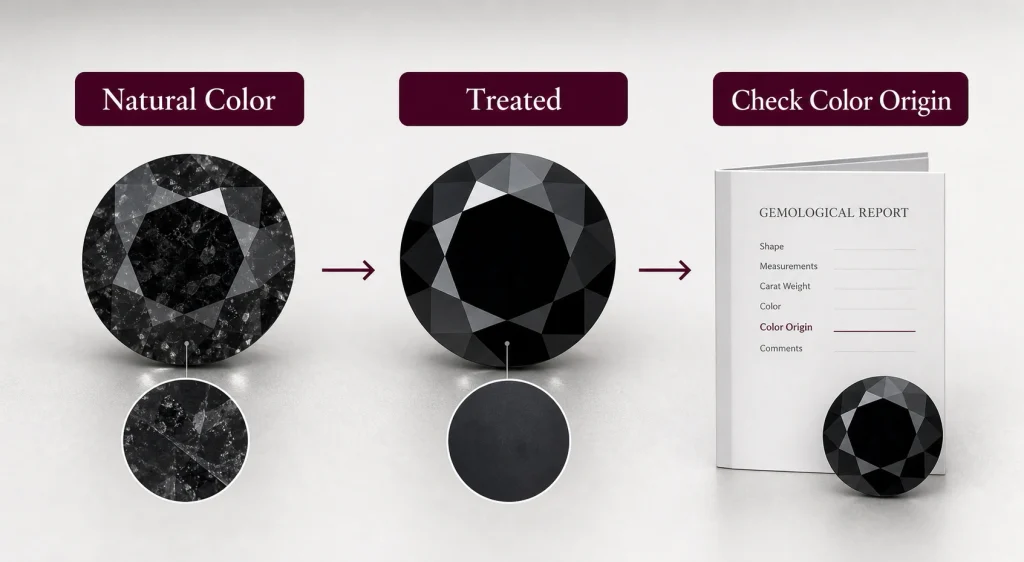
This is one of the most important things to investigate when buying a black diamond.
Black diamonds can have a natural color origin or can be treated to produce their dark appearance. GIA specifically notes that most black diamonds on the market are treated.
Treatment isn’t necessarily a dealbreaker. It simply changes what you’re buying and can affect rarity and value.
If you’re paying a premium for a black diamond because you want a naturally colored stone, ask for documentation showing the color origin.
For an expensive black diamond, a reputable gemological report can provide additional confidence about whether the color is natural or treated. GIA reports can identify the origin of a diamond’s color.
Are Salt-and-Pepper Diamonds Natural?
Salt-and-pepper describes a visual category centered around visible inclusions rather than a special diamond species.
The term is used for diamonds where black, gray, and white inclusions are prominent enough to become the defining feature of the stone. GIA has documented this type of diamond in the trade.
When shopping, don’t assume that every stone marketed with the term “salt-and-pepper” will have exactly the same appearance.
Some are heavily peppered.
Some are mostly gray.
Some have a lighter, almost cloudy appearance.
Others have dramatic clusters of dark inclusions.
That is why photographs or videos of the actual stone are particularly useful.
Which Is More Durable?
Both are diamonds, so both have the fundamental hardness associated with diamond.
However, hardness is not the same as resistance to chipping or breaking.
This is especially important with heavily included diamonds.
Natural black diamonds can contain numerous inclusions and fractures, and GIA notes that their internal structure can make some stones more susceptible to damage from sharp impacts.
Salt-and-pepper diamonds also need to be evaluated individually. A heavily included stone shouldn’t automatically be rejected, but you should pay attention to whether inclusions reach the surface or create structural concerns.
For either type, the setting can provide an additional layer of protection.
Best Settings for Black Diamond Engagement Rings
Black diamonds work particularly well when the setting reinforces their dramatic appearance.
Bezel settings
A bezel can create a sleek, modern look while surrounding the diamond with metal.
Solitaire settings
A black diamond solitaire makes the center stone the entire focus of the ring.
Halo settings
A black center surrounded by colorless diamonds creates high contrast and can make the center stone appear even more dramatic.
Gothic and alternative settings
Black diamonds naturally fit darker, unconventional aesthetics.
If that is the look you’re after, you can also explore Black Diamond Gothic Engagement Rings for styles that lean into the darker aesthetic.
The Diamiv sitemap also includes dedicated content for Gothic Black Diamond Engagement Rings and Vintage Black Diamond Engagement Rings, which can help you explore different directions.
Best Settings for Salt-and-Pepper Diamond Engagement Rings
Salt-and-pepper diamonds often look best in settings that allow the center stone to remain the focus.
Bezel settings
A bezel can complement the organic appearance of a salt-and-pepper stone while offering protection around the edges.
Simple solitaire settings
A minimalist setting lets the inclusion pattern do the talking.
Vintage-inspired settings
The imperfect, individual appearance of salt-and-pepper diamonds works naturally with vintage and antique-inspired designs.
Geometric settings
Shapes such as hexagons, kites, shields, and other unconventional silhouettes can emphasize the artistic character of the stone.
If you’re interested in unusual shapes, Diamiv’s hexagon cut diamond guide is a useful next step for understanding the shape itself.
Black Diamond vs Salt-and-Pepper Diamond: Price
Price can vary enormously for both types.
With black diamonds, one of the most important factors is whether the color is natural or treated. Natural-color black diamonds can command a premium because of their rarity, while treated stones are generally more accessible. GIA notes that treatment is common among black diamonds.
Salt-and-pepper diamonds are different because traditional clarity isn’t the primary selling point.
A heavily included stone may actually be desirable because the inclusions create the look the buyer wants.
That means you shouldn’t evaluate a salt-and-pepper diamond using the same expectations you would use for a traditional colorless diamond.
Instead, compare:
- The actual appearance
- Inclusion pattern
- Shape and dimensions
- Cut quality
- Transparency
- Structural condition
- Setting
- Overall ring design
In other words, don’t assume the diamond with the “better” clarity grade will be the better salt-and-pepper diamond.
Which One Looks More Unique?
Both can look unusual, but they create uniqueness in different ways.
A black diamond gives you a distinctive overall color.
A salt-and-pepper diamond gives you a distinctive internal pattern.
If you want something immediately bold from across the room, black is usually the stronger choice.
If you want something that rewards a closer look, salt-and-pepper may be more appealing.
This also makes salt-and-pepper stones particularly attractive to people who don’t want their engagement ring to look identical to another couple’s ring.
Black Diamond vs Salt-and-Pepper Diamond: Which Should You Choose?
Choose a black diamond if you:
- Want a dramatic black center stone
- Prefer a bold, high-contrast aesthetic
- Like gothic, modern, or alternative jewelry
- Want a more visually uniform center
- Like pairing the center with bright diamond accents
- Don’t mind investigating whether the stone is natural or treated
Diamiv’s Alternative Engagement Rings collection is another natural place to explore if you’re intentionally moving away from conventional engagement-ring styles.
Choose a salt-and-pepper diamond if you:
- Want a one-of-a-kind appearance
- Love visible natural inclusions
- Prefer an organic or artistic look
- Don’t need a traditional bright-white diamond appearance
- Like vintage-inspired or unconventional jewelry
- Want the individual character of the stone to be part of the ring’s identity
Can You Use Black and Salt-and-Pepper Diamonds Together?
Yes.
You don’t necessarily have to choose only one aesthetic.
A ring could use a black diamond as the center with salt-and-pepper accents, or a salt-and-pepper center with dark accent stones.
The contrast can be particularly effective when the rest of the ring is relatively simple.
The key is making sure the stones complement rather than compete with one another.
Black Diamond vs Salt-and-Pepper Diamond: Pros and Cons
Black Diamond Pros
- Dramatic and unmistakable appearance
- Strong contrast with bright metals and white diamonds
- Works well with alternative and gothic designs
- Can be more affordable than many traditional high-quality colorless diamonds
- Available in natural and treated forms
Black Diamond Cons
- Many black diamonds are treated
- Natural-color black diamonds can be harder to find
- Internal fractures and inclusions can require careful handling
- Less traditional sparkle than a colorless brilliant diamond
Salt-and-Pepper Diamond Pros
- Every stone has its own inclusion pattern
- Excellent for unconventional engagement rings
- Natural-looking and organic appearance
- Makes inclusions part of the design
- Works particularly well with vintage and artistic styles
Salt-and-Pepper Diamond Cons
- Appearance varies significantly from stone to stone
- Heavy inclusions require individual inspection
- May have less conventional sparkle
- Not ideal for buyers who want a clean, traditional diamond appearance
- Photos and videos can be important when comparing individual stones
Frequently Asked Questions
Is a black diamond better than a salt-and-pepper diamond?
No. They are designed to appeal to different tastes.
Black diamonds are better suited to buyers who want a dark, dramatic center stone. Salt-and-pepper diamonds are better suited to buyers who appreciate visible inclusions and one-of-a-kind patterns.
Are salt-and-pepper diamonds real diamonds?
Yes. The term describes diamonds with prominent visible inclusions rather than a different gemstone species. GIA has documented diamonds marketed as salt-and-pepper diamonds with eye-visible black, gray, and white inclusions.
Are black diamonds real diamonds?
Yes. Black diamonds are real diamonds. Their dark appearance can result from natural inclusions or from treatments that alter their color.
Are black diamonds usually treated?
Many are. GIA states that most black diamonds are treated, which makes it particularly important to establish the color origin when shopping for a black diamond.
Which one is more unique?
Both are distinctive, but salt-and-pepper diamonds tend to have more variation from stone to stone because their visible inclusion patterns differ.
Which one is better for a gothic engagement ring?
A black diamond is usually the more direct choice for a strongly gothic look because its dark color creates an immediate dramatic effect.
For additional inspiration, explore the Gothic Engagement Rings collection.
Can salt-and-pepper diamonds be used for everyday engagement rings?
They can, but the individual stone should be evaluated carefully. Visible inclusions aren’t automatically a structural problem, but heavily included diamonds can require more attention to their condition and setting.
Final Verdict
The choice between a black diamond and a salt-and-pepper diamond ultimately comes down to what you want the center stone to communicate.
A black diamond says bold, dramatic, mysterious, and unmistakable.
A salt-and-pepper diamond says individual, organic, artistic, and unapologetically imperfect.
If you want a ring with a strong, consistent dark presence, choose a black diamond. If you want a center stone whose internal pattern makes it feel genuinely personal, a salt-and-pepper diamond may be the better fit.
Either way, don’t shop by the name alone. Look closely at the actual stone, understand how its appearance was created, consider its structural condition, and choose a setting that suits how you plan to wear the ring.