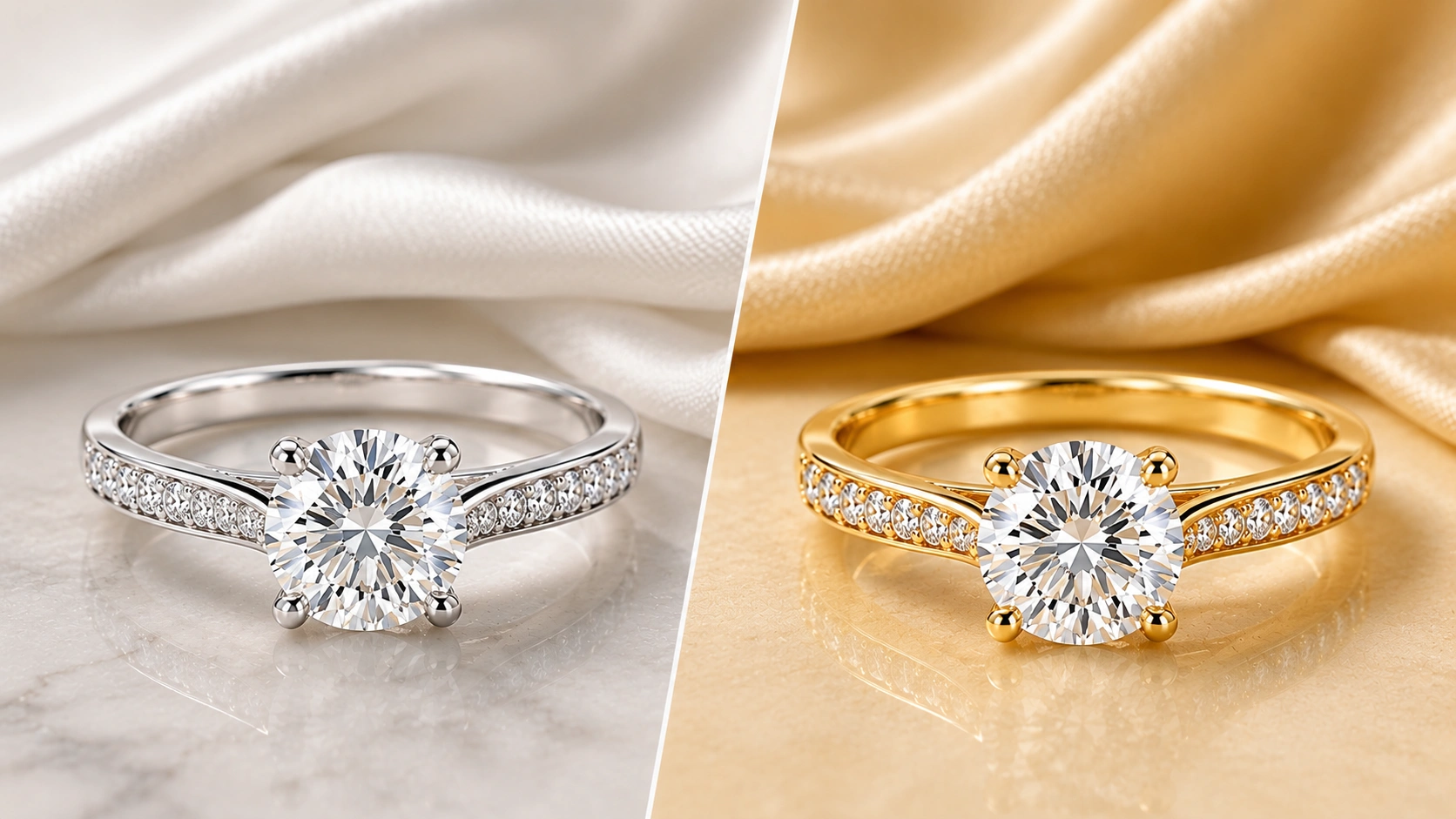
Choosing between white gold and yellow gold comes down to more than color. The two metals can have the same gold purity at the same karat, but they create very different looks and have different maintenance requirements.
White gold is usually the better choice if you want a bright, cool-toned setting that makes a diamond look crisp and modern. Yellow gold is a better fit if you prefer a warm, classic appearance and want a metal that does not require rhodium replating.
Neither is universally better. The right choice depends on your preferred style, diamond color, lifestyle, and how much maintenance you are comfortable with.
White Gold vs Yellow Gold at a Glance
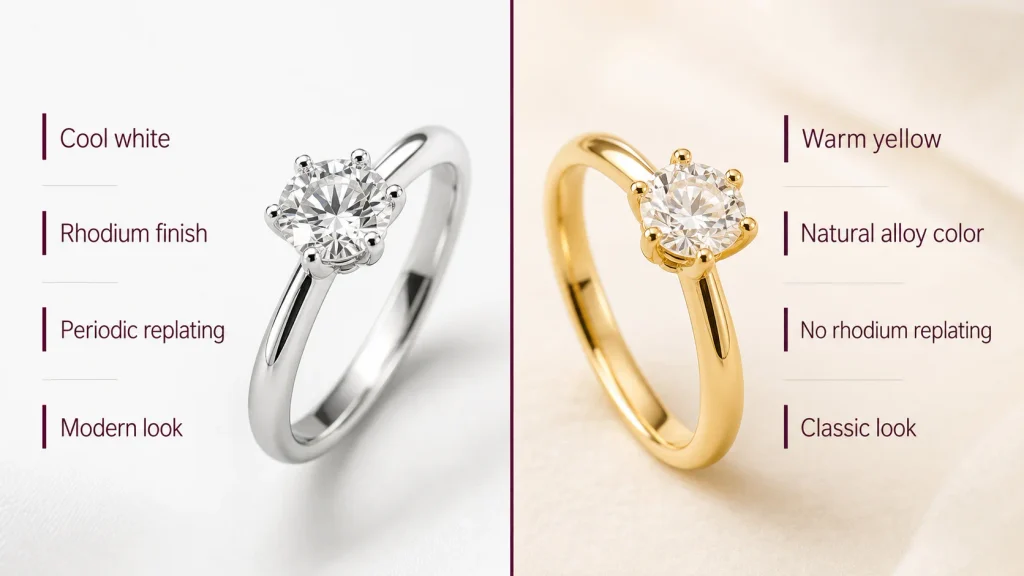
| Feature | White Gold | Yellow Gold |
|---|---|---|
| Appearance | Bright, cool, silvery-white | Warm, classic yellow |
| Gold content | Depends on karat | Depends on karat |
| Common engagement-ring choices | 14K and 18K | 14K and 18K |
| Rhodium plating | Usually yes | No |
| Ongoing maintenance | Periodic replating may be needed | Mainly cleaning and polishing |
| Diamond appearance | Can make a diamond look whiter | Can add warm reflections |
| Style | Modern, sleek, classic | Traditional, vintage, timeless |
| Best for | Cool-toned white-metal look | Warm, classic look |
| Nickel concern | Depends on alloy | Generally not a white-gold issue, but alloy composition still matters |
What Is White Gold?
White gold is gold alloyed with other metals to create a lighter, white-toned metal. Common alloying metals can include nickel, palladium, silver, copper, and zinc, depending on the formulation.
Most white gold engagement rings are also coated with rhodium, a highly reflective white metal. The rhodium gives white gold its bright, almost mirror-like finish and helps create the crisp appearance many shoppers associate with white gold.
The important thing to understand is that white gold is not simply a different purity of gold.
For example, 14K white gold and 14K yellow gold both contain 58.3% pure gold. The remaining material consists of alloying metals, and those metals help determine the color and properties of the finished ring.
If you’re comparing gold purity rather than color, see the breakdown of 14K vs 18K gold.
What Is Yellow Gold?
Yellow gold is gold alloyed with metals such as copper, silver, and zinc while retaining its characteristic warm yellow appearance.
Pure 24K gold is generally too soft for an engagement-ring setting, so jewelry gold is mixed with other metals to increase its strength and make it more practical for everyday wear.
The most common choices for engagement rings are 14K and 18K yellow gold.
The biggest visual advantage of yellow gold is that its color is the actual color of the alloy. Unlike rhodium-plated white gold, it does not depend on a white surface coating to maintain its yellow appearance.
White Gold vs Yellow Gold: Appearance
This is usually the first difference you’ll notice.
White gold has a cool, bright appearance that works particularly well with modern engagement-ring designs. It provides a neutral-looking backdrop for diamonds and can make the setting visually recede behind the stone.
Yellow gold has a warmer, more traditional appearance. It can give an engagement ring a vintage, romantic, or heirloom-inspired character.
Your personal jewelry collection can also be a useful clue. If you usually wear silver, platinum, or other white metals, white gold may feel more natural. If your everyday jewelry is predominantly yellow gold, a yellow-gold engagement ring can create a more cohesive look.
There is no universal rule that one metal looks better on a particular skin tone. Personal preference matters more than a rigid color-matching formula.
Which Is More Durable: White Gold or Yellow Gold?
The answer is more complicated than simply saying one color of gold is stronger.
Karat, alloy composition, ring thickness, and construction all affect durability.
A 14K gold ring contains more alloying metal than an 18K gold ring, which can make 14K a practical choice for everyday wear. But the exact hardness of white gold and yellow gold also depends on their specific alloy compositions.
The rhodium layer on white gold is another factor. It can make the surface look extremely bright and helps protect the underlying metal, but the coating itself can wear away with regular use.
Yellow gold does not have this separate plating layer. Scratches affect the gold alloy itself and can generally be polished by a jeweler.
Bottom line: Don’t choose between white and yellow gold based solely on the assumption that one is automatically more durable. Look at the karat, alloy, ring design, and how you plan to wear it.
Does White Gold Need More Maintenance?
Usually, yes.
The biggest maintenance difference is rhodium plating.
White gold is commonly rhodium plated to give it a bright white finish. Over time, friction from everyday wear can gradually wear down that coating. When this happens, the ring may look less bright and the underlying white-gold alloy can become more visible.
A jeweler can generally restore the bright finish by cleaning, polishing, and replating the ring when necessary. GIA specifically recommends asking your jeweler about replating because rhodium can wear over time.
Yellow gold does not need rhodium plating to maintain its characteristic color. It can still become scratched or lose some of its shine with wear, but routine cleaning and occasional professional polishing are generally enough.
For additional care information, see how to clean gold rings.
If you’re specifically concerned about the appearance of white gold over time, you can also learn whether white gold tarnishes.
Which Looks Better With a Diamond?
Both can look excellent with a diamond, but they create different visual effects.
White gold and diamond color
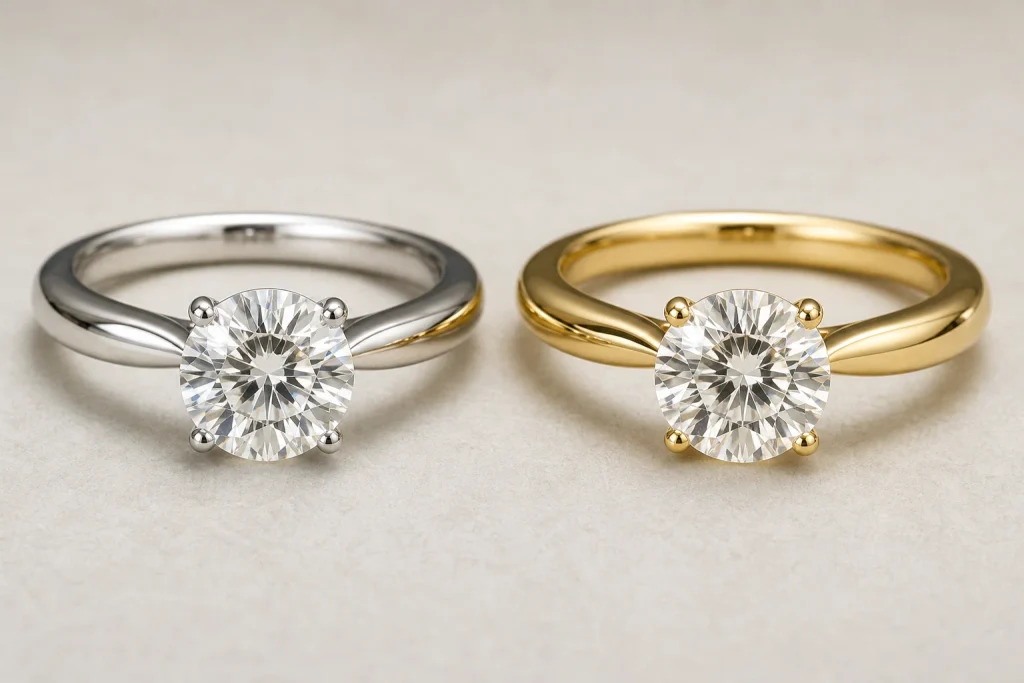
White gold provides a cool, neutral-looking background around the diamond. This can be particularly appealing if you want the stone to appear as white and colorless as possible.
GIA notes that the metal surrounding a diamond can influence the reflections seen in the stone. White metal can produce whitish reflections, while yellow gold can introduce warmer reflections.
This does not mean you need a D-color diamond simply because you choose white gold. Diamond color should be evaluated alongside cut, clarity, carat, and your overall budget.
Yellow gold and diamond color
Yellow gold creates warmer reflections and can complement diamonds with noticeable warmth.
This can be especially attractive if you prefer a traditional or vintage appearance. At the same time, the contrast between yellow gold and a whiter diamond can create a striking look.
For shoppers deciding how much diamond color matters, Diamiv’s diamond color guide is a useful next step.
Does White Gold Make a Diamond Look Whiter?
It can.
The surrounding metal affects the light reflected by the diamond, so a white-metal setting can help create a whiter-looking overall appearance.
However, the effect varies with the diamond’s actual color grade, cut, setting design, and how much metal is visible around the stone.
Yellow gold can work especially well when you deliberately want contrast between a white-looking diamond and a warm setting.
In other words, the metal should be considered part of the overall visual design rather than treated as an isolated decision.
14K vs 18K: Does Karat Matter?
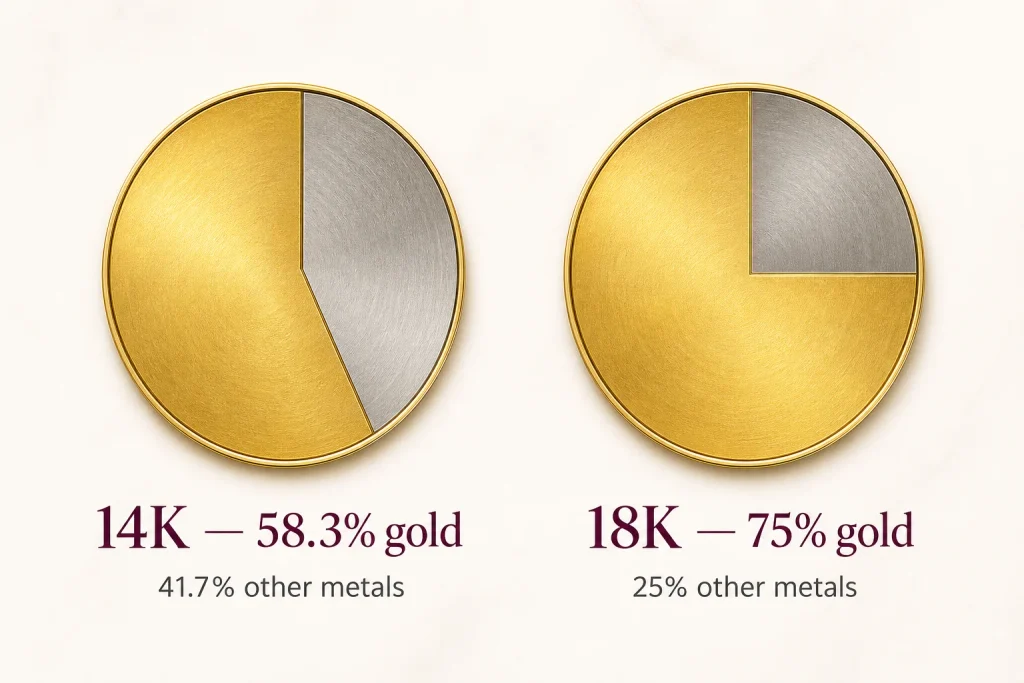
Yes.
Karat tells you how much pure gold is present in the alloy.
- 14K gold: 58.3% pure gold
- 18K gold: 75% pure gold
- 24K gold: essentially pure gold, but generally too soft for most engagement-ring settings
The same principle applies to both colors. A 14K white-gold ring and a 14K yellow-gold ring contain the same proportion of pure gold.
An 18K ring contains more gold and typically has a richer appearance, while 14K is often selected for its balance of gold content, durability, and price.
For a deeper comparison, see 14K vs 18K gold.
White Gold vs Yellow Gold: Which Is More Expensive?
There is no simple rule that white gold is always more expensive than yellow gold.
When comparing rings with the same karat, amount of gold, design, and craftsmanship, the underlying gold value can be similar.
White gold can have additional long-term maintenance costs because rhodium plating may need to be renewed. Yellow gold does not require that particular treatment.
The total price of an engagement ring, however, is usually influenced much more heavily by factors such as the diamond, setting design, gold weight, craftsmanship, and retailer.
So rather than choosing a metal solely because you expect it to be cheaper, compare complete rings with similar specifications.
White Gold vs Yellow Gold for Different Styles
Choose white gold for a modern engagement ring
White gold works naturally with sleek, contemporary designs. It is also a popular choice when you want the metal to blend visually with the diamond.
It can be especially effective with:
- Solitaire rings
- Halo settings
- Pavé designs
- Three-stone rings
- Minimalist designs
- Art Deco-inspired styles
Choose yellow gold for a classic or vintage look
Yellow gold has a naturally warm character that works beautifully with traditional and vintage-inspired designs.
It can be particularly appealing for:
- Vintage-style rings
- Heirloom-inspired designs
- Solitaire settings
- Bezel settings
- Engraved rings
- Classic yellow-gold bands
If you’re choosing between broader metal options, Diamiv’s engagement ring metals guide provides a useful starting point.
White Gold vs Yellow Gold: Pros and Cons
White Gold Pros
- Bright, cool appearance
- Works well with modern designs
- Creates a neutral-looking backdrop for diamonds
- Similar gold content to yellow gold at the same karat
- Can provide a platinum-like appearance at a lower price point
White Gold Cons
- Rhodium plating can wear over time
- May require periodic replating
- Some white-gold alloys contain nickel, which can be problematic for people with nickel sensitivities
- The appearance can change as the rhodium layer wears
Yellow Gold Pros
- Warm, timeless appearance
- Does not require rhodium plating
- Works well with classic and vintage designs
- Easy to pair with other yellow-gold jewelry
- Color is inherent to the alloy rather than a surface coating
Yellow Gold Cons
- Scratches can be more visually noticeable
- Its warm color may not appeal to shoppers who prefer white metals
- Can introduce warmer reflections into a diamond
White Gold vs Yellow Gold: Which Should You Choose?
Choose white gold if you:
- Prefer a bright, cool-toned ring
- Want a modern or sleek appearance
- Like the look of white metals
- Want the diamond to have a crisp, neutral-looking backdrop
- Don’t mind periodic rhodium maintenance
Choose yellow gold if you:
- Prefer a warm, traditional appearance
- Like vintage or heirloom-inspired jewelry
- Want to avoid rhodium replating
- Already wear yellow-gold jewelry
- Prefer the character of a naturally warm metal
If you’re still undecided, look at both metals next to the type of diamond and setting you actually want. The combination is more important than judging white gold and yellow gold in isolation.
Frequently Asked Questions
Is white gold better than yellow gold for an engagement ring?
Not necessarily. White gold is better for shoppers who prefer a cool, bright appearance, while yellow gold is better for those who prefer warmth and lower maintenance. Both can be excellent engagement-ring metals.
Does white gold have more gold than yellow gold?
No. At the same karat, white gold and yellow gold contain the same proportion of pure gold. A 14K white-gold ring and a 14K yellow-gold ring are both 58.3% pure gold. Their colors come from their different alloy compositions and, in most white gold, rhodium plating.
Does yellow gold last longer than white gold?
Not automatically. Both can provide years of everyday wear when properly made and cared for. White gold has an additional consideration because its rhodium surface can wear and require renewal.
Does white gold turn yellow?
The white-gold alloy itself is not necessarily bright white. Most white gold is rhodium plated, and as that coating wears, the underlying alloy can become more visible, making the ring appear warmer or less white.
Which is easier to maintain, white gold or yellow gold?
Yellow gold is generally simpler to maintain because it does not require rhodium replating. White gold may require periodic professional replating to restore its bright white finish.
Is 14K or 18K better for white gold and yellow gold?
Both can work well for engagement rings. 14K contains less pure gold and more alloying metal, while 18K contains more pure gold. The better option depends on your priorities for color, durability, budget, and personal preference. See the detailed 14K vs 18K gold comparison.
Can you combine white gold and yellow gold?
Yes. Mixed-metal engagement rings can combine the cool appearance of white gold with the warmth of yellow gold. This can also make it easier to coordinate an engagement ring with existing jewelry.
Is white gold or yellow gold better for a diamond?
Neither is universally better. White gold can create a crisp, neutral backdrop, while yellow gold can create warmer contrast and reflections. The best choice depends on the diamond’s color and the appearance you want from the finished ring.
Final Words
White gold is the better choice for a cool, bright, contemporary look, while yellow gold is better for warmth, classic styling, and simpler long-term maintenance.
At the same karat, neither contains more pure gold simply because of its color. The main differences come from the alloy composition, appearance, surface treatment, and the way each metal interacts visually with the diamond.
For many shoppers, the decision becomes straightforward once they answer three questions:
- Do I prefer white or yellow metal?
- Am I comfortable maintaining rhodium plating?
- How do I want my diamond and setting to look together?
If you prefer a bright white appearance and don’t mind occasional maintenance, choose white gold. If you want warmth and a metal that does not need replating, yellow gold is an excellent choice.