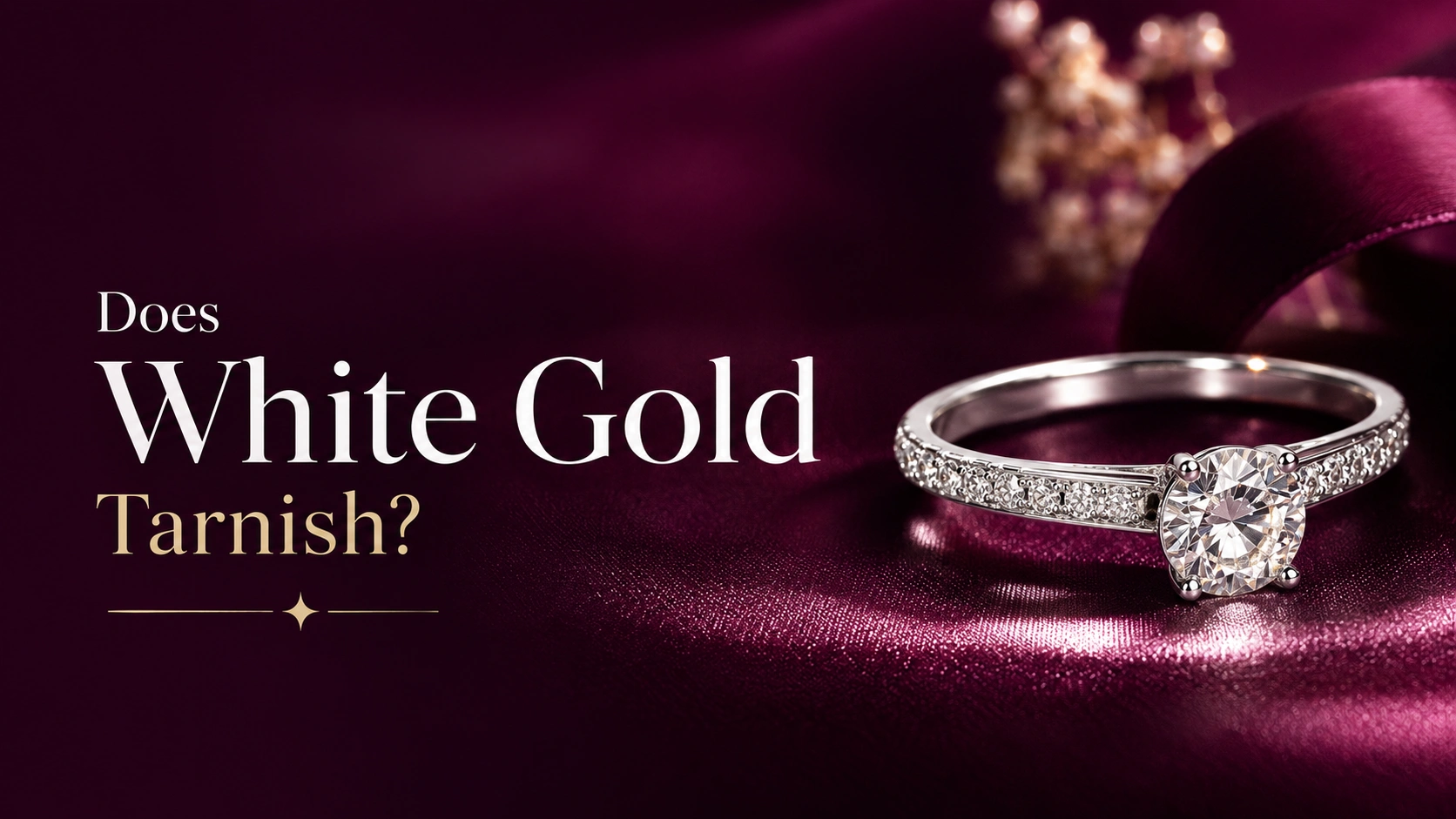
White gold does not usually tarnish in the same way that silver does. However, white gold jewelry can become less bright or develop a yellowish appearance over time. In most cases, this happens because the rhodium plating on the surface wears away and reveals the warmer-colored white gold alloy underneath.
This is especially common with white gold engagement rings because they are exposed to frequent friction, water, soaps, lotions, and other everyday substances.
The good news is that a white gold ring that looks yellow or dull is not necessarily damaged. Cleaning can remove surface buildup, while rhodium replating can restore the bright white appearance when the plating has worn down.
Does White Gold Tarnish?
Not usually in the traditional sense.
Tarnish is a chemical reaction that creates a dull or discolored surface on a metal. Silver, for example, can develop a dark tarnished layer after reacting with sulfur-containing compounds in the environment.
White gold behaves differently. It is an alloy made from gold mixed with other metals, such as nickel, palladium, silver, or zinc. The exact composition varies between jewelry manufacturers and gold karats.
Most white gold jewelry is also coated with rhodium, a bright, reflective metal that gives white gold its crisp white appearance. Over time, that thin coating can wear away.
So when someone asks, “Does white gold tarnish?” there are really two different things to consider:
- Rhodium plating wearing away: This is the most common reason white gold starts looking yellowish or less bright.
- Actual tarnishing of the underlying alloy: This can occur in some white gold alloys, depending on the metals used and the conditions the jewelry encounters.
For most white gold engagement rings, a change in color is more likely to be related to rhodium wear than traditional tarnishing.
Why Does White Gold Turn Yellow?
White gold is not naturally the same bright white color as rhodium.
Gold is naturally yellow. When it is mixed with other metals, the resulting alloy becomes much paler, but it can still retain a warm or slightly yellowish tone.
Rhodium plating creates the bright, silvery-white appearance many people associate with white gold.
As the rhodium wears away, the underlying alloy becomes visible. This can make a white gold ring look:
- Slightly yellow
- Warmer in color
- Less reflective
- Uneven in color
- Duller than when it was new
The change may be most noticeable on areas that experience the most friction, such as the bottom and sides of an engagement ring band.
That does not necessarily mean the gold itself has deteriorated.
What Is Rhodium Plating?
Rhodium is a bright white precious metal that is commonly used as a surface coating on white gold jewelry.
Think of rhodium plating as a very thin finish over the white gold alloy. It gives the ring its highly reflective white appearance while also providing a surface that can resist everyday wear.
The problem is that plating is not permanent.
Everyday friction gradually removes it. Once enough rhodium has worn away, the natural color of the white gold underneath becomes visible.
This is why a white gold engagement ring can look perfectly bright when new and gradually develop warmer-colored areas after extended wear.
How Long Does Rhodium Plating Last?
There is no universal lifespan for rhodium plating.
How long it lasts depends on factors such as:
- How frequently you wear the ring
- How much friction the ring experiences
- Your daily activities
- Exposure to chemicals
- Contact with soaps and cleaning products
- How thick the original plating is
- Individual skin chemistry
A ring worn every day will generally need attention sooner than a piece of white gold jewelry worn occasionally. Some current jewelry sources cite roughly one to three years as a common range for daily-worn rings, but there is no fixed schedule that applies to every ring.
Rather than replating strictly according to a calendar, it makes more sense to have the ring inspected when the underlying warmer color becomes noticeable or the finish becomes uneven.
Does 14K White Gold Tarnish?
14K white gold can develop a change in appearance over time, but that does not necessarily mean it is tarnishing.
14K gold contains a higher proportion of alloy metals than 18K gold, since it contains about 58.3% pure gold. The remaining portion consists of other metals used to provide strength and alter the color.
The specific alloy mixture matters because white gold is not made from one universal formula.
If your 14K white gold ring is rhodium plated, the most noticeable change over time will often be the wearing of that rhodium layer rather than the gold itself suddenly tarnishing.
Does 18K White Gold Tarnish?
18K white gold can also change in appearance, particularly as its rhodium plating wears.
18K gold contains 75% pure gold, with the remaining 25% made up of alloy metals.
Like 14K white gold, the exact appearance and behavior depend on the alloy composition and whether the jewelry has been rhodium plated.
The important point is that karat alone does not tell you whether a white gold ring will develop a yellowish appearance. The alloy composition, surface treatment, wear, and care routine all matter.
What Causes White Gold to Lose Its Shine?
Rhodium naturally wears with use, but some activities can accelerate the process.
Everyday friction
Daily wear is one of the biggest factors. Rings constantly rub against skin, clothing, surfaces, and other objects.
The areas receiving the most contact tend to show wear first.
Soaps and cleaning products
Frequent exposure to soaps, detergents, and household cleaning products can contribute to the deterioration of the surface finish.
If you regularly clean, wash dishes, or work with household chemicals while wearing your ring, removing it first can help preserve the finish.
Lotions and cosmetics
Hand creams, lotions, perfumes, and other personal-care products can leave residue on jewelry and contribute to a dull appearance.
Chlorine and harsh chemicals
Chlorine and other harsh chemicals can be particularly undesirable for fine jewelry. Avoid exposing your white gold ring to strong chemicals whenever possible.
Sweat and body oils
Sweat, oils, and everyday dirt can build up on the surface of a ring. This buildup can make white gold appear dull even when the rhodium plating itself is still intact.
How Do You Clean White Gold?
For routine cleaning, a gentle approach is best.
A simple method is:
- Mix warm water with a small amount of mild soap.
- Soak the ring briefly.
- Gently clean it with a very soft brush if necessary.
- Rinse thoroughly with clean water.
- Pat it dry with a soft, lint-free cloth.
Avoid aggressive scrubbing or abrasive cleaners, particularly if the ring has delicate details or gemstones.
If your ring still looks yellow after cleaning, the issue may not be dirt at all. It may simply need fresh rhodium plating. Gentle cleaning can remove surface buildup, but it cannot replace worn plating.
For more jewelry-cleaning advice, see how to clean gold rings.
How Do You Know If White Gold Needs Replating?
Your white gold ring may need replating if you notice:
- Yellowish areas appearing on the band
- A noticeably warmer color than when the ring was new
- Uneven color between different parts of the ring
- A duller or less reflective finish
- Rhodium wearing away around high-friction areas
A jeweler can inspect the ring and determine whether it needs cleaning, polishing, or rhodium replating.
Replating involves removing or preparing the existing surface and applying a new layer of rhodium. This restores the bright white finish associated with newly rhodium-plated white gold.
Can Tarnished-Looking White Gold Be Restored?
Yes, in most cases.
If the problem is simply dirt or residue, professional or careful at-home cleaning may restore the shine.
If the rhodium has worn away, rhodium replating can restore the bright white appearance.
If the underlying alloy has experienced actual surface tarnishing or damage, a jeweler may need to evaluate and polish the piece before replating it.
So a yellow-looking white gold ring does not automatically mean you need to replace it. Often, the appearance can be restored with routine jewelry maintenance.
White Gold vs. Platinum: Which Needs Less Maintenance?
If you’re deciding between metals for an engagement ring, maintenance is worth considering.
White gold typically gets its bright white appearance from rhodium plating, so maintaining that appearance may eventually involve replating.
Platinum is naturally white and does not rely on a rhodium coating to create its color. However, platinum can develop a patina from everyday wear, which is a different type of change in appearance.
For a broader comparison of the two metals, see white gold vs. platinum.
You can also compare their overall characteristics in gold vs. platinum engagement rings.
Is White Gold a Good Choice for an Engagement Ring?
Yes. White gold remains a popular engagement-ring metal because it combines the appearance of a bright white metal with the affordability and familiarity of gold.
The main trade-off is maintenance.
If you want the bright, mirror-like white appearance of rhodium-plated white gold, you should expect that the finish can wear over time. That’s normal and does not mean the ring is defective.
If you prefer a metal that is naturally white and does not require rhodium plating, platinum may be worth considering.
Your choice ultimately comes down to the appearance, durability, budget, and maintenance level you prefer.
For a broader overview of ring metals, see the engagement ring metals guide.
Frequently Asked Questions
Does white gold turn yellow?
It can appear yellow over time, but this is usually because rhodium plating has worn away and exposed the warmer-colored white gold alloy underneath.
Does white gold tarnish like silver?
No. White gold generally does not tarnish in the same way silver does. A yellow or dull appearance is more commonly caused by rhodium plating wearing away.
Can you prevent white gold from turning yellow?
You cannot prevent rhodium plating from wearing indefinitely, but you can slow down wear by removing your ring during cleaning, avoiding harsh chemicals, minimizing unnecessary friction, and keeping the jewelry clean.
Can you make yellow white gold white again?
Yes. If the yellow appearance is caused by worn rhodium plating, a jeweler can generally restore the bright white appearance through rhodium replating.
How often should white gold be replated?
There is no fixed interval. Daily-worn rings may need replating periodically, but the appropriate timing depends on how quickly the plating wears and how noticeable the color change becomes.
Is white gold high maintenance?
Compared with naturally white metals such as platinum, rhodium-plated white gold requires an additional maintenance step if you want to preserve its bright white appearance. However, routine cleaning and occasional replating are generally straightforward.
Final Words
White gold does not usually “tarnish” in the way people expect. If your white gold engagement ring starts looking yellow or less brilliant, the most likely explanation is that its rhodium plating has worn away and the warmer white gold alloy underneath is showing through.
Regular gentle cleaning can keep the ring looking its best, while professional rhodium replating can restore the bright white finish when the surface coating wears down.
So if you’re considering a white gold engagement ring, don’t let the possibility of color changes put you off. Just understand that white gold’s bright appearance comes with some periodic maintenance.