A Portrait Cut Diamond is not designed to compete with a round brilliant for sparkle. Its appeal comes from something quieter: exceptional transparency, a sleek flat profile, and a glass-like appearance that feels both historic and surprisingly modern.
If you love unusual diamond jewelry, minimalist engagement rings, or stones that look more like wearable art than traditional bridal jewelry, the portrait cut deserves a closer look.
But before buying one, there are a few important things to understand. Portrait cut diamonds behave differently from traditional faceted diamonds, and the qualities that make them special also make them more challenging to evaluate.
Here are seven things to know about the Portrait Cut Diamond, from its history and characteristics to clarity, sparkle, price, and choosing the right stone.
Portrait Cut Diamond
A portrait cut diamond is an exceptionally thin, flat diamond with a polished surface and minimal faceting. The stone typically has a transparent, almost glass-like appearance rather than the bright flashes of light associated with brilliant-cut diamonds.
The term is closely associated with historical jewelry in which thin, transparent diamonds were placed over miniature portraits or other artwork. The diamond acted almost like a protective layer of glass while allowing the image beneath it to remain visible.
According to Natural Diamonds, the style has roots in ancient India and has historical associations with Mughal-era jewelry. The name “portrait cut” comes from its connection to miniature portrait art.
Today, the portrait cut has found a new audience among jewelry designers and buyers who prefer understated luxury. Instead of hiding its unusual nature behind a conventional setting, the cut makes transparency the star of the show.
Think of it this way: a round brilliant diamond walks into the room and immediately turns on every light. A portrait cut diamond walks in, sits quietly by the window, and somehow everyone still notices.
1. Portrait Cut Diamond History: An Old Idea With a Modern Following
The portrait cut diamond history is one of the most interesting parts of this unusual style.
Historical accounts connect portrait cuts with India, where thin, transparent diamonds could be used in jewelry featuring miniature portraits. The diamond’s transparency allowed the artwork beneath it to remain visible while providing a protective covering.
The style is also associated with the jewelry traditions of the Mughal period. Natural Diamonds notes a connection with Mughal Emperor Shah Jahan and the use of transparent diamonds over hand-painted portraits.
However, it is important to avoid treating every story about the origin of the cut as absolute historical fact. The term and its modern use have evolved, and historical diamond-cutting practices were not always documented using today’s terminology.
What we can say with confidence is that the concept of using extremely thin, transparent diamonds in jewelry has historical roots, while modern portrait cuts have brought that idea back into contemporary design.
That blend of old and new is a big reason for their appeal.
2. What Makes Portrait Cut Diamonds Different?
The biggest difference is simple: a portrait cut diamond is about transparency rather than maximum brilliance.
Traditional brilliant cuts use carefully arranged facets to reflect and return light to the viewer. GIA explains that diamond cut involves factors such as proportions, symmetry, and polish, all of which influence how a diamond interacts with light.
Portrait cuts take a very different approach.
Their extremely shallow profile and limited faceting create a clean, smooth appearance. Depending on the stone and its setting, you may see a subtle reflection, a soft glow, or a fascinating sense of depth. You may also see the wearer’s skin or the background beneath the stone.
That is not necessarily a flaw.
In fact, it is part of the design.
This is why comparing a portrait cut directly with a round brilliant can be misleading. They are trying to achieve different visual effects.
A brilliant cut says, “Look at how I sparkle.”
A portrait cut says, “Look how clearly you can see through me.”
Neither is automatically better. It comes down to personal taste.
3. Portrait Cut Diamond Clarity Matters More Than You Might Expect
One of the most important portrait cut diamond characteristics is its transparency.
Because the stone is so thin and visually transparent, inclusions can be easier to notice than they might be in a heavily faceted diamond. Facets in traditional cuts can sometimes break up or disguise the appearance of inclusions. A very transparent portrait cut may give the viewer a much clearer view into the stone.
That makes portrait cut diamond clarity particularly important.
This does not mean you should blindly buy the highest clarity grade available. Instead, you should examine the actual stone and understand how its inclusions appear face-up.
A diamond’s clarity grade is only one part of the buying decision. GIA’s guidance on diamond quality emphasizes that buyers should consider the individual stone rather than relying only on a single number or grade.
For a portrait cut, ask:
- Is the diamond visibly clean when viewed from the top?
- Are there inclusions that interrupt its transparent appearance?
- Does the stone have a clear, attractive face-up appearance?
- Is the surface polished well?
- Does the stone show scratches, chips, or obvious damage?
In short, eye-clean appearance matters.
For this particular style, clarity is not just a technical specification. It directly contributes to the visual character of the diamond.
4. Do Portrait Cut Diamonds Sparkle?
This is probably the most common question: Do portrait cut diamonds sparkle?
The short answer is: not like a traditional brilliant-cut diamond.
The portrait cut diamond sparkle is generally subtle because the stone does not use the same type of complex faceting designed to create strong brilliance, fire, and scintillation.
GIA explains that brilliance refers to white light reflected from a diamond, fire describes spectral colors created when light is dispersed, and scintillation refers to the flashes and patterns of light and dark seen as a diamond moves.
A portrait cut is not primarily designed to maximize these effects.
Instead, its beauty comes from:
- Transparency
- Clarity
- A smooth, glass-like appearance
- An ultra-thin profile
- Minimalist design
- The way it interacts with the setting and the background
If you want maximum sparkle, a round brilliant or another well-designed brilliant cut may be a better choice.
If you prefer a calm, architectural look that does not shout for attention, a portrait cut could be exactly what you want.
5. Portrait Cut Diamond vs Emerald Cut: Are They the Same?
No. A portrait cut diamond vs emerald cut comparison is useful because both can have a sleek, elongated appearance, but they are fundamentally different.
An emerald cut is a traditional step cut. It uses broad, parallel facets that create the famous “hall of mirrors” effect. When well cut, an emerald cut can produce flashes of light and strong visual contrast.
A portrait cut, by contrast, is much thinner and typically has minimal faceting. Its defining visual quality is transparency rather than the reflective pattern associated with a step-cut diamond.
The difference becomes especially clear when you look at them side by side.
| Feature | Portrait Cut Diamond | Emerald Cut Diamond |
|---|---|---|
| Profile | Extremely thin | Deeper |
| Faceting | Minimal or limited | Step-cut facets |
| Main visual appeal | Transparency | Hall-of-mirrors effect |
| Sparkle | Subtle | Moderate, with broad flashes |
| Clarity importance | Very high visually | High, because inclusions can be visible |
| Overall style | Minimalist and artistic | Elegant and classic |
So, if you like the clean outline of an emerald cut but want something much more transparent and unconventional, a portrait cut may appeal to you.
6. Portrait Cut vs Rose Cut Diamond: What Is the Difference?
The portrait cut vs rose cut diamond comparison is another interesting one because both cuts have historical associations and generally produce less brilliance than modern brilliant cuts.
A rose cut typically has a flat base and a domed top covered with triangular facets. These facets create a distinctive, soft sparkle that is very different from the intense brilliance of a modern round brilliant.
A portrait cut is generally much flatter and more transparent, with minimal faceting.
The easiest way to remember the difference is this:
Rose cut = soft, antique-style shimmer.
Portrait cut = transparency and glass-like clarity.
Both can work beautifully in vintage-inspired or contemporary jewelry. However, they create very different visual experiences.
If your priority is subtle sparkle with an antique personality, a rose cut may be a better fit.
If your priority is a sleek, transparent appearance, the portrait cut is more likely to suit you.
7. Is a Portrait Cut Diamond Good for an Engagement Ring?
A portrait cut diamond engagement ring can be an excellent choice for the right person.
The key phrase is “the right person.”
If you want a traditional engagement ring with lots of sparkle and instant visual recognition, a portrait cut may not be your first choice.
But if you want something unusual, minimalist, artistic, and deeply personal, it can be a beautiful alternative.
A portrait cut engagement ring can work especially well for someone who:
- Prefers understated jewelry
- Likes vintage or historical design influences
- Wants a non-traditional engagement ring
- Does not prioritize maximum sparkle
- Appreciates unusual diamond cuts
- Likes minimalist or architectural jewelry
The design also offers plenty of room for creativity.
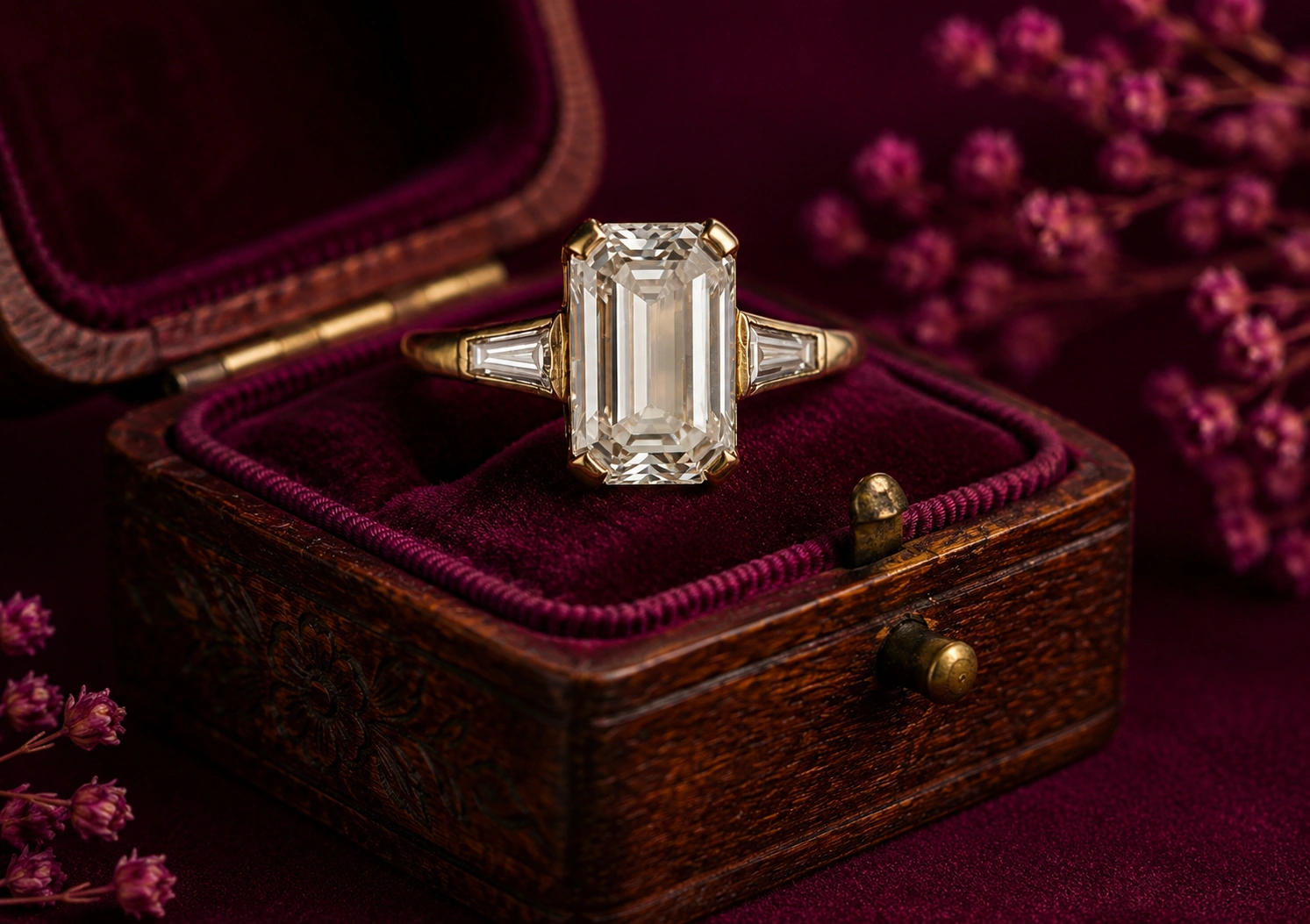
A portrait cut diamond ring can feature a simple bezel setting, a minimal metal frame, or a more elaborate design that incorporates additional gemstones or artwork.
The setting matters enormously because the stone itself is so transparent. The color of the metal, the surface beneath the diamond, and the overall construction can all influence how the stone looks.
How Is a Portrait Cut Diamond Made?
The exact cutting process varies depending on the rough material and the desired final design, but the fundamental idea is to create an extremely thin diamond with carefully polished surfaces.
This requires specialized cutting and polishing skills.
Because the stone is so thin, the cutter must balance the desired shape and transparency with the practical requirements of handling and setting the diamond.
The process also begins with suitable rough material. Not every rough diamond will produce a good portrait cut.
This is one reason why portrait cut diamond quality cannot be judged by carat weight alone.
A larger stone is not automatically a better stone.
For a portrait cut, the quality of the finished piece depends heavily on factors such as:
- Transparency
- Clarity
- Polish
- Shape
- Symmetry
- Overall craftsmanship
- Suitability for the intended setting
GIA notes that polish and symmetry are important aspects of diamond craftsmanship, while its standardized overall cut grading system applies specifically to standard round brilliant diamonds rather than all fancy shapes.
That distinction matters when shopping for unusual cuts. Do not assume that every non-round diamond comes with the same type of standardized cut assessment as a round brilliant.
Portrait Cut Diamond Price: Why Can It Vary So Much?
The portrait cut diamond price can vary significantly.
There is no single price formula that applies to every portrait cut. Factors such as whether the stone is natural or laboratory-grown, carat weight, clarity, color, shape, craftsmanship, and the rarity of the finished design can all affect pricing.
Custom cutting can also influence the final cost.
A natural portrait cut diamond with exceptional clarity and a custom shape may be difficult to source. On the other hand, a laboratory-grown diamond can provide another route for buyers who want to explore unconventional cuts.
However, buyers should avoid assuming that a portrait cut is automatically cheaper because it contains less diamond depth.
The value of a diamond involves more than the amount of material used. Rarity, quality, demand, craftsmanship, and the specifics of the stone all matter.
If you are comparing a natural portrait cut diamond with a portrait cut lab grown diamond, focus on what you are actually buying rather than assuming one is universally “better.”
The right choice depends on your budget, priorities, and personal preferences.
Portrait Cut Lab Grown Diamond: Is It a Good Option?
A portrait cut lab grown diamond can be an interesting choice for someone who wants this unusual style while having more flexibility in sourcing.
Laboratory-grown diamonds have the same crystal structure and chemical composition as natural diamonds, but they are created in controlled laboratory environments rather than formed naturally in the Earth’s mantle.
For a non-traditional cut, availability can be an important consideration.
If you want a specific shape, size, or clarity combination, working with a jeweler who can source or commission a custom-cut stone may give you more options.
As always, ask for clear information about the stone’s origin and any available grading documentation.
The important point is that “lab grown” and “natural” describe the diamond’s origin. They do not automatically tell you whether the specific portrait cut is attractive, well polished, or suitable for your design.
How to Choose a Portrait Cut Diamond
If you are wondering how to choose a portrait cut diamond, start with the visual effect you want.
1. Prioritize transparency
The entire appeal of a portrait cut depends on its clear, open appearance. Look for a stone that gives you the visual character you want.
2. Examine clarity carefully
Because the stone can be highly transparent, visible inclusions may stand out. Review the actual diamond rather than choosing solely by a clarity grade.
3. Check the polish
A poorly polished surface can take away from the clean, glass-like appearance that makes the style attractive.
4. Consider the shape
Portrait cuts can appear in different outlines. Rectangular, elongated, geometric, and more organic silhouettes can create very different looks.
Choose the shape that works with your jewelry design and personal style.
5. Think about the setting
The setting can dramatically affect a transparent diamond. A bezel, open setting, or decorative backing can change how the stone looks against the skin.
Ask to see photographs or videos of the actual stone in different lighting conditions.
6. Buy from a knowledgeable jeweler
Because portrait cuts are less standardized than mainstream diamond cuts, experience matters.
A jeweler who understands unusual diamond cuts should be able to explain the stone’s characteristics, origin, clarity, treatment if applicable, and available documentation.
Portrait Cut Diamond Pros and Cons
Like every diamond style, portrait cuts have advantages and limitations.
Pros
- Extremely distinctive appearance
- Minimalist and modern aesthetic
- Strong historical connection
- Excellent choice for unconventional jewelry
- Can create an artistic, almost invisible effect
- Works well for custom jewelry designs
Cons
- Does not offer the sparkle of a brilliant cut
- Inclusions may be easier to notice
- Can require specialized sourcing
- May be difficult to compare using standard cut-grading expectations
- Extremely thin stones require thoughtful setting and handling
The biggest “con” is also the biggest “pro”: portrait cuts are not trying to be conventional.
That is wonderful if you love the look.
It is less wonderful if you secretly want a round brilliant and are hoping a portrait cut will somehow behave like one.
Are Portrait Cut Diamonds Valuable?
The answer depends on what you mean by “valuable.”
A portrait cut can be valuable because of its diamond material, clarity, size, craftsmanship, rarity, historical associations, or artistic design. But you should not assume that every portrait cut diamond automatically carries a premium or strong resale value.
The diamond market does not treat every unusual cut in the same way.
If you are purchasing one as an investment, focus on independent documentation, provenance where relevant, and realistic market expectations.
If you are buying one because you genuinely love it, the calculation is much simpler.
You are buying a piece of jewelry that you want to wear.
That is often the most sensible reason to buy any unusual diamond.
Final Thoughts: Is a Portrait Cut Diamond Right for You?
A Portrait Cut Diamond is for someone who sees beauty beyond sparkle.
Its history, transparency, unusual proportions, and minimalist character make it one of the more fascinating alternatives to traditional diamond cuts. It can work beautifully as a portrait cut diamond engagement ring, a statement ring, or part of unique diamond jewelry.
However, it is important to understand what you are buying.
Portrait cuts do not behave like brilliant cuts. Their appeal comes from clarity, transparency, craftsmanship, and design rather than maximum light return.
When shopping, pay close attention to clarity, polish, symmetry, transparency, and the quality of the setting. Look at the actual stone whenever possible, and ask questions about its origin and documentation.
Ultimately, the best portrait cut diamond is not necessarily the biggest or the most expensive.
It is the one that gives you the visual character you love.
For some people, that means a traditional diamond that sparkles from across the room. For others, it means a nearly invisible stone that looks like a piece of glass floating on the skin.
And honestly, that is the charm of the portrait cut: it does not need to sparkle loudly to make a statement.
Frequently Asked Questions
What is a portrait cut diamond?
A portrait cut diamond is an extremely thin, flat diamond with a transparent, glass-like appearance and minimal faceting. The style has historical roots in Indian jewelry and is associated with the use of transparent diamonds over miniature portraits.
Are portrait cut diamonds real diamonds?
Yes. A portrait cut can be made from a natural diamond or a laboratory-grown diamond. The term “portrait cut” describes the cutting style, not the diamond’s origin.
Do portrait cut diamonds sparkle?
Portrait cut diamonds generally do not sparkle like brilliant-cut diamonds. Their beauty comes primarily from transparency, clarity, and a smooth, glass-like appearance.
Is a portrait cut diamond good for an engagement ring?
Yes, if you prefer an unconventional engagement ring with a minimalist and artistic appearance. It may not be ideal if your priority is maximum brilliance and traditional diamond sparkle.
Is portrait cut diamond clarity important?
Yes. Because portrait cuts are highly transparent, visible inclusions can be more noticeable. Examining the actual stone is especially important when choosing one.
What is the difference between a portrait cut and an emerald cut diamond?
An emerald cut is a deeper step-cut diamond with broad, rectangular facets that create a hall-of-mirrors effect. A portrait cut is typically much thinner and focuses on transparency rather than traditional faceted reflections.
What is the difference between a portrait cut and a rose cut diamond?
A rose cut has a flat base and a domed, faceted top that creates soft sparkle. A portrait cut is generally flatter and more transparent, with minimal faceting.
How do I buy a portrait cut diamond?
Look for strong transparency, good clarity, high-quality polish, and a shape that suits your design. Ask the jeweler about the stone’s origin, documentation, craftsmanship, and setting requirements before purchasing.
Are portrait cut diamonds expensive?
Prices vary widely. Natural or laboratory-grown origin, carat weight, clarity, color, craftsmanship, rarity, and custom cutting can all influence the price. There is no single standard price for every portrait cut diamond.