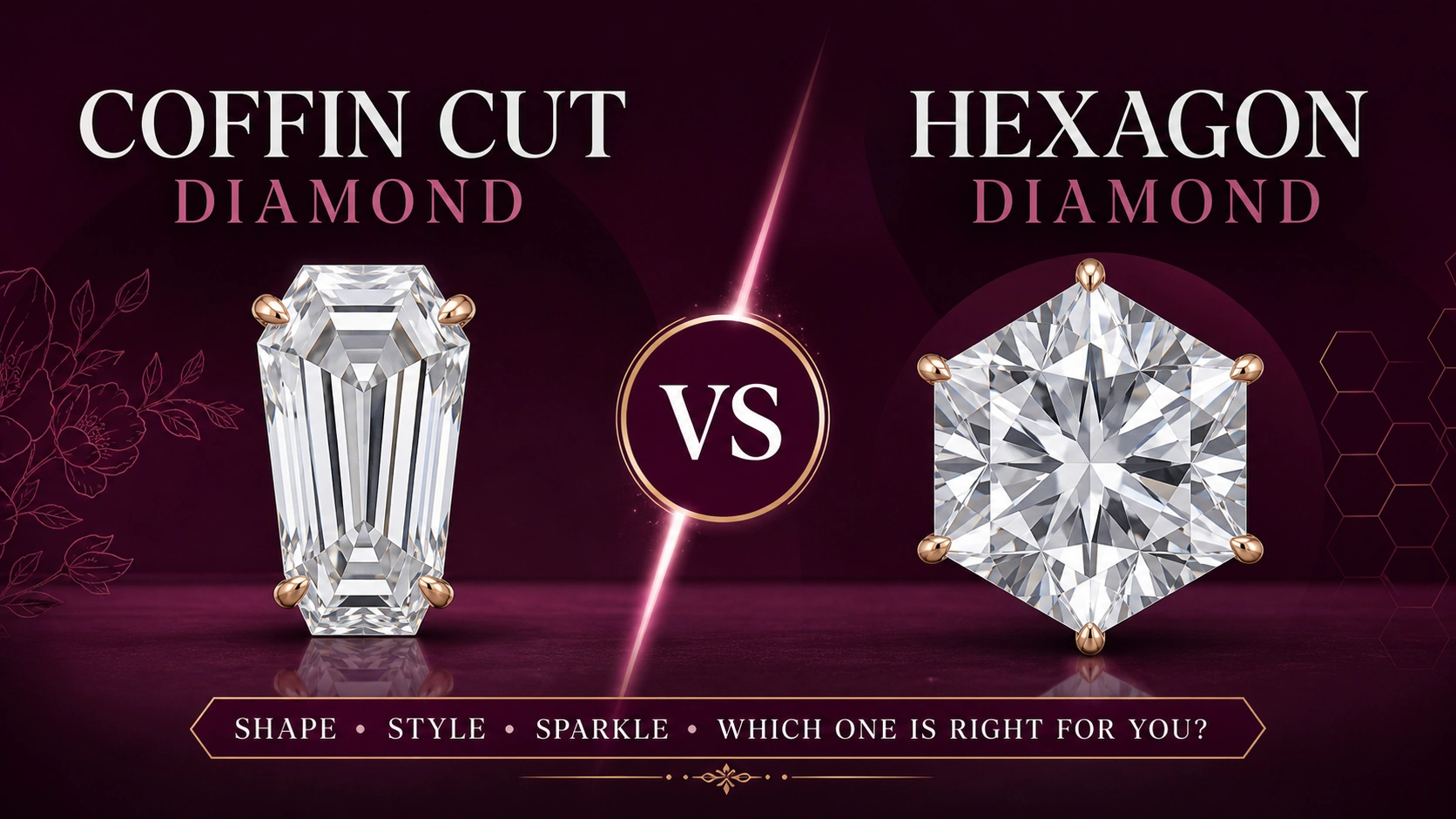
Coffin cut and hexagon diamonds are both striking choices for an unconventional engagement ring. At first glance, they can look similar because both use angular, six-sided outlines. But the two shapes create very different impressions on the hand.
A coffin cut diamond has a more elongated, coffin-like silhouette, usually with longer sides and angled corners. A hexagon diamond emphasizes six-sided symmetry and can look more balanced, architectural, or geometric.
So which one is better?
If you want a dramatic, elongated shape with a distinctly gothic feel, the coffin cut is usually the stronger choice. If you prefer clean symmetry and a modern geometric appearance, a hexagon may be a better fit.
Coffin Cut Diamond vs Hexagon Diamond: Quick Comparison
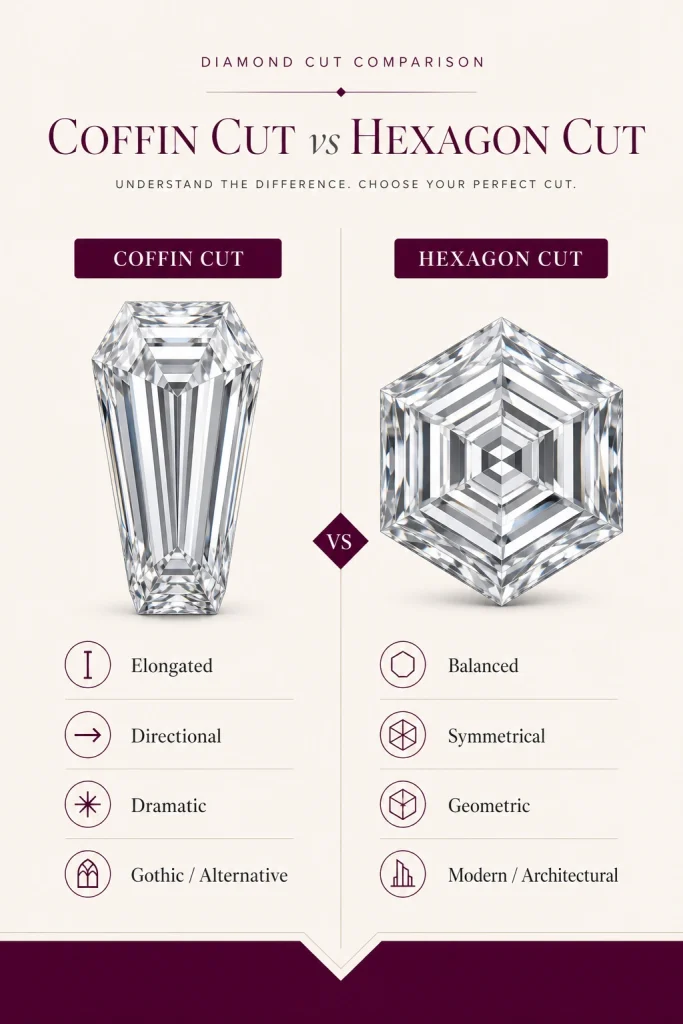
| Feature | Coffin Cut Diamond | Hexagon Diamond |
|---|---|---|
| Overall shape | Elongated coffin-like outline | Six-sided geometric outline |
| Visual character | Dark, dramatic, gothic | Modern, architectural, geometric |
| Symmetry | Elongated and directional | More balanced and symmetrical |
| Finger coverage | Usually looks longer | Usually looks broader and more compact |
| Style | Gothic, alternative, dramatic | Modern, minimalist, vintage, architectural |
| Faceting | Can vary by stone | Can be step, brilliant, or rose cut |
| Best for | Nontraditional and gothic rings | Geometric and contemporary rings |
| Main attraction | Distinctive elongated silhouette | Strong six-sided symmetry |
The most important distinction is simple: a coffin shape emphasizes length, while a conventional hexagon emphasizes symmetry.
Coffin Cut Diamond
A coffin cut diamond is a specialty diamond shape with an angular outline inspired by the silhouette of a coffin.
Its proportions can vary, but the shape generally looks more elongated than a regular hexagon. The longer sides and angled corners create a distinctive outline that immediately separates it from conventional diamond shapes.
The unusual silhouette is one reason coffin diamonds appeal to shoppers looking for alternative or gothic engagement rings.
However, the shape does not automatically make a ring gothic. A coffin diamond in a dark metal or ornate setting can look dramatic and gothic, while the same stone in a simple white-gold or platinum setting can feel more modern and minimalist.
Because coffin cuts are specialty shapes rather than one universally standardized cutting style, individual stones can differ in proportions and faceting.
If you want to explore the shape in greater detail, see the Coffin Cut Diamond Guide.
Hexagon Diamond
A hexagon diamond has a six-sided outline. The sides may be relatively even for a balanced geometric appearance, or the stone can be elongated to create a longer silhouette.
Unlike a traditional round brilliant, a hexagon is primarily defined by its outline. The internal faceting can vary considerably.
For example, hexagon diamonds can be:
- Step cut
- Brilliant cut
- Rose cut
- Regular or elongated in proportion
A step-cut hexagon can create broad reflections and a clean, architectural appearance, while a brilliant-faceted version can produce more active sparkle.
This flexibility makes hexagon diamonds surprisingly versatile. They can look contemporary, vintage-inspired, minimalist, or even slightly industrial depending on the cut and setting.
For a deeper explanation of the shape, see the Hexagon Cut Diamond Guide.
Coffin vs Hexagon: The Key Differences
1. Shape and Silhouette
The biggest difference is the outline.
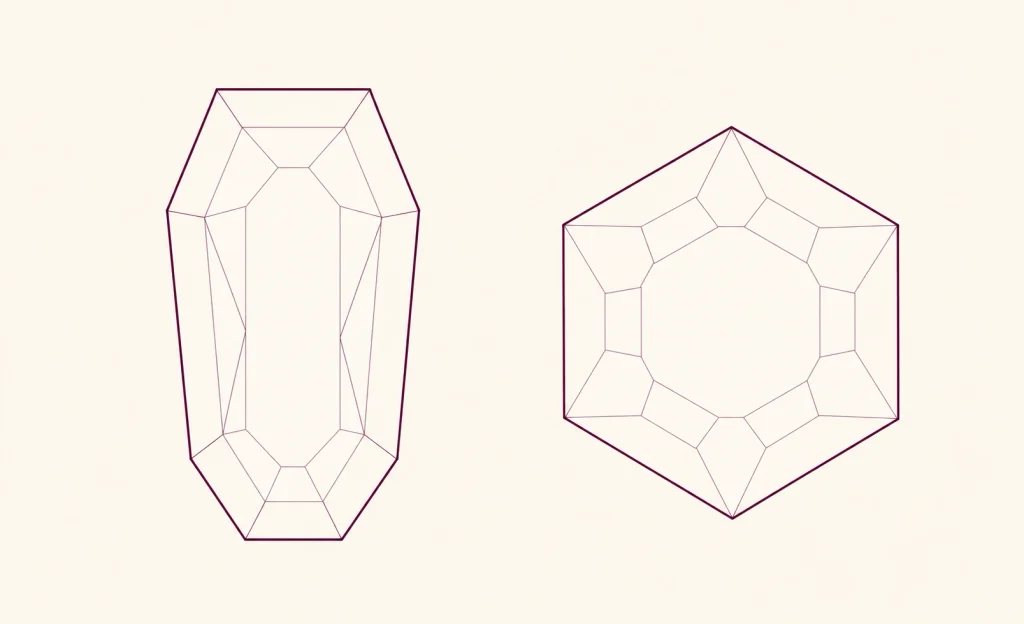
A coffin cut generally has a longer, more directional silhouette. Its angled corners and elongated body create a shape that looks almost like a stylized coffin.
A conventional hexagon has a more balanced six-sided outline. The geometry is easier to recognize as a true hexagon and tends to feel more symmetrical.
This difference becomes especially noticeable when both stones are placed side by side.
Choose coffin if: you want length and drama.
Choose hexagon if: you want symmetry and geometric balance.
2. Proportions
Coffin diamonds tend to emphasize an elongated shape. This can make the center stone visually stretch along the finger.
Hexagon diamonds can have different proportions, too. A regular hexagon creates a compact appearance, while an elongated hexagon gives you more finger coverage without losing the six-sided identity.
There is no universally ideal proportion for either shape.
The right choice depends on whether you prefer a stone that looks:
- Long and narrow
- Broad and symmetrical
- Compact and geometric
- Elongated but still strongly angular
With unusual shapes, looking at the actual stone is more useful than relying solely on a number such as length-to-width ratio.
3. Faceting and Sparkle
The outline and the faceting are separate considerations.
A coffin diamond can have different facet arrangements, so two coffin-shaped stones may not have exactly the same light performance.
Hexagon diamonds can also use different faceting styles. Step-cut hexagons tend to produce broad flashes and a reflective, hall-of-mirrors effect, while brilliant-cut versions can create more lively sparkle.
If sparkle is your priority, don’t choose between coffin and hexagon based on shape alone. Examine the individual stone’s:
- Facet pattern
- Light return
- Symmetry
- Transparency
- Clarity
- Overall visual appearance
This is particularly important with specialty shapes because there is less standardization than with mainstream cuts.
4. Gothic vs Modern Appearance
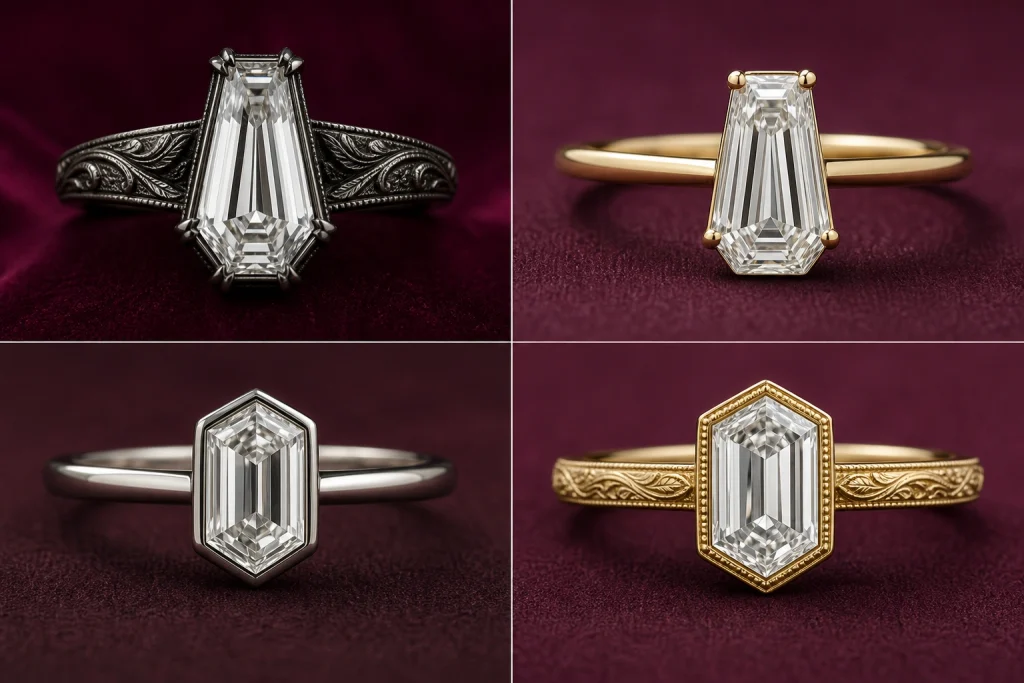
This is where the two shapes have perhaps their biggest stylistic difference.
A coffin diamond naturally lends itself to gothic and alternative jewelry because its elongated silhouette has a darker, more dramatic visual language.
A hexagon tends to feel more architectural and modern. Its balanced geometry can look clean and sophisticated without necessarily having a gothic association.
That said, the setting can change the personality of either stone.
For example:
Coffin + black metal + ornate details = strongly gothic
Coffin + simple gold setting = modern alternative
Hexagon + bezel setting + minimal band = contemporary
Hexagon + antique details + yellow gold = vintage-inspired
So the stone is only part of the final design.
5. Ring Settings
Both shapes benefit from a setting that respects their angular outlines.
A bezel setting can emphasize the geometric silhouette while providing additional protection around the edges.
Prong settings can leave more of the outline visible, which is useful if the shape itself is the main design feature. However, the exact prong arrangement should be chosen according to the stone’s corners and proportions.
Coffin diamonds can work particularly well in:
- Solitaire settings
- Bezel settings
- Vintage-inspired settings
- Halo designs
- East-west designs
- Alternative engagement rings
Hexagon diamonds can work well in:
- Solitaire settings
- Bezel settings
- Cluster designs
- Geometric settings
- Halo settings
- Modern minimalist rings
For more ideas, see the guide to coffin diamond ring settings.
6. Durability and Edge Protection
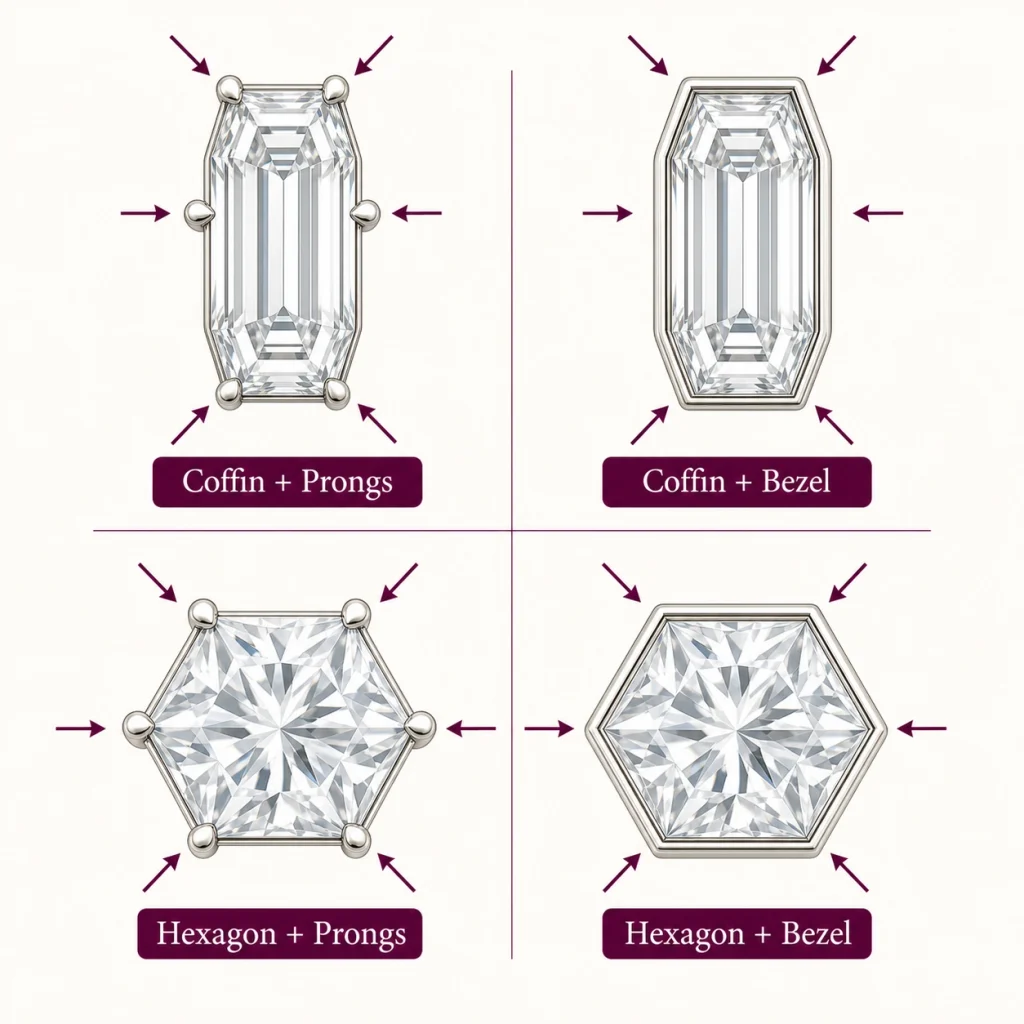
Both shapes have angular corners or edges that deserve attention when choosing a setting.
A ring designed for everyday wear should protect vulnerable areas without hiding the character of the stone.
A well-designed bezel or prong arrangement can help secure the stone while still allowing its outline to remain visible.
This matters particularly with hexagons because their defined corners can be exposed when the stone is set with minimal protection. Similar considerations apply to the angled corners of a coffin diamond.
The stone’s actual construction and setting should therefore be considered together rather than treating the shape alone as a durability rating.
Which Looks More Gothic: Coffin or Hexagon?
Coffin cut wins for a traditionally gothic aesthetic.
The elongated coffin silhouette has an immediate association with gothic, macabre, and alternative jewelry. It can create a stronger visual statement without requiring elaborate detailing.
A hexagon can certainly be used in a gothic ring, especially when paired with:
- Black diamonds
- Dark metal
- Ornate engraving
- Milgrain
- Vintage-inspired details
- Gothic motifs
But the underlying geometry of a hexagon usually feels more architectural than macabre.
If your goal is specifically a gothic engagement ring, a coffin shape gives you a stronger starting point.
You can also explore gothic engagement rings for broader style inspiration.
Which Looks More Modern?
Hexagon usually has the edge for a clean modern look.
Its symmetry makes it naturally suited to minimalist and architectural designs.
A simple hexagon center stone with a plain band can look contemporary without needing much additional decoration.
Coffin diamonds can also look modern, particularly when the setting is restrained. But their distinctive silhouette tends to make the ring feel more alternative and statement-driven.
Think of the difference this way:
Hexagon: “I love unusual geometry.”
Coffin: “I want an unusual shape with attitude.”
Which Is Better for an Engagement Ring?
Neither shape is universally better. The better option depends on the look you want.
Choose a Coffin Cut Diamond If You:
- Want a gothic or alternative engagement ring
- Prefer elongated shapes
- Want a dramatic center stone
- Like unconventional jewelry
- Want the diamond’s silhouette to be the main focal point
- Prefer a darker or more mysterious aesthetic
Choose a Hexagon Diamond If You:
- Prefer balanced geometry
- Like modern or architectural jewelry
- Want a six-sided center stone
- Prefer a more versatile visual style
- Like minimalist engagement rings
- Want the option of regular or elongated proportions
If you are choosing primarily for style personality, the distinction is quite clear.
Coffin is more dramatic. Hexagon is more architectural.
Coffin Cut vs Hexagon: Pros and Cons
Coffin Cut Diamond
Pros
- Distinctive elongated silhouette
- Strong gothic and alternative appeal
- Excellent choice for a statement engagement ring
- Looks different from conventional diamond shapes
- Can create attractive finger length
Cons
- Less conventional and potentially harder to source
- Individual proportions can vary
- Not every setting will complement the shape
- The gothic association may feel too strong for some buyers
Hexagon Diamond
Pros
- Strong geometric appearance
- Balanced and symmetrical look
- Works with modern, vintage, and minimalist designs
- Available in different faceting styles
- Regular and elongated versions provide different visual effects
Cons
- Sharp corners need thoughtful protection
- Step-cut versions can make clarity more noticeable
- Availability can be more limited than mainstream shapes
- The look depends heavily on the individual stone’s faceting and proportions
Which One Should You Choose?
The easiest way to decide is to start with the overall personality you want from the ring.
Pick a coffin cut diamond if you want:
A dramatic, elongated, gothic-inspired engagement ring that feels unmistakably unconventional.
Pick a hexagon diamond if you want:
A balanced, geometric center stone that feels modern, architectural, and distinctive without being as overtly gothic.
If you’re still undecided, compare actual stones rather than judging only from diagrams or names. Two diamonds with the same nominal shape can look quite different because of their proportions, faceting, symmetry, and setting.
For shoppers who want to browse unusual styles, the Coffin Diamond Rings collection and Coffin Cut Engagement Rings collection are natural places to continue exploring.
There is also a Hexagon Lab Grown Diamond Engagement Rings collection for shoppers specifically considering lab-grown stones.
Frequently Asked Questions
Is a coffin cut diamond the same as a hexagon?
No. They can both have six-sided geometric outlines, but a coffin cut generally has a more elongated coffin-like silhouette, while a conventional hexagon emphasizes a more balanced six-sided shape.
Which is more gothic, coffin or hexagon?
A coffin cut is generally more gothic because of its elongated, dramatic silhouette. A hexagon usually has a cleaner architectural appearance, although its setting can give it a gothic character.
Does a hexagon diamond sparkle more than a coffin diamond?
Not necessarily. Sparkle depends largely on the stone’s faceting and cut quality rather than its outline alone. Brilliant-faceted hexagons can be highly sparkly, while step-cut stones generally produce broader flashes.
Are coffin diamonds good for engagement rings?
Yes. Their unusual silhouette makes them a strong choice for someone who wants a nontraditional engagement ring, particularly a gothic or alternative design.
Are hexagon diamonds good for engagement rings?
Yes. Hexagon diamonds can work well in solitaire, bezel, cluster, halo, and other settings. Their geometric outline makes them particularly appealing for modern and unconventional engagement rings.
Which diamond shape looks longer on the finger?
A coffin diamond will generally create a stronger elongated effect because of its longer silhouette. An elongated hexagon can also provide substantial finger coverage while maintaining its six-sided geometry.
Which should I choose for a gothic engagement ring?
A coffin cut is usually the more natural choice for a strongly gothic design. A hexagon is better suited to shoppers who want geometric modernity but can still be styled with darker metals and gothic details.
Which is more unusual: coffin or hexagon?
Both are uncommon compared with round, oval, princess, and cushion shapes. The coffin cut generally feels more niche because of its distinctive silhouette, while hexagons have become a recognizable choice for geometric and alternative engagement rings.