Gothic engagement rings are for couples who want their ring to feel personal, distinctive, and a little outside the traditional bridal playbook.
They can be dark and dramatic, but they do not have to be. A Gothic engagement ring might feature a black diamond and thorn-inspired setting, or it might use a classic white diamond with pointed architecture, intricate filigree, antique details, or claw prongs.
That range is what makes Gothic style so interesting.
The best Gothic engagement rings are not simply “dark” versions of traditional rings. They combine shape, metal, gemstone, setting, and symbolism to create a distinctive visual language. Gothic jewelry can draw inspiration from Gothic architecture, Victorian design, romanticism, antique jewelry, nature, and modern alternative fashion.
If you are considering one, this guide will help you understand the style, compare different Gothic aesthetics, choose the right stone and setting, and find a ring that feels dramatic without becoming difficult to wear.
What Is a Gothic Engagement Ring?
A Gothic engagement ring is an engagement ring influenced by Gothic aesthetics, including architectural forms, dark romanticism, Victorian-inspired jewelry, unusual gemstones, ornate metalwork, and symbolic motifs.
There is no single design that makes a ring Gothic.
Some rings are unmistakably dramatic, with black diamonds, skulls, coffins, dark metals, and elaborate details. Others are much more understated, using a pointed silhouette, claw prongs, antique diamond cuts, or delicate filigree to create a Gothic feeling.
This distinction matters because Gothic style is better understood as a design language than a checklist.
A ring does not need to include every Gothic element. In fact, combining too many dramatic features can make the design feel more theatrical than timeless.
A more refined approach is often to choose one or two strong Gothic elements and let the rest of the ring support them.
What Makes an Engagement Ring Gothic?
Several design characteristics commonly create a Gothic appearance.
1. Architectural Shapes
Gothic architecture is one of the clearest sources of inspiration.
Pointed arches, vertical lines, tracery, cathedral-inspired structures, and intricate openwork can all translate beautifully into ring design. Contemporary Gothic jewelry often borrows these architectural cues to make the setting feel more sculptural.
Look for:
- Pointed arches
- Cathedral-style settings
- Geometric halos
- Architectural galleries
- Open filigree
- Sharp or elongated silhouettes
These details can make even a traditional white diamond feel Gothic.
2. Dark or Unusual Gemstones
Black diamonds are an obvious choice, but they are far from the only option.
Gothic rings can work beautifully with:
- Black diamonds
- Salt-and-pepper diamonds
- Gray diamonds
- Deep red gemstones
- Garnet
- Ruby
- Sapphire
- Amethyst
- Onyx
- Other dark or unusual gemstones
The goal is not necessarily to choose the darkest stone available. Instead, think about the mood you want the center stone to create.
A black diamond produces a bold, monochromatic look. A deep red gemstone introduces a romantic and dramatic quality. A gray or salt-and-pepper diamond can feel more organic and mysterious.
3. Ornate Metalwork
Gothic design often gives the setting more visual importance than a conventional solitaire would.
Filigree, engraving, milgrain-inspired detailing, scrollwork, vines, leaves, and open metalwork can transform the band and gallery into part of the overall design.
This is particularly useful if you want a Gothic ring without using a black gemstone.
4. Pointed or Claw-Like Details
Claw prongs, sometimes called talon prongs, are particularly effective because their pointed shapes naturally create a sharper, more dramatic appearance.
They can be paired with:
- Round diamonds
- Oval diamonds
- Pear shapes
- Marquise diamonds
- Emerald cuts
- Unusual geometric stones
5. Symbolic Motifs
Gothic jewelry frequently uses symbolism rather than decoration for decoration’s sake.
Common motifs include:
- Roses
- Thorns
- Skulls
- Serpents
- Bats
- Crosses
- Crowns
- Moons
- Stars
- Coffins
- Leaves and vines
The meaning can be personal. A thorn may represent protection or the difficult parts of love, while a rose can combine beauty and darkness.
For a deeper look at symbolism, see the guide to Gothic engagement ring meaning.
The Main Gothic Engagement Ring Styles
One of the easiest ways to choose a Gothic engagement ring is to identify the specific Gothic aesthetic that appeals to you.
Victorian Gothic
Victorian Gothic is ideal if you love antique jewelry, intricate details, romantic symbolism, and old-world elegance.
Typical features include:
- Filigree
- Milgrain-style details
- Antique-inspired settings
- Rose or yellow gold
- Dark gemstones
- Elaborate halos
- Floral motifs
- Intricate galleries
Victorian-inspired Gothic rings tend to feel romantic rather than aggressively dark.
If that sounds like your style, explore Victorian Gothic engagement rings for more inspiration.
Gothic Romance
Gothic romance sits between traditional bridal jewelry and a darker aesthetic.
Instead of skulls or overtly macabre motifs, these rings might use:
- Deep red gemstones
- Thorn-like bands
- Romantic floral details
- Vintage settings
- Dark metal accents
- Dramatic halos
This is one of the easiest Gothic styles to wear every day because it can retain a conventional engagement-ring silhouette while introducing darker details.
Architectural Gothic
Architectural Gothic focuses on structure.
Think pointed arches, cathedral-inspired settings, geometric lines, dramatic profiles, and open metalwork.
This style is particularly effective with elongated gemstones such as marquise, pear, or other angular shapes because the stone and setting reinforce each other visually.
Dark and Dramatic Gothic
This is the style most people imagine when they hear “Gothic engagement ring.”
It may include:
- Black diamonds
- Blackened or dark metal
- Coffin-shaped stones
- Skull motifs
- Thorn details
- Heavy engraving
- Dramatic halos
- Strong contrast
It is expressive and unmistakably alternative.
The key is proportion. If the center stone, band, and motifs are all competing for attention, the ring can become visually overwhelming.
Celestial Gothic
Celestial Gothic combines darkness with stars, moons, planets, and night-sky imagery.
Instead of relying entirely on black stones, this style may use:
- Crescent moons
- Star motifs
- Celestial halos
- Dark blue gemstones
- Black diamonds
- Tiny accent stones
- Constellation-inspired engraving
It is a good choice if you want something mystical without using traditionally macabre imagery.
Minimalist Gothic
Gothic does not have to mean ornate.
A minimalist Gothic ring might have:
- A simple dark gemstone
- A pointed band
- A black diamond
- A clean bezel
- A subtle architectural detail
- One symbolic accent
This approach is particularly attractive if you want the ring to feel distinctive while remaining easy to wear with everyday clothing.
Choosing the Right Stone for a Gothic Engagement Ring
The center stone can dramatically change the personality of a Gothic ring.
Black Diamonds
Black diamonds are among the most recognizable choices for Gothic engagement rings.
Their opaque appearance creates strong contrast and works particularly well with white gold, yellow gold, rose gold, or darker finishes.
They can also provide a more contemporary look than some heavily vintage-inspired designs.
For more information, see the guide to black diamond engagement rings.
If you want the strongest combination of Gothic styling and a black center stone, a black diamond Gothic engagement ring is an obvious direction.
Salt-and-Pepper Diamonds
Salt-and-pepper diamonds offer a softer alternative to an opaque black diamond.
Their natural-looking inclusions create gray, black, and white patterns inside the stone, giving the ring an organic and slightly mysterious character.
They work particularly well with antique, rustic, alternative, and nature-inspired Gothic designs.
Red Gemstones
Deep red stones such as ruby and garnet can create a dramatic Gothic-romantic appearance.
The color introduces warmth into an otherwise dark design and pairs naturally with rose or yellow gold.
Dark Blue and Purple Gemstones
Sapphire and amethyst can create a less conventional but equally atmospheric ring.
Deep blue sapphire feels elegant and mysterious, while purple gemstones can push the design toward a more fantasy-inspired aesthetic.
White Diamonds
A Gothic engagement ring does not need a dark center stone.
A white diamond can actually make the setting the star of the design.
Pairing a bright diamond with claw prongs, blackened accents, thorn-like metalwork, architectural details, or elaborate filigree can create a Gothic look while retaining the familiarity of a traditional diamond.
Best Diamond Cuts for Gothic Engagement Rings
The diamond shape can influence the entire character of the ring.
Marquise
Marquise diamonds have pointed ends and an elongated silhouette, making them a natural fit for Gothic designs.
The shape works particularly well with:
- Claw prongs
- Thorn-inspired settings
- East-west designs
- Gothic halos
- Dark metal accents
See Gothic engagement rings with marquise diamonds for a more focused look.
Rose Cut
Rose cuts have a flat base and faceted domed top, giving them a distinctly antique appearance.
They are particularly suited to vintage and Victorian Gothic designs.
Explore Gothic engagement rings with rose-cut diamonds if you prefer an old-world aesthetic.
Coffin Cut
Coffin-shaped gemstones are one of the most overtly Gothic choices.
The shape immediately creates a darker, more unconventional silhouette and can be used as the central design feature of the ring.
For a deeper exploration, see the complete guide to coffin cut diamond rings.
Pear
Pear-shaped diamonds combine a rounded end with a pointed tip.
That point can echo thorn, leaf, claw, or teardrop imagery, making the shape surprisingly versatile for Gothic designs.
Oval
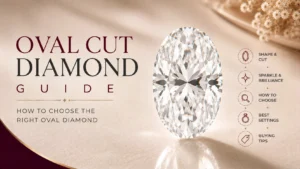
Oval diamonds are softer and more traditional than marquise or coffin cuts, but they can still work beautifully in Gothic settings.
An ornate halo, claw prongs, architectural gallery, or darker metal can completely change the feel of an otherwise classic oval.
Emerald Cut
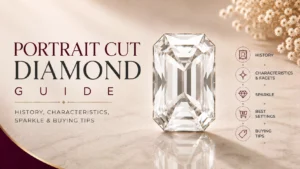
Emerald cuts offer clean geometric lines rather than faceted sparkle.
That structured appearance can complement architectural Gothic designs, especially when paired with strong metalwork.
Choosing the Metal
The metal determines how the Gothic elements come together.
White Gold
White gold provides a bright, cool foundation.
It works especially well with:
- Black diamonds
- Gray diamonds
- Black accents
- Sapphire
- Geometric designs
Yellow Gold
Yellow gold creates stronger contrast against dark gemstones and can give Gothic rings a vintage or Victorian character.
It is particularly effective with garnet, ruby, black diamonds, and antique-inspired settings.
Rose Gold
Rose gold introduces warmth and softness.
It can make an otherwise dark Gothic design feel more romantic and less severe.
Platinum
Platinum provides a naturally white appearance and a substantial feel.
It is a good choice if you want Gothic details without using a dark metal finish.
Black or Dark Finishes
Blackened or dark metal can produce the strongest Gothic appearance.
However, it is worth considering how the finish will behave over time and how the ring will look if raised surfaces become lighter through wear.
The setting should also be evaluated independently from the finish. A black metal ring with a generic design is not necessarily Gothic; the shape, structure, and details still matter.
Gothic Settings and Details to Look For
The setting is where a Gothic engagement ring can become truly distinctive.
Cathedral Settings
Cathedral-style structures naturally complement Gothic architecture.
Raised arches can create a dramatic profile while giving the center stone visual prominence.
Claw Prongs
Claw prongs add pointed details around the center stone.
They are particularly effective with marquise, pear, oval, and other elongated shapes.
Filigree
Filigree adds delicate ornamental detail to the band, shoulders, or gallery.
It is especially useful for Victorian Gothic rings.
Halo Settings
A Gothic halo does not have to be a standard circle of small diamonds.
It can incorporate:
- Pointed shapes
- Geometric elements
- Thorn-like details
- Black accent stones
- Asymmetric designs
Bezel Settings
A bezel setting can create a clean, contemporary Gothic look.
It is particularly attractive if you prefer minimalist Gothic jewelry rather than heavily ornate designs.
Gothic Symbols and What They Can Represent
Symbolism is one of the biggest reasons couples choose Gothic jewelry.
Roses
Roses can represent love, beauty, passion, and the contrast between beauty and mortality.
Thorns
Thorns can symbolize protection, resilience, sacrifice, or the idea that meaningful love can contain difficult moments.
Skulls
Skulls are associated with mortality and the memento mori tradition, but in modern Gothic jewelry they can also represent eternal love, acceptance of mortality, or a commitment to live fully.
Serpents
Serpents can carry many interpretations, including transformation, rebirth, protection, temptation, and eternal cycles.
Bats
Bats are strongly associated with Gothic culture and can give a ring a playful alternative character.
Coffins
Coffin imagery is one of the boldest Gothic motifs.
It can represent mortality, eternal devotion, or simply an intentionally unconventional aesthetic.
Celestial Symbols
Moons and stars can suggest mystery, eternity, dreams, and the idea of two people sharing the same night sky.
The important thing is not choosing a symbol because it is “Gothic enough.” Choose one that actually means something to you.
How to Make a Gothic Engagement Ring Look Elegant
A Gothic ring can be dramatic without looking like costume jewelry.
The easiest way to achieve that balance is to control the number of statement elements.
For example:
Elegant approach:
- One dark gemstone
- Refined metalwork
- One distinctive motif
- Balanced proportions
- High-quality setting
Overloaded approach:
- Black stone
- Skull halo
- Thorn band
- Multiple symbols
- Heavy engraving
- Extremely tall setting
- Several contrasting finishes
The second design may be intentionally theatrical, but it is much harder to create a timeless appearance.
A good rule is to choose one primary statement and let the rest of the design support it.
If you want a darker look that still feels refined, consider elegant Gothic engagement rings as a useful direction.
How to Choose a Gothic Engagement Ring for Everyday Wear
An engagement ring is usually worn frequently, so appearance is only part of the decision.
Consider your lifestyle before choosing an elaborate design.
If You Work With Your Hands
A lower-profile setting or protective setting may be more practical than an extremely tall, intricate design.
If You Prefer Low Maintenance
Simpler bands and fewer delicate details can make cleaning and maintenance easier.
If You Want Maximum Drama
A high-profile setting, unusual center stone, or elaborate halo can create a spectacular effect, but it may require more attention during everyday wear.
Think About the Stone
Different gemstones have different levels of durability.
For a ring intended for everyday wear, consider the hardness and toughness of the center stone, as well as how exposed its edges and corners are.
A pointed gemstone may look incredible but can require more thoughtful protection around vulnerable areas.
How to Choose Your Gothic Style
If you are overwhelmed by the number of choices, start with these five questions.
1. Do You Want Subtle or Dramatic Gothic?
If you want something understated, focus on architecture, antique cuts, or a single dark stone.
If you want maximum impact, consider black diamonds, coffin cuts, dramatic halos, or symbolic motifs.
2. Which Era or Mood Appeals to You?
Do you prefer:
- Victorian romance?
- Medieval architecture?
- Dark romanticism?
- Celestial fantasy?
- Modern alternative fashion?
- Minimalist darkness?
Your answer can immediately narrow the options.
3. What Should the Center Stone Say?
A black diamond feels bold.
A white diamond feels more traditional.
A ruby feels passionate.
A sapphire feels mysterious.
A salt-and-pepper diamond feels organic and unconventional.
4. How Much Symbolism Do You Want?
You can keep the symbolism subtle with hidden engraving or architectural details, or make it the central feature with skulls, thorns, serpents, or coffins.
5. Will You Still Love It Years From Now?
Trends can be fun, but an engagement ring should ultimately feel connected to your identity.
Ask yourself whether you love the entire design or simply one currently popular Gothic feature.
Gothic vs. Alternative vs. Dark Romance Engagement Rings
These styles overlap, but they are not identical.
Gothic Engagement Rings
Usually emphasize:
- Dark or dramatic aesthetics
- Architectural inspiration
- Symbolic motifs
- Pointed shapes
- Ornate metalwork
- Victorian or medieval influences
Alternative Engagement Rings
Alternative is the broader category.
It can include Gothic designs, but also:
- Unique gemstones
- Unusual cuts
- Nontraditional settings
- Colored stones
- Nature-inspired designs
- Modern artistic rings
Dark Romance Engagement Rings
Dark romance tends to be softer and more romantic.
It may use:
- Deep colors
- Vintage details
- Floral motifs
- Black diamonds
- Romantic symbolism
- Antique-inspired settings
A ring can belong to more than one category.
For example, a black diamond ring with thorn-inspired metalwork could be Gothic, alternative, and dark romantic at the same time.
Where to Start Shopping for Gothic Engagement Rings
Once you understand the design language, browsing by collection can be much easier than searching through every type of engagement ring.
A broad Gothic Engagement Rings collection is the best starting point if you are still deciding what style suits you.
From there, you can narrow the aesthetic.
For a stronger black-and-dark aesthetic, explore Black Diamond Gothic Engagement Rings.
For an old-world look, browse Vintage Gothic Engagement Rings.
And if you want something less predictable, Unique Gothic Engagement Rings can help you explore more unusual designs.
If coffin-shaped stones are what attracted you to Gothic jewelry in the first place, the Coffin Cut Engagement Rings collection is another natural direction.
Frequently Asked Questions
Are Gothic engagement rings only for people who dress Gothic?
No.
Gothic engagement rings range from extremely dramatic to surprisingly subtle. A person can wear a traditional wardrobe and still choose a Gothic ring because they appreciate antique details, unusual shapes, symbolism, or architectural design.
Does a Gothic engagement ring have to be black?
No.
Black is common, but Gothic design can also use white diamonds, gray diamonds, red gemstones, blue sapphire, purple gemstones, yellow gold, rose gold, and platinum.
The overall design matters more than the color alone.
What is the most Gothic-looking diamond shape?
There is no single answer, but marquise and coffin-shaped stones are particularly effective because their pointed or angular silhouettes naturally create a dramatic appearance.
Rose cuts can be excellent for a vintage Gothic look, while emerald cuts work well with architectural designs.
Can a Gothic engagement ring still look elegant?
Absolutely.
Elegance usually comes from restraint and proportion.
A sophisticated Gothic ring might use one unusual center stone, refined filigree, pointed prongs, and a carefully balanced setting rather than combining every possible Gothic motif.
Are Gothic engagement rings suitable for everyday wear?
Yes, provided the individual ring is designed appropriately for everyday use.
Pay attention to the center stone’s durability, setting security, exposed edges, profile height, and amount of delicate metalwork.
Are black diamonds real diamonds?
Yes. Black diamonds are genuine diamonds. Their appearance comes from the way the stone’s color and internal structure interact with light.
If you are comparing black diamonds with other dark-looking stones, make sure you understand the difference before purchasing.
What is the difference between Gothic and dark romance?
Gothic usually leans more heavily into architectural, symbolic, dramatic, and darker elements.
Dark romance tends to be softer, more romantic, and often more floral or vintage-inspired.
There is considerable overlap between the two.
Can I wear a Gothic engagement ring with a traditional wedding band?
Dark romance tends to be softer, more romantic, and often more floral or vintage-inspired.
There is considerable overlap between the two.
Yes.
The key is to create a visual connection between the two rings.
You can match the metal, repeat a gemstone color, choose a curved wedding band that follows the engagement ring’s shape, or use a simpler band that lets the Gothic ring remain the focal point.
Final Thoughts
Gothic engagement rings are not defined by one gemstone, one color, or one symbol.
The strongest designs bring several elements together intentionally: architecture, proportion, gemstone choice, metal, setting, and symbolism.
That might mean a black diamond surrounded by dramatic claw prongs. It might mean a Victorian-inspired white diamond ring covered in delicate filigree. Or it could be a minimalist ring with a pointed silhouette and one subtle Gothic detail.
The right choice is the one that reflects your relationship and your personal style rather than simply checking every Gothic box.
Start with the overall mood you want. Then choose the stone, shape, metal, setting, and symbolism that support it.
That is what turns a Gothic engagement ring from a novelty into a meaningful piece of jewelry you can see yourself wearing for years.