If a traditional solitaire engagement ring doesn’t feel like you, you may have come across two terms while shopping: gothic engagement rings and alternative engagement rings.
The two styles overlap, but they aren’t interchangeable.
Alternative engagement rings are a broad category of rings that move away from conventional bridal styles. They can include unusual gemstones, distinctive diamond shapes, nature-inspired designs, colorful stones, vintage details, asymmetrical settings, and gothic aesthetics.
Gothic engagement rings are more specific. They usually have a darker, more dramatic visual language influenced by Gothic architecture, Victorian design, dark romance, symbolism, or other gothic motifs.
In other words, gothic rings can be alternative, but not every alternative engagement ring is gothic.
That distinction can make it much easier to narrow down the right ring for your style.
Gothic vs Alternative Engagement Rings at a Glance
| Feature | Gothic Engagement Rings | Alternative Engagement Rings |
|---|---|---|
| Overall category | Specific aesthetic | Broad category |
| Typical mood | Dark, dramatic, romantic, mysterious | Individual, unconventional, expressive |
| Colors | Black, deep red, dark gemstones, metallic tones | Any color, including bright and pastel shades |
| Gemstones | Black diamonds, garnet, onyx, dark gemstones | Diamonds, sapphires, emeralds, opals, moss agate, moissanite and more |
| Design details | Thorns, arches, filigree, skulls, bats, celestial motifs | Nature, geometric, vintage, colorful, minimalist or unusual designs |
| Metal choices | Blackened, oxidized, yellow, rose or white metals | Any metal depending on the design |
| Best for | Couples drawn to dark romantic aesthetics | Couples who simply want something outside traditional bridal styles |
The easiest way to remember the difference is this:
Alternative describes how different the ring is from tradition. Gothic describes the aesthetic direction that difference takes.
What Is a Gothic Engagement Ring?
For Love That Was Never Meant to Be Ordinary
From thorn-covered roses to spiders, coffins and crows, find a gothic engagement ring with a story as unforgettable as your own.


A gothic engagement ring is designed around a dark, dramatic, romantic or symbolic aesthetic.
Gothic doesn’t necessarily mean a ring has to be black. A ring can have a white diamond and still feel unmistakably gothic if the setting uses pointed architectural details, dramatic proportions, thorn-like elements or elaborate metalwork.
Common gothic design features include:
- Black diamonds and other dark gemstones
- Coffin-shaped or unusual gemstone cuts
- Thorn and vine details
- Gothic arches
- Filigree
- Claw-like prongs
- Skulls or other symbolic motifs
- Bats, ravens or celestial imagery
- Victorian-inspired details
- Blackened or darker metal finishes
- Dramatic halos and architectural settings
If you’re still defining what qualifies as gothic, the guide to what makes an engagement ring gothic can help you identify the design details that create the aesthetic.
Gothic Doesn’t Have to Mean Costume-Like
One misconception is that a gothic engagement ring has to be extremely elaborate.
It doesn’t.
A simple black diamond solitaire with an unusual setting can have a gothic character without skulls, bats or heavy ornamentation.
Likewise, a delicate white-gold ring with pointed prongs and subtle thorn-inspired details can feel gothic while remaining understated enough for everyday wear.
The key is design language, not simply darkness.
What Is an Alternative Engagement Ring?
A Ring That Looks Like You
Step beyond traditional engagement rings with distinctive designs inspired by vintage romance, moonlit skies, and nature.


Alternative engagement rings are much broader.
The term generally describes engagement rings that don’t follow the most conventional bridal formula.
A traditional engagement ring might feature a round brilliant diamond, white or yellow gold, and a familiar solitaire or halo setting.
An alternative ring could change one or several of those elements.
For example, it might use:
- An unusual diamond shape
- A colorful gemstone
- A nontraditional center stone
- A nature-inspired setting
- An asymmetrical design
- A vintage or antique-inspired setting
- A black diamond
- A geometric silhouette
- Moss agate or another distinctive gemstone
- A toi et moi arrangement
- A minimalist design with an unconventional stone
For a broader overview, see the Alternative Engagement Rings guide.
The important point is that alternative doesn’t automatically mean dark.
An emerald-green sapphire ring, a colorful opal ring or a delicate moss agate ring can all be alternative without having anything particularly gothic about them.
Gothic vs Alternative: The Biggest Difference
The biggest difference is specificity.
Alternative is an umbrella term.
Gothic is a particular aesthetic that can exist underneath that umbrella.
Think of it this way:
Alternative engagement rings
→ Gothic
→ Nature-inspired
→ Colorful gemstone
→ Geometric
→ Vintage-inspired
→ Bohemian
→ Artistic
→ Minimalist unconventional
→ Fantasy-inspired
→ Other nontraditional styles
There can also be overlap between several categories.
For example, a black diamond ring with thorn details could be:
- Alternative because it doesn’t follow a conventional bridal style
- Gothic because of its dark romantic design
- Nature-inspired because of the thorn motif
- Vintage-inspired if the setting uses antique-style metalwork
This is why shopping by aesthetic can sometimes be more useful than shopping by a single label.
Can a Ring Be Both Gothic and Alternative?
Yes. In fact, many gothic engagement rings are alternative engagement rings.
A gothic design is usually considered alternative because it intentionally moves away from conventional engagement-ring styling.
For example, imagine a ring with:
- A black diamond center
- A marquise shape
- Thorn-inspired prongs
- Dark metal accents
- Intricate filigree
That ring would fit comfortably into both categories.
However, consider a bright blue sapphire solitaire in a clean yellow-gold setting.
It’s alternative because the colorful gemstone creates a less traditional look.
But it isn’t necessarily gothic.
This distinction is useful when you’re trying to decide what kind of ring you actually want rather than simply searching for the most unusual option available.
Popular Gothic Engagement Ring Styles
If you’re leaning toward gothic, several design directions are especially common.
1. Black Diamond Gothic Rings
Find a Ring With a Darker Side
From black moissanite to gothic-inspired details, see the designs made for a love story that feels anything but ordinary.


Black diamonds create an immediate sense of contrast without requiring an elaborate setting.
They can work especially well with:
- Blackened metal
- White gold
- Yellow gold
- Thorn details
- Gothic halos
- Architectural settings
For a deeper look at this category, explore the Black Diamond Engagement Rings guide.
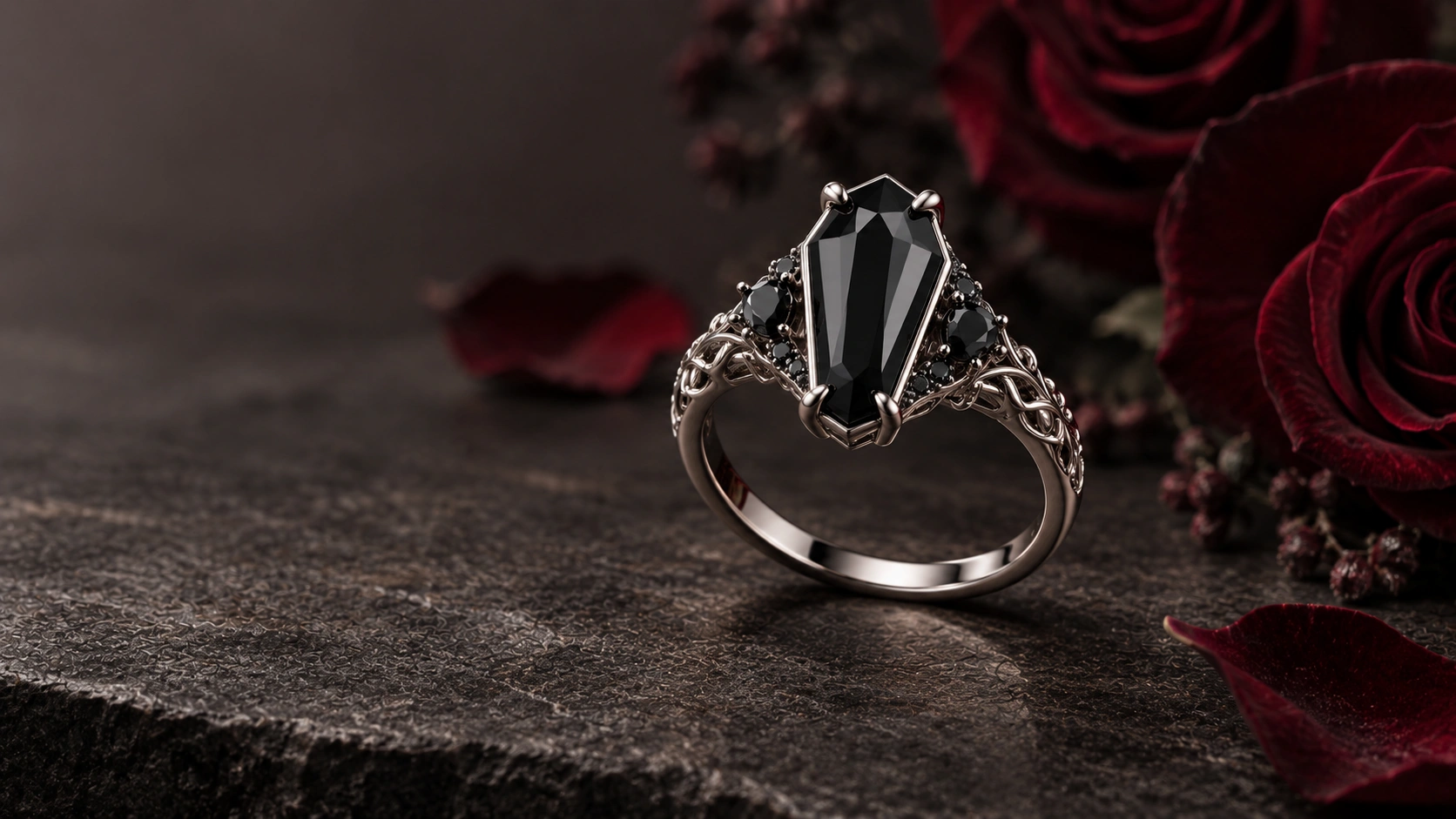
2. Coffin-Shaped Rings
Make Your Ring Impossible to Forget
Unusual silhouettes, salt-and-pepper diamonds, and gothic details come together in coffin-shaped designs made for a love story with a little edge.


Coffin-cut diamonds and gemstones have an angular silhouette that naturally suits darker aesthetics.
They’re particularly useful if you want something gothic without relying on obvious symbols.
You can also explore coffin diamond rings for more ideas.
3. Victorian Gothic Rings
Dark Romance, Victorian Soul
Ornate details, dramatic black sparkle, and old-world character come together in a ring made for something beautifully unconventional.


Victorian-inspired designs often combine romantic detailing with darker colors and ornate metalwork.
Look for:
- Filigree
- Milgrain-style detailing
- Floral motifs
- Dark gemstones
- Antique-inspired settings
- Intricate shoulders
This direction can work particularly well if you want gothic style that feels romantic rather than theatrical.
4. Gothic Filigree Rings
Where Every Detail Tells a Darker Story
Intricate filigree, dramatic gemstones, and gothic-inspired details come together in rings made for those who want something truly distinctive.


Filigree adds detail without necessarily making a ring look overly dark.
A delicate filigree pattern can give a conventional gemstone a much more distinctive character.
5. Gothic Rings With Thorns and Vines
Where Love Blooms With a Little Edge
Twisted vines, delicate roses, and sharp thorns turn these gothic rings into dramatic symbols of romance, nature, and individuality.


Thorn-inspired settings are one of the easiest ways to create a gothic mood without using overt symbols.
They can also create a softer, romantic look compared with skulls or other dramatic motifs.
Popular Alternative Engagement Ring Styles
If you like the idea of being unconventional but aren’t specifically drawn to gothic aesthetics, alternative rings give you many more directions.
Colorful Gemstone Rings
Sapphires, emeralds, rubies, opals and other gemstones can replace the traditional colorless diamond.
A colored gemstone can make a ring feel personal without making it dark.
Nature-Inspired Rings
Leaves, flowers, branches, vines and organic textures are popular choices for couples who want a connection to nature.
These rings can be alternative while still feeling soft and romantic.
Geometric Rings
Unusual shapes can create a modern alternative look.
Hexagons, coffins, kites, elongated shapes and asymmetrical arrangements can all make the ring feel distinctly different from a classic round solitaire.
Vintage-Inspired Rings
Vintage styling can also fall under the alternative umbrella, particularly when the design uses an unusual gemstone or setting.
The result can feel distinctive without being overtly gothic.
Minimalist Alternative Rings
Alternative doesn’t have to mean elaborate.
A simple ring with an unusual stone, unconventional cut or unexpected metal combination can be enough.
This is a good option if you want something different but still easy to wear every day.
Gothic vs Alternative: Which Style Is Right for You?
The best choice depends less on what is technically “more alternative” and more on what you want your ring to communicate.
Choose Gothic If You Love:
- Dark romantic aesthetics
- Victorian or medieval-inspired design
- Black diamonds and dark gemstones
- Dramatic settings
- Symbolic details
- Thorns, arches, skulls or celestial motifs
- Intricate metalwork
- Moody, mysterious jewelry
You don’t have to use every gothic element at once.
Often, one strong feature is enough.
A black diamond, unusual silhouette or thorn-inspired setting can establish the mood without making the ring feel like a costume piece.
Choose Alternative If You Want:
- A ring that doesn’t look like everyone else’s
- An unusual gemstone
- A colorful center stone
- A modern geometric design
- A nature-inspired setting
- A vintage-inspired ring
- A nontraditional diamond shape
- More freedom from traditional engagement-ring conventions
Alternative is usually the better starting point if you know you want something unconventional but aren’t sure which aesthetic fits you.
What If You Like Gothic Style but Want Something Subtle?
You don’t need to commit to a dramatic gothic ring.
Try combining one or two gothic details with a more familiar foundation.
For example:
Classic center stone + gothic prongs
A traditional diamond can become much more distinctive with pointed or claw-inspired prongs.
White metal + black diamond
The contrast creates a gothic mood without requiring elaborate decoration.
Simple band + thorn detail
A small botanical detail can communicate the aesthetic without overwhelming the ring.
Marquise diamond + clean setting
The naturally dramatic shape can provide a gothic feeling even when the rest of the ring is minimalist.
This approach is especially useful if you want a ring that works comfortably in different settings while still reflecting your personal style.
How to Choose the Right Stone
Your gemstone can dramatically change how an alternative or gothic ring feels.
For a Gothic Look
Consider:
- Black diamond
- Garnet
- Ruby
- Dark sapphire
- Onyx
- Salt-and-pepper diamond
- Other deep or contrasting gemstones
A darker stone tends to create a stronger gothic impression, especially when combined with detailed metalwork.
For a Broader Alternative Look
You have much more freedom.
Consider:
- Sapphire
- Emerald
- Ruby
- Opal
- Moss agate
- Moissanite
- Colored diamonds
- Unusual diamond cuts
The stone doesn’t have to be dark to be alternative.
Don’t Forget the Ring Setting
The setting can be just as important as the center stone.
A black diamond in a conventional solitaire setting may feel relatively simple.
Put that same stone into an architectural setting with pointed shoulders, detailed metalwork or unusual prongs, and the overall impression changes dramatically.
When comparing rings, look at:
- Center stone
- Stone shape
- Prong style
- Band design
- Metal color
- Texture and detailing
- Overall silhouette
The combination matters more than any single feature.
Final Words
Gothic and alternative engagement rings overlap, but they aren’t the same thing.
Alternative engagement rings are the broader category. They give couples freedom to move beyond conventional diamonds, settings, colors and silhouettes.
Gothic engagement rings are a more defined aesthetic characterized by dark romance, dramatic details, symbolism, architectural influences and distinctive visual elements.
So if you’re asking:
“Are gothic rings alternative?”
Usually, yes.
“Are all alternative rings gothic?”
No.
If you want a dark, dramatic and symbolic aesthetic, start with gothic styles. If you simply know that a traditional engagement ring isn’t for you, explore the broader alternative category first.
And if you find yourself somewhere in the middle, that’s perfectly fine. A ring can combine gothic details with colorful gemstones, minimalist settings, vintage influences or nature-inspired designs.
The goal isn’t to choose the label that sounds right. It’s to find a ring that feels unmistakably like yours.
Frequently Asked Questions
Is gothic the same as alternative engagement rings?
No. Alternative is a broad category for nontraditional engagement rings, while gothic describes a specific dark, dramatic and often symbolic aesthetic. A gothic engagement ring can therefore be alternative, but alternative rings aren’t necessarily gothic.
Are black diamond engagement rings gothic?
They can be, but not always. A black diamond can create a gothic appearance when paired with dark metal, dramatic settings or gothic-inspired details. A simple black diamond solitaire may simply be an alternative engagement ring.
Can an engagement ring be gothic but still elegant?
Absolutely. Subtle details such as thorn-inspired prongs, delicate filigree, a marquise diamond or a dark gemstone can create a gothic aesthetic without making the ring look overly theatrical.
What is the best gemstone for a gothic engagement ring?
There isn’t one universal choice. Black diamonds, garnets, rubies, dark sapphires, onyx and salt-and-pepper diamonds can all work well. The best choice depends on the color, durability, setting and overall design you prefer.
Are alternative engagement rings only for women?
No. Alternative engagement rings can be designed for anyone. The category is based on style rather than gender and can include minimalist bands, unusual gemstones, gothic designs, geometric rings and other nontraditional approaches.