Yes, both partners can get promise rings, but they don’t have to. There is no formal rule that says a promise ring must be exchanged between both people in a relationship.
Some couples choose matching or complementary promise rings and exchange them with each other. Others prefer one partner to give a ring as a personal gesture of commitment. The right choice depends on what the promise means to you, whether the commitment is mutual, and whether both people actually want to wear a ring.
Unlike an engagement ring, a promise ring does not have one universally accepted tradition. That flexibility is part of what makes promise rings meaningful.
Should Both Partners Get Promise Rings?
Both partners should get promise rings if the ring represents a mutual promise or commitment that you are making to each other.
For example, if you are promising to remain committed while building a future together, exchanging two rings can make sense. Each person has a physical reminder of the commitment.
Other couples may prefer only one promise ring. This can be appropriate when one partner is giving the ring as a personal gift or when the promise is primarily being made by the person giving it.
So, there is no requirement to buy two rings. One ring is not less meaningful, and two rings are not automatically more meaningful.
The most important thing is that both partners understand what the ring represents.
Why Do Some Couples Exchange Two Promise Rings?
There are several reasons couples choose to give each other promise rings.
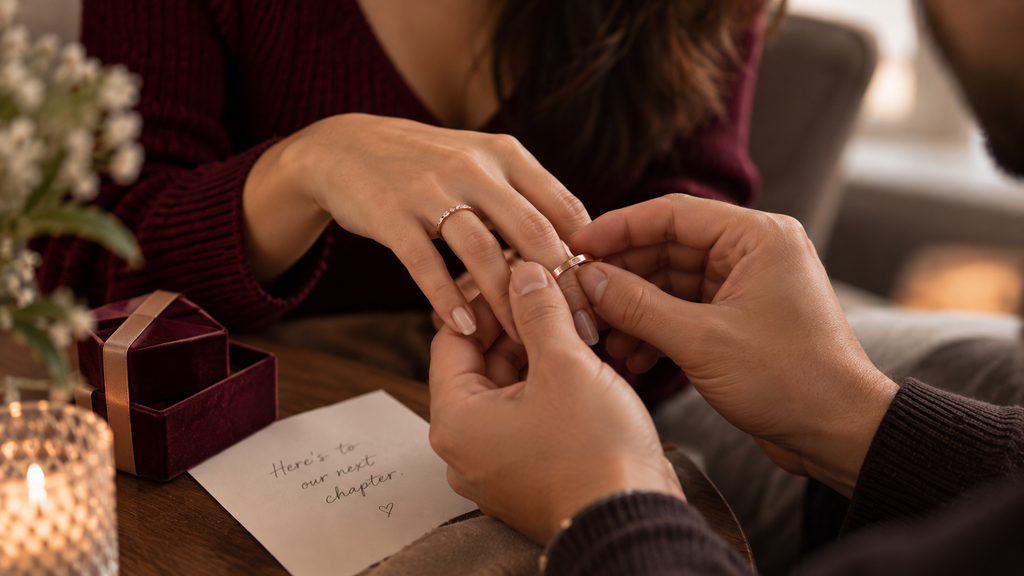
1. It represents mutual commitment
Two rings can symbolize that both people are actively making the same commitment.
Rather than one person promising something to the other, the exchange can communicate:
“We’re making this promise together.”
This can be especially meaningful for couples who see their relationship as an equal partnership.
2. Both partners want a physical reminder
A promise ring can serve as a small, everyday reminder of a relationship or commitment.
If both people enjoy wearing jewelry, having a ring can make the gesture feel more reciprocal. It can also become a sentimental piece that reminds each person of a particular moment in the relationship.
3. The couple wants to celebrate a milestone together
Two promise rings can work well for a shared milestone, such as becoming exclusive, reaching an important relationship anniversary, starting a long-distance relationship, or making a commitment about the future.
If you’re unsure about when the gesture makes sense, understanding when to give a promise ring can help put the timing into perspective.
4. They want matching or complementary jewelry
Some couples enjoy the symbolism of having rings that clearly belong together.
The rings do not have to be identical. One partner might prefer a simple metal band while the other prefers a gemstone or diamond design. They can still share a common detail, such as the same metal, engraving, stone, or design element.
When Is One Promise Ring Enough?
Buying only one ring can be the better choice in some situations.
The promise is coming from one partner
Sometimes a promise ring is simply a meaningful gift from one person to another.
For example, someone might give their partner a ring as a personal promise of loyalty or long-term commitment. In that situation, there is no need to create a matching exchange unless both people want one.
Your partner doesn’t wear jewelry
A second ring does not add meaning if the recipient rarely wears rings.
If one person prefers watches, bracelets, necklaces, or no jewelry at all, forcing a two-ring tradition can make the gesture feel less personal. A promise should reflect the people involved, not an assumed rule.
You want the ring to remain a personal gift
Some couples prefer the traditional gift-giving aspect of one partner presenting the ring.
The experience can feel more like a special surprise or relationship milestone rather than an exchange.
You’re working with a limited budget
Buying two rings naturally costs more than buying one. If purchasing two rings would stretch your budget, there is no reason to do it simply because you think you’re supposed to.
A thoughtful single ring can carry far more meaning than two rings chosen primarily because of social expectations.
For couples considering their budget, this guide on how much to spend on a promise ring can provide useful context.
Do Promise Rings Have to Match?
No. Promise rings do not have to match.
Matching rings are one option, but couples can also choose rings that are completely different while sharing a meaningful connection.
For example:
- One partner could choose a plain gold band while the other chooses a gemstone ring.
- Both rings could use the same metal but different designs.
- The rings could feature different stones connected to each person’s birth month.
- Both could have the same engraving inside.
- Each ring could represent one half of a shared idea.
The important part is the shared meaning, not identical designs.
If you’re interested in coordinated designs, explore these promise ring styles for couples for ideas.
How Should Couples Choose Two Promise Rings?
If you’ve decided that both partners should get a ring, choosing them together can make the process easier.
Start with the meaning
Before shopping, talk about what the promise actually represents.
Is it a promise of:
- Long-term commitment?
- Exclusivity?
- Faithfulness?
- A future together?
- Support during a difficult period?
- Commitment while living apart?
- A future engagement?
A clear meaning helps prevent one partner from interpreting the ring differently from the other.
Choose styles that fit each person’s personality
Don’t choose a ring simply because it looks good on one person.
Consider whether each partner prefers:
- Minimalist or detailed designs
- Plain bands or gemstones
- Gold, platinum, or another metal
- Classic or modern styles
- Delicate or substantial bands
- Everyday jewelry or occasional pieces
You can also choose different rings that share a subtle design connection.
Get both ring sizes right
Sizing becomes particularly important when buying two rings.
Each partner should have a ring that feels comfortable for everyday wear. If you need help determining the right size, Diamiv’s ring size guide and men’s ring size guide can be useful starting points.
Consider engraving
An engraving can make two different rings feel connected without making them identical.
Ideas include:
- Your anniversary date
- Initials
- A meaningful word
- A private nickname
- Coordinates of an important place
- A short phrase split between the two rings
If engraving appeals to you, see these promise ring engraving ideas for inspiration.
What Should Both Promise Rings Symbolize?
There is no universal meaning that every promise ring has to carry.
The symbolism should come from the couple.
For one couple, the rings might represent a commitment to stay together while they work toward marriage. For another, they might simply represent loyalty and a serious relationship without any specific wedding timeline.
That distinction matters because a promise ring should not automatically be interpreted as an engagement ring.
A useful starting point is to discuss the meaning before exchanging the rings. This prevents one partner from thinking, “This means we’re getting engaged soon,” while the other thinks, “This represents our commitment, but marriage isn’t currently part of the plan.”
For a deeper look at the symbolism, read what a promise ring means in a relationship.
Where Should Both Partners Wear Promise Rings?
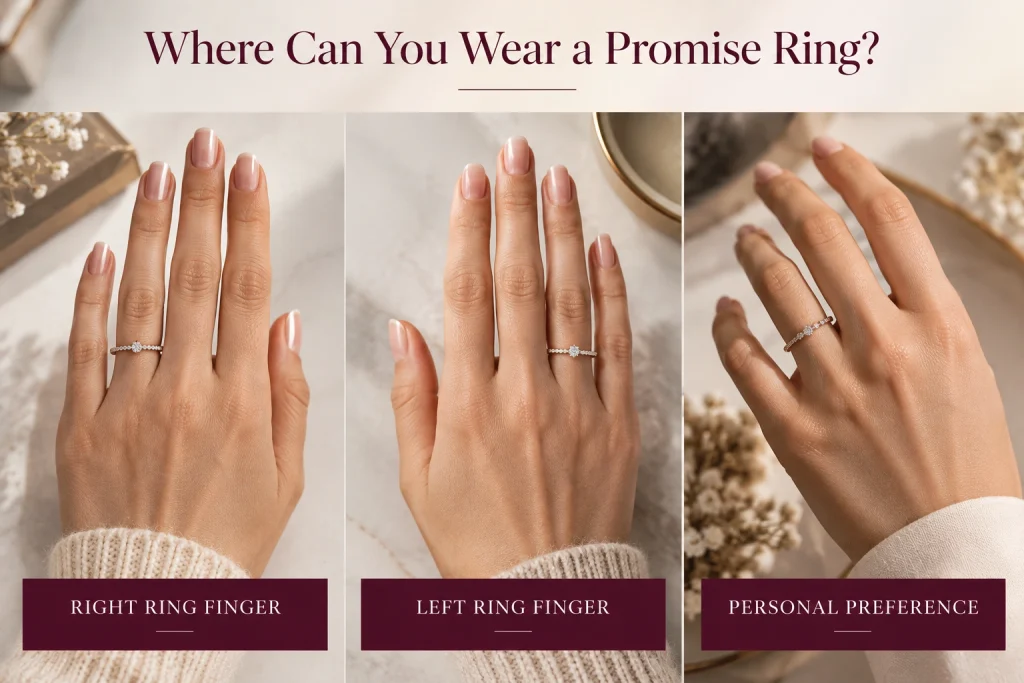
There is no single required finger or hand for a promise ring.
Many people choose the right ring finger because it distinguishes the promise ring from a traditional engagement ring. Others wear it on the left ring finger or another finger based on comfort, culture, or personal preference.
If both partners are wearing rings, they don’t necessarily have to wear them in exactly the same place.
For example, one person may prefer the right ring finger while the other may choose another finger that feels more comfortable.
See what finger a promise ring goes on for more details.
Should Both Promise Rings Cost the Same?
Not necessarily.
A promise ring is about the commitment behind it, so there is no requirement for both rings to have the same price.
One partner might choose a simple gold band while the other prefers a diamond or gemstone design. Differences in price can reflect personal taste, ring construction, or budget rather than differences in commitment.
What matters is that neither person feels pressured to spend more simply to make the rings financially equal.
If diamonds are part of the plan, couples can also consider whether a traditional diamond or lab-grown diamond better fits their budget and preferences.
Should Couples Exchange Promise Rings at the Same Time?
They can, but they don’t have to.
A simultaneous exchange can be especially meaningful when both partners have agreed that the rings represent a mutual commitment.
However, one partner can also give the first ring as a surprise and the couple can later decide whether they want matching or complementary rings.
There is no formal ceremony or timing requirement for promise rings.
The experience should fit the relationship.
What If Only One Partner Wants a Promise Ring?
This is a situation where communication matters more than tradition.
If one person wants a promise ring and the other doesn’t, talk about why.
The hesitation may have nothing to do with the relationship. Your partner may:
- Not wear jewelry
- Prefer a different type of sentimental gift
- Feel that a ring carries too much symbolism
- Be uncomfortable with the expectation attached to it
- Simply prefer to wait
A promise ring should feel meaningful, not obligatory.
If the two of you have different preferences, you could choose another symbol of commitment or have only one partner wear the ring.
Common Mistakes to Avoid
Assuming two rings are required
They aren’t. Promise ring traditions are flexible, and couples can decide what works for them.
Assuming matching means identical
Two rings can complement each other without being duplicates.
Giving a ring without explaining its meaning
This can create confusion, especially if one partner interprets a promise ring as a sign of an upcoming engagement.
Spending beyond your comfort level
A promise ring doesn’t need to be expensive to be meaningful.
Choosing a ring that doesn’t suit the wearer
Consider your partner’s lifestyle and personal style rather than choosing solely based on what looks romantic.
Frequently Asked Questions
Is it normal for both partners to wear promise rings?
Yes. Many couples choose to exchange and wear promise rings as a mutual symbol of commitment. However, it is equally acceptable for only one partner to wear a promise ring.
Who is supposed to buy the promise rings?
There is no universal rule. One partner can buy a ring for the other, both partners can buy rings for each other, or the couple can choose and purchase the rings together.
Should promise rings be matching?
No. They can be identical, complementary, or completely different. The shared meaning is more important than matching designs.
Do guys get promise rings too?
Yes. Promise rings are not limited to women. Both partners can wear them, including men, and many couples choose matching or complementary bands.
Is a promise ring the same as an engagement ring?
No. An engagement ring traditionally accompanies a proposal to marry. A promise ring can represent commitment, loyalty, future intentions, or another promise without necessarily meaning that an engagement is imminent.
Is it better to get one promise ring or two?
Neither option is inherently better. Choose two if you both want to symbolize a mutual commitment with rings. Choose one if the gesture is primarily a personal gift or if only one partner wants to wear one.
Final Takeaway
Both partners can absolutely get promise rings, but they don’t need to.
Two rings make sense when the promise is mutual and both people want a physical symbol of that commitment. One ring may be more appropriate when one partner is giving a personal gift, when the other person doesn’t wear jewelry, or when budget and personal preferences favor a single ring.
Promise rings work best when couples create their own meaning rather than following a rigid tradition. Whether you choose matching bands, complementary designs, or a single sentimental ring, the commitment behind the jewelry matters more than the number of rings.