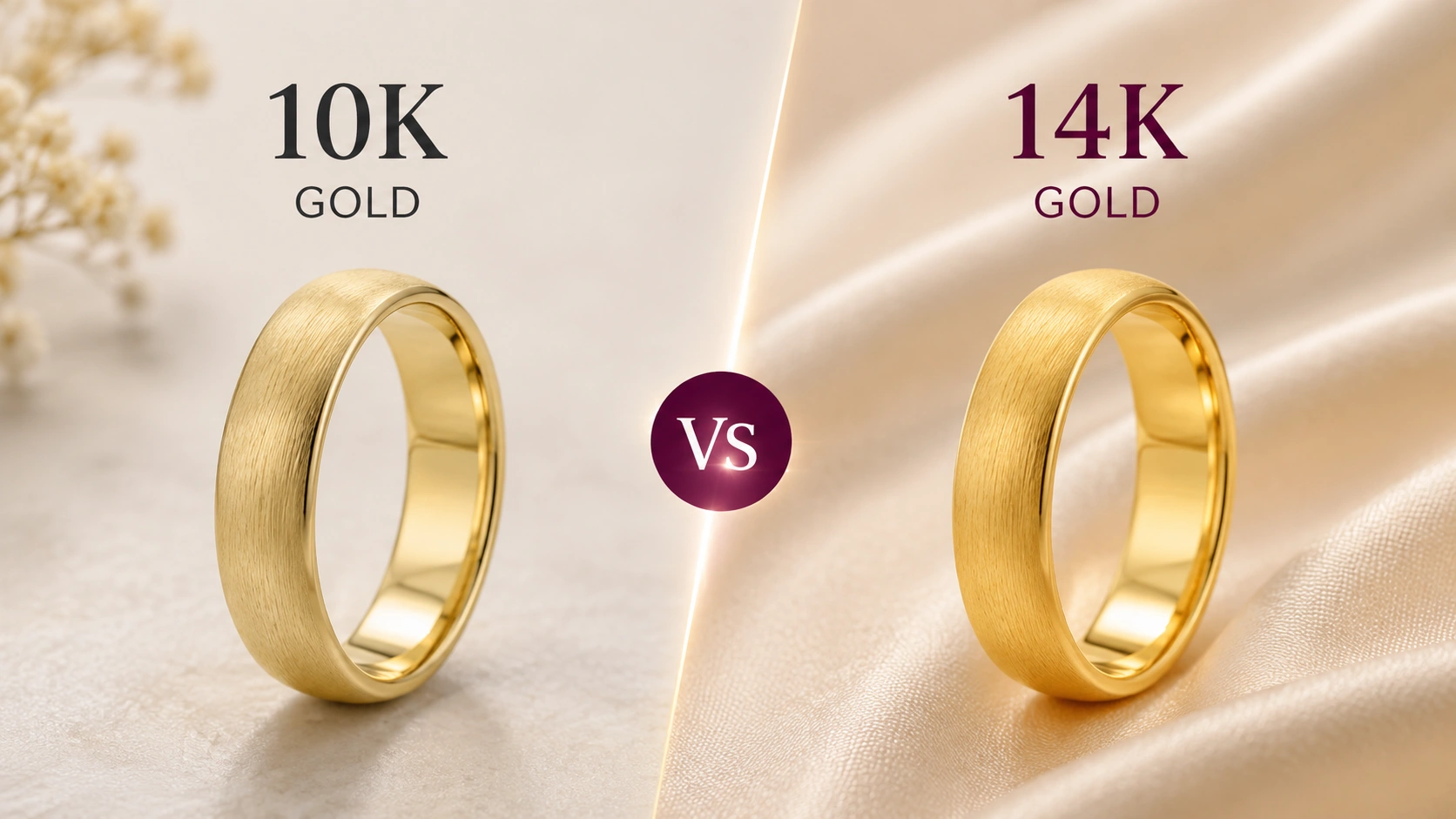
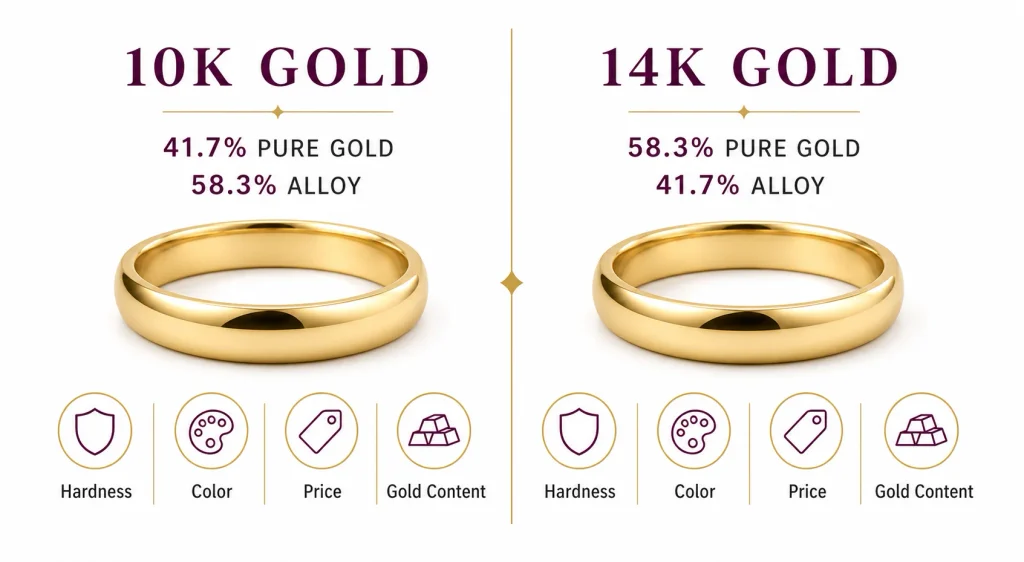
If you’re comparing 10K vs 14K gold, the biggest difference is how much pure gold each contains. 10K gold is 41.7% pure gold, while 14K gold is 58.3% pure gold.
That difference affects more than just purity. It influences the gold’s color, hardness, price, and how it may perform as an everyday ring.
For most engagement ring shoppers, 14K gold is the better all-around choice because it offers a good balance of durability, appearance, gold content, and price. However, 10K gold can make sense if keeping the cost down and maximizing hardness are your top priorities.
10K vs 14K Gold at a Glance
| Feature | 10K Gold | 14K Gold |
|---|---|---|
| Pure gold content | 41.7% | 58.3% |
| Alloy content | 58.3% | 41.7% |
| Hardness | Generally harder | Slightly softer |
| Scratch resistance | Generally higher | Very good |
| Color | Usually lighter | Usually richer |
| Price | Lower | Higher |
| Gold content | Lower | Higher |
| Everyday wear | Excellent | Excellent |
| Engagement rings | Good budget option | Excellent all-around option |
Neither is automatically “better.” The right choice depends on what matters most to you.
What Does 10K and 14K Gold Mean?
The “K” in 10K and 14K stands for karat, a measurement of gold purity.
Pure gold is 24K. Because pure gold is relatively soft, jewelry is normally made by combining gold with other metals. These additional metals are called alloys and can include materials such as copper, silver, zinc, or other metals depending on the type and color of gold.
The calculation is straightforward:
- 10K gold: 10 parts gold out of 24 = 41.7% pure gold
- 14K gold: 14 parts gold out of 24 = 58.3% pure gold
- 18K gold: 18 parts gold out of 24 = 75% pure gold
- 24K gold: 24 parts gold out of 24 = essentially pure gold
So when you choose 10K instead of 14K, you’re choosing a gold alloy with a larger proportion of non-gold metals.
If you want to compare more jewelry metals and understand how they differ, see our engagement ring metals guide.
10K vs 14K Gold Purity
14K gold has significantly more pure gold than 10K gold.
10K contains 41.7% pure gold, compared with 58.3% in 14K. That means a 14K piece contains roughly 40% more pure gold than a 10K piece by proportion.
The trade-off is that the additional alloy in 10K gold can make the metal harder, while 14K’s higher gold content gives it a richer appearance and greater intrinsic gold value.
For shoppers, this creates an important distinction:
Higher karat does not simply mean better.
It means higher gold purity. Whether that is preferable depends on how you plan to use the jewelry.
Which Is More Durable: 10K or 14K Gold?
This is one of the most misunderstood parts of the comparison.
10K gold is generally harder than 14K gold because it contains a greater proportion of alloy metals. That can make 10K somewhat more resistant to everyday scratching.
14K gold is slightly softer, but that does not make it fragile. It is still a highly practical choice for jewelry worn every day, including engagement rings. Current comparisons consistently identify 10K as the harder option while still describing 14K as durable enough for everyday use.
For an engagement ring, durability involves more than gold karat. The design of the setting, thickness of the band, prong construction, and how the ring is treated all matter.
So don’t assume that choosing 10K automatically gives you a dramatically longer-lasting engagement ring.
Winner for hardness: 10K
If your only priority is resistance to scratching, 10K has the advantage.
Winner for overall engagement-ring use: 14K
For most buyers, the small difference in hardness isn’t enough to outweigh 14K’s higher gold content and richer appearance.
10K vs 14K Gold Color
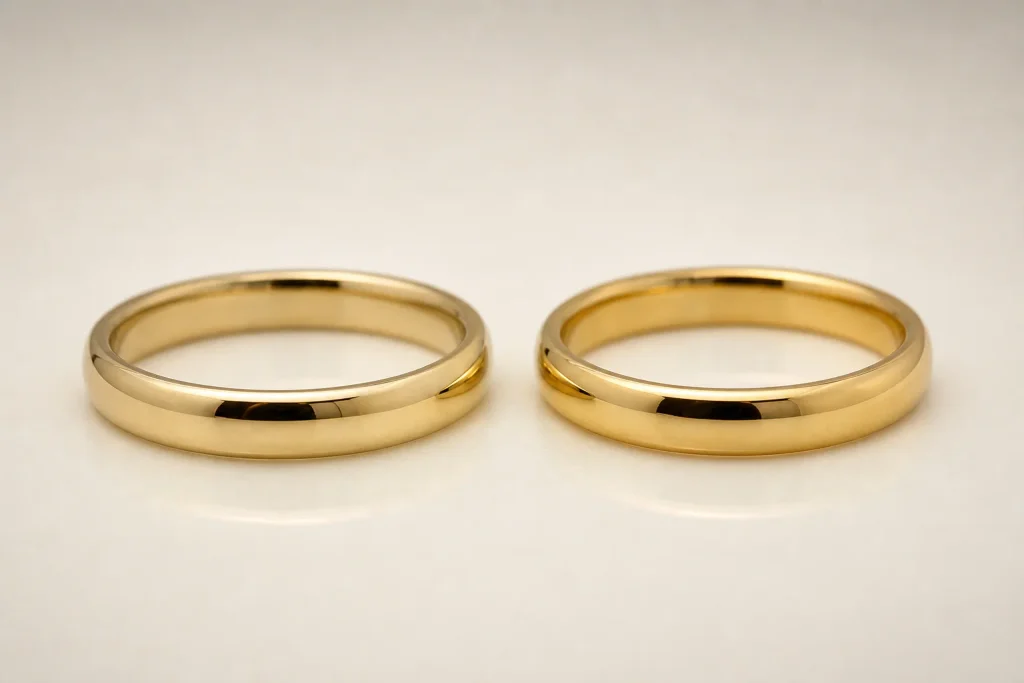
The difference in color is easiest to see with yellow gold.
Because 14K contains more gold, it generally has a richer, warmer yellow appearance. 10K usually has a lighter or paler yellow tone because a greater proportion of the alloy consists of other metals.
The difference can be subtle, particularly when the pieces aren’t placed next to each other.
What about rose gold?
Rose gold gets much of its pink tone from copper in the alloy. As a result, the exact appearance of 10K and 14K rose gold depends on the alloy recipe used by the manufacturer.
You shouldn’t assume that every 10K or 14K rose-gold piece will have exactly the same shade.
What about white gold?
White gold is another special case because its visible color can be influenced by rhodium plating.
A 10K and 14K white-gold ring can look quite similar when both have a fresh rhodium finish. Over time, the plating can wear and reveal the underlying alloy color.
If you’re deciding between gold colors, you may also want to compare white gold vs. yellow gold.
Is 10K Gold Cheaper Than 14K Gold?
Yes, generally.
The main reason is simple: 10K contains less pure gold.
If two otherwise comparable pieces weigh the same, the 14K piece contains more actual gold. That typically means a higher material cost and a higher retail price.
However, don’t expect every 14K ring to cost exactly a fixed percentage more than an equivalent 10K ring. Jewelry prices also depend on:
- Ring weight
- Design complexity
- Brand
- Craftsmanship
- Gemstones or diamonds
- Setting style
- Manufacturing costs
So karat is only one component of the final price.
Winner for affordability: 10K
If your budget is tight, 10K can let you spend more of your budget on the diamond or other parts of the ring.
Winner for gold content: 14K
If you place greater value on the amount of gold in the piece, 14K is the clear choice.
Is 10K or 14K Better for Sensitive Skin?
This question requires some caution.
The issue isn’t simply the karat. The specific alloy metals used in the jewelry matter.
Because 10K gold contains more alloy metals, there can be a greater chance that a particular 10K alloy contains a metal that irritates your skin. Nickel is one example that can cause contact reactions in some people.
That doesn’t mean every 10K ring will cause irritation or that every 14K ring is automatically hypoallergenic.
If you have known metal allergies or particularly sensitive skin, ask the jeweler exactly which metals are included in the alloy rather than choosing based on karat alone.
Practical choice for sensitive skin
If you’re comparing otherwise similar alloys, 14K can be the more comfortable starting point because it contains a higher percentage of gold and less alloy. But the actual alloy composition is more important than the karat number by itself.
10K vs 14K for Engagement Rings
For an engagement ring, the decision becomes easier once you consider how the ring will be worn.
An engagement ring is typically exposed to frequent contact with surfaces, water, household objects, clothing, and other everyday activities. You therefore want a metal that can handle regular wear while still giving you the appearance and value you want.
Choose 10K if:
- Your main priority is keeping the ring affordable.
- You want a harder gold alloy.
- You don’t mind a somewhat lighter gold appearance.
- You would rather put more of your budget toward the diamond.
- You don’t have concerns about the specific alloy used.
Choose 14K if:
- You want a richer gold appearance.
- You want more pure gold in the ring.
- You want a strong balance between durability and gold content.
- You plan to wear the engagement ring every day.
- You’re comfortable spending somewhat more on the setting.
For most engagement ring shoppers, 14K is the safer all-around recommendation.
It’s durable enough for everyday wear, contains substantially more gold than 10K, and provides the classic appearance many people expect from a gold engagement ring.
10K Gold Pros and Cons
Pros
- Lower price
- Higher hardness
- Good resistance to everyday scratches
- Real gold
- Can be a smart choice for budget-conscious shoppers
Cons
- Lower gold content
- Usually a lighter yellow color
- More alloy metal
- Specific alloy composition can matter more for people with metal sensitivities
- Less gold value than an otherwise comparable 14K piece
14K Gold Pros and Cons
Pros
- 58.3% pure gold
- Richer gold appearance
- Excellent balance of durability and purity
- Well suited to everyday jewelry
- Strong choice for engagement rings
- Higher intrinsic gold content than 10K
Cons
- More expensive than comparable 10K jewelry
- Slightly softer than 10K
- Exact appearance still depends on the alloy and gold color
10K vs 14K Gold: Which Should You Buy?
For most people, 14K gold is the better choice.
The reason isn’t that 14K is dramatically more durable or that 10K is poor-quality gold. Instead, 14K hits a useful middle ground.
You get considerably more pure gold than with 10K while retaining enough alloy content to make the metal practical for everyday jewelry.
Choose 10K when affordability and hardness are more important than gold purity and appearance.
Choose 14K when you want a more traditional fine-jewelry feel and are willing to pay more for the additional gold content.
For an engagement ring specifically, I’d generally favor 14K gold unless budget is the overriding concern.
10K vs 14K Gold vs 18K Gold
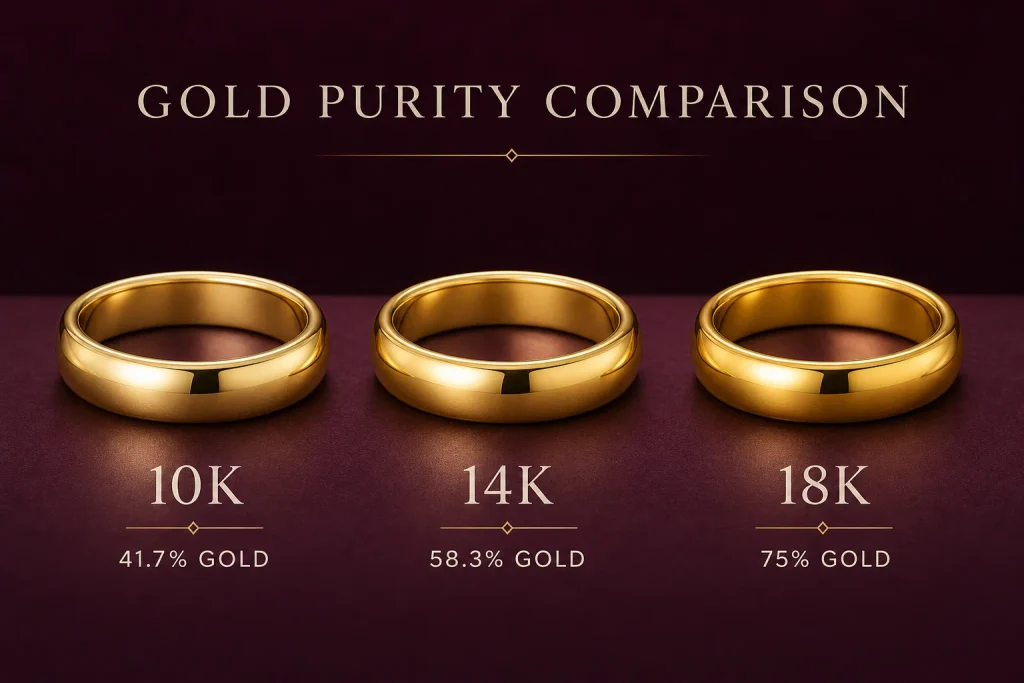
If you’re still deciding between karats, 18K is another common option.
18K contains 75% pure gold, so it has more gold than either 10K or 14K. It also tends to have a richer color, but the higher gold content makes it softer and more expensive.
Diamiv’s 14K vs. 18K gold comparison can help if you’re deciding whether to move up from 14K.
In simple terms:
- 10K: Best for lower cost and greater hardness
- 14K: Best overall balance for most engagement rings
- 18K: Best when higher gold purity and a richer appearance are priorities
How Should You Care for a Gold Ring?
Regardless of whether you choose 10K or 14K, proper care can help your ring maintain its appearance.
Avoid exposing the ring unnecessarily to harsh chemicals and remove it for activities that could cause significant impact or abrasion.
Regular cleaning can also help remove oils and buildup.
For more detailed maintenance advice, see our guide on how to clean gold rings.
If low maintenance is particularly important to you, Diamiv also has a guide to low-maintenance engagement rings.
Frequently Asked Questions
Is 10K gold real gold?
Yes. 10K gold is a genuine gold alloy containing 41.7% pure gold. The remaining material consists of alloy metals.
Is 14K gold better than 10K gold?
For most engagement rings, 14K is the better all-around option because it offers more gold content while remaining durable enough for everyday wear. However, 10K can be preferable when affordability and hardness are the main priorities.
Does 10K gold scratch less than 14K?
Generally, yes. The higher alloy content in 10K usually makes it harder than 14K, which can give it greater resistance to surface scratching.
Does 14K gold last longer than 10K?
Neither should be considered automatically longer-lasting. 10K is generally harder, while 14K contains more gold and is still highly durable for everyday jewelry. Ring construction, thickness, setting quality, maintenance, and how the ring is worn can all affect longevity.
Is 10K gold good for an engagement ring?
Yes. 10K can be a practical engagement-ring material, particularly for buyers who want to reduce the cost of the setting. However, 14K is generally the better all-around choice for shoppers who want a balance of durability, appearance, and gold content.
Is 14K gold good for everyday wear?
Yes. 14K gold is widely suitable for everyday jewelry and is a particularly practical choice for engagement rings.
Which is more valuable, 10K or 14K gold?
14K gold generally has greater intrinsic gold value because it contains more pure gold by proportion.
Does higher karat gold mean better quality?
Not necessarily. Higher karat means higher gold purity. It doesn’t automatically mean the jewelry is better for every use. A lower-karat alloy can be harder and less expensive, while a higher-karat alloy contains more gold and generally has a richer appearance.
Final Words
The choice between 10K vs 14K gold comes down to a trade-off between price, hardness, purity, and appearance.
10K gold is the budget-friendly, harder option.
14K gold offers more pure gold, a richer appearance, and an excellent balance of durability and value.
For an engagement ring that you’ll wear every day, 14K gold is the best choice for most shoppers. If keeping the ring setting affordable is your top priority, however, 10K remains a perfectly reasonable alternative.