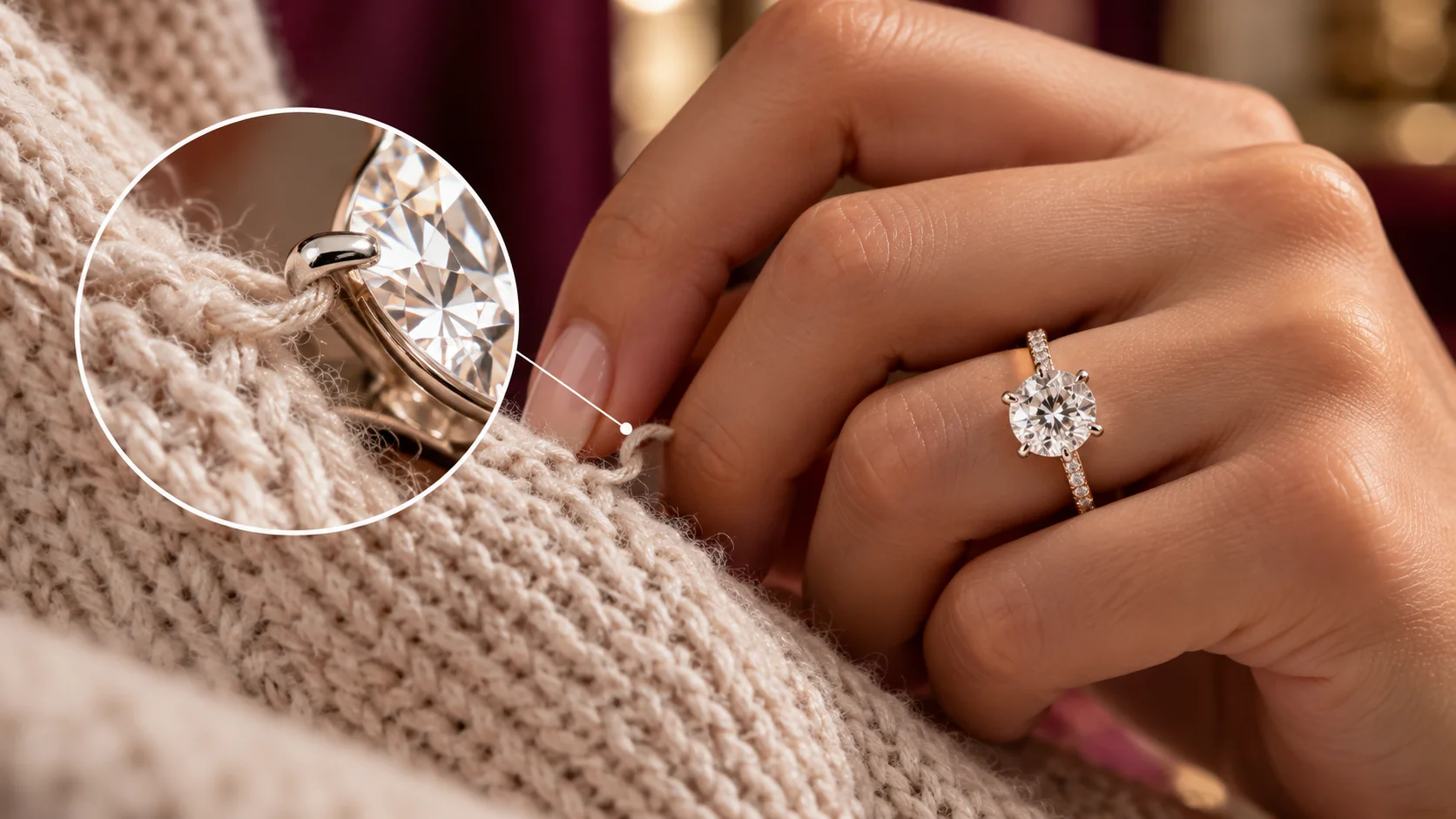
If your ring keeps catching on sweaters, blankets, towels, or other fabrics, the prongs may be the reason. A properly finished prong should hold the gemstone securely without leaving a sharp or raised edge that constantly catches on clothing.
Occasional snagging can happen with delicate settings, especially on loosely knitted fabrics. But if your ring suddenly starts catching on clothes when it did not before, that can be a sign that a prong has bent, worn down, or shifted.
The important question is whether the snagging is simply a characteristic of the ring’s design or a warning that the setting needs attention.
Why Are My Ring Prongs Catching on Clothes?
Ring prongs can catch on clothes when they have a sharp edge, are not properly finished, sit too high, or have moved out of their original position.
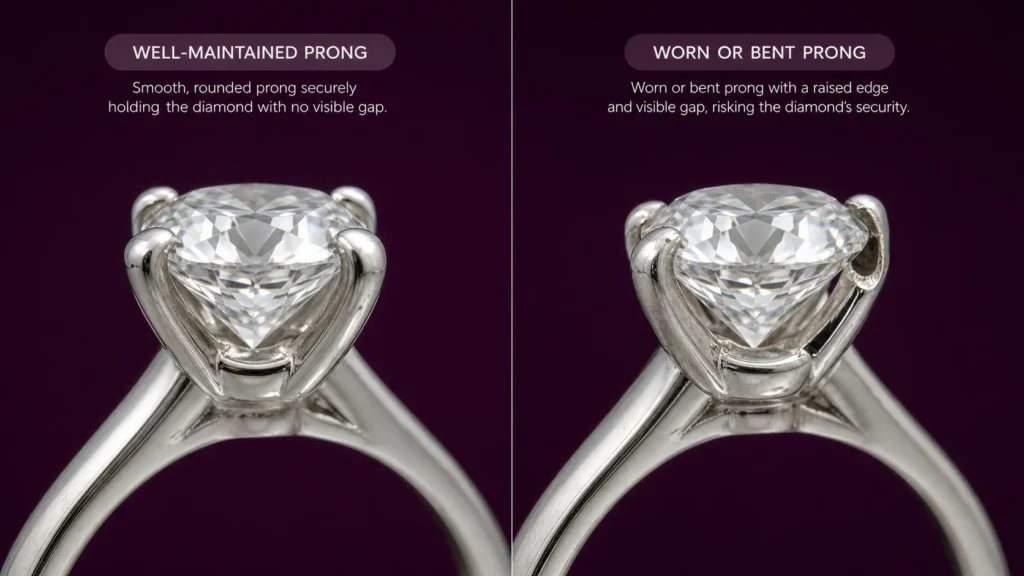
Common causes include:
- A prong tip that was not properly polished
- A prong that has bent or lifted
- Normal wear that has changed the shape of the prong
- A high-profile ring setting
- Long or pointed claw prongs
- Decorative details around the setting
- A prong that has become loose
GIA notes that prong tips should sit securely against the gemstone without gaps. Prongs that are not flush can snag clothing and may also break or scratch the skin.
So, if your ring is constantly catching on fabric, it is worth taking a closer look at the setting rather than simply accepting it as normal.
Is It Normal for Ring Prongs to Snag?
A small amount of occasional snagging does not necessarily mean something is wrong.
Loose-knit sweaters, blankets, towels, and other textured fabrics can catch on even small parts of a ring. Claw-style prongs and raised settings can also have a slightly higher tendency to interact with fabric because more metal sits above the gemstone.
However, constant or sudden snagging is different.
If your ring has always caught on certain fabrics, the design or finishing may be responsible. If the ring was previously smooth and has suddenly started catching on everything, the prongs should be inspected.
A change in how the ring feels can be an early indication that a prong has moved or become damaged.
6 Common Reasons Your Ring Prongs Catch on Clothes
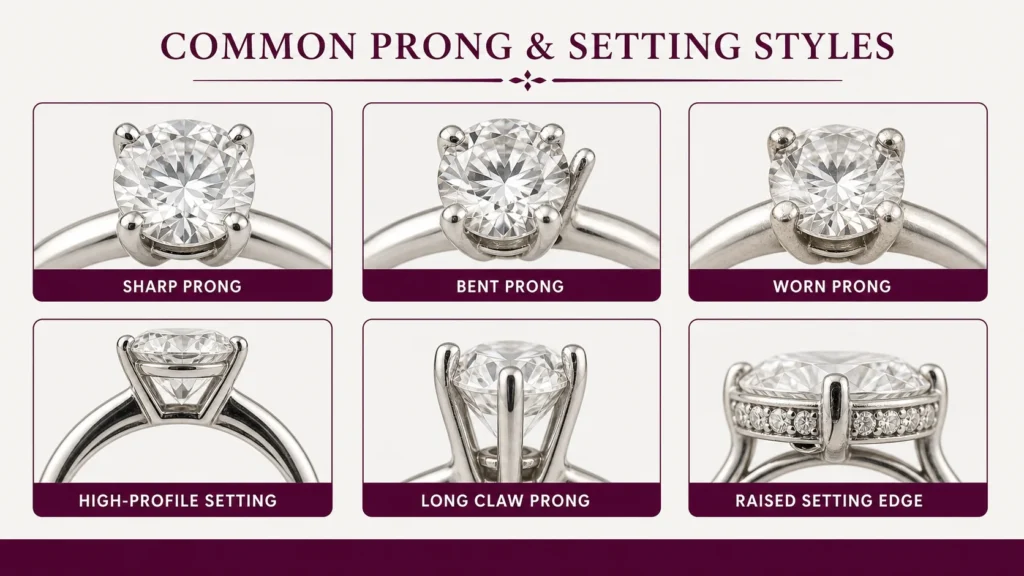
1. The Prong Tip Is Sharp or Rough
One of the simplest explanations is an unfinished or rough prong tip.
A properly finished prong should be shaped and polished so that it securely contacts the gemstone without presenting a sharp edge to the surrounding fabric.
If a prong feels noticeably sharp when you gently touch around the setting, it may need professional finishing.
This is particularly important if the ring is new and has been snagging since you first wore it. A new ring that constantly catches may need to go back to the jeweler for inspection.
2. A Prong Has Bent Outward
A prong can shift after the ring receives an impact.
You might knock your ring against a countertop, door frame, desk, or another hard surface. A strong snag can also pull on a prong.
When a prong moves outward, even slightly, it can create a small raised edge that catches on fabric.
Look at the prongs from above and from the side. One that appears noticeably different from the others deserves attention.
A bent prong can also reduce how securely the gemstone is held. GIA recommends regularly inspecting prongs because bent or broken prongs may no longer adequately protect or secure the gemstone.
3. The Prongs Have Become Worn
Prongs experience repeated contact during everyday wear.
Over time, metal can wear down, particularly at the small tips that hold the gemstone. Wear can change the shape of a prong and create an edge that catches on clothing.
Older rings deserve particular attention because gradual wear may not be obvious until the ring begins behaving differently.
If your ring has been worn every day for years and has suddenly started snagging, have the prongs checked rather than assuming the fabric is the problem.
4. Your Ring Has a High-Profile Setting
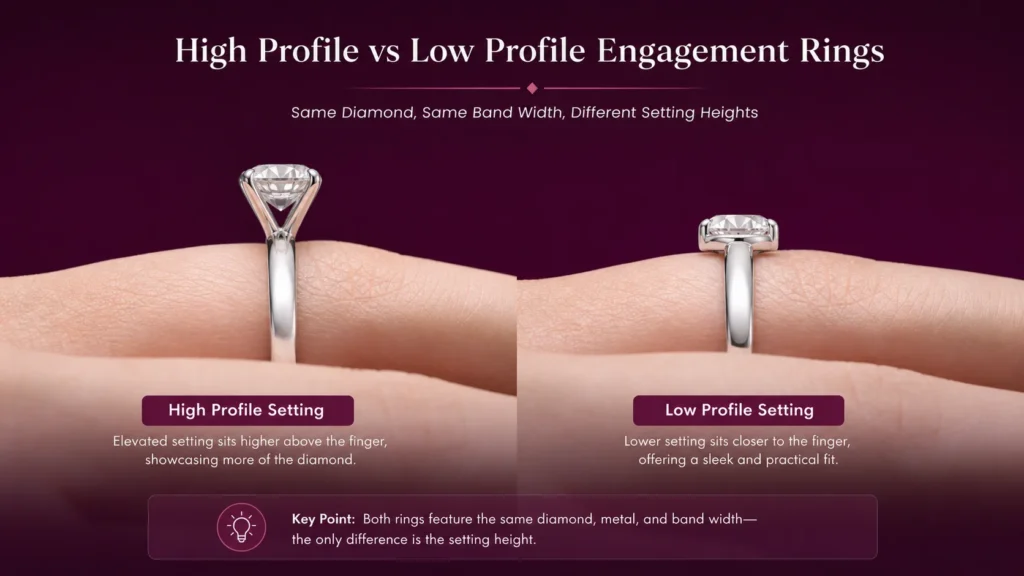
Some rings are designed to sit higher on the finger.
A high setting can give the center diamond a more prominent appearance and may allow a wedding band to fit underneath it. But the increased height can also make parts of the setting more exposed.
That can make the ring more likely to catch on clothing or bump against objects.
This does not automatically mean a high setting is poorly made. It is simply one of the design trade-offs to consider when choosing an engagement ring.
5. You Have Long Claw Prongs
Claw prongs are intentionally elongated and can give a ring a delicate, refined appearance.
Because they are more visually prominent than rounded prongs, they may interact with fabric more readily, particularly if the tips are not smoothly finished.
That does not mean claw prongs should routinely snag. Proper finishing still matters.
If you love the appearance of claw prongs but frequently work with fabrics or wear gloves, ask a jeweler about a design that balances the look you want with practical everyday wear.
6. Another Part of the Setting Is Catching
Sometimes the prongs are not actually the problem.
A ring can catch because of:
- Pavé or bead-set details
- Raised decorative elements
- A sharp edge on the setting
- A high gallery or basket
- A pointed gemstone
- Metal that has become damaged elsewhere
If you cannot identify the exact source of the snag, avoid trying to file individual areas yourself. A jeweler can inspect the entire setting and determine what is catching.
How Can I Tell If a Prong Is Damaged?
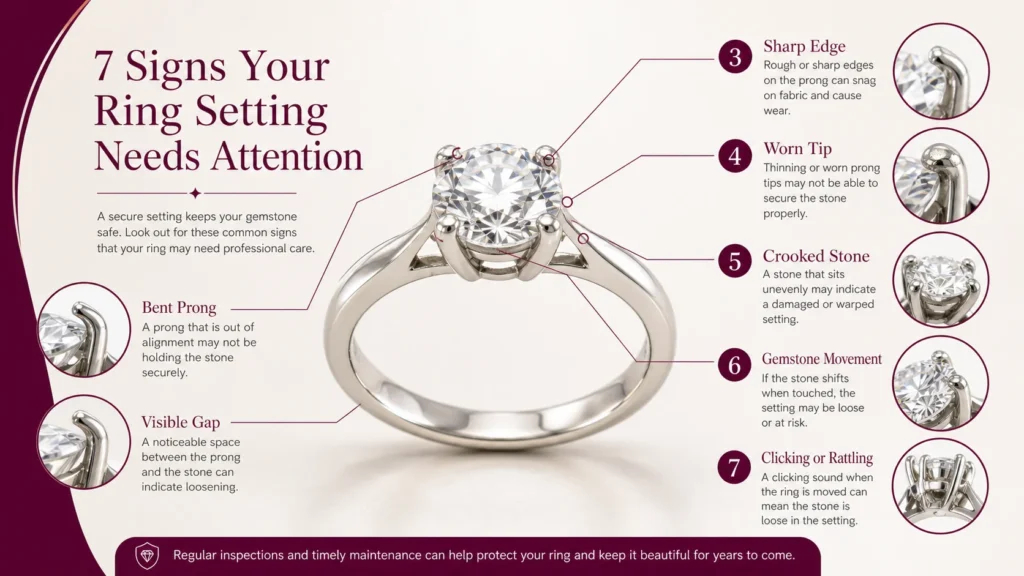
Snagging alone does not tell you exactly what is wrong. Look for other warning signs.
Pay attention to:
- One prong looking different from the others
- A visible gap between the prong and gemstone
- A prong that looks bent or lifted
- A sharp edge that was not there previously
- The diamond moving when gently touched
- A faint clicking or rattling sound
- The diamond appearing slightly crooked or rotated
- The ring suddenly becoming much more prone to snagging
If you notice several of these signs together, the issue is more likely to be a damaged or loose setting rather than harmless fabric catching.
For a more detailed checklist, see our guide on how to know if a prong is loose.
What Should I Do If My Ring Keeps Catching on Clothes?
First, determine whether the snagging is new or has always been present.
If the ring is new
If your new ring catches constantly from the beginning, contact the jeweler who made or sold it.
Ask them to check whether:
- The prongs are properly finished
- The tips are sitting correctly against the gemstone
- The setting is unusually high
- Any edges are unnecessarily sharp
A simple finishing adjustment may solve the problem.
If the ring suddenly started snagging
Treat this more seriously.
A sudden change can indicate that a prong has bent, shifted, or worn down. Stop wearing the ring for strenuous activities and arrange for a professional inspection.
This is especially important if the diamond also moves or you can see a gap between the stone and a prong.
You can also learn more about why ring prongs bend and what can cause them to move out of position.
Can I Fix a Ring Prong That Keeps Catching on Clothes Myself?
It is better not to.
Do not use household pliers, nail clippers, files, or other tools to bend, cut, or smooth the prong yourself.
A prong is part of the mechanism holding the gemstone in place. Changing its shape without the right tools and technique can weaken the setting or put unnecessary pressure on the gemstone.
A jeweler can determine whether the solution is:
- Polishing a rough prong tip
- Reshaping a slightly bent prong
- Tightening the setting
- Re-tipping a worn prong
- Rebuilding a damaged prong
- Replacing part of the setting
The appropriate repair depends on why the prong is catching in the first place.
What If My Ring Is Snagging and the Diamond Is Moving?
That is a more serious warning sign.
If you can feel the diamond shifting when you gently touch it, stop wearing the ring and have it inspected by a qualified jeweler.
GIA explains that a loose gemstone can be at greater risk of damage because it is no longer being held securely by the mounting. Bent or broken prongs can also expose the gemstone to additional risk.
Do not keep wearing the ring simply because the diamond has not fallen out yet.
Early repair is generally much better than discovering the problem after the stone has become loose or been lost.
How Often Should Ring Prongs Be Checked?
There is no single inspection schedule that fits every ring, because wear depends on the setting, metal, construction, and how frequently the ring is worn.
For a ring worn every day, regular professional inspections are a sensible part of maintenance. GIA recommends having engagement-ring prongs checked periodically, with some guidance suggesting every six months or at least annually depending on circumstances.
A quick visual check at home can also help you notice changes between professional inspections.
Our guide on how often ring prongs should be checked explains what to look for and why regular inspections matter.
How Can You Check Your Ring Prongs at Home?
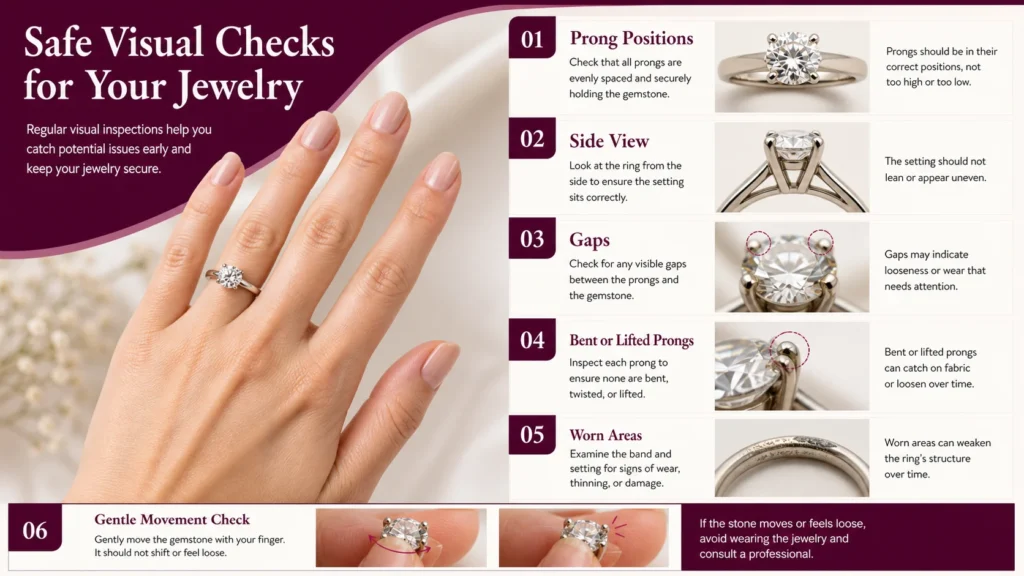
You can perform a basic visual inspection without trying to repair anything.
Start by looking at the ring under good lighting.
Check whether:
- All the prongs appear to be in their expected positions.
- One prong looks noticeably different from the others.
- There are visible gaps between the gemstone and prongs.
- Any prong looks bent, lifted, or unusually thin.
- The gemstone appears to have moved or rotated.
- The ring has developed a new sharp or rough area.
You can also gently touch the gemstone to check for obvious movement, but do not push aggressively or try to move the prongs.
For a step-by-step approach, see how to check diamond prongs at home.
Which Ring Settings Are Less Likely to Catch on Clothes?
If snagging is a major concern, consider how much metal and how many edges sit above or around the gemstone.
Bezel settings
A bezel setting surrounds some or all of the gemstone with metal. Because there are no exposed prong tips, it can provide a smoother profile and reduce snagging.
GIA identifies bezel settings as a practical option for people who want a more protected, snag-resistant design.
Lower-profile settings
A lower-profile setting keeps the center stone and its supporting structure closer to the finger.
This can reduce how much of the setting is exposed during everyday activities.
Rounded prongs
Rounded prongs can provide a smoother appearance than very elongated claw-style prongs.
They can still catch on fabric if they are poorly finished or damaged, so the workmanship remains important.
Channel-set designs
Channel settings use metal walls to hold gemstones rather than individual exposed prongs. Their relatively smooth surface can make them less prone to catching than some prong-set designs.
The best choice ultimately depends on your lifestyle, the gemstone shape, and the appearance you want.
Can a Different Prong Style Reduce Snagging?

Yes, the prong style can affect how a ring interacts with fabric.
For example, claw prongs have a more elongated appearance, while rounded prongs have a softer profile.
There are also specialized prong designs for protecting pointed gemstone shapes. V-prongs are commonly used around vulnerable corners of shapes such as pear, marquise, heart, and princess cuts.
If you’re comparing different designs, our Engagement Ring Prong Guide covers the major prong styles and their practical differences.
How Can You Prevent Ring Prongs From Catching on Clothes?
You cannot eliminate every possible snag from a prong-set ring, but you can reduce the risk.
Keep the ring inspected
Regular inspections can catch worn or bent prongs before they become a bigger problem.
Remove your ring during high-risk activities
Take the ring off before activities where it may be hit, pulled, or subjected to heavy friction.
Exercise, gardening, manual work, and activities involving tools can put additional stress on a ring’s setting.
Be careful with loose-knit fabrics
Sweaters, blankets, towels, and other textured materials can catch on even small parts of a ring.
Use extra care when handling these fabrics if your ring has a delicate or raised setting.
Do not ignore a change
If your ring suddenly starts catching more often, investigate the reason.
A new snag can be an early clue that something about the setting has changed.
When Should You See a Jeweler?
Have your ring inspected if:
- The snagging suddenly started.
- One prong looks bent.
- A prong feels sharp or rough.
- You see a gap between the prong and gemstone.
- The diamond moves when gently touched.
- You hear clicking or rattling.
- The gemstone looks crooked.
- A prong appears thinner than it used to be.
- The ring has suffered a significant impact.
If the diamond is visibly loose or a prong is broken, avoid wearing the ring until it has been professionally inspected.
GIA notes that even one damaged prong can affect how securely a gemstone is held, so it is better to address a small setting problem before it becomes a lost-stone problem.
Frequently Asked Questions
Why does my ring suddenly catch on everything?
A ring that suddenly starts catching on clothing may have a bent, worn, lifted, or poorly finished prong. It can also be caused by another raised or damaged part of the setting. If the behavior is new, have the ring inspected.
Should ring prongs catch on clothes?
Occasional catching can happen, particularly with loose-knit fabrics and raised or delicate settings. Constant snagging is not something to ignore, especially if the ring previously felt smooth.
Can a loose prong cause my diamond to fall out?
Yes. A loose, bent, or broken prong may no longer hold the gemstone securely. If you notice snagging together with movement, a visible gap, or a damaged prong, stop wearing the ring and have it inspected.
Are claw prongs more likely to snag?
Claw prongs can be more prone to catching than smoother, rounded profiles because of their elongated shape. However, properly finished claw prongs should not constantly snag on ordinary clothing.
Can I file a sharp prong myself?
It is not recommended. Filing or bending a prong without the appropriate jewelry tools and experience can weaken the setting or affect how securely the gemstone is held. Have a jeweler assess and finish the prong instead.
What ring setting is best if I hate snagging?
A bezel setting is one of the better choices for reducing snagging because metal surrounds the gemstone rather than leaving individual prongs exposed. Lower-profile and smoother settings can also be practical for people who want a ring that is easier to wear every day.
Final Thoughts
If your ring prongs are catching on clothes, the problem may be as simple as a rough prong tip – or it may be an early warning that a prong has bent, worn, or shifted.
The most important clue is change.
If your ring has always caught occasionally on chunky sweaters, the design may simply have some interaction with fabric. But if it suddenly starts snagging on clothes, hair, or towels, take a closer look at the setting.
Check for bent or lifted prongs, visible gaps, sharp edges, movement, or changes in the diamond’s position. If you notice any of these signs, have the ring inspected by a qualified jeweler rather than attempting a DIY repair.
A small prong problem is much easier to address before it becomes a loose gemstone.