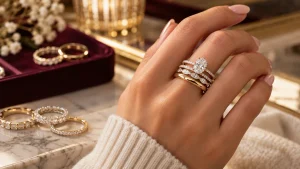
No, lab-grown diamonds do not normally turn yellow over time. A lab-grown diamond’s color is primarily determined by its composition, growth conditions, and any treatments performed during manufacturing. Normal wear does not cause a colorless lab-grown diamond to gradually become yellow.
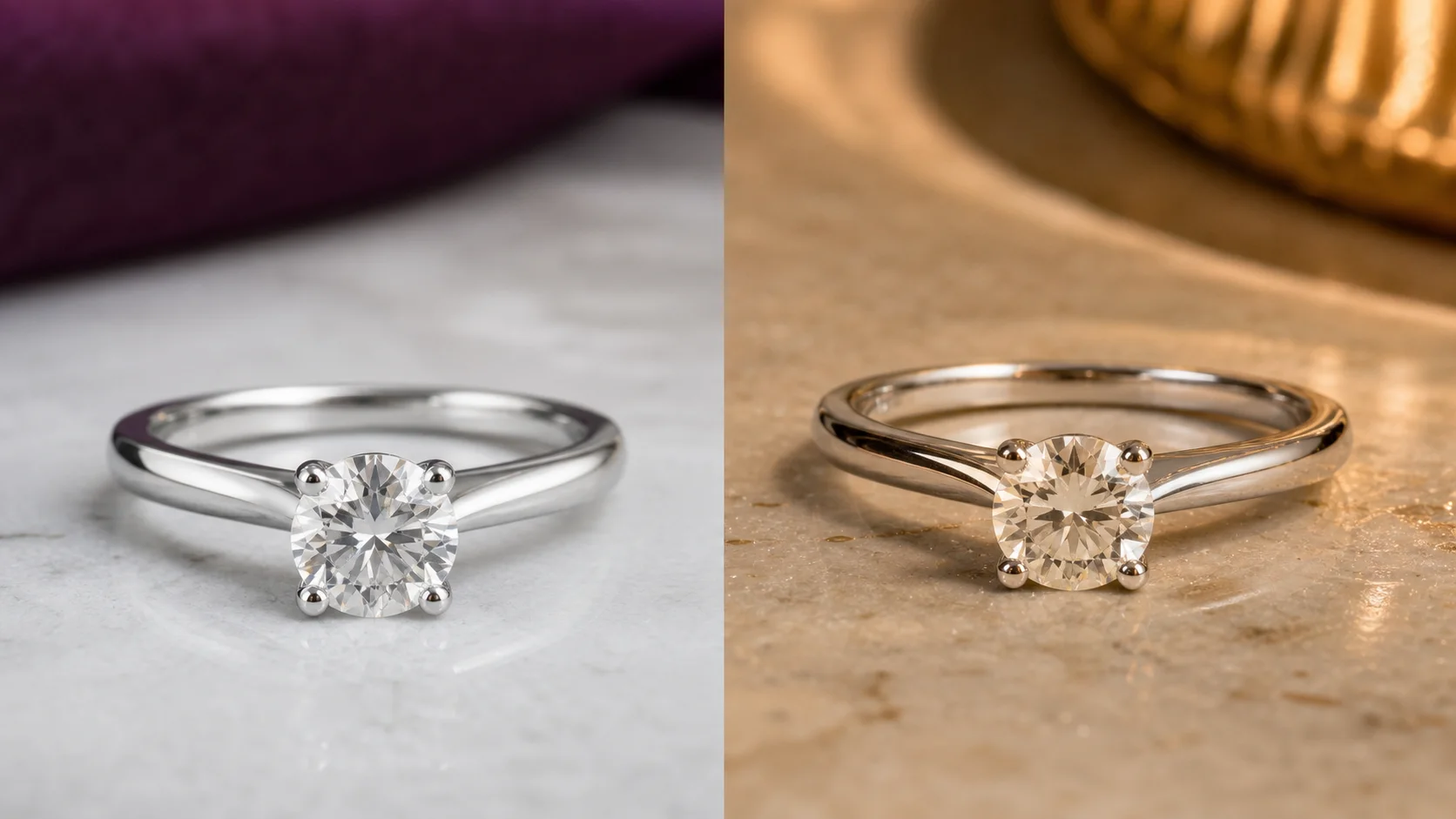
However, there are several reasons a lab-grown diamond may appear more yellow or warmer than you remember. Surface buildup, lighting, the color grade you originally purchased, and reflections from the ring setting can all affect how a diamond looks.
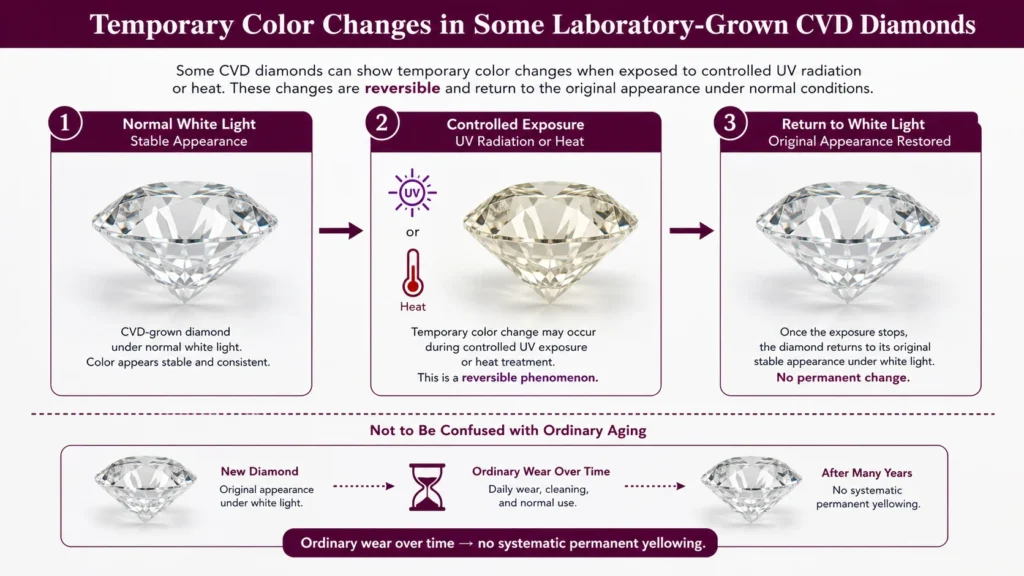
GIA research also shows that some laboratory-grown diamonds can exhibit temporary color changes under specific conditions, but these are not the same thing as a diamond permanently turning yellow with age. In studies of CVD-grown diamonds submitted to GIA multiple times over months to years, researchers found no significant or systematic change in color grade.
Do lab-grown diamonds actually turn yellow with age?
For a typical jewelry-quality lab-grown diamond, no.
Lab-grown diamonds are diamond material, with the same fundamental crystal structure and physical and optical properties as natural diamonds. Their color is related to what is incorporated into the crystal during growth rather than to the diamond simply getting older.
GIA notes that nitrogen can cause yellow or yellow-orange coloration in some laboratory-grown diamonds. Modern manufacturing has become much better at controlling nitrogen, and colorless HPHT-grown diamonds now make up the vast majority of HPHT-grown diamonds submitted to GIA.
That means a diamond that was graded as colorless when you bought it does not normally begin drifting toward yellow simply because you’ve worn it for several years.
If you’re comparing lab-grown and natural stones, Diamiv’s guide to lab-grown vs. natural diamonds provides useful background on how the two types compare.
So why might a lab-grown diamond look yellow?
If your diamond suddenly looks warmer than it used to, the most likely explanation isn’t that the diamond has aged.
Here are some of the things worth checking.
1. The diamond already had some body color
Not every lab-grown diamond is colorless.
Diamonds are graded across a range of color, and a near-colorless stone can have a subtle warm appearance compared with a higher color grade. Lab-grown diamonds can also intentionally be produced in fancy colors, including yellow.
GIA explains that nitrogen incorporated during HPHT growth can produce yellow coloration. CVD-grown diamonds can also have color related to growth conditions and may undergo post-growth treatments to modify that color.
So if a diamond looks slightly warm today, check its grading report before assuming its color has changed.
The original color grade is particularly important because a diamond that was purchased as a warmer color was not necessarily supposed to look completely colorless in the first place.
2. Dirt and oil can make the diamond look yellow or dull
This is one of the easiest explanations to overlook.
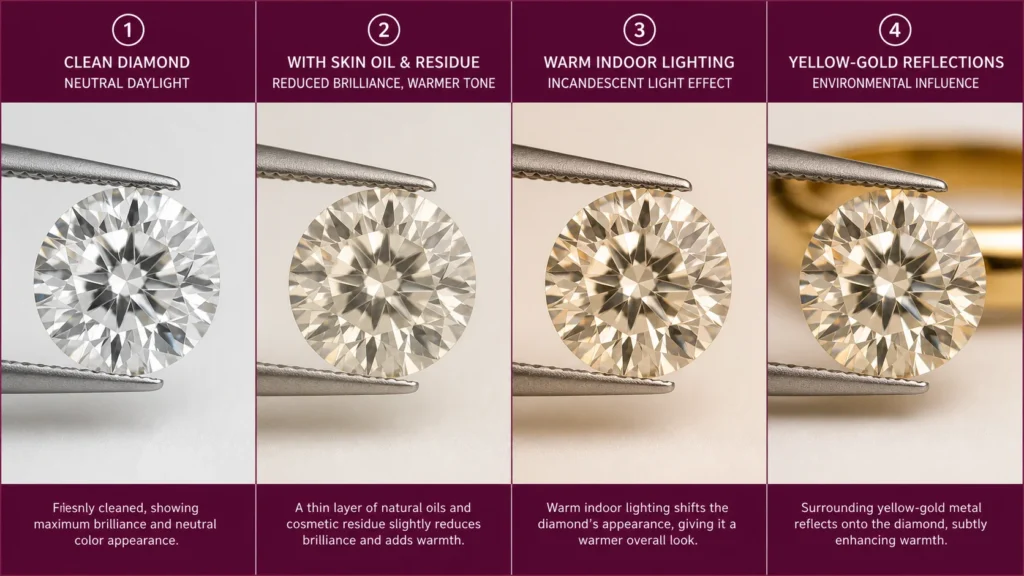
Engagement rings are exposed to skin oils, lotion, sunscreen, soap, cosmetics and other residue. Buildup on the diamond’s surface can interfere with the way light enters and exits the stone.
The result can be a diamond that looks:
- Duller
- Less sparkly
- Hazy
- Darker
- Slightly warmer or yellowish
That doesn’t mean the diamond itself has changed color.
If your diamond looks different after months of daily wear, cleaning it is one of the first things to try. Diamiv also has a guide on the best way to clean a lab diamond ring.
3. Lighting can make the diamond appear warmer
A diamond does not necessarily look exactly the same under every light source.
Warm indoor lighting can make a near-colorless diamond appear more yellow than it does in daylight. The colors around the diamond can also influence what your eyes perceive.
This is why it’s useful to examine a diamond under several different lighting conditions before deciding that its color has actually changed.
Diamiv’s guide on why a diamond looks yellow in some lighting covers this issue in more detail.
4. The ring setting can influence its appearance
The metal surrounding a diamond can affect how its color is perceived.
A diamond set in yellow gold can pick up warm reflections from its surroundings, particularly when viewed from certain angles. This doesn’t mean the diamond itself has become yellow.
The effect can be more noticeable with lower color grades because there is already some body color for the surrounding metal and lighting to emphasize.
5. The diamond may look different from different angles
Diamonds are designed to interact with light through their facets.
Depending on the lighting, viewing angle and surroundings, you may see more white light, colored reflections, or darker areas. A diamond that looks completely white face-up can therefore look warmer from another angle or in another environment.
This is another reason not to diagnose a permanent color change based on a single viewing situation.
Can HPHT or CVD lab-grown diamonds change color?
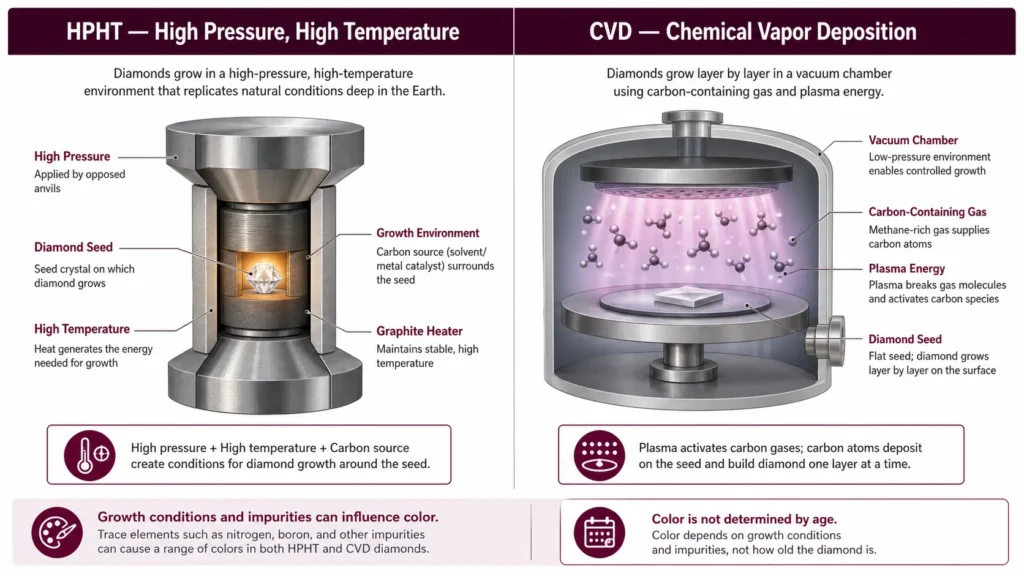
HPHT and CVD are two different methods used to grow laboratory-grown diamonds.
HPHT stands for High Pressure, High Temperature. CVD stands for Chemical Vapor Deposition.
Both methods can produce colorless diamonds, but the growth process can influence the impurities and defects present in the finished crystal.
GIA reports that early HPHT-grown diamonds were often yellow-orange because of nitrogen impurities. Manufacturers have since become much better at controlling nitrogen, resulting in a much higher proportion of colorless HPHT-grown diamonds.
CVD-grown diamonds can also have coloration after growth. GIA notes that some CVD diamonds have brown coloration after growth and can undergo HPHT or low-pressure high-temperature treatment to modify or improve their color.
The important distinction is this:
Color associated with how a diamond was grown or treated is not the same as a colorless diamond gradually turning yellow because it has been worn.
Can a lab-grown diamond experience a temporary color change?
There is an important scientific nuance here.
GIA has documented certain CVD-grown diamonds that can temporarily change color when exposed to ultraviolet radiation or high temperatures. In the examples studied, these effects were reversible rather than permanent. GIA reports that the laboratory-grown diamonds showing photochromic or thermochromic effects returned to their original color, and the observed changes did not represent permanent or long-term color changes.
This is very different from saying that lab-grown diamonds “turn yellow over time.”
These are specific material behaviors observed under particular conditions, not normal aging from wearing a lab-grown diamond as an engagement ring.
What about yellow lab-grown diamonds?
Yellow lab-grown diamonds are a different situation because their color is intentional.
Laboratory-grown diamonds can be manufactured with yellow coloration. GIA explains that nitrogen can be deliberately introduced during growth to produce yellow lab-grown diamonds, with HPHT-grown examples often showing stronger yellow coloration.
A yellow lab-grown diamond therefore isn’t a colorless diamond that has “aged into” a yellow diamond.
It was produced with that color or underwent treatment designed to create or modify the color.
Can diamond treatments affect color?
Yes, which is why it is useful to know whether a diamond has undergone treatment.
GIA describes treatments such as irradiation and annealing that can modify diamond color. It also distinguishes these from coatings, which can wear or be damaged by heat and chemicals.
For a buyer, the practical takeaway is simple: look at the grading report and any treatment information rather than assuming every lab-grown diamond behaves identically.
If you’re buying a colorless lab-grown diamond, pay attention to its stated color grade and the laboratory report accompanying the stone.
What should you do if your lab-grown diamond looks yellow?
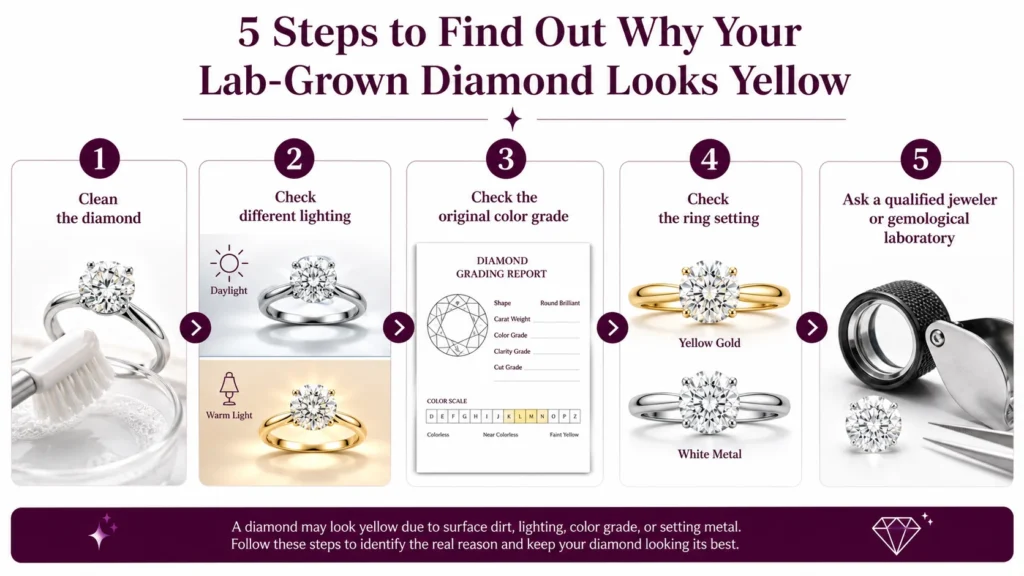
If your lab-grown diamond appears more yellow than you remember, work through these checks before assuming the diamond has changed.
Step 1: Clean the diamond
Remove surface oils, soap and other residue.
A dirty diamond can look dramatically different from a freshly cleaned diamond because surface buildup reduces light return.
Step 2: Check it in different lighting
Compare the diamond in:
- Natural daylight
- Neutral indoor lighting
- Warm indoor lighting
- Different rooms
If the diamond only looks yellow under certain lighting, the lighting may be responsible for the difference in appearance.
Step 3: Check the original color grade
Look at the grading report and confirm the diamond’s color grade.
If the stone was originally graded in the near-colorless range rather than the colorless range, a slight warmth may have always been part of its appearance.
Step 4: Look at the ring setting
Consider whether the diamond is surrounded by yellow gold or another strongly colored metal.
Reflections from the setting can affect the appearance of the stone without changing its actual body color.
Step 5: Have it examined if the change seems unusual
If the diamond appears substantially different even after cleaning and checking it under neutral lighting, take the ring to a qualified jeweler or gemological laboratory.
This is especially sensible if you have concerns about a treatment, damage or an issue with the setting.
How can you keep a lab-grown diamond looking bright?
The diamond itself does not require special protection from ordinary aging, but your ring still benefits from regular care.
Keep the stone clean, avoid unnecessary exposure to harsh chemicals, and have the setting inspected periodically to make sure the diamond remains secure.
Regular cleaning is particularly useful for engagement rings because they are worn frequently and accumulate residue faster than jewelry that spends most of its time stored away.
Do lab-grown diamonds turn yellow over time? The bottom line
No, lab-grown diamonds do not normally turn yellow simply because they get older.
A colorless lab-grown diamond should not gradually change into a yellow diamond through ordinary daily wear.
If a lab-grown diamond appears yellow, consider:
- Its original color grade
- Surface buildup
- Lighting conditions
- Reflections from the ring setting
- The diamond’s growth characteristics
- Any post-growth treatment
GIA’s research also supports an important distinction: while certain laboratory-grown diamonds can show temporary color changes under specific conditions, researchers have not found evidence of a systematic, permanent color change from ordinary aging.
So if you’re considering a lab-grown diamond for an engagement ring, the fact that it is lab-grown does not mean it will gradually yellow with age.