If you’re wondering which diamond shape holds value best, the short answer is simple: the Round Brilliant Cut consistently retains the strongest resale value among all diamond shapes.
But that doesn’t mean every round diamond is a great investment or that fancy-shaped diamonds are poor choices.
A diamond’s resale value depends on several factors working together, including its shape, cut quality, certification, carat weight, and current market demand. Shape is only one piece of the puzzle, but it’s an important one because it directly influences buyer demand in both retail and secondary markets.
In this guide, we’ll explain:
- Whether diamond shape really affects value
- The diamond shape with the highest resale value
- Diamond resale value by shape
- Round vs oval diamond value
- Natural vs lab-grown diamond resale value
- The best diamond shapes for investment
- Common myths buyers should know
Everything below is based on established diamond grading principles and information from trusted industry authorities, including the GIA (Gemological Institute of America) and respected diamond market resources.
Quick Answer: Which Diamond Shape Holds Value Best?
The Round Brilliant Cut generally holds value better than any other diamond shape.
Why?
Because it has:
- The highest worldwide demand
- The largest buyer pool
- Consistent pricing across markets
- Strong liquidity in the resale market
- Decades of popularity for engagement rings
If two diamonds have identical The 4Cs (Cut, Color, Clarity, and Carat), the round brilliant usually commands a higher price per carat than most fancy-shaped diamonds.
That doesn’t guarantee profit when reselling. Diamonds are luxury goods first – not traditional investments. However, if resale matters to you, round diamonds usually offer the strongest position.
Does Diamond Shape Affect Value?
Yes, diamond shape affects value in two important ways.
1. Retail Pricing
Some shapes require more rough diamond material during cutting.
A Round Brilliant Cut often sacrifices more rough crystal to achieve ideal light performance. That lower yield contributes to its higher retail price.
Shapes like Oval, Cushion, Pear, or Radiant preserve more of the original rough, making them less expensive per carat.
2. Resale Demand
Demand drives resale prices.
Round diamonds remain the most requested shape worldwide, making them easier to resell than many fancy-shaped diamonds.
So when people ask:
Does diamond shape affect resale value?
The answer is yes. Shapes with stronger buyer demand generally retain value better.
Why Round Brilliant Diamonds Retain Value Best
There are several reasons why the Round Brilliant Cut is often considered the diamond shape with the highest resale value.
Highest Consumer Demand
Round diamonds account for the majority of engagement ring sales in many markets.
More buyers mean stronger competition whenever a quality round diamond enters the resale market.
Superior Light Performance
The Round Brilliant Cut was developed to maximize brilliance, fire, and sparkle.
Its standardized facet arrangement makes it easier for expert cutters to achieve excellent optical performance compared with many fancy shapes.
Strong Market Liquidity
Liquidity simply means how easily something can be sold.
Among all diamond shapes, round diamonds usually attract buyers faster because demand remains consistently high.
If you’re asking:
Which diamond shape is easiest to resell?
The answer is almost always Round Brilliant.
Premium Price Per Carat
Round diamonds often carry higher prices than fancy shapes with similar specifications.
Although paying more initially doesn’t guarantee higher resale profits, it reflects stronger market demand.
Diamond Resale Value by Shape
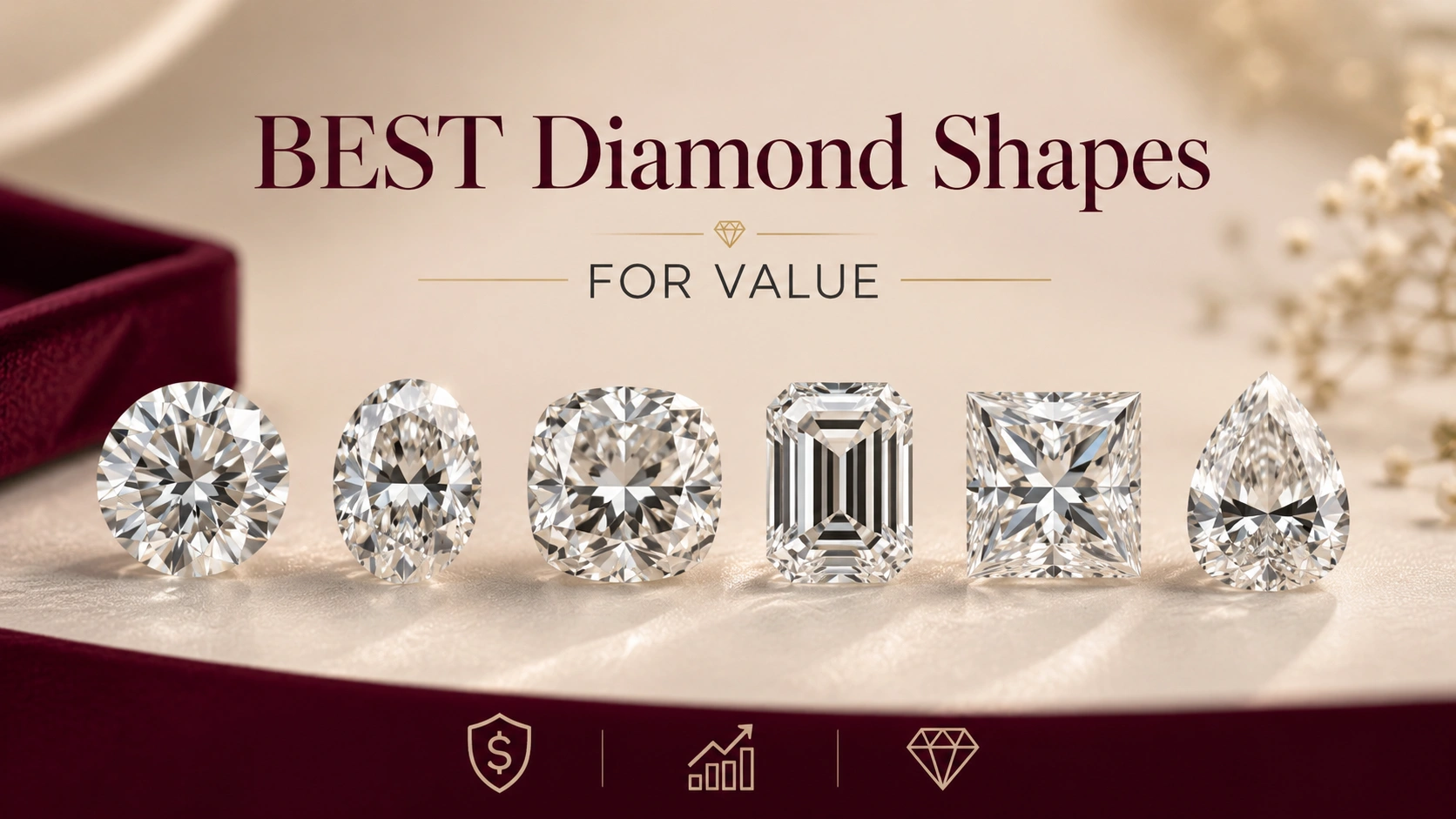
The table below compares the general resale strength of popular diamond shapes.
| Diamond Shape | Typical Resale Strength | Market Demand |
|---|---|---|
| Round Brilliant | Excellent | Very High |
| Oval | Very Good | High |
| Emerald | Good | Moderate to High |
| Cushion | Good | Moderate |
| Radiant | Good | Moderate |
| Princess | Moderate | Moderate |
| Pear | Moderate | Moderate |
| Marquise | Moderate | Lower than average |
| Asscher | Moderate | Niche demand |
| Heart | Lower | Limited audience |
Remember, this is a general comparison. An exceptional diamond with superior cut quality and excellent documentation can outperform an average diamond regardless of shape.
Which Diamond Cut Is Most Valuable?
People often confuse diamond cut and diamond shape.
Here’s the difference:
- Shape refers to the outline (Round, Oval, Cushion, Pear, etc.).
- Cut refers to how well the diamond’s proportions and facets interact with light.
So when someone asks:
Which diamond cut is most valuable?
There are two possible answers:
- The Round Brilliant is the most valuable shape.
- Within any shape, an Excellent Cut Grade (where applicable) usually commands the highest value.
According to GIA, cut quality has a major influence on a diamond’s beauty and overall market appeal.
Best Diamond Shape for Resale Value
If resale matters, here’s a practical ranking.
1. Round Brilliant
Best overall resale value.
Pros:
- Highest demand
- Easier to sell
- Premium pricing
- Excellent market recognition
2. Oval Cut
Oval diamonds have become increasingly popular over the past decade.
Many buyers appreciate their elongated appearance and ability to look larger than round diamonds of similar carat weight.
If you’re wondering:
Do oval diamonds hold value?
Generally, yes. They often perform better than many other fancy-shaped diamonds because demand remains strong.
3. Emerald Cut
Emerald cuts appeal to buyers who prefer elegance over maximum sparkle.
Although demand is smaller than for round diamonds, well-cut emerald diamonds maintain respectable resale interest.
4. Cushion Cut
Cushion diamonds continue to attract buyers looking for a softer, vintage-inspired appearance.
Do cushion diamonds hold value?
Yes, but usually not as strongly as round or oval diamonds.
5. Radiant Cut
Radiant cuts combine brilliant sparkle with clipped corners.
Their resale value typically depends on overall quality and current market demand.
Most Expensive Diamond Shape
Many people ask:
Which diamond shape is worth the most?
Or:
Which diamond shape is most expensive?
Among common shapes, Round Brilliant diamonds usually have the highest price per carat.
Reasons include:
- Higher cutting waste
- Strong consumer demand
- Premium branding
- Consistent popularity
That higher purchase price doesn’t automatically translate into investment returns, but it reflects the market’s willingness to pay more.
Round vs Oval Diamond Value
Both shapes remain popular, but they perform differently.
| Feature | Round Brilliant | Oval |
|---|---|---|
| Retail Price | Higher | Lower |
| Resale Demand | Excellent | Very Good |
| Price Per Carat | Highest | Lower |
| Liquidity | Excellent | Strong |
| Visual Size | Standard | Appears larger |
If resale is your priority, round generally wins.
If budget matters, oval often delivers excellent visual value.
Princess Cut vs Round Resale Value
The Princess Cut became extremely popular during the 1990s and early 2000s.
Today, demand remains healthy but trails behind round diamonds.
Round diamonds generally:
- Sell faster
- Attract more buyers
- Retain stronger resale prices
Emerald Cut vs Radiant Cut
These two rectangular shapes attract different buyers.
Emerald Cut
- Elegant
- Hall-of-mirrors appearance
- Less sparkle
- Classic appeal
Radiant Cut
- Brilliant sparkle
- Modern appearance
- Better at hiding inclusions
Neither consistently outperforms round diamonds in resale, but both enjoy stable demand.
Why Fancy-Shaped Diamonds Usually Sell for Less
Fancy-shaped diamonds include:
- Oval
- Cushion
- Pear
- Marquise
- Princess
- Emerald
- Radiant
- Asscher
- Heart
They usually cost less because:
- They preserve more rough diamond.
- Production costs are lower.
- Buyer demand is smaller.
- Pricing competition is stronger.
This doesn’t mean they’re lower quality.
In fact, many buyers intentionally choose fancy shapes because they offer excellent value for money.
Natural vs Lab-Grown Diamond Resale Value
| Factor | Natural Diamonds | Lab-Grown Diamonds |
|---|---|---|
| Resale Value | Generally higher due to stronger market demand | Generally lower because of limited secondary market demand |
| Long-Term Value Retention | Better value retention over time compared to lab-grown diamonds | Values have declined as production has increased |
| Supply | Naturally limited, making them rarer | Can be produced in larger quantities using laboratory technology |
| Market Demand | Strong and well-established in both retail and resale markets | Growing retail demand, but resale demand remains relatively limited |
| Price Stability | More stable over the long term, though prices can still fluctuate | Retail prices have decreased significantly over recent years as production has expanded |
| Investment Potential | Not guaranteed investments, but generally stronger than lab-grown diamonds | Generally not recommended if resale value is the primary goal |
| Best For | Buyers who prioritize long-term ownership and stronger resale potential | Buyers looking for maximum size and quality at a lower upfront cost |
| Buyer Confidence | Higher, especially when accompanied by a GIA grading report | Certification helps with transparency, but resale demand is still developing |
| Typical Resale Market | Jewelers, auction houses, private buyers, and diamond dealers | Mostly private buyers, with fewer established resale channels |
| Overall Recommendation | Better choice if preserving resale value is important | Better choice if affordability and appearance matter more than future resale |
What Is the Best Diamond Shape for Investment?
Strictly speaking, diamonds should not be viewed like stocks, index funds, or real estate.
Most retail diamonds do not appreciate significantly over time.
If you’re looking for the best diamond shape investment, consider:
- Round Brilliant
- Excellent cut quality
- GIA certified diamond
- Natural diamond
- Higher color and clarity grades within your budget
- Popular carat weights with broad buyer demand
Buying quality is usually more important than chasing rarity alone.
Tips for Buying a Diamond That Holds Value
If long-term value matters, follow these guidelines.
Choose a GIA-Certified Diamond
Independent grading builds buyer confidence and simplifies resale.
Prioritize Cut Quality
A well-cut diamond almost always attracts more interest than a poorly cut diamond with higher color or clarity.
Buy Natural if Resale Matters
Natural diamonds generally have stronger resale demand than lab-grown diamonds.
Stick with Popular Shapes
Round Brilliant remains the safest choice.
Oval and Emerald are also widely recognized.
Avoid Chasing Trends
Fashion changes.
Classic shapes tend to perform better over decades.
Focus on Overall Quality
Shape alone won’t determine resale value.
Buyers also evaluate:
- Carat weight
- Color
- Clarity
- Certification
- Condition
- Market demand
Common Myths About Diamond Resale Value
Myth 1: Every diamond increases in value.
False.
Most consumer diamonds sell for less than their original retail purchase price.
Myth 2: Shape doesn’t matter.
False.
Buyer demand varies significantly by shape.
Myth 3: Larger diamonds always retain more value.
Not necessarily.
Overall quality and market demand remain just as important.
Myth 4: Lab-grown and natural diamonds have identical resale markets.
False.
Both have different supply dynamics and resale demand.
Frequently Asked Questions
Which diamond cut has the highest resale value?
A well-cut Round Brilliant diamond generally has the highest resale value, especially when it is GIA certified and has strong grades in the 4Cs.
Does diamond shape affect resale value?
Yes. Diamond shape affects resale value because buyer demand varies by shape. Round diamonds usually sell faster and retain value better than many fancy-shaped diamonds.
Do oval diamonds hold their value?
Oval diamonds generally hold their value well due to strong consumer demand, although they typically don’t match the resale strength of Round Brilliant diamonds.
Which diamond shape is easiest to resell?
Round Brilliant diamonds are usually the easiest to resell because they have the largest buyer market and consistent global demand.
Which diamond shape is the most expensive?
Round Brilliant diamonds are generally the most expensive shape per carat because they require more rough diamond to be removed during cutting and remain in high demand.
Do fancy-shaped diamonds lose value?
Like all diamonds, fancy-shaped diamonds can depreciate after purchase. However, popular shapes such as Oval, Emerald, and Radiant often perform better than niche shapes in the resale market.
Does GIA certification improve diamond resale value?
Yes. A GIA-certified diamond usually attracts more buyer confidence, making it easier to resell and helping support stronger resale prices.
Is diamond shape more important than carat weight?
Both matter, but resale value depends on the combination of shape, cut quality, color, clarity, carat weight, and market demand rather than shape alone.
What factors affect diamond resale value?
The main factors include diamond shape, cut quality, carat weight, color, clarity, certification, overall condition, and current market demand.
Final Thoughts
So, which diamond shape holds value best? For most buyers, the answer remains the Round Brilliant Cut. Its enduring popularity, broad market demand, and strong liquidity make it the safest choice if resale value matters.
Still, shape is only one part of the equation. A high-quality natural diamond with excellent cut, reliable certification, and balanced grades across the 4Cs will usually outperform a poorly chosen stone regardless of its outline.
If you’re buying an engagement ring, focus first on selecting a diamond you’ll genuinely enjoy wearing. If preserving value is also important, prioritize a GIA-certified natural Round Brilliant with excellent cut quality and realistic expectations about the resale market.