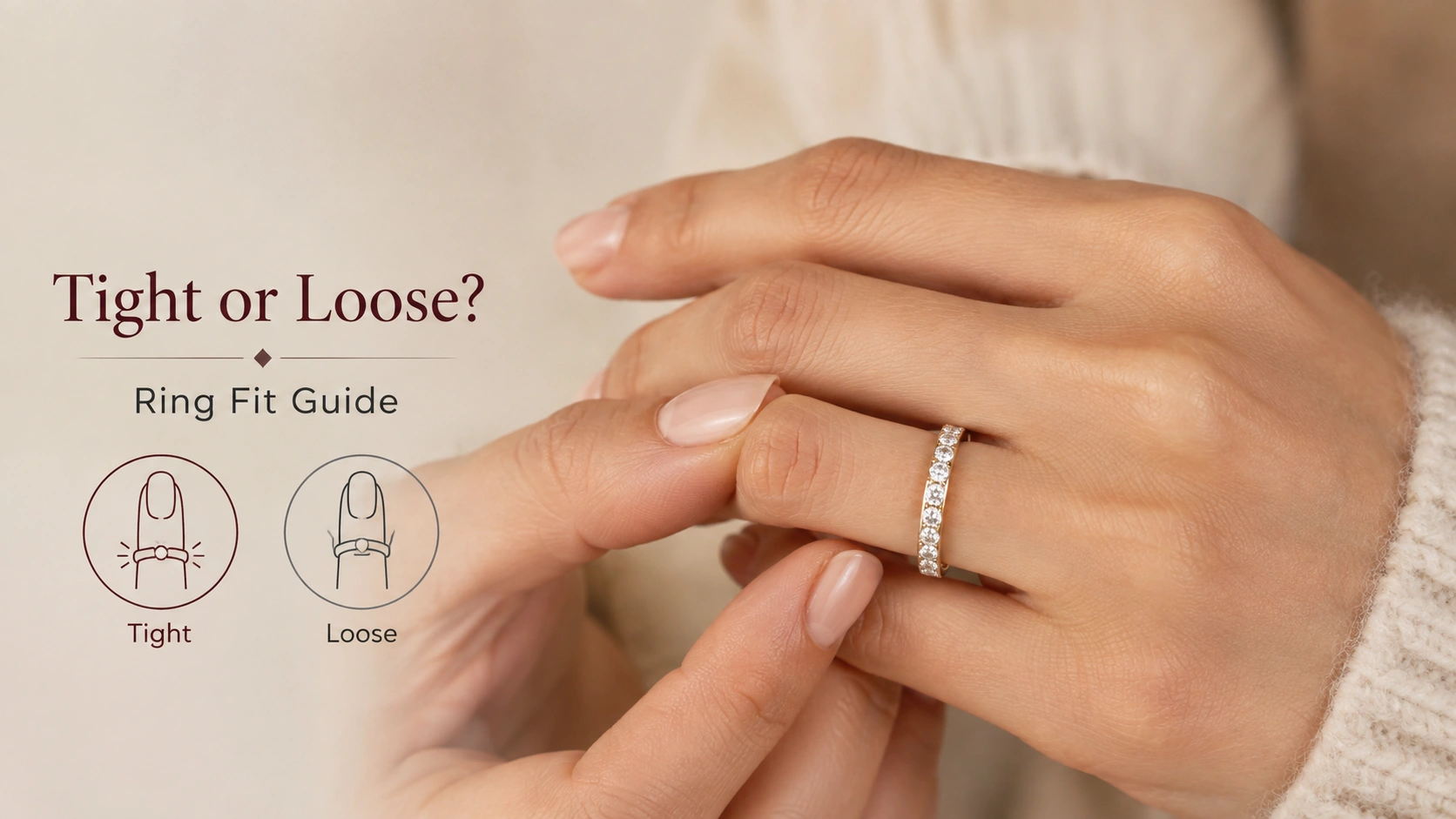
Buying a wedding band is exciting, but getting the right fit matters just as much as choosing the design. Many people ask the same question: should a wedding band be tight or loose? The answer isn’t simply “tight” or “loose.” Instead, the ideal wedding band fit strikes a balance between comfort and security.
A properly fitted wedding band should stay securely on your finger during daily activities without causing discomfort. It should slide over your knuckle with slight resistance and sit comfortably once in place. If your ring constantly spins, slips off, or leaves your finger feeling numb, it’s time to reconsider the fit.
In this guide, you’ll learn how should a wedding band fit, how tight it should feel, the warning signs of an incorrect fit, and practical wedding band sizing tips that help you choose a ring you’ll enjoy wearing every day.
How Should a Wedding Band Fit?
If you’ve ever wondered how should a wedding band fit, imagine putting on a well-fitted pair of shoes. They shouldn’t pinch your feet, but they shouldn’t fall off either. Your wedding ring should feel much the same.
A proper wedding band fit should:
- Slide over the knuckle with gentle resistance.
- Sit securely at the base of your finger.
- Stay in place during normal movement.
- Rotate slightly if you intentionally twist it.
- Come off with a little effort rather than slipping off on its own.
Most professional jewellers describe this as a snug wedding band rather than a tight one. Once the ring passes your knuckle, it should feel comfortable without squeezing your finger.
A ring that fits correctly often feels unfamiliar for the first few days simply because you’re adjusting to wearing jewellery. That doesn’t necessarily mean it’s the wrong size.
Should a Wedding Band Be Tight or Loose?
The short answer is neither.
A wedding band should feel snug enough to stay secure but loose enough to remain comfortable throughout the day.
Your fingers naturally change size because of temperature, hydration, exercise, and even the time of day. That’s why a perfectly fitted ring may feel slightly tighter in the afternoon than it does in the morning.
Jewellers generally recommend choosing a size that:
- Doesn’t slide off while washing your hands.
- Doesn’t require excessive force to remove.
- Doesn’t leave your finger throbbing after several hours.
- Doesn’t spin constantly during everyday wear.
Think of your wedding band as a trusted travel companion. You want it close enough to stay with you, but not so clingy that it makes every movement uncomfortable.
How Tight Should a Wedding Band Feel?
One of the most common questions couples ask is how tight should a wedding band be?
A correctly fitted wedding ring should:
- Feel comfortably snug.
- Leave a very light temporary impression after removal.
- Slide over your knuckle with slight resistance.
- Not cut off circulation.
- Not create pain or numbness.
Many people assume a ring should glide off effortlessly. In reality, your knuckle is often slightly wider than the base of your finger. That’s why it’s normal to feel mild resistance when removing your ring.
Professional jewellers often perform what’s known as a simple ring fit test. They gently twist the ring while removing it. If it slides off without any resistance, it may be too loose. If it refuses to move without significant force, it may be too tight.
Signs Your Wedding Band Is Too Tight
A tight ring isn’t just uncomfortable – it can become difficult to remove if your fingers swell.
Here are the most common signs your wedding ring is too tight.
It Leaves Deep Marks
A faint indentation is completely normal after wearing a ring all day.
However, deep grooves that remain for a long time suggest the band is applying too much pressure.
Your Finger Feels Numb
Loss of feeling is never a good sign.
If your finger tingles, throbs, or becomes numb while wearing your ring, it’s likely restricting blood flow.
You Can’t Remove It Easily
Many people ask, how to know if a wedding band is too tight?
If soap, water, lotion, and patience still don’t help you remove it, the ring is probably too small.
While fingers naturally swell in warm weather, your ring should still come off with moderate effort under normal conditions.
The Skin Bulges Around the Ring
A small amount of skin around the band is perfectly normal.
Excessive bulging, however, often indicates that the ring is squeezing your finger rather than fitting comfortably.
It Causes Daily Discomfort
Your wedding band shouldn’t constantly remind you it’s there.
If you’re eager to remove it every evening because it feels uncomfortable, the fit deserves another look.
Signs Your Wedding Band Is Too Loose
A loose ring may feel comfortable, but it also increases the risk of losing a piece of jewellery you’ll likely wear every day.
Here are the most common signs your wedding ring is too loose.
It Slides Off Easily
Many people ask, should a wedding band slide off easily?
The answer is no.
A properly fitted ring should require slight resistance as it passes over the knuckle.
If gravity alone removes your ring when your hand points downward, it’s almost certainly too loose.
It Spins Constantly
Another frequent question is, should my wedding band spin?
Some movement is completely normal, especially if your fingers become colder.
However, continuous spinning throughout the day usually means the band is too large.
Occasional ring movement isn’t a problem, but constant rotation can become annoying and may even increase wear over time.
You Feel Like It Might Fall Off
If you instinctively check your finger every few minutes, your ring probably isn’t giving you enough confidence.
A comfortable wedding band fit should provide peace of mind, not constant worry.
It Falls Off While Washing Your Hands
Soap reduces friction, making every ring slightly looser.
If your wedding band regularly slips off while washing your hands, swimming, or drying your hands with a towel, it’s worth having the fit assessed by a professional jeweller.
Does Finger Size Change During the Day?
Yes – and often more than people expect.
One of the biggest reasons people struggle with wedding ring sizing is that fingers naturally expand and contract throughout the day.
Several factors affect finger size, including:
- Warm weather
- Cold temperatures
- Exercise
- Salt intake
- Hydration levels
- Hormonal changes
- Pregnancy
- Time of day
For many people, fingers are slightly smaller in the morning and become larger during the afternoon or evening.
This natural variation explains why a ring may fit perfectly at breakfast but feel noticeably snug after a summer walk.
According to the Gemological Institute of America (GIA), professional ring sizing works best when your hands are at a normal temperature rather than unusually cold or warm. Measuring under typical conditions helps you choose a size that remains comfortable throughout everyday wear.
Wedding Band Fit in Winter vs Summer
One reason people become confused about proper wedding band fit is that their fingers don’t stay the same size all year.
Temperature affects blood vessels, which changes the size of your fingers. During warm weather, blood vessels expand, and fingers often swell slightly. In colder conditions, blood vessels narrow, making fingers a little slimmer.
This seasonal change explains why your wedding band may feel tighter in July and looser in January.
Wedding Band Fit in Summer
During summer, your ring may:
- Feel slightly snug.
- Leave a light indentation after a long day.
- Become harder to remove after exercise or outdoor activities.
A little extra tightness isn’t unusual, but your ring should never become painful or difficult to remove.
Wedding Band Fit in Winter
During colder months, you may notice:
- More ring movement.
- Slight spinning.
- Easier removal.
A small amount of movement is expected. However, if your ring feels like it could slip off while walking outdoors, it may be too loose.
The best approach is to choose a size that feels comfortable throughout most of the year instead of sizing your ring for extreme weather conditions.
Comfort Fit vs Standard Fit Wedding Bands
Not all wedding bands feel the same, even if they share the same ring size.
The inside shape of the band plays a major role in comfort.
Comfort Fit Band
A comfort fit band has a gently rounded interior.
Benefits include:
- Slides over the knuckle more easily.
- Feels smoother during daily wear.
- Reduces pressure on the finger.
- Works well for people who wear their ring all day.
Many people prefer comfort-fit wedding bands because they reduce friction without making the ring feel loose.
Standard Fit Band
A standard fit band has a flat interior.
Advantages include:
- Traditional appearance.
- Slightly lower cost in some designs.
- Secure feel for thinner bands.
Because the inside edge isn’t rounded, some people find a standard fit feels tighter than a comfort fit in the same size.
If you’re choosing between the two, ask your jeweller to let you try both before making a decision.
Should You Size Up for a Wide Wedding Band?
Many shoppers ask, should you size up for a wedding band if it’s wider than usual?
In many cases, yes – but not always.
A wider band covers more skin, creating additional friction. That extra contact often makes the ring feel tighter than a narrow band in the same size.
For example, someone who comfortably wears a slim 2 mm band may find that a 7 mm or 8 mm wedding band feels noticeably tighter.
Rather than automatically increasing your size, have your finger measured while trying on bands with a similar width.
Professional jewellers often recommend sizing based on the actual band width you plan to wear rather than relying on the size of another ring.
Wedding Band Fit Over the Knuckle
Not everyone’s finger has the same shape.
Some people have large knuckles with slimmer fingers, while others have very little difference between the knuckle and the base of the finger.
If your knuckle is noticeably larger, your wedding band should:
- Pass over the knuckle with gentle resistance.
- Sit comfortably once it reaches the base of your finger.
- Stay secure without constant spinning.
If you choose a size based only on your finger, the ring may never pass your knuckle. If you size only for the knuckle, the ring may become loose after you put it on.
A professional jeweller can help you find the best balance.
Wedding Band Sizing for Swollen Fingers
Finger swelling affects almost everyone at some point.
Common causes include:
- Hot weather
- Exercise
- Pregnancy
- Certain medications
- Long flights
- Eating salty foods
If you know your fingers regularly swell, don’t choose a dramatically larger ring.
Instead:
- Get professionally measured at a normal room temperature.
- Try on rings later in the day.
- Wear the sample ring for several minutes before deciding.
This approach gives a more realistic picture of your everyday ring size.
How Loose Should a Wedding Band Be?
A wedding band should never feel like it’s about to fall off.
A good rule is simple:
- The ring should rotate with gentle pressure.
- It shouldn’t spin constantly on its own.
- It shouldn’t slide off when your hand hangs naturally.
- It should require a slight twist to remove.
Many jewellers describe this as a secure fit rather than a loose fit.
If you’re asking, how loose should a wedding band be, the answer is “just loose enough to remain comfortable.”
Should a Wedding Ring Leave a Mark?
This question worries many first-time ring owners.
The answer is usually yes.
A faint impression that disappears within a few minutes is completely normal.
However, a deep groove, redness, swelling, or discomfort suggests the ring is too tight.
Think about wearing a pair of socks. They often leave a temporary mark without causing any problems. Your wedding band can do the same.
Pay attention to how your finger feels rather than focusing only on the mark.
How Do I Know if My Wedding Band Fits Correctly?
If you’re still unsure, use this simple ring fit guide.
Your ring probably fits well if it:
- Slides over your knuckle with slight resistance.
- Sits comfortably at the base of your finger.
- Doesn’t pinch your skin.
- Doesn’t leave deep marks.
- Doesn’t fall off while washing your hands.
- Doesn’t constantly spin.
- Feels secure during everyday activities.
If you answered “yes” to most of these, you’ve likely found your ideal wedding band fit.
When Should You Resize Your Wedding Ring?
A wedding ring doesn’t need resizing because it feels slightly different on a hot afternoon or a cold morning. Seasonal changes are normal.
However, you should consider visiting a professional jeweller if:
- Your ring regularly falls off.
- It becomes painful to wear.
- You struggle to remove it under normal conditions.
- It leaves deep grooves or causes numbness.
- It spins constantly and feels insecure.
Many traditional gold and platinum wedding bands can be resized. However, some designs – such as full eternity bands or rings made from materials like tungsten or ceramic – may have limited or no resizing options.
If you’re unsure, ask your jeweller before purchasing so you understand your future options.
Frequently Asked Questions
How tight should a wedding band be?
A wedding band should feel comfortably snug. It should slide over your knuckle with slight resistance, stay securely on your finger, and remain comfortable throughout the day. It shouldn’t pinch, restrict circulation, or cause pain.
Should a wedding ring be tight?
A wedding ring should feel secure rather than tight. If it leaves deep marks, causes numbness, or feels painful, it’s likely too small.
Should a wedding ring be loose?
No. A loose wedding ring increases the risk of slipping off during everyday activities. A properly fitted ring should stay in place while still feeling comfortable.
Should my wedding band spin?
A small amount of ring movement is normal, especially when your fingers are cold.
However, constant spinning usually indicates the ring is slightly too large.
Should a wedding ring leave a mark?
A faint temporary indentation is normal after wearing a ring all day.
Deep grooves, redness, swelling, or discomfort suggest the ring may be too tight.
Does finger size change during the day?
Yes.
Temperature, hydration, exercise, diet, and hormones can all affect finger size. That’s why jewellers recommend measuring your finger under normal daily conditions rather than immediately after physical activity or exposure to extreme temperatures.
Should you size up for a wide wedding band?
Sometimes.
Because wider bands cover more of your finger, they often feel tighter than narrow bands of the same size. Your jeweller can recommend the most comfortable fit based on the width of your chosen band.
Can a wedding band be resized later?
Many precious metal wedding bands can be resized if needed.
However, some styles and materials cannot. Always check the resizing policy before purchasing your ring.
Final Thoughts
Choosing the right wedding band size isn’t about finding a ring that’s either tight or loose – it’s about finding one that feels natural.
A well-fitted wedding band stays secure without squeezing your finger, slides over the knuckle with gentle resistance, and feels comfortable enough for everyday wear. Since finger size naturally changes with temperature, activity, and time of day, don’t expect your ring to feel exactly the same every hour.
If you’re between sizes or unsure about the fit, seek advice from an experienced jeweller. A professional fitting takes into account your finger shape, knuckle size, band width, and preferred style, giving you the best chance of finding a ring you’ll love wearing for years to come.
Your wedding band is more than a piece of jewellery – it’s something you’ll likely wear every day. Taking the time to get the fit right is one of the simplest ways to ensure lasting comfort, confidence, and peace of mind.
