Choosing an engagement ring is exciting, but choosing the right diamond shape can feel like comparing two beautiful works of art. Every diamond shape has its own personality, sparkle pattern, and visual appeal.
Two shapes that often create confusion among modern buyers are the Dutch Marquise diamond and the Pear engagement ring. Both feature an elongated silhouette, both can make the finger appear longer, and both offer a unique alternative to traditional round diamonds.
However, they create completely different impressions.
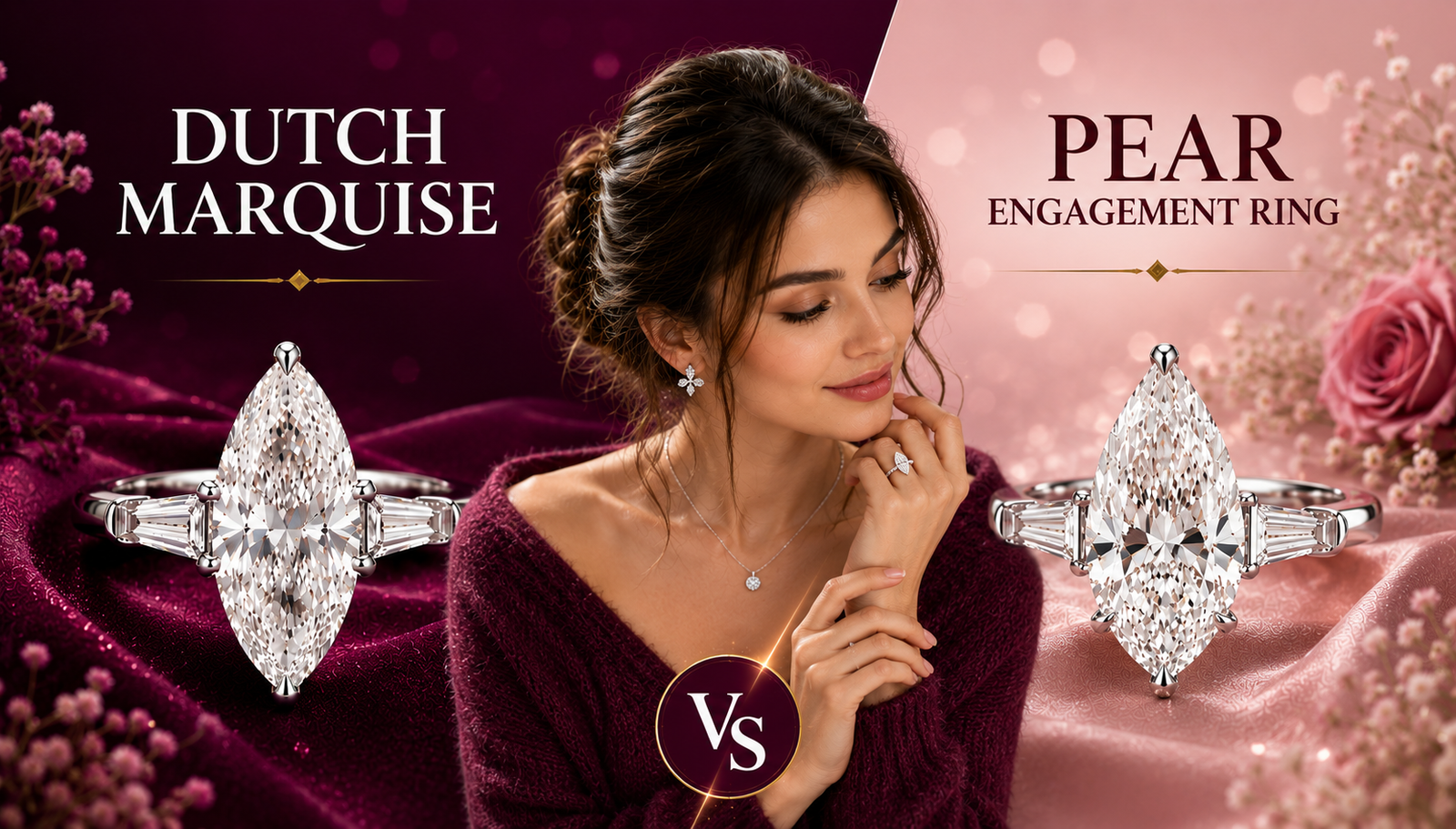
A Dutch Marquise engagement ring offers a rare, elegant, and sophisticated look with its elongated oval center and pointed ends. A Pear engagement ring combines the brilliance of a round diamond with a graceful teardrop shape, creating a romantic and timeless appearance.
So, which one is better?
The answer depends on your style, budget, lifestyle, and what you want your engagement ring to represent.
In this guide, we will compare Dutch Marquise vs Pear engagement rings based on shape, sparkle, size appearance, durability, price, settings, and everyday wear to help you choose the perfect diamond style.
Dutch Marquise Diamond
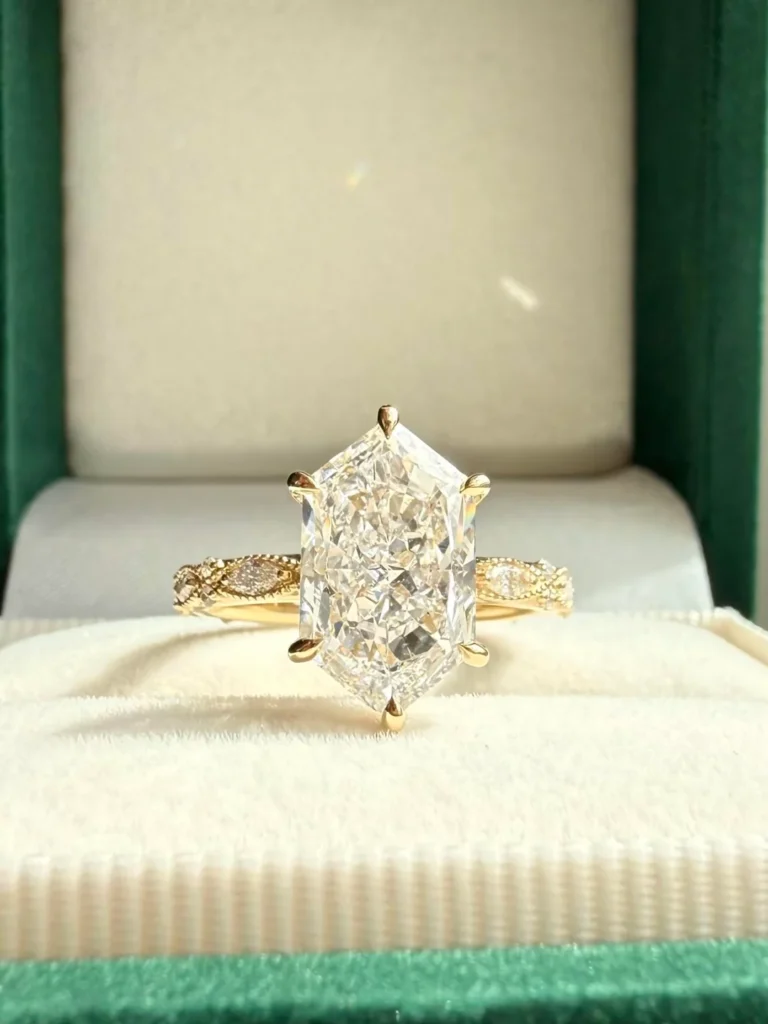
A Dutch Marquise diamond is a unique elongated diamond shape inspired by traditional marquise cuts but with a distinctive Dutch-style design. It features a long, narrow profile with pointed ends and carefully arranged facets that create a vintage yet luxurious appearance.
Unlike a standard marquise diamond, Dutch Marquise diamonds are known for their artistic proportions and handcrafted feel. They often appeal to buyers looking for something uncommon rather than a widely seen engagement ring style.
The shape creates a beautiful finger-elongating effect, making it an attractive choice for people who want a statement ring with a refined silhouette.


Dutch Marquise diamonds are especially popular among buyers searching for:
- Unique engagement ring shapes
- Vintage-inspired engagement rings
- Custom diamond rings
- Rare diamond cuts
- Lab grown Dutch Marquise diamonds
Because this shape is less common than traditional diamond cuts, it often feels more personal and exclusive.
Pear Engagement Ring
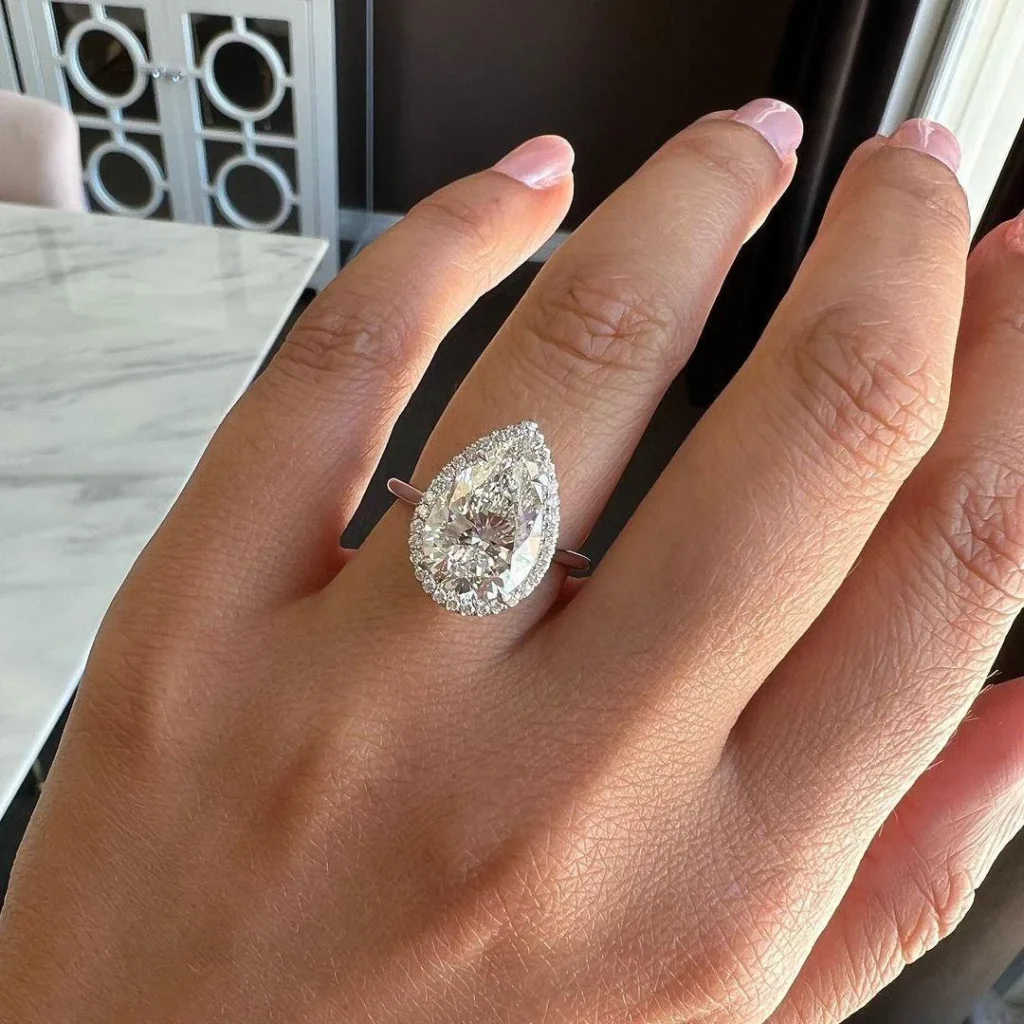
A Pear engagement ring features a pear-shaped diamond, also called a teardrop diamond. It combines the brilliance of a round brilliant cut with the elegant point of a marquise shape.
The wider rounded end creates strong light return, while the pointed tip adds a graceful and feminine appearance.
Pear diamonds are considered a versatile choice because they work beautifully in many settings, including:
- Solitaire engagement rings
- Halo engagement rings
- Hidden halo rings
- East-west engagement rings
- Three-stone engagement rings
The pear shape has remained popular because it balances classic beauty with a modern twist.


A well-cut pear diamond can display impressive diamond brilliance and fire, making it a favourite among buyers who want sparkle with a distinctive shape.
Dutch Marquise vs Pear Engagement Ring: Quick Comparison
| Feature | Dutch Marquise Diamond | Pear Diamond |
|---|---|---|
| Shape | Long and narrow with pointed ends | Teardrop shape with one pointed end |
| Style | Vintage, artistic, rare | Romantic, classic, elegant |
| Sparkle | Facet-driven brilliance | Strong brilliance with round-cut influence |
| Finger Appearance | Creates strong elongating effect | Also lengthens fingers but softer |
| Popularity | Rare and uncommon | More widely recognized |
| Best For | Unique and vintage-inspired designs | Timeless and romantic styles |
| Setting Options | Solitaire, bezel, east-west | Solitaire, halo, hidden halo |
| Availability | Limited | More commonly available |
Both diamonds offer beauty, but they communicate different personalities.
A Dutch Marquise feels like a hidden treasure discovered in an antique jewellery collection.
A Pear diamond feels like a classic love story with a modern chapter.
Dutch Marquise vs Pear Diamond: Shape and Appearance
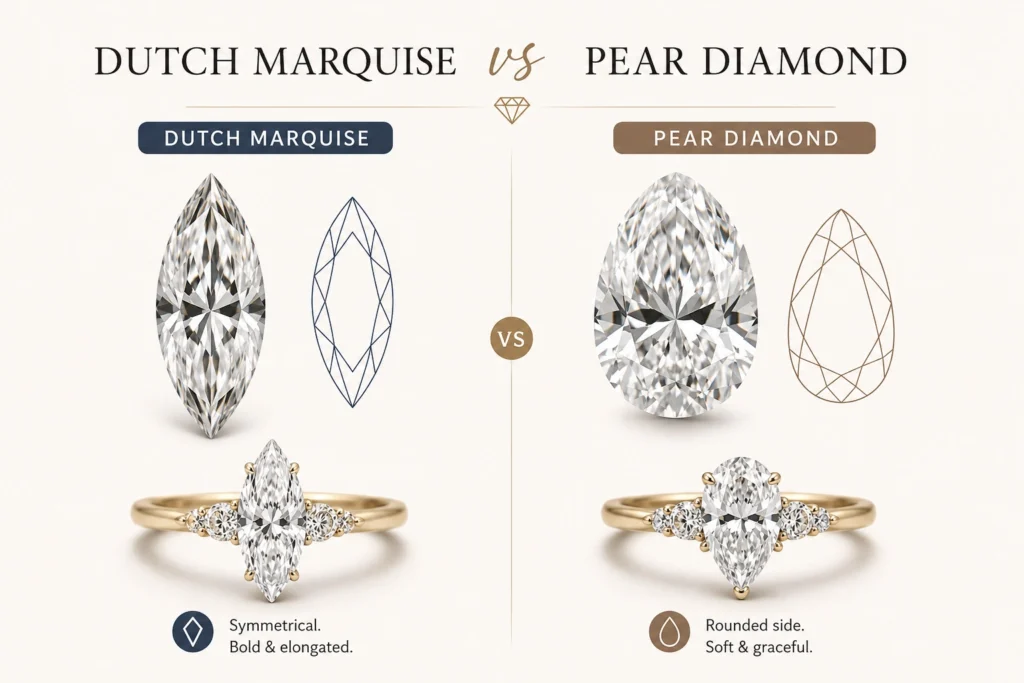
The biggest difference between these two diamond shapes is their overall silhouette.
A Dutch Marquise diamond has a symmetrical pointed shape on both ends. This creates a longer visual appearance and gives the diamond a more dramatic presence.
A Pear diamond, on the other hand, has one rounded side and one pointed tip. This creates a softer and more romantic appearance.
When placed on the finger:
- Dutch Marquise appears longer and more architectural.
- Pear appears graceful and fluid.
- Dutch Marquise creates a stronger vintage impression.
- Pear creates a more contemporary romantic feel.
For buyers searching for a unique engagement ring shape, Dutch Marquise often stands out because fewer people own this style.
For buyers who want something recognizable but still different from a round diamond, Pear remains a strong choice.
Dutch Marquise vs Pear Engagement Ring: Which Looks Bigger?
Many buyers want an engagement ring that offers maximum visual impact. This is where elongated diamond shapes have an advantage.
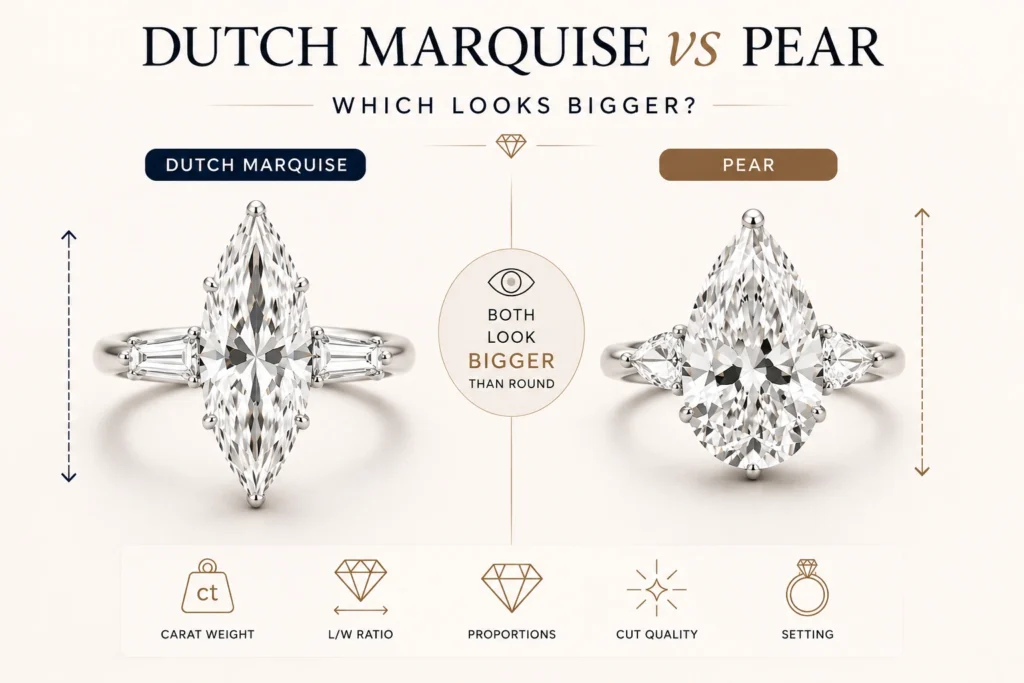
Both Dutch Marquise and Pear diamonds usually appear larger than round diamonds of similar carat weight because their elongated shapes cover more surface area on the finger.
A diamond's visual size depends on:
- Carat weight
- Length-to-width ratio
- Diamond proportions
- Cut quality
- Setting design
A well-proportioned Dutch Marquise diamond can create significant finger coverage because of its long shape.
Pear diamonds can also appear larger because their teardrop outline spreads across the finger.
If your goal is maximum elongated appearance, Dutch Marquise may have a slight advantage due to its longer profile.
However, the actual face-up size depends on the individual diamond's measurements rather than shape alone.
Sparkle Comparison: Dutch Marquise vs Pear Diamond
Sparkle is one of the most important factors when choosing an engagement ring.
The sparkle of a diamond depends mainly on:
- Cut quality
- Facet arrangement
- Symmetry
- Light performance
- Diamond proportions
A Pear diamond generally offers strong brilliance because it inherits characteristics from the round brilliant cut.
The rounded portion allows excellent light return, creating noticeable sparkle.
Dutch Marquise diamonds create a different type of beauty. Their faceting pattern produces elegant flashes of light and a distinctive vintage appearance.
Instead of only chasing maximum sparkle, many buyers choose Dutch Marquise because of its character.
The choice often comes down to preference:
- Want maximum brilliance? → Pear may appeal more.
- Want rare vintage charm? → Dutch Marquise may be the better choice.
Dutch Marquise vs Pear Engagement Ring: Durability Comparison
Durability is an important factor because an engagement ring is designed for everyday wear. A beautiful diamond should also be practical enough to handle daily activities.
Both Dutch Marquise diamonds and Pear diamonds have pointed tips, which means their settings need careful consideration.
The pointed areas are the most vulnerable parts of these shapes. Without proper protection, they may be more exposed to accidental impacts.
For this reason, jewellers often recommend protective settings such as:
- Claw prongs
- V-shaped prongs
- Bezel settings
- Halo settings
A Pear engagement ring usually requires a V-prong at the pointed tip to protect the diamond.
A Dutch Marquise engagement ring also benefits from protective prong placement because both ends feature pointed edges.
When comparing durability:
- Pear diamonds have one vulnerable point.
- Dutch Marquise diamonds have two pointed ends.
- Both can be durable with the correct setting.
The diamond cut itself is not the only factor. The quality of craftsmanship, setting design, and daily care play a major role in long-term durability.
Dutch Marquise vs Pear Diamond: Bow-Tie Effect
One common topic when comparing elongated diamonds is the bow-tie effect.
The bow-tie effect appears as a dark shadow across the middle section of some elongated diamond shapes. It happens when light does not return properly because of the diamond's proportions and facet arrangement.
Both Pear and Marquise-style diamonds can show this effect.
However, the visibility depends on:
- Diamond cut quality
- Length-to-width ratio
- Facet design
- Symmetry
A well-cut diamond should have balanced light performance without a distracting dark area.
When selecting either a Dutch Marquise or Pear diamond, buyers should review the actual diamond images or videos instead of choosing only based on carat weight.
A beautiful diamond is not just about size. It is about how it interacts with light.
Dutch Marquise vs Pear Engagement Ring: Which Sparkles More?
There is no simple winner because sparkle depends on the individual diamond.
A high-quality Pear diamond can offer impressive brilliance because of its round brilliant-inspired faceting.
Dutch Marquise diamonds can also display beautiful flashes of light, especially when crafted with excellent symmetry and proportions.
The sparkle difference usually comes from the cutting style:
Pear Diamond Sparkle
Pear diamonds are known for:
- Bright flashes
- Strong brilliance
- Classic diamond sparkle
- Excellent light return when well cut
Dutch Marquise Diamond Sparkle
Dutch Marquise diamonds are appreciated for:
- Elegant light patterns
- Artistic faceting
- Vintage-inspired brilliance
- Unique visual character
If you prefer a traditional sparkling engagement ring, Pear may feel more familiar.
If you prefer a rare diamond with personality, Dutch Marquise offers something different.
Dutch Marquise vs Pear Diamond: Price Comparison
The price of an engagement ring depends on several factors, including:
- Carat weight
- Diamond quality
- Cut grade
- Colour
- Clarity
- Certification
- Metal choice
- Brand craftsmanship
Shape also influences pricing.
Pear diamonds are generally easier to find because they are more widely produced and available in different sizes and qualities.
Dutch Marquise diamonds are rarer, and their availability can be more limited. A custom-cut or handcrafted Dutch Marquise diamond may require additional craftsmanship.
For buyers considering lab-grown diamonds, both options can provide an opportunity to choose a larger-looking diamond while maintaining budget flexibility.
A lab grown Dutch Marquise diamond can be an excellent choice for someone searching for a rare appearance.
A lab grown Pear diamond can be ideal for buyers who want a classic shape with strong sparkle.
Instead of choosing only by price, compare:
- Diamond measurements
- Cut quality
- Visual appearance
- Certification
- Overall craftsmanship
Dutch Marquise vs Pear: Best Ring Settings
The right setting can completely change how a diamond looks.
Both Dutch Marquise and Pear diamonds work well with different engagement ring styles.
Dutch Marquise Engagement Ring Settings
Popular options include:
Solitaire Setting
A solitaire Dutch Marquise ring keeps attention on the unusual diamond shape.
It creates a clean and elegant appearance.
East-West Setting
An east-west Dutch Marquise ring places the diamond horizontally instead of vertically.
This creates a modern and fashion-forward look.
Halo Setting
A halo around a Dutch Marquise diamond can add extra sparkle and make the centre stone appear larger.
Bezel Setting
A bezel setting provides additional protection around the diamond edges, making it practical for daily wear.
Pear Engagement Ring Settings
Pear diamonds are extremely versatile.
Popular choices include:
Classic Solitaire
A solitaire Pear engagement ring creates a timeless and elegant look.
Hidden Halo Setting
A hidden halo adds extra sparkle beneath the centre diamond while maintaining a clean appearance.
Cathedral Setting
A cathedral setting lifts the diamond higher and creates a traditional engagement ring style.
Pavé Band
A pavé band adds additional brilliance around the centre stone.
Dutch Marquise or Pear: Which Is Better for Everyday Wear?
The best everyday engagement ring depends on your lifestyle.
If you work with your hands frequently or prefer low-maintenance jewellery, protective settings are especially important.
A Pear diamond with a secure V-prong setting can work beautifully for everyday wear.
A Dutch Marquise diamond can also be suitable for daily use when placed in a well-designed setting.
For active lifestyles:
- Choose protective prongs.
- Consider a bezel setting.
- Avoid designs where pointed edges are overly exposed.
- Schedule regular jewellery inspections.
A well-made engagement ring should balance beauty and practicality.
Lab Grown Dutch Marquise vs Pear Diamond
Lab-grown diamonds have become a popular choice for buyers looking for modern diamond options.
A lab-grown diamond has the same chemical composition, crystal structure, and physical properties as a mined diamond. The main difference is the origin.
Both options are available as lab-grown diamonds:
- Lab grown Dutch Marquise diamond
- Lab grown Pear diamond
A lab-grown Dutch Marquise diamond may appeal to buyers who want:
- Rare diamond shapes
- Custom engagement rings
- Vintage-inspired designs
- A distinctive centre stone
A lab-grown Pear diamond may appeal to buyers who want:
- Classic elegance
- Strong sparkle
- A timeless engagement ring style
The best choice depends on your personal taste rather than whether the diamond was created in a laboratory or mined.
Dutch Marquise vs Pear Engagement Ring: Which One Should You Choose?
Choosing between a Dutch Marquise and Pear engagement ring comes down to your personal style.
Choose a Dutch Marquise engagement ring if you want:
- A rare and artistic diamond shape
- A vintage-inspired engagement ring
- A strong finger-elongating effect
- A unique conversation piece
- A handcrafted jewellery feel
Choose a Pear engagement ring if you want:
- A romantic teardrop shape
- Classic diamond brilliance
- More availability and variety
- A timeless engagement ring style
- A versatile design
Neither shape is universally better.
The perfect engagement ring is the one that matches your personality and feels meaningful every time you look at it.
Frequently Asked Questions
Is Dutch Marquise better than Pear diamond?
Neither diamond shape is universally better. A Dutch Marquise diamond is ideal for buyers who prefer a rare, vintage-inspired engagement ring, while a Pear diamond suits those looking for classic elegance with excellent sparkle. The better choice depends on personal style, budget, and lifestyle.
Which diamond sparkles more: Dutch Marquise or Pear?
Pear diamonds generally offer strong brilliance because their faceting style is influenced by the round brilliant cut. Dutch Marquise diamonds provide unique light patterns and vintage-inspired sparkle. Cut quality, symmetry, and proportions determine the actual sparkle of both shapes.
Which engagement ring looks bigger: Dutch Marquise or Pear?
Both Dutch Marquise and Pear diamonds can appear larger than round diamonds because their elongated shapes provide more surface coverage. Dutch Marquise diamonds usually create a longer appearance, while Pear diamonds provide balanced finger coverage.
Are Dutch Marquise diamonds more expensive than Pear diamonds?
The price depends on carat weight, colour, clarity, cut quality, certification, and availability. Pear diamonds are generally easier to find, while Dutch Marquise diamonds may cost differently depending on their rarity and craftsmanship.
What setting is best for a Pear engagement ring?
Popular Pear engagement ring settings include solitaire, hidden halo, halo, cathedral, and pavé settings. A V-prong is commonly used to protect the pointed end of the pear diamond.
Final Thoughts
The choice between a Dutch Marquise vs Pear engagement ring is not about finding a winner. It is about finding a diamond shape that reflects your story.
A Dutch Marquise diamond offers rarity, vintage charm, and artistic beauty.
A Pear diamond delivers romance, brilliance, and timeless elegance.
If you want a ring that feels uncommon and handcrafted, Dutch Marquise may be the perfect match.
If you want a classic yet distinctive design with impressive sparkle, a Pear engagement ring remains a beautiful choice.
The best engagement ring is not only the one that catches the light, it is the one that captures your personality.