If you’re choosing a gold engagement ring, wedding band, or other piece of fine jewelry, you’ve probably come across two common options: 14K gold and 18K gold.
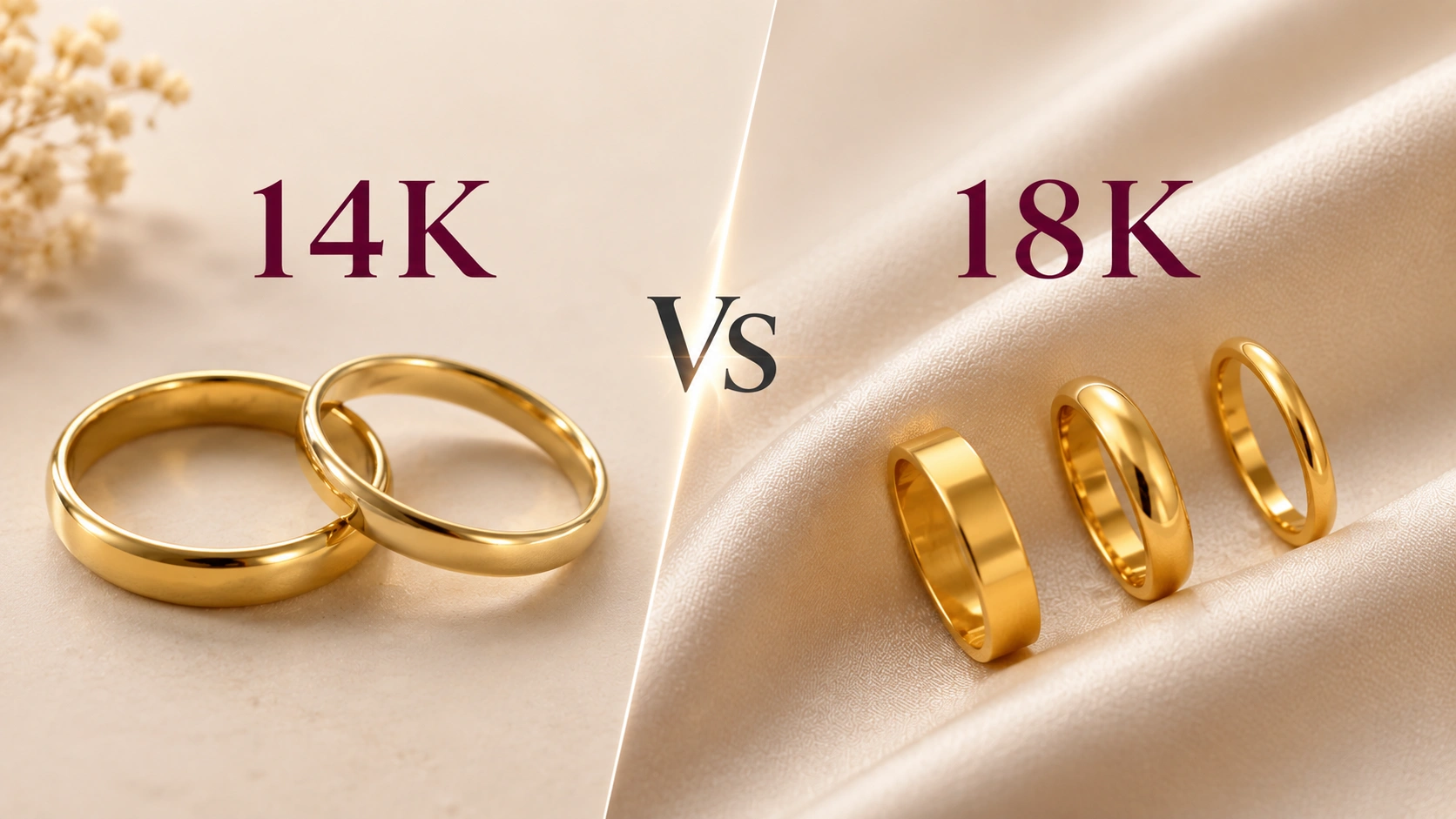
Both are real gold. Both can be excellent choices for an engagement ring. The main difference is how much pure gold each contains.
14K gold contains about 58.3% pure gold, while 18K gold contains 75% pure gold. The remaining metal is made up of alloys such as copper, silver, zinc, palladium, or other metals, depending on the type and color of gold.
That difference affects more than purity. It also influences the metal’s color, hardness, price, and how it behaves with everyday wear. The Federal Trade Commission explains that karat describes the proportion of pure gold in a 24-part alloy: 14K is 14 parts gold and 10 parts other metal, while 18K is 18 parts gold and six parts other metal.
For most people buying an everyday engagement ring, 14K gold is the practical choice because it offers a strong balance of durability and price. If you prioritize a richer gold color, higher gold content, and a more luxurious feel, 18K gold may be worth the additional cost.
14K vs 18K Gold at a Glance
| Feature | 14K Gold | 18K Gold |
|---|---|---|
| Pure gold content | About 58.3% | 75% |
| Alloy content | About 41.7% | 25% |
| Durability | Higher | Lower |
| Color | Lighter, less saturated | Richer, deeper |
| Price | Usually lower | Usually higher |
| Everyday wear | Excellent | Excellent with reasonable care |
| Gold content | Lower | Higher |
| Best for | Durability and value | Purity and richer color |
Neither is automatically better. The right choice depends on how you plan to wear the ring and what matters most to you.
What Does 14K Gold Mean?
The “K” in 14K stands for karat, which measures gold purity out of 24 parts.
A 14K gold alloy contains 14 parts pure gold and 10 parts other metals. That works out to approximately 58.3% gold.
The additional metals aren’t simply there to reduce the amount of gold. They help make the alloy more suitable for jewelry. Pure 24K gold is relatively soft, so gold used in rings is normally mixed with other metals to improve hardness and durability.
The result is a gold alloy that is generally more resistant to everyday scratching and denting than higher-karat gold.
For that reason, 14K gold is particularly popular for jewelry that gets worn frequently.
What Does 18K Gold Mean?
18K gold contains 18 parts pure gold out of 24, or 75% pure gold.
The remaining 25% consists of alloying metals. Because there is more gold and less alloy than in 14K gold, 18K gold generally has a richer and more saturated appearance, particularly in yellow gold.
It is also softer than 14K gold, meaning it can be more susceptible to scratches and dents during everyday wear. GIA similarly describes higher-gold-content alloys as richer in color, slightly softer, and more expensive.
That doesn’t make 18K gold fragile. It is still a commonly used fine-jewelry alloy and is considered suitable for everyday rings when cared for appropriately.
Also Read: 10K vs 14K Gold
14K vs 18K Gold: What’s the Difference?
1. Gold Purity
This is the fundamental difference.
- 14K: approximately 58.3% pure gold
- 18K: 75% pure gold
An 18K ring therefore contains significantly more actual gold than a comparable 14K ring.
If gold content is important to you, 18K has the advantage.
2. Durability
14K generally has the advantage in durability.
Because it contains a greater proportion of alloy metals, 14K gold is typically harder than 18K gold. That makes it better suited to people who are hard on their jewelry or wear their rings during a lot of hands-on activity.
18K gold is softer, so scratches and small dents can develop more readily.
However, don’t interpret that as meaning an 18K engagement ring isn’t durable enough for daily wear. GIA lists both 14K and 18K as suitable for everyday rings.
The more useful distinction is that 14K gives you a larger durability margin, while 18K puts more emphasis on gold content and appearance.
3. Color
The difference is most noticeable in yellow gold.
18K yellow gold generally has a deeper, warmer yellow appearance because it contains more pure gold. 14K yellow gold tends to look somewhat lighter.
GIA notes that the precise alloy composition also affects the shade, so two pieces of the same karat aren’t necessarily identical in color.
If you want the classic, saturated yellow-gold appearance associated with high-purity gold, 18K is usually the better choice.
If you prefer a subtler yellow, 14K may be more appealing.
4. Price
18K gold generally costs more because it contains more gold.
If two rings have essentially the same design and weight, the 18K version will normally have a higher material cost than the 14K version.
That doesn’t necessarily mean an 18K engagement ring is the better value for every buyer.
With 14K, you may be able to allocate some of the money saved on the setting toward another part of the ring, such as the diamond.
5. Weight
Gold is a dense metal, and higher-gold-content alloys can feel somewhat different in the hand.
An 18K ring may feel slightly more substantial than a comparable 14K ring, although the actual difference depends on the ring’s dimensions, design, and alloy composition.
For most engagement-ring shoppers, weight is much less important than durability, appearance, and price.
6. Skin Sensitivity
This one requires more nuance than simply saying “18K is hypoallergenic.”
The exact alloy matters.
14K gold contains more non-gold metal, and some alloys may include metals that cause reactions in sensitive individuals. GIA notes that people sensitive to particular alloy metals, including nickel or copper depending on the gold type, should check the composition carefully.
18K contains less alloy overall, which can make it a better choice for some people with metal sensitivities. But 18K isn’t automatically allergy-proof because its remaining alloy metals still matter.
If you have a known metal allergy, ask the jeweler exactly which metals are used in the alloy rather than choosing solely based on the karat number.
Read: White Gold vs Yellow Gold | White Gold vs Platinum | Rose Gold vs Yellow Gold
14K vs 18K Gold for Engagement Rings
For an engagement ring, both 14K and 18K are legitimate choices.
The decision usually comes down to four questions:
Do you prioritize durability?
Choose 14K.
Do you want the richest yellow-gold color?
Choose 18K, particularly for yellow gold.
Is keeping the price lower important?
Choose 14K.
Do you place a high value on gold purity and a more luxurious feel?
Choose 18K.
For a ring that will be worn every day for years, 14K is often the easiest recommendation because it combines durability, attractive color, and a relatively lower price.
But if you love the appearance of 18K yellow gold and don’t mind taking reasonable care of your ring, there is no reason to avoid it simply because it is softer.
Also Read: Can you wear an engagement ring in the shower?
14K vs 18K Yellow Gold
Yellow gold is where the difference between the two karats is easiest to see.
14K yellow gold typically has:
- A lighter yellow appearance
- Greater hardness
- Better resistance to everyday wear
- A lower price
18K yellow gold typically has:
- A richer, deeper yellow
- Higher gold content
- A softer feel
- A higher price
GIA lists both 14K and 18K as good choices for engagement rings and identifies 14K and 18K as common yellow-gold finenesses.
If you’re choosing yellow gold specifically because you love the color of gold, 18K deserves serious consideration.
If you’re choosing yellow gold because you want a practical metal for everyday wear, 14K is difficult to beat.
14K vs 18K White Gold
The comparison becomes less visually obvious with white gold.
Both 14K and 18K white gold are alloys rather than naturally pure white gold. Their exact appearance depends on the metals used in the alloy and whether the piece has a rhodium coating.
GIA notes that white gold is often rhodium plated and that both 14K and 18K white gold are commonly used in engagement rings.
Because of this, 18K’s richer natural gold color is much less relevant when you’re buying white gold.
For many shoppers, 14K white gold makes sense when durability and price are priorities.
If you have sensitive skin, however, pay particular attention to the alloy composition rather than assuming that one karat is automatically safer.
14K vs 18K Rose Gold
Rose gold gets much of its pinkish color from copper in the alloy.
Both 14K and 18K rose gold are available, but their color can differ depending on the precise alloy recipe.
Generally, 14K rose gold can have a stronger pink or reddish appearance because it contains a larger proportion of alloy metals, while 18K rose gold tends to retain more of the underlying yellow-gold character.
If you want a distinctly pink-toned ring, compare actual samples rather than relying only on the karat number.
Which Is Better for Everyday Wear?
For most people, 14K gold is the more practical everyday option.
It is harder than 18K gold and generally costs less, making it particularly attractive for rings that stay on the finger through much of the day.
That said, 18K gold is also suitable for everyday wear. GIA’s ring-metal guidance lists both 14K and 18K as appropriate for everyday rings.
Your lifestyle matters.
If you work with your hands, exercise while wearing your ring, or simply don’t want to worry much about minor scratches, 14K is the safer practical choice.
If you are willing to remove your ring during activities that could damage it and care more about color and gold content, 18K can be an excellent everyday choice.
Which Is Better for a Diamond Engagement Ring?
There isn’t one universally correct answer.
Choose 14K for your engagement ring if:
- You want stronger resistance to everyday wear.
- You have an active lifestyle.
- You want to spend less on the setting.
- You prefer a slightly lighter gold color.
- You want a practical metal for long-term daily use.
Choose 18K if:
- You want a richer yellow-gold appearance.
- Higher gold content matters to you.
- You prefer the feel and appearance of higher-purity gold.
- You’re comfortable paying more.
- You’re willing to give the ring a little more care.
Your diamond choice still matters independently. The metal doesn’t change the diamond’s carat weight, cut, clarity, or color grade.
If you’re still comparing the diamond itself, Diamiv’s 4Cs of diamond quality guide can help you understand how those characteristics affect a diamond.
Is 18K Gold Worth the Extra Cost?
It can be, but only if you value what you’re getting in return.
The main advantage is higher gold content.
You’re not paying more simply because “18K” sounds better. You’re paying for a larger proportion of actual gold in the alloy, along with the richer appearance that often comes with it.
If you don’t care about the difference in color or purity, paying extra for 18K may not provide much practical benefit.
For a buyer working with a fixed engagement-ring budget, 14K can be particularly attractive because the savings can potentially be directed toward the diamond or another part of the design.
For someone who considers the metal itself an important part of the purchase, the additional gold in 18K may justify the premium.
Is 14K Gold Good Enough for an Engagement Ring?
Absolutely.
14K isn’t a lower-quality version of 18K. It is a different gold alloy with a different balance between gold content and alloy metals.
The FTC explains that 14K gold is made from 14 parts gold and 10 parts other metal, while 18K contains 18 parts gold and six parts other metal.
Both are established choices for engagement rings, and GIA specifically identifies 14K and 18K as good choices for engagement-ring gold.
The fact that 14K contains less gold doesn’t make it “fake gold” or inferior gold.
Read: Why engagement rings have prongs
14K vs 18K Gold: Which Should You Choose?
For most engagement-ring shoppers in the U.S., 14K gold is the best all-around choice.
It offers a practical combination of durability, appearance, and price, making it particularly well suited to a ring that will be worn every day.
Choose 18K gold when higher gold content and a richer color are important enough to justify the additional cost and somewhat greater susceptibility to scratches.
The simplest way to think about the decision is:
14K = durability and value.
18K = purity and richer color.
Neither is universally better. The better karat is the one that fits how you want your ring to look, how you plan to wear it, and where you want your budget to go.
Frequently Asked Questions
Is 18K gold better than 14K gold?
Not necessarily. 18K contains more pure gold and generally has a richer color, while 14K is harder and usually less expensive. For everyday engagement rings, 14K is often the more practical option.
Does 18K gold scratch more easily than 14K?
Generally, yes. Because 18K contains more gold and less alloy metal, it is softer than 14K and can be more susceptible to scratches and dents.
Does 14K gold last longer than 18K?
Both can last for decades with proper care. However, 14K’s greater hardness can make it more resistant to everyday scratches and wear.
Does 18K gold look more yellow than 14K?
Usually, yes, particularly with yellow gold. Higher gold content generally produces a richer, more saturated yellow color.
Is 14K or 18K better for an engagement ring?
For most people, 14K is the better practical choice for an everyday engagement ring. Choose 18K if you strongly prefer its richer color and higher gold content.
Is 18K gold worth more than 14K?
As a material, yes. An 18K alloy contains more pure gold, so a comparable piece will generally have a higher gold value. Retail pricing also depends on the ring’s design, craftsmanship, brand, and other factors.
Can you wear 18K gold every day?
Yes. 18K gold is commonly used for everyday rings and engagement rings. It is simply softer than 14K, so reasonable care can help minimize scratches and dents.
Is 14K gold real gold?
Yes. 14K is real gold alloy containing approximately 58.3% pure gold. The rest consists of other metals added to create a suitable jewelry alloy.
What does 585 mean on gold?
A “585” marking indicates approximately 585 parts gold per 1,000 parts alloy, corresponding to about 58.5% gold and commonly associated with 14K gold.
What does 750 mean on gold?
A “750” marking indicates 750 parts gold per 1,000 parts alloy, or 75% gold. It corresponds to 18K gold.
Bottom Line
14K and 18K gold are both excellent choices for an engagement ring.
If your priority is durability, everyday practicality, and value, choose 14K.
If your priority is higher gold purity and a richer gold color, choose 18K.
Don’t choose 18K simply because the number is higher. And don’t choose 14K because you think it is somehow inferior. They are designed around different trade-offs.
For most U.S. engagement-ring shoppers, 14K is the sensible default. For someone who loves the deeper appearance and higher gold content of 18K, the upgrade can be worthwhile.