Are 4 prongs enough for an engagement ring? Yes, four prongs can securely hold a diamond for everyday wear when the setting is well-designed, properly fitted, and regularly maintained. They create a clean, open look that showcases more of the center stone. However, six prongs offer additional contact points, which can provide extra security if one prong becomes damaged. The best choice depends on your diamond’s shape, size, setting quality, and lifestyle. Understanding these differences can help you choose an engagement ring that balances beauty, durability, and peace of mind.
Four-Prong Engagement Ring Setting
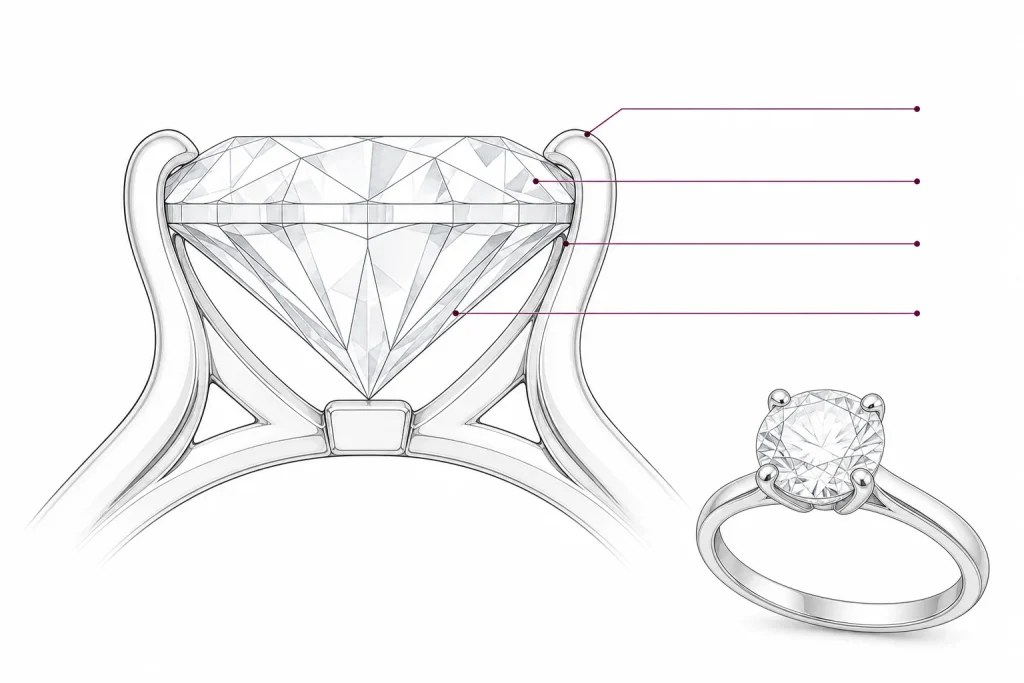
A four-prong engagement ring uses four small metal supports to hold the center diamond in place. The prongs grip the diamond near its outer edge, known as the girdle, helping prevent the stone from moving or falling out.
Four-prong settings are popular because they expose more of the diamond while keeping the surrounding metal relatively unobtrusive. They work particularly well with minimalist solitaires and designs where the center stone is the main attraction.
Here are the main benefits of a four-prong setting:
- More diamond visibility: Fewer prongs cover the diamond’s perimeter, creating a more open appearance.
- Clean, modern styling: Four prongs complement minimalist and contemporary engagement ring designs.
- Defined diamond shapes: The prong arrangement can emphasize the geometry of square and rectangular stones.
- Less metal around the center stone: The setting can look delicate without requiring an elaborate mounting.
However, four prongs provide fewer contact points than six. If one prong becomes loose, bent, or broken, the remaining prongs may not keep the diamond secure under every circumstance.
You can learn more about how these small metal supports work in our guide to engagement ring prongs.
Are Four Prongs as Secure as Six Prongs?
Four prongs can provide reliable support, but six prongs generally offer greater redundancy. The additional two contact points may help keep a diamond in place if one prong becomes damaged.

Consider the differences:
| Feature | Four-Prong Setting | Six-Prong Setting |
|---|---|---|
| Number of contact points | Four | Six |
| Diamond visibility | More open | Slightly more metal around the stone |
| Overall appearance | Minimal and modern | Classic and traditional |
| Backup support | Fewer remaining contact points if a prong fails | More remaining contact points if a prong fails |
| Round diamond appearance | Can emphasize a slightly geometric outline | Can emphasize a rounder outline |
| Maintenance | Requires regular inspection | Requires regular inspection |
Neither design is automatically safe or unsafe. A well-made four-prong setting can be more dependable than a poorly constructed six-prong setting.
The thickness and placement of the prongs, the quality of the setting, the fit of the diamond, and the condition of the metal all influence security. Six prongs simply provide an additional margin of support when everything else is comparable.
The Gemological Institute of America (GIA) also explains that six-prong settings can offer additional protection if a prong breaks, while four-prong settings can adequately secure a diamond when properly constructed.
For a more detailed comparison, read four prongs vs. six prongs.
Does Diamond Shape Matter When Choosing Four Prongs?
Yes. Diamond shape is an important consideration because some stones have pointed corners or tips that need particular protection.
A four-prong setting can work well with many diamond shapes, but the prongs must be positioned appropriately for the specific stone.
Round Diamonds
Four-prong settings are a popular choice for round diamonds. They create an open appearance and allow much of the diamond’s outline to remain visible.
The four-prong arrangement can also make a round diamond appear slightly more geometric. If you prefer a traditional, rounded outline with additional contact points, a six-prong setting is worth considering.
Oval Diamonds
Four prongs can hold an oval diamond securely when the setting is designed for its proportions. However, the stone’s elongated shape and pointed ends deserve attention.
Depending on the design, additional prongs may help protect the ends of a larger oval diamond. Ask your jeweler whether the proposed setting adequately supports the stone rather than choosing based on prong count alone.
If you’re comparing designs, explore these oval lab-grown diamond engagement rings.
Princess-Cut Diamonds
Princess-cut diamonds have pointed corners that can be vulnerable to chipping from an impact.
A four-prong setting may be suitable, but the corners need appropriate protection. V-shaped prongs are one option because they can wrap around the vulnerable points instead of leaving them exposed.
The important consideration is where the prongs sit and how well they protect the diamond’s corners.
Pear and Marquise Diamonds
Pear-shaped and marquise diamonds have pointed tips that require special attention.
A four-prong setting may leave one or both tips without adequate protection, depending on the design. Additional prongs or appropriately positioned V-shaped prongs can help protect these vulnerable areas.
For these shapes, ask the jeweler to explain exactly how the tips will be secured before choosing a setting.
Are Four Prongs Enough for Everyday Wear?
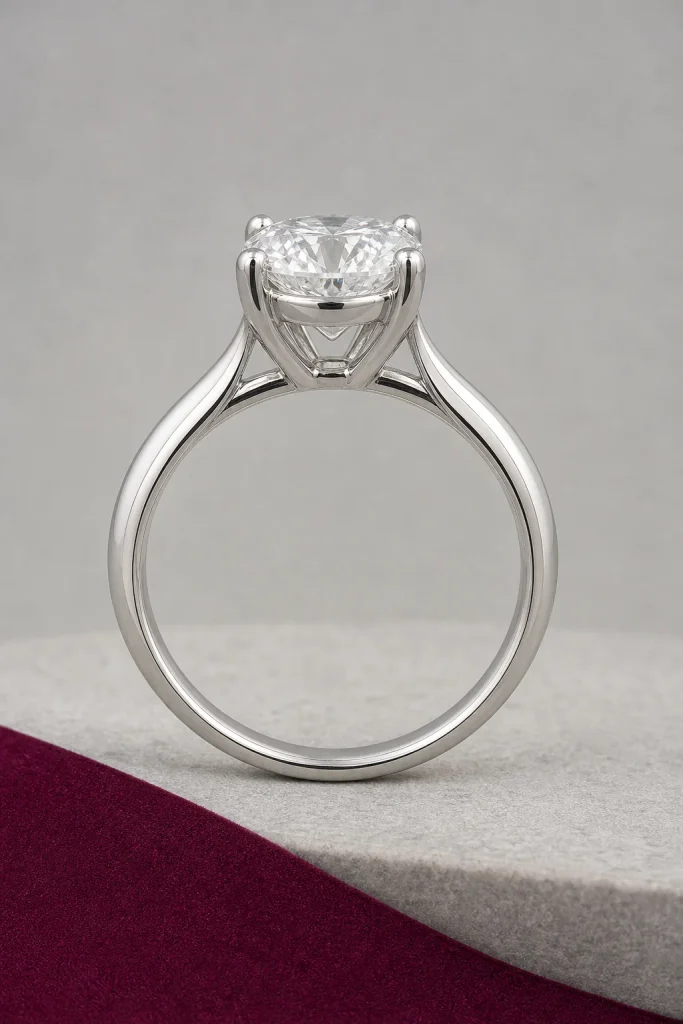
For many people, yes. A properly constructed four-prong engagement ring can be suitable for everyday wear, provided its condition is monitored.
The number of prongs is only one part of the decision. Your daily routine, the height of the setting, the size and shape of the diamond, and the quality of the craftsmanship also matter.
Consider these situations:
- Office work and everyday activities: A well-made four-prong setting may be perfectly suitable for a diamond worn during ordinary daily activities.
- Frequent manual work: If you regularly lift heavy objects, garden, or perform hands-on tasks, consider a lower-profile setting that is less likely to strike hard surfaces.
- Larger center diamonds: Discuss whether the prong dimensions and mounting provide sufficient support for your particular stone. Six prongs may be worth considering.
- Delicate prong designs: Very thin or sharply tapered prongs may require closer attention to wear and maintenance.
You don’t necessarily need to remove an engagement ring every time you perform an ordinary task. However, removing it during activities that could cause a hard impact can help reduce the risk of damage.
If everyday practicality is a priority, our guide to low-maintenance engagement rings offers additional considerations.
Do Four Prongs Make a Diamond Look Bigger?
A four-prong setting can make a diamond appear slightly more exposed because less metal surrounds its perimeter. This creates a cleaner view of the stone and can make the setting feel visually lighter.
However, four prongs do not increase the diamond’s actual size or carat weight.
Six prongs cover slightly more of the diamond’s edge and can create a more enclosed appearance. On round diamonds, they can also emphasize the stone’s circular outline.
Neither setting automatically produces more sparkle. A diamond’s brilliance depends primarily on its cut quality and how it interacts with light, rather than simply the number of prongs holding it.
If you are choosing a center stone as well as a setting, consider how the diamond’s proportions and overall design work together.
How Can You Tell If a Four-Prong Setting Is Unsafe?
Even a well-made engagement ring can develop worn or damaged prongs over time. Recognizing potential warning signs is important because a loose setting can put the center diamond at risk.
Watch for these signs:
- A prong looks bent or lifted: One or more prongs may no longer sit correctly against the diamond.
- The diamond moves: Any noticeable movement can indicate that the stone is not being held securely.
- The ring catches on clothing: A damaged or raised prong may snag on fabric, hair, or gloves.
- A prong appears thinner than the others: Uneven wear can weaken the setting.
- A visible gap appears between the diamond and a prong: The stone may no longer fit securely in its mounting.
If you notice any of these problems, stop wearing the ring until a qualified jeweler has inspected it. Avoid trying to bend the prongs back into place yourself, as doing so can damage the metal or the diamond.
Our guide explains how to tell if a ring prong is loose, including the warning signs worth taking seriously.
How to Keep a Four-Prong Engagement Ring Secure
Regular maintenance is essential, regardless of whether your ring has four or six prongs.
Follow these practical steps to help protect your center diamond.
1. Schedule Regular Professional Inspections
Have a jeweler inspect the prongs and setting periodically. An inspection can identify wear, looseness, or damage before it becomes a more serious problem.
GIA recommends checking prongs every six months or using an annual anniversary as a reminder. The appropriate interval may depend on how frequently you wear the ring and how demanding your daily activities are.
2. Avoid Hard Impacts
Diamonds are hard, but they can still chip when struck at vulnerable points. Metal prongs can also bend or become damaged after an impact.
Remove your ring before activities that could expose it to significant knocks or pressure.
3. Keep the Ring Clean
Dirt and residue can collect around the diamond and setting, making it harder to see the condition of the prongs clearly.
Use a cleaning method appropriate for your ring and gemstone, or ask a jeweler for advice. Avoid aggressive cleaning methods when the setting may already be loose.
4. Don’t Ignore Snagging
If your ring suddenly begins catching on clothing, hair, or fabric, have it inspected. A snag can be an early indication that a prong is bent, lifted, or worn.
Learn more about why ring prongs catch on clothes.
5. Ask About Repair and Aftercare
Before purchasing an engagement ring, ask whether the jeweler offers inspections, prong tightening, repairs, and other maintenance services.
Understanding the aftercare available can help you plan for the long-term upkeep of your ring.
Should You Choose Four or Six Prongs for Your Engagement Ring?
The right choice comes down to the balance between appearance, diamond protection, and everyday practicality.
Choose four prongs if you prefer a minimal design, want more of the diamond visible, or like the geometric appearance that four prongs can create around certain diamond shapes.
Consider six prongs if you want additional contact points, prefer a traditional round-diamond outline, or would appreciate the extra redundancy if one prong becomes damaged.
For pointed diamond shapes, pay particular attention to how the tips are protected. For larger center stones, ask the jeweler to assess the setting’s construction and support rather than relying on a universal carat-weight rule.
You can compare available designs in our round lab-grown diamond engagement ring collection and evaluate which setting style best fits your preferences.
Ultimately, four prongs can be enough for an engagement ring. A secure fit, sound craftsmanship, appropriate prong placement, and regular professional inspections are what help keep the diamond protected over time.
Frequently Asked Questions
Are 4 prongs enough to hold an engagement ring diamond securely?
Yes, four prongs can hold an engagement ring diamond securely when the setting is well-made, the prongs fit properly, and the ring is maintained regularly. However, six prongs provide additional support if one becomes damaged.
Is a 4-prong or 6-prong engagement ring better?
A four-prong setting is ideal for a clean, minimal look with more of the diamond visible. A six-prong setting offers additional holding points and can provide greater security if a prong breaks. The better choice depends on the diamond’s shape, size, and your daily activities.
Can a diamond fall out of a 4-prong setting?
Yes, a diamond can fall out if one or more prongs become loose, bent, worn, or broken. Because a four-prong setting has fewer holding points, damage to a single prong can compromise the stone’s security. Regular inspections by a jeweler help reduce this risk.
Are 4-prong engagement rings safe for everyday wear?
Yes, a properly constructed four-prong engagement ring can be suitable for everyday wear. Remove it during activities that may expose it to hard impacts, and have the prongs checked regularly to identify wear or looseness before the diamond becomes insecure.
Are 4 prongs enough for a 2-carat diamond?
Four prongs can securely hold a 2-carat diamond if the setting is specifically designed for its size and shape. However, six prongs may provide extra reassurance for a valuable center stone. Ask a qualified jeweler to assess the prong thickness, placement, and overall setting construction.
Do 4-prong engagement rings need more maintenance?
Four-prong engagement rings require regular maintenance to ensure the diamond remains secure. Inspect the ring for loose prongs, visible damage, or movement in the center stone. A jeweler can check the setting and recommend repairs when necessary. Six-prong settings also need routine inspections.
How do you know if the prongs on an engagement ring are loose?
Signs of loose prongs include a diamond that moves or rattles, prongs that appear bent or uneven, and metal that catches on clothing more than usual. If you notice these signs, stop wearing the ring and have a jeweler inspect it before wearing it again.