If you love unusual diamonds, you may have come across two cuts that look quite different from the modern round brilliant: the portrait cut diamond and the rose cut diamond.
Both have a low-profile appearance and can look larger across the finger than their carat weight might suggest. But that is where much of the similarity ends.
The Portrait Cut vs Rose Cut Diamond comparison comes down to several important details, including faceting, transparency, sparkle, clarity, appearance, and price.
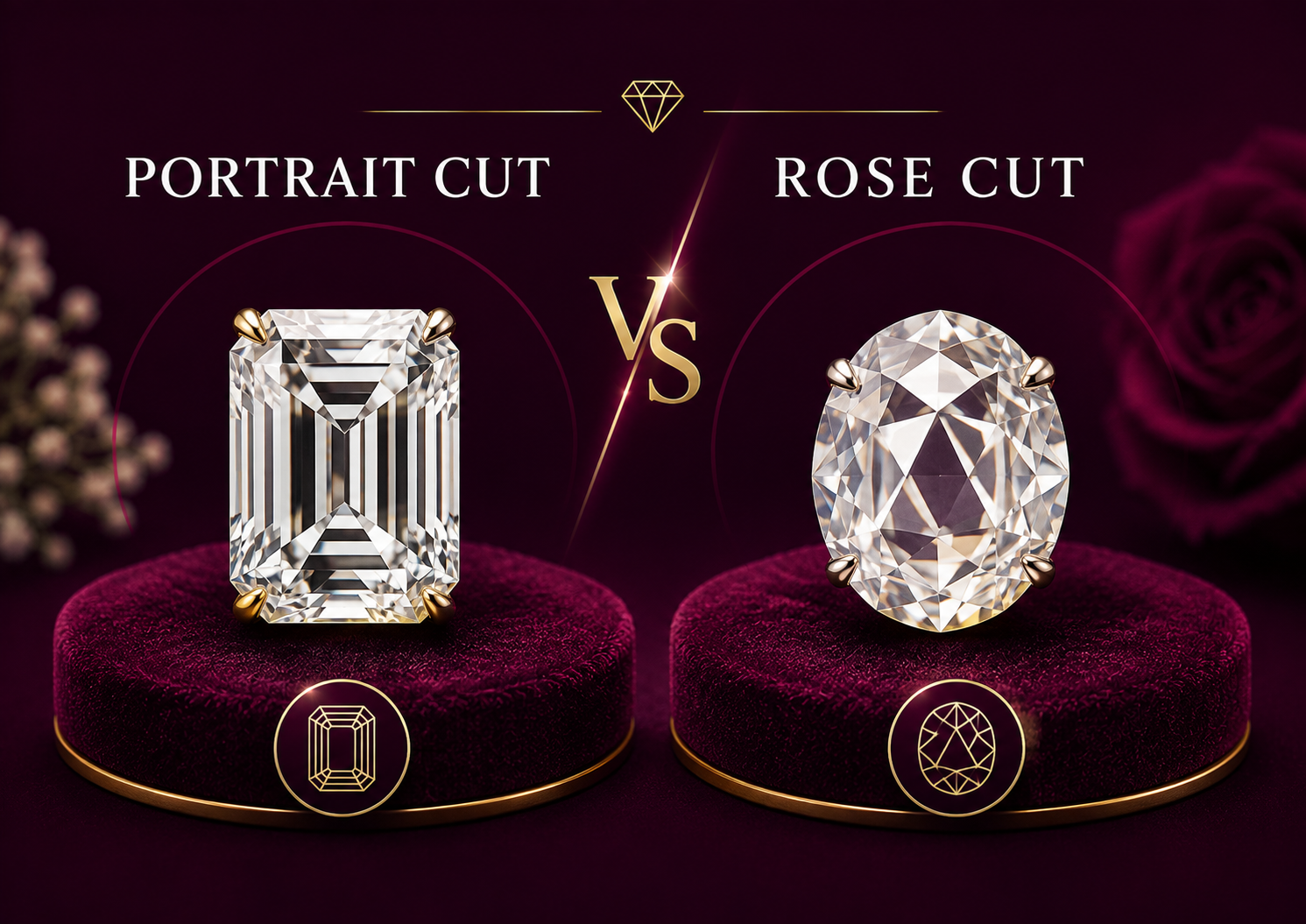
A rose cut has a distinctive domed top covered with triangular facets. A portrait cut, by contrast, is known for its extremely thin profile and broad, flat-looking surface. One gives you a soft, faceted shimmer. The other leans toward a clean, glass-like look.
So, is a portrait cut diamond the same as a rose cut? No. While both cuts have historical roots and a shallow profile, their construction and visual character differ.
Let’s take a closer look at the difference between portrait cut and rose cut diamonds so you can decide which style suits your jewelry better.
Portrait Cut Diamond
A portrait cut diamond is an unusually thin diamond with a broad, flat-looking face. The term often refers to diamonds cut to create a smooth, transparent appearance rather than the bright flashes associated with modern brilliant cuts.
Historically, thin transparent gemstones were used in jewelry to protect and display miniature portraits or other artwork. This association helps explain the name “portrait cut.”
Modern portrait cuts can appear in different shapes, including elongated rectangular designs. Their defining feature is their extreme thinness and emphasis on the large surface area.
Because the stone has very little depth, the diamond’s clarity becomes especially important. In a thin, transparent stone, inclusions can be easier to notice because there is less depth and faceting to disguise them.
The result is a diamond that looks sleek, unusual, and almost glass-like.
Portrait Cut Diamond Characteristics
Some common portrait cut diamond characteristics include:
- Very thin overall profile
- Broad, flat-looking surface
- Minimal traditional faceting
- Strong emphasis on transparency
- Low-profile appearance
- Clarity that can play an important visual role
- A subtle, reflective look rather than traditional brilliant sparkle
The exact design can vary, so you should always examine the individual stone rather than relying only on the name of the cut.
Rose Cut Diamond
A rose cut diamond is a historic diamond style that dates back to the 16th century. According to the Gemological Institute of America (GIA), the rose cut has a flat bottom and a domed crown made from triangular facets that meet at an apex. The style takes its name from its resemblance to a rosebud.
The rose cut became popular long before the modern round brilliant cut. Early examples often came from naturally shallow diamond material and cleavage fragments.
GIA research describes common rose cuts as having a flat base and a dome with triangular facets. Depending on the particular style, the faceting arrangement can vary.
Unlike a modern brilliant-cut diamond, a rose cut does not have a traditional pavilion designed to create strong internal light return.
Instead, its shallow construction and triangular facets create a softer visual effect.
Rose Cut Diamond Characteristics
Typical rose cut diamond characteristics include:
- Flat base
- Domed top
- Triangular facets
- Shallow overall profile
- Soft, subtle sparkle
- Vintage or antique-inspired appearance
- Large face-up appearance relative to carat weight
GIA notes that rose cuts can have three or more facets forming the domed crown, while traditional diamond rose cuts commonly feature a central group of triangular facets with additional facets around them.
This gives the rose cut its recognizable personality. It does not try to compete with a modern brilliant cut for maximum sparkle. Its charm comes from doing something completely different.
Portrait Cut vs Rose Cut: Key Differences
The easiest way to understand the portrait cut diamond vs rose cut diamond comparison is to look at how each stone handles its surface, facets, and light.
| Feature | Portrait Cut Diamond | Rose Cut Diamond |
|---|---|---|
| Overall profile | Extremely thin and flat-looking | Shallow with a domed crown |
| Top appearance | Broad and smooth-looking | Faceted with triangular facets |
| Base | Typically very shallow and flat | Flat |
| Faceting | Minimal or subtle, depending on design | Distinct triangular faceting |
| Visual effect | Transparent, reflective, glass-like | Soft, faceted shimmer |
| Sparkle | Subtle and reflective | Soft sparkle rather than intense brilliance |
| Clarity | Often visually important | Can be important because of open, shallow construction |
| Style | Minimalist, unusual, artistic | Vintage, romantic, antique-inspired |
| Face-up size | Can look large because of its broad surface | Often looks large for its carat weight |
| Engagement ring appeal | Best for distinctive, unconventional designs | Excellent for vintage-inspired and low-profile designs |
The most important point is simple: a portrait cut is not just another name for a rose cut.
The two styles can overlap visually because both are shallow. However, their surface structures are different.
Difference in Shape and Faceting
The biggest physical difference between the two cuts is their faceting.
A rose cut diamond has a domed crown covered with triangular facets. These facets create the recognizable rosebud-like pattern associated with the cut.
A portrait cut diamond, on the other hand, emphasizes a very thin, broad surface. Depending on the specific stone, it can have a much flatter and smoother visual appearance.
This means the answer to how to tell a portrait cut diamond from a rose cut often comes down to looking at the top of the stone.
If you see a clearly domed crown with triangular facets, you are likely looking at a rose cut.
If the stone looks exceptionally thin, broad, and almost like a transparent polished panel, it may be a portrait cut.
That said, unusual custom cuts can blur the boundaries. When buying a rare diamond, ask the jeweler exactly how the stone was cut and request clear photographs or videos from multiple angles.
Difference in Sparkle and Light Performance
The portrait cut vs rose cut diamond sparkle comparison is interesting because neither style aims to produce the intense brilliance of a well-cut modern round brilliant diamond.
A rose cut produces a softer form of sparkle. Its triangular facets can reflect light across the surface, creating flashes and shimmer rather than the rapid, bright scintillation associated with modern brilliant cuts.
GIA describes rose cuts as having a soft, subtle sparkle and notes that their flat base and shallow design contribute to their distinctive appearance.
Portrait cuts tend to place more emphasis on transparency and reflection than traditional diamond brilliance.
So, do portrait cut diamonds sparkle? They can show light reflection and flashes, but you should not expect the same type of brilliance as a modern brilliant-cut diamond.
And do rose cut diamonds sparkle? Yes, but their sparkle is generally softer and more understated.
Think of it this way: a round brilliant is the person who walks into a room and immediately grabs everyone’s attention. A rose cut is the person sitting quietly in the corner who somehow ends up being the most interesting one there.
Portrait Cut vs Rose Cut Diamond Clarity
Clarity is another important part of the comparison.
A portrait cut diamond has a large, thin, transparent surface. Because of this design, visible inclusions can stand out more easily. The stone’s appearance often depends heavily on how clean and transparent it looks.
With a rose cut diamond, clarity can also matter because the shallow construction and open faceting may make inclusions more noticeable than they would be in some heavily faceted brilliant cuts.
However, you should not automatically assume that every rose cut needs to be flawless.
The right clarity depends on the individual diamond, its size, shape, transparency, and how visible its inclusions are to the naked eye.
This is why a portrait cut vs rose cut diamond clarity comparison should focus on visual inspection rather than simply choosing the highest clarity grade available.
If possible, examine the actual stone under different lighting conditions. A diamond that looks clean and beautiful to your eyes may offer better value than paying a premium for a higher clarity grade that makes little visible difference.
Difference in Size and Face-Up Appearance
Both cuts can create an interesting visual advantage: they can look relatively large across the finger compared with deeper diamond cuts of similar weight.
Rose cuts have a flat bottom and shallow construction. GIA specifically notes that this allows them to face up larger than other cuts of the same carat weight.
Portrait cuts take this idea even further with their exceptionally thin profile and broad surface.
This makes both styles attractive to shoppers who want a diamond with plenty of visual presence without necessarily choosing a deep, heavy stone.
However, remember that face-up size is not the same as carat weight. A diamond that covers more surface area may still weigh less than a deeper diamond with similar dimensions.
In other words, your finger sees millimeters. The scale sees carats. They do not always agree.
Portrait Cut vs Rose Cut Diamond Price
There is no universal answer to the question, “Are portrait cut diamonds more expensive than rose cut diamonds?”
The price of either style depends on several factors, including:
- Natural or lab-grown origin
- Carat weight
- Color
- Clarity
- Dimensions
- Craftsmanship
- Shape
- Availability
- Whether the stone is antique or newly cut
- The reputation and pricing of the seller
The portrait cut diamond price can vary considerably because these stones are less standardized and may require specialized cutting and careful material selection.
The rose cut diamond price also varies widely. Antique rose cuts, modern rose cuts, natural diamonds, and custom-cut stones can all occupy very different price ranges.
Therefore, it would be misleading to say that one cut is always cheaper or more expensive.
Instead, compare individual stones based on their actual specifications and appearance.
If two diamonds have similar carat weights but very different dimensions, clarity, origin, and craftsmanship, their prices may differ substantially.
Which Diamond Cut Is Better for an Engagement Ring?
The answer depends on your personal style.
A portrait cut engagement ring can work beautifully for someone who wants something artistic, minimalist, and highly unusual. The flat, transparent appearance can create a sleek design that feels very different from a traditional engagement ring.
A rose cut engagement ring suits someone who loves vintage-inspired jewelry, soft sparkle, and a romantic old-world feel.
The rose cut also works well in low-profile settings because of its shallow construction. GIA notes that rose cuts are often used in antique and one-of-a-kind designs, as well as contemporary jewelry.
Choose a Portrait Cut If You Want:
- A rare and unconventional look
- A very thin, low-profile diamond
- A broad, transparent appearance
- A minimalist or artistic engagement ring
- A diamond that feels more like a piece of art than a traditional sparkle machine
Choose a Rose Cut If You Want:
- Vintage-inspired character
- A soft, subtle sparkle
- A domed top with triangular facets
- A shallow profile
- A diamond that looks distinctive and romantic
Neither is objectively “better.”
The better choice is the one that matches the kind of beauty you actually enjoy looking at every day.
Portrait Cut vs Rose Cut Diamond: Pros and Cons
Portrait Cut Diamond Pros
- Extremely distinctive appearance
- Very thin profile
- Broad face-up look
- Strong emphasis on transparency
- Works well for minimalist and artistic jewelry designs
Portrait Cut Diamond Cons
- Visible inclusions can be easier to notice
- May not satisfy shoppers who want strong traditional sparkle
- Less standardized than popular diamond cuts
- Finding the right stone may require more specialized sourcing
Rose Cut Diamond Pros
- Strong vintage and historical character
- Soft, subtle sparkle
- Flat base and shallow profile
- Can look large for its carat weight
- Works beautifully in antique-inspired and modern minimalist designs
Rose Cut Diamond Cons
- Does not offer the intense brilliance of a modern brilliant cut
- Clarity and color may be more visually apparent
- Individual stones can vary significantly in faceting and appearance
- May not suit someone who wants maximum sparkle
Frequently Asked Questions
What is the difference between portrait cut and rose cut diamonds?
The main difference is their construction. A rose cut has a flat base and a domed crown covered with triangular facets. A portrait cut is generally much thinner and emphasizes a broad, flat, transparent appearance.
Is a portrait cut diamond the same as a rose cut?
No. Although both styles have shallow profiles, they are different diamond cutting styles. Rose cuts have distinctive triangular facets across a domed crown, while portrait cuts emphasize an exceptionally thin and broad surface.
Do portrait cut diamonds sparkle?
Portrait cut diamonds can reflect light and show subtle flashes, but they generally do not produce the same intense brilliance as modern brilliant-cut diamonds. Their appeal comes more from transparency and reflection.
Do rose cut diamonds sparkle?
Yes. Rose cut diamonds can show a soft, subtle sparkle created by their triangular facets and shallow design. Their light performance differs from modern brilliant cuts, which produce stronger brilliance and scintillation.
Are portrait cut diamonds more expensive than rose cut diamonds?
Not necessarily. Both portrait cut diamond price and rose cut diamond price depend on factors such as carat weight, color, clarity, origin, craftsmanship, availability, and the individual stone’s quality.
Which is better: portrait cut vs rose cut diamond?
Neither is universally better. A portrait cut may suit someone who prefers a minimalist, transparent appearance, while a rose cut may appeal to someone who wants vintage character and soft sparkle.
Which is better for an engagement ring?
Both can work well in an engagement ring. A portrait cut engagement ring offers an unusual, artistic appearance, while a rose cut engagement ring brings vintage charm and subtle sparkle. Your preferred style should guide the decision.
How can you tell a portrait cut diamond from a rose cut?
Look at the top of the stone. A rose cut normally has a domed crown with visible triangular facets. A portrait cut generally has a much flatter, thinner, and more transparent appearance. Because custom cuts can vary, ask the jeweler for the stone’s exact cutting description.
Does a rose cut diamond look bigger than a portrait cut diamond?
Both can appear large for their weight because of their shallow construction and broad face-up appearance. The actual visual size depends on the stone’s dimensions, shape, and proportions.
What should I prioritize when buying either cut?
Start with how the actual diamond looks to your eyes. Check transparency, visible inclusions, color, dimensions, craftsmanship, and how the stone performs in different lighting. For unusual cuts, the individual stone matters more than simply choosing a specification on paper.
Portrait Cut vs Rose Cut Diamond: Which One Should You Choose?
The Portrait Cut vs Rose Cut Diamond decision ultimately comes down to your preferred visual style.
Choose a portrait cut if you are drawn to transparency, a broad flat surface, and a design that feels rare and unconventional.
Choose a rose cut if you prefer a domed, faceted surface with soft sparkle and unmistakable vintage character.
If your priority is maximum brilliance and scintillation, neither should automatically be your first choice. Modern brilliant cuts generally offer a very different light performance.
But if you want a diamond with personality, history, and a look that does not follow the usual engagement-ring formula, both cuts deserve attention.
The best approach is to compare the actual stones side by side. Look at them in natural light, indoor light, and moving conditions. Pay attention to how each diamond handles reflections, how clean it looks to your eye, and how it sits in the setting.
After all, choosing a diamond is not an exam where one answer gets a gold star.
It is about finding the stone that makes you stop, look twice, and think, “Yes. That’s the one.”