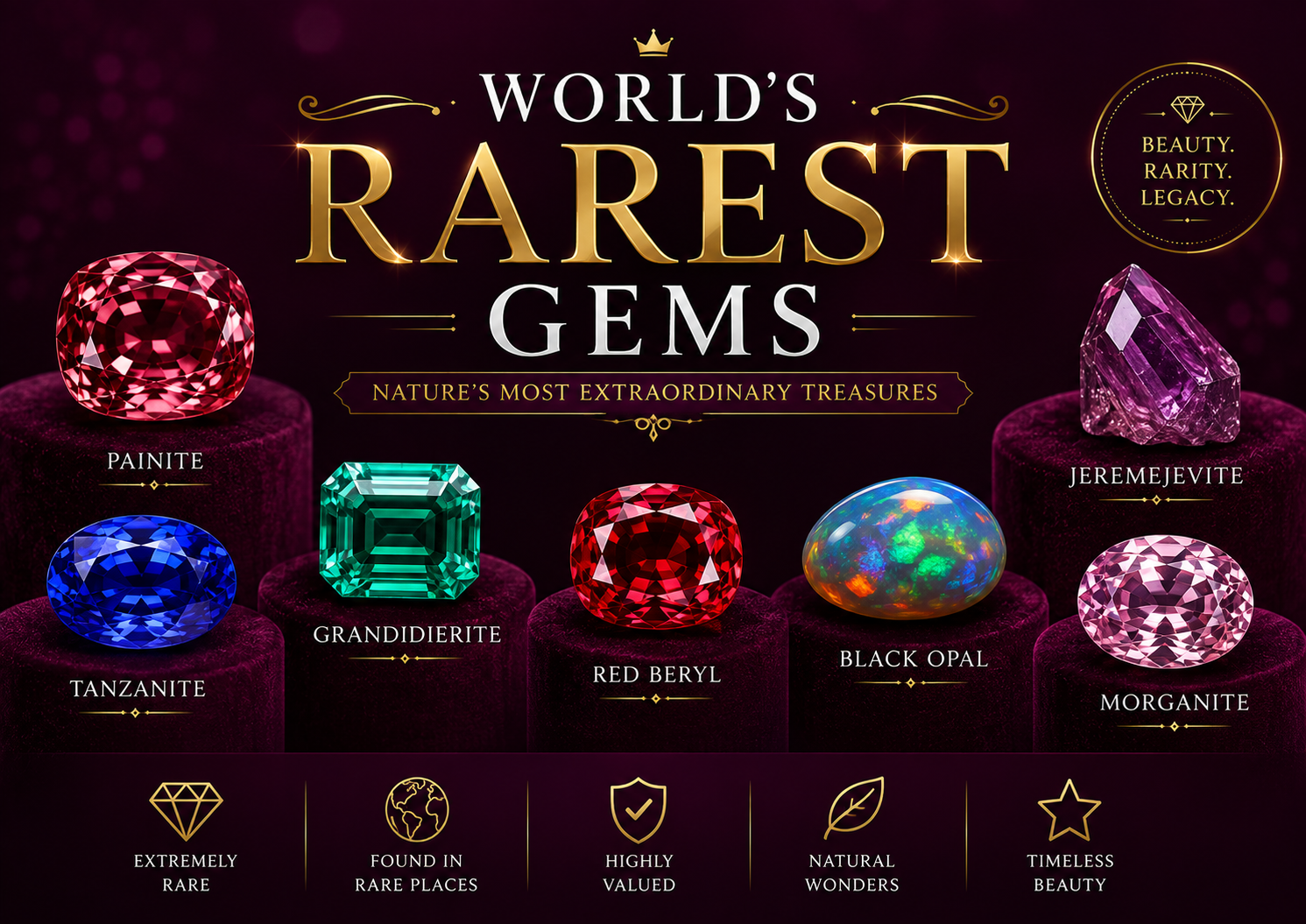
When people think about rare gemstones, diamonds usually come to mind first. They have a reputation for being scarce, valuable, and difficult to find. Yet the gemstone world has a fascinating secret: some gemstones are far rarer than diamonds.
From Painite and Red Beryl to Musgravite and Taaffeite, some natural gems occur in such limited quantities that even experienced collectors may rarely encounter a fine specimen.
However, there is an important detail to understand. Rarity and value are not the same thing. A gemstone can be rarer than diamond but still sell for less because price also depends on color, clarity, size, durability, provenance, demand, and whether the material is suitable for jewelry.
So, what gemstones are rarer than diamonds? Let’s look at some of the rarest gemstones in the world and explore why they attract collectors, gemologists, and jewelry enthusiasts.
Are There Gemstones Rarer Than Diamonds?
Yes. Several natural gemstones are considered rarer than diamonds, particularly in fine gem quality.
Diamonds are relatively widespread compared with some extremely rare gem minerals. However, that does not mean every diamond is common or inexpensive. Certain diamonds, especially exceptional natural fancy-color diamonds, can be extraordinarily rare and valuable.
For example, GIA describes fancy-color diamonds as the “rarest of the rare,” with saturated pink, blue, and green diamonds commanding exceptional interest. Pure red diamonds are particularly scarce. GIA reported in 2025 that only around two dozen pure red diamonds weighing more than one carat were known in the public record.
This shows why simple comparisons can be misleading. A rare gemstone may be rarer than an average diamond, while an exceptional red diamond may be much rarer than many other gems.
The better question is not simply, “Is this gemstone rarer than diamond?” It is also, “How rare is fine-quality material, and how much demand does it have?”
What Makes a Gemstone Rarer Than a Diamond?
Gemstone rarity depends on several factors.
First, the mineral itself may occur in very few geological locations. Second, only a small percentage of mined material may have the transparency, color, and clarity required for faceting.
Some minerals are relatively well known to collectors but almost never appear as large, clean, faceted gems. Others may exist in more than one location but remain extremely scarce in jewelry-quality form.
That distinction matters.
A mineral can be rare as a species, yet its crystals may not be attractive enough for jewelry. Conversely, a gemstone may have a broader geological occurrence but produce very little material with exceptional color and clarity.
That is why discussions about rare natural gemstones should always distinguish between mineral rarity and gem-quality rarity.
15 Gemstones Rarer Than Diamonds
The following gemstones are frequently recognized among the world’s rarest or most collectible gems. This is not a strict scientific ranking from number one to number fifteen. Instead, it is a selection of exceptionally rare gemstones based on their scarcity, limited gem-quality material, or importance among collectors.
1. Painite
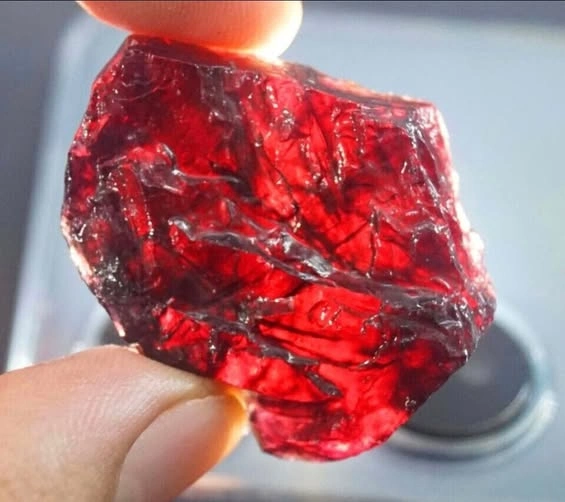
Painite is one of the names that almost always appears in discussions about the rarest gemstones in the world.
For years, Painite had an extraordinary reputation because very few specimens were known. Later discoveries increased the known supply, but fine gem-quality Painite remains highly sought after by collectors.
Its brownish-red to reddish-brown appearance may not immediately resemble the classic image of a colorful gemstone. That is part of its charm. In the world of rare gems, geological scarcity can matter just as much as visual drama.
Painite is also a good example of why rarity claims need context. The number of known specimens has changed over time, so older statements claiming that only a handful of Painite crystals exist should not be repeated as current fact.
2. Red Beryl
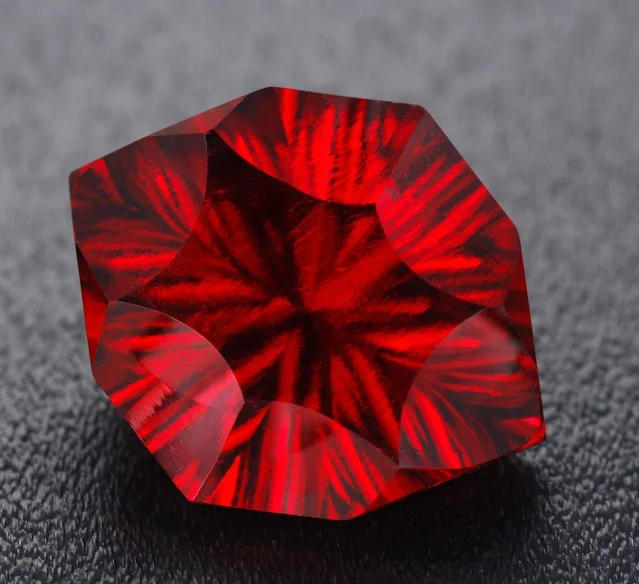
Red Beryl is another gemstone frequently mentioned among stones rarer than diamonds.
It is closely related to emerald and aquamarine because all three belong to the beryl mineral family. The difference is its striking red color, which comes from manganese.
Fine Red Beryl is exceptionally difficult to find in sizes suitable for faceting. Most known material is small, making larger clean gems particularly desirable to collectors.
Its scarcity also makes it a fascinating contrast with emerald. Emerald has a long-established jewelry market, while Red Beryl remains much more of a collector’s gemstone.
3. Alexandrite
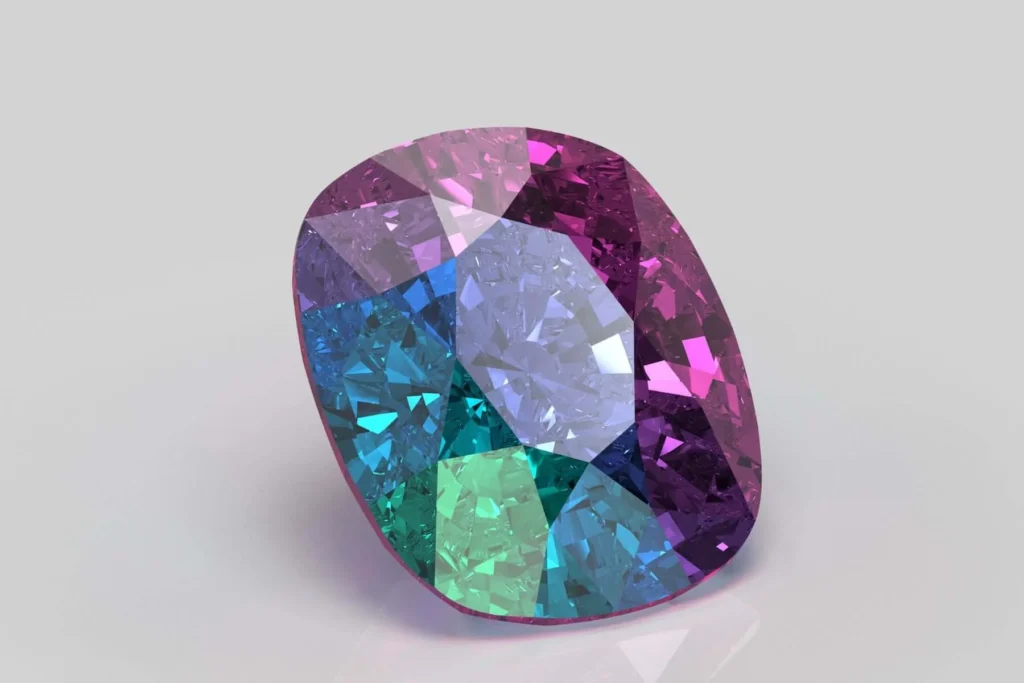
Alexandrite is famous for one spectacular feature: color change.
Depending on the lighting, a fine alexandrite can appear greenish or bluish-green in daylight and shift toward reddish or purplish tones under incandescent light.
Natural alexandrite with a strong color change, good clarity, and attractive color is exceptionally rare. Its scarcity is especially notable in larger sizes.
So, is alexandrite rarer than diamond? Fine natural alexandrite can certainly be rarer than many diamonds, particularly when you consider strong color change and high-quality material. But it would be inaccurate to claim that every alexandrite is rarer than every diamond.
As always, quality and origin matter.
4. Musgravite
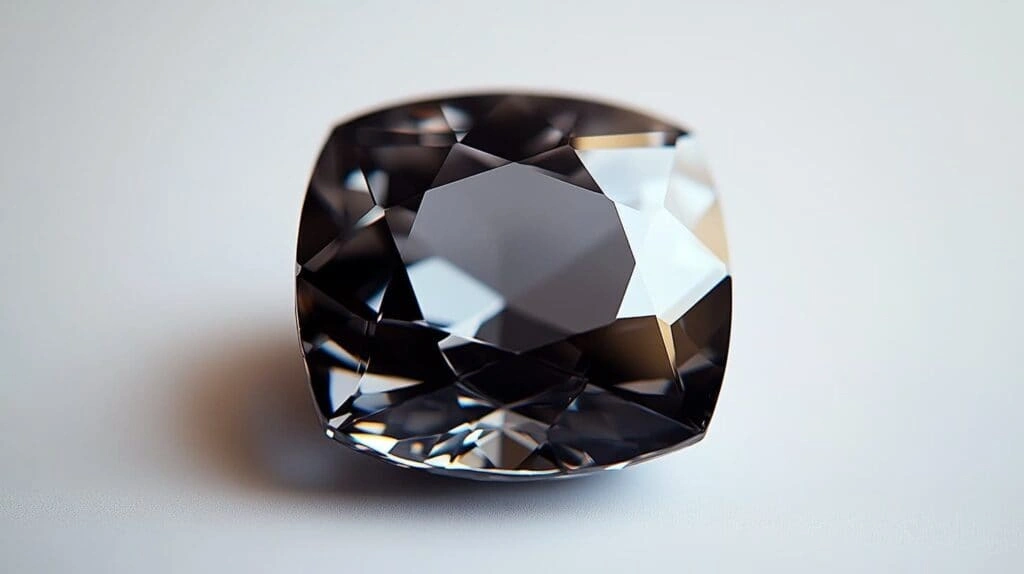
Musgravite belongs to the same broader mineral family as taaffeite and is one of the most sought-after rare collector gemstones.
GIA describes musgravite as a rare mineral that is highly sought after by rare-stone collectors. It can display gray, greenish-gray, violet-gray, and other subtle colors.
The combination of scarcity and limited gem-quality material makes fine musgravite particularly interesting.
It is also a reminder that the rarest gemstones are not always the most commercially familiar. Many people know diamonds, rubies, and emeralds. Far fewer have ever seen a fine musgravite.
5. Taaffeite
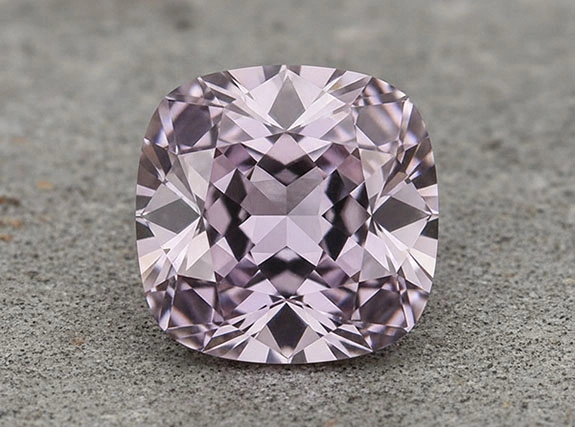
Taaffeite has an unusual history.
The gemstone was initially mistaken for spinel because of its appearance. It was later identified as a distinct mineral species.
Today, taaffeite remains one of the world’s most famous rare gems. It can occur in shades ranging from pale pink and mauve to violet and reddish tones.
Fine-quality taaffeite is difficult to find, and its unusual history adds to its appeal among collectors.
6. Grandidierite
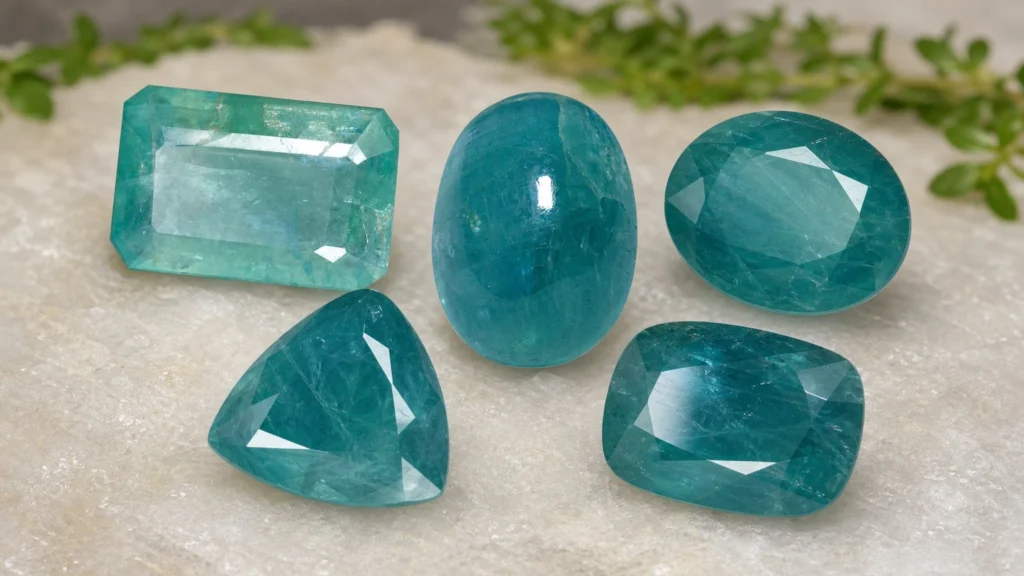
Grandidierite is a rare mineral best known for its attractive greenish-blue to bluish-green colors.
Although the mineral has been found in several locations, transparent gem-quality material remains exceptionally uncommon. That difference between “found in nature” and “found in facetable quality” is critical when discussing rare gemstones.
The finest examples combine attractive color, transparency, and clarity. These qualities can make grandidierite highly desirable to serious collectors.
7. Paraíba Tourmaline
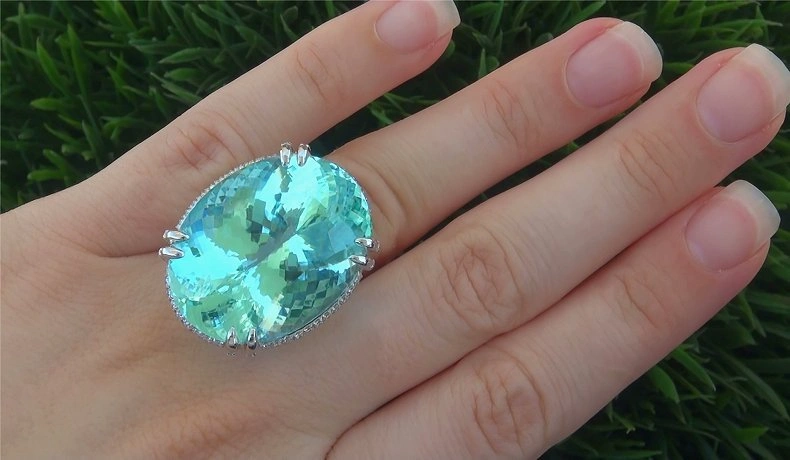
Paraíba tourmaline is not necessarily the rarest mineral on this list, but exceptional material is among the most desirable.
Its vivid blue to green colors, often described as neon-like, helped transform the gemstone market when copper-bearing tourmalines from Brazil gained international attention.
GIA notes that Brazilian Paraíba tourmaline is rare and highly coveted. The gemstone’s intense color, unusual chemistry, and limited availability of top-quality material all contribute to its reputation.
High-quality Paraíba tourmaline can also command prices that exceed those of many diamonds. This is an excellent example of why gemstones more valuable than diamonds can exist without being universally more valuable than diamonds.
The market decides value based on quality and demand, not rarity alone.
8. Black Opal
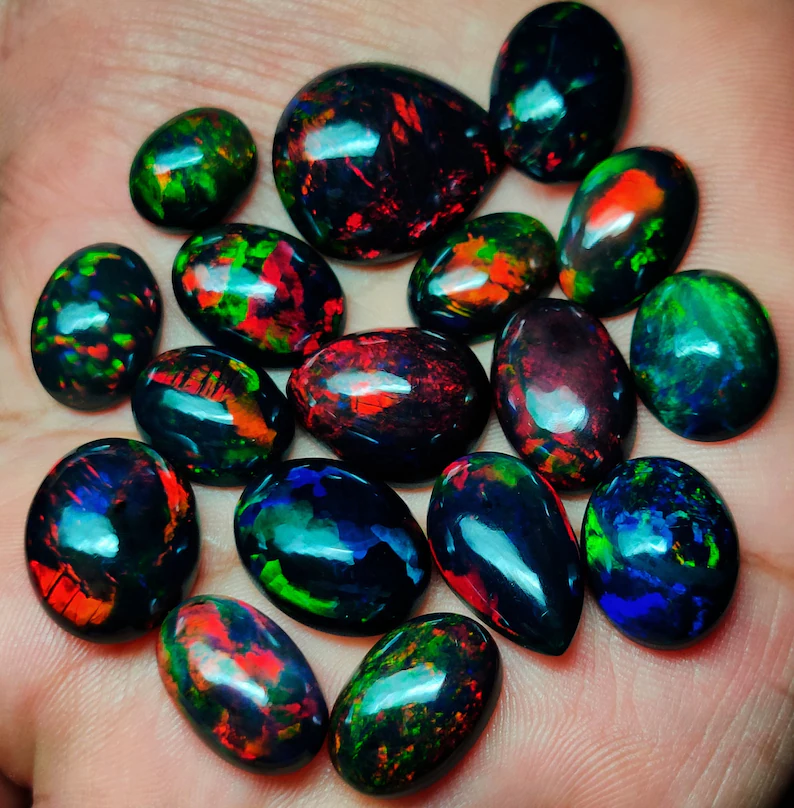
Black Opal is widely considered the most valuable type of opal, particularly when it displays a strong play-of-color against a dark body tone.
The best examples can show vivid flashes of multiple colors and become highly collectible.
Although opal as a mineral group is not necessarily rarer than diamond, exceptional Black Opal can be extremely scarce. This makes it an important name when discussing rare and valuable gemstones.
9. Tanzanite
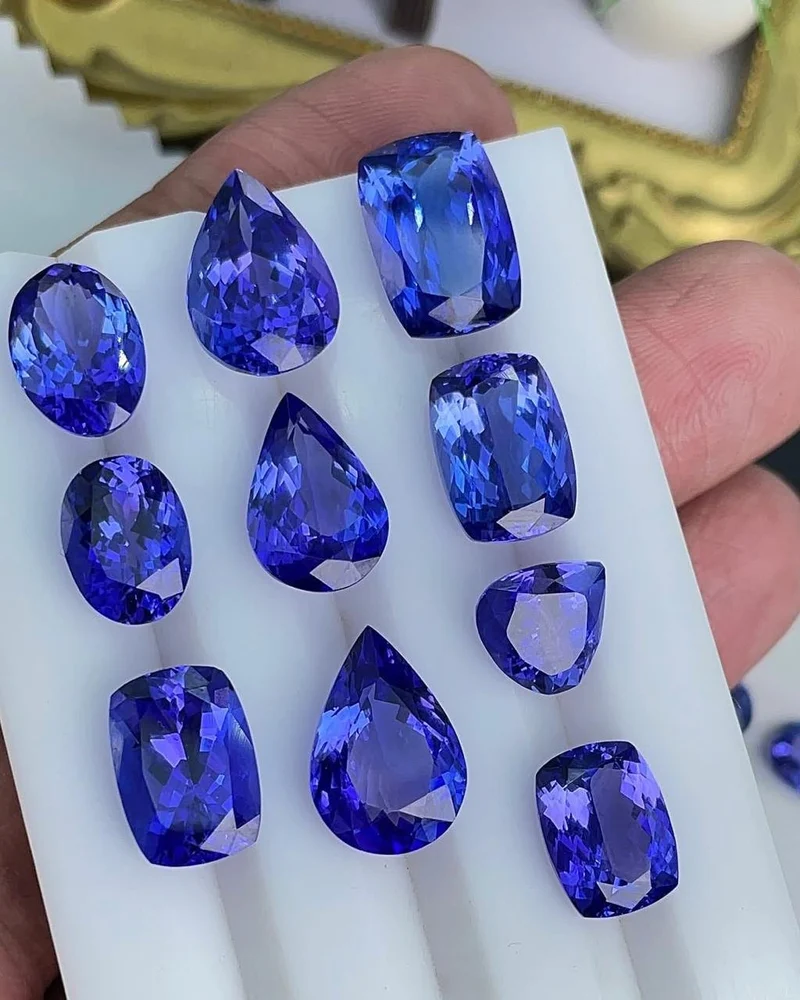
Tanzanite has a very different rarity story.
Unlike many gemstones that come from multiple regions, gem-quality tanzanite is associated with a very limited geographic area near Mount Kilimanjaro in Tanzania.
Its blue to violet colors and pleochroism make it visually distinctive.
So, is tanzanite rarer than diamond? The answer depends on what you are comparing. Tanzanite has a remarkably restricted known source, but diamonds occur in many locations worldwide. However, diamonds also vary enormously in rarity depending on color and quality.
Tanzanite’s limited geographic source is one of the key reasons collectors pay close attention to its long-term availability.
10. Jeremejevite
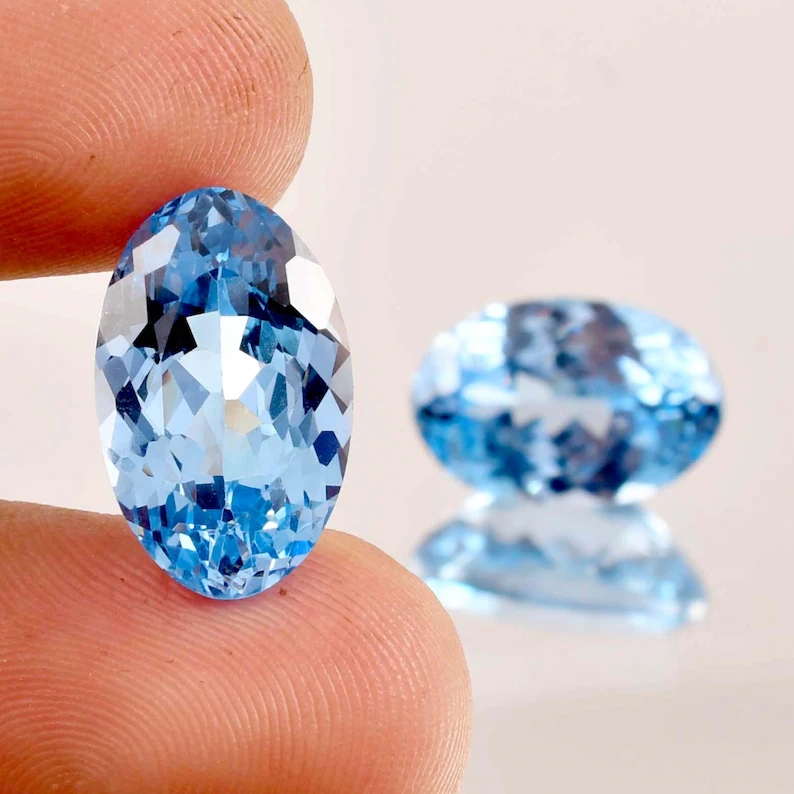
Jeremejevite is an exceptionally rare borate mineral known for producing attractive crystals, particularly blue examples from Namibia.
Fine gem-quality crystals are uncommon, and well-formed specimens are highly valued by mineral and gemstone collectors.
Its name may not have the household recognition of diamond, but that is precisely what makes the rare-gem world so interesting. Some of the most rare gemstones are known mainly within specialist collecting communities.
11. Benitoite
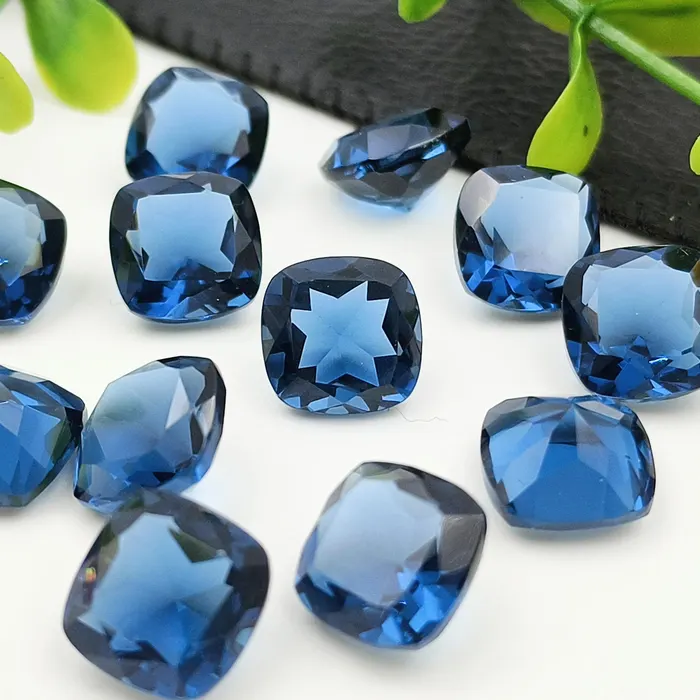
Benitoite is a collector favorite with an especially interesting story.
It is known for its striking blue color and strong dispersion, which can give cut stones an impressive visual effect.
California is historically important to benitoite, and the gemstone has become closely associated with the state. Fine transparent material is rare, making quality faceted stones particularly desirable.
Benitoite demonstrates another important principle: a gemstone can be valuable not because it competes directly with diamonds in mainstream jewelry, but because collectors value its rarity and unique mineralogical identity.
12. Kashmir Sapphire
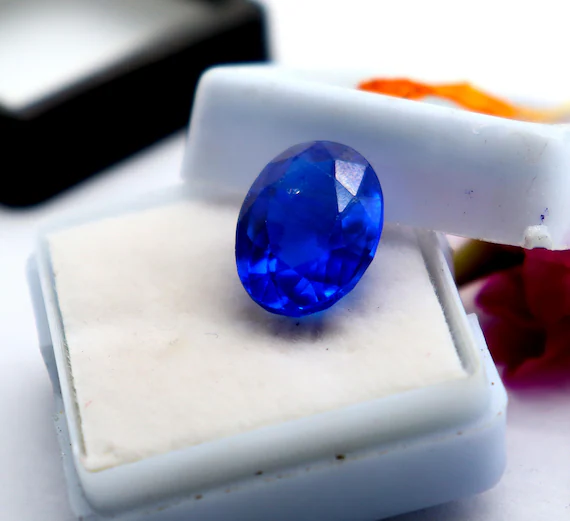
Sapphire itself is not rare. However, fine Kashmir sapphire is in a completely different category.
The finest Kashmir sapphires are famous for their rich blue color and velvety appearance. Historical Kashmir material is particularly prized, and exceptional stones can command enormous prices at auction.
This is another case where the phrase “rarer than diamond” needs careful handling. Common sapphire is not rarer than diamond, but exceptional Kashmir sapphire is among the world’s most coveted and scarce colored gemstones.
13. Imperial Jadeite
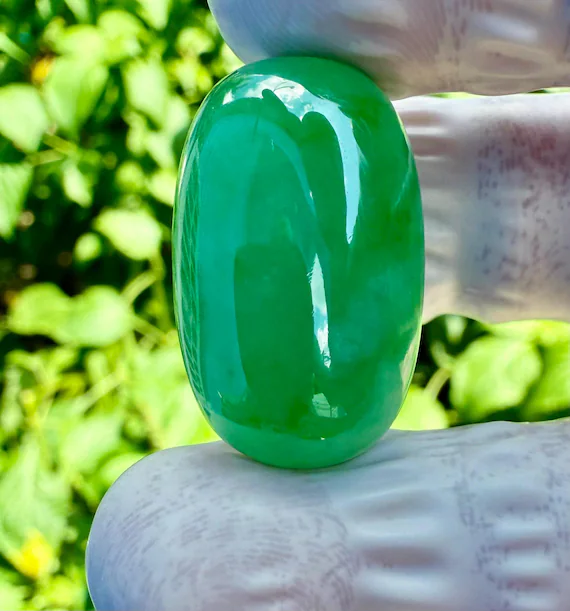
Jadeite is a fascinating example of a gemstone whose value depends heavily on quality and color.
Imperial jadeite, with its highly prized vivid green color and translucency, is considered the finest type of jadeite in the market.
Exceptional Imperial Jadeite can be extraordinarily valuable, sometimes reaching prices that far exceed those of ordinary diamonds.
This makes it one of the strongest examples of gemstones more valuable than diamonds in specific quality categories.
14. Demantoid Garnet
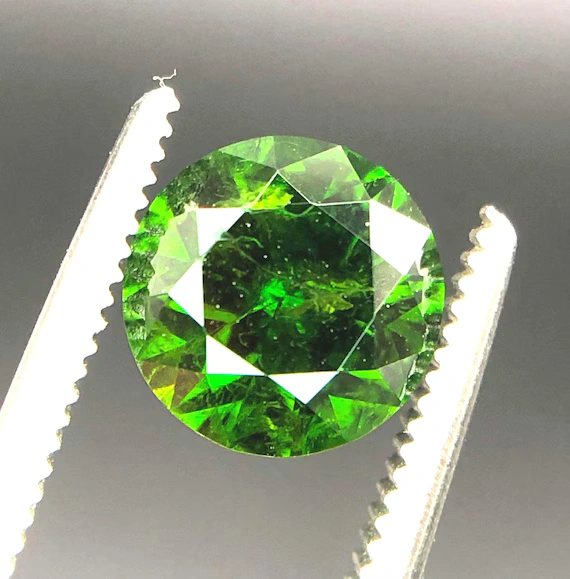
Garnet is a familiar gemstone family, but demantoid is much rarer than many consumers realize.
It is valued for its vivid green color and high brilliance. Russian demantoid is especially famous among collectors, and some stones contain distinctive horsetail-shaped inclusions.
These inclusions can actually add to the gemstone’s appeal rather than automatically reducing its value.
Demantoid proves that “inclusions” are not always bad news. In some rare gemstones, they can provide important clues about origin and become part of the stone’s identity.
15. Poudretteite
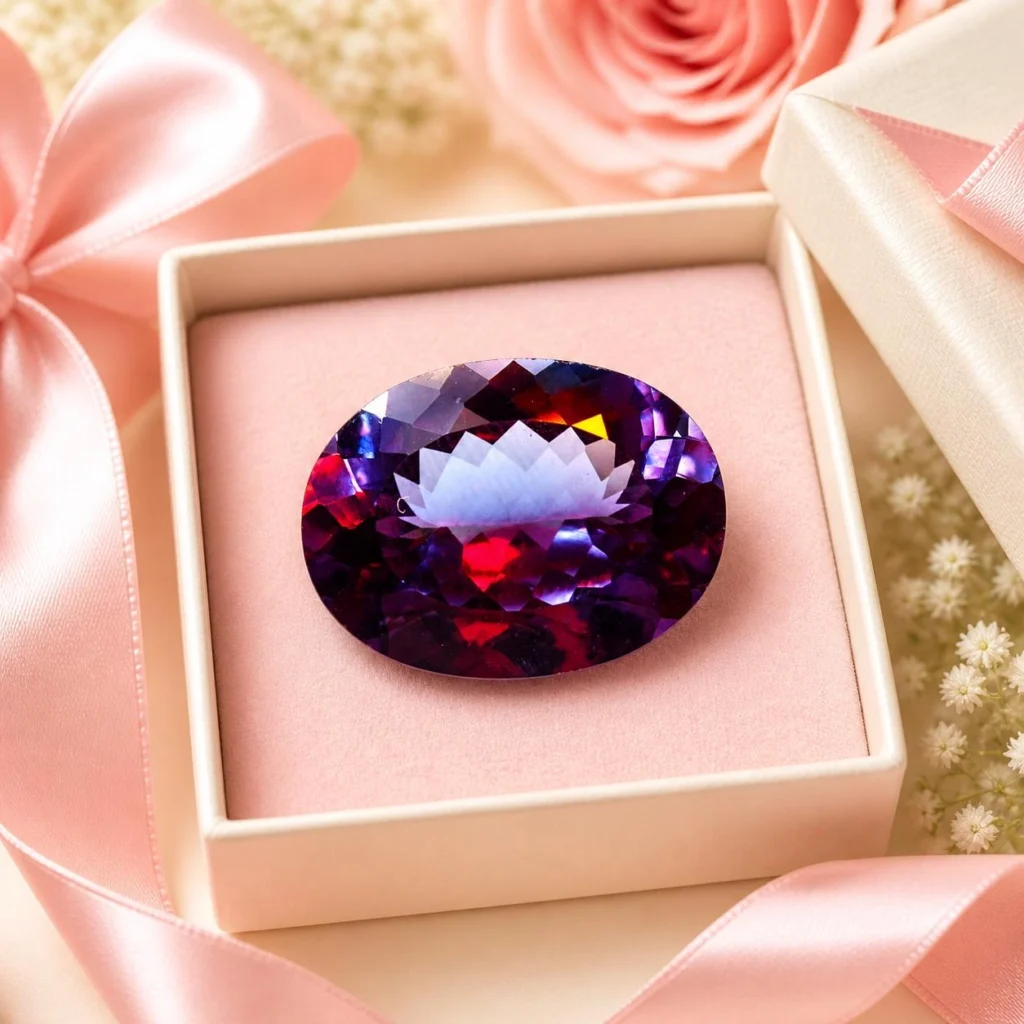
Poudretteite is among the lesser-known names on this list, but it has a strong reputation among mineral collectors.
The mineral was first identified from Mont Saint-Hilaire in Quebec, Canada, and later gem-quality material was found in Myanmar.
Its rarity, attractive pink to violet hues, and limited availability make it a fascinating example of an extremely rare gemstone that most jewelry shoppers will never encounter in a typical store.
Gemstones More Valuable Than Diamonds: Is Rarity Enough?
Not necessarily.
This is one of the biggest misconceptions surrounding rare gemstones.
A gemstone can be rarer than diamond and still cost less. Why? Because the market does not price gemstones based on scarcity alone.
Consider the factors that influence value:
- Color and saturation
- Clarity and transparency
- Carat weight
- Cut quality
- Durability
- Origin
- Treatment status
- Provenance
- Consumer demand
- Collector interest
A rare gemstone with poor color or heavy inclusions may have limited commercial value. Meanwhile, an exceptional colored diamond can attract intense demand from collectors and wealthy buyers.
That is why claims about gemstones more expensive than diamonds should always include context.
Some rare gemstones can command higher prices per carat than many diamonds. But no single gemstone is automatically more valuable than every diamond.
What Is Rarer Than a Diamond?
The answer depends on how you define rarity.
If you compare the mineral species themselves, several gems on this list are much less commonly encountered than diamonds.
If you compare fine-quality gemstones, the answer becomes more complicated.
A small, heavily included diamond is not comparable to a large, vivid red diamond. Likewise, an ordinary sapphire is not comparable to an exceptional Kashmir sapphire.
The most useful comparison is therefore between similar levels of quality and market demand.
What Is the Rarest Gemstone in the World?
There is no universally accepted answer to the question, “What is the rarest gemstone in the world?”
Painite has historically held a famous reputation for extreme rarity, while gemstones such as musgravite, taaffeite, poudretteite, jeremejevite, and fine Red Beryl are also frequently discussed among the world’s rarest gems.
The difficulty comes from defining “rarest.”
Are we counting mineral specimens? Facetable stones? Transparent crystals? Stones above one carat? Fine-quality examples?
Change the criteria, and the answer can change too.
Frequently Asked Questions
What gemstones are rarer than diamonds?
Several gemstones can be rarer than diamonds, particularly in fine gem quality. Examples include Painite, Red Beryl, Musgravite, Taaffeite, Grandidierite, Jeremejevite, Benitoite, and Poudretteite. Exceptional varieties of gemstones such as Kashmir sapphire and Imperial Jadeite can also be extremely scarce.
What is the rarest gemstone in the world?
There is no universally accepted single answer because gemstone rarity depends on how it is measured. Painite has a long-standing reputation as one of the rarest gemstones, while Musgravite, Taaffeite, Poudretteite, and other rare gems are also exceptionally scarce. Fine gem-quality material is much rarer than ordinary mineral specimens.
Is Painite rarer than diamond?
Painite was historically considered one of the rarest gemstones because only a few specimens were known for many years. Later discoveries increased the known supply, although fine gem-quality Painite remains rare. Therefore, it is more accurate to describe Painite as exceptionally rare rather than claim that every Painite specimen is rarer than every diamond.
Is Alexandrite rarer than diamond?
Fine natural Alexandrite with a strong color-change effect is exceptionally rare, especially in larger sizes with good clarity. However, not every Alexandrite is rarer than every diamond. The comparison depends on the gemstone’s quality, size, color change, and the type of diamond being considered.
Is Red Beryl rarer than diamond?
Fine Red Beryl is exceptionally scarce, particularly in larger, clean faceted sizes. It is widely recognized as one of the rarest members of the beryl family. However, comparing its rarity with diamonds requires considering the quality and type of diamond involved.
Is Tanzanite rarer than diamond?
Tanzanite has a highly restricted known source near Mount Kilimanjaro in Tanzania, which contributes to its rarity. However, it is difficult to make a blanket statement that all tanzanite is rarer than all diamonds because diamond rarity varies significantly by color, quality, and size.
What gemstone is more expensive than a diamond?
Some exceptional gemstones can cost more per carat than many diamonds. Examples include top-quality Paraíba tourmaline, Imperial Jadeite, exceptional Kashmir sapphire, and certain rare colored gemstones. However, no gemstone is automatically more expensive than every diamond because price depends on rarity, quality, demand, provenance, and market conditions.
Are rare gemstones more valuable than diamonds?
Not necessarily. Rarity is only one factor that affects gemstone value. Color, clarity, size, cut, durability, origin, treatment, provenance, and market demand also influence price. A rare gemstone may be less valuable than an exceptional diamond if consumer and collector demand is lower.
Which gemstone is the hardest to find?
There is no single gemstone that can definitively be called the hardest to find. Some of the most difficult gemstones to obtain in fine quality include Painite, Musgravite, Poudretteite, Red Beryl, and fine Alexandrite. Availability also changes as new deposits are discovered or existing sources become depleted.
Final Thoughts on the World’s Rarest Gemstones
The world of rare gemstones is much bigger than the traditional diamond conversation.
Painite, Red Beryl, Alexandrite, Musgravite, Taaffeite, Grandidierite, Paraíba Tourmaline, and other rare gems show that nature can create materials far less common than the diamonds most people know.
But the most important lesson is simple: rarity does not equal value.
A gemstone’s price depends on far more than how difficult it is to find. Color, clarity, size, beauty, durability, origin, demand, and collector interest all play a role.
So, when someone asks, “What stone is more rare than diamond?” the honest answer is that several gemstones may qualify depending on the comparison.
And that is what makes the subject so fascinating. Diamonds may be the world’s most famous gemstones, but they are certainly not the only stones with an extraordinary rarity story.