Yes. A loose prong can cause a diamond to fall out of a ring. Prongs are the small pieces of metal that hold the diamond in position, so if one becomes loose, bent, worn, or broken, the stone may no longer be held securely.
A loose prong does not necessarily mean the diamond will fall out immediately. However, it creates a security problem that can become worse through everyday wear, snagging, or an accidental impact.
If you notice that a prong looks different, catches on clothing, or your diamond appears to move, it is safest to stop wearing the ring and have it inspected by a qualified jeweler.
Can a Loose Prong Really Make a Diamond Fall Out?
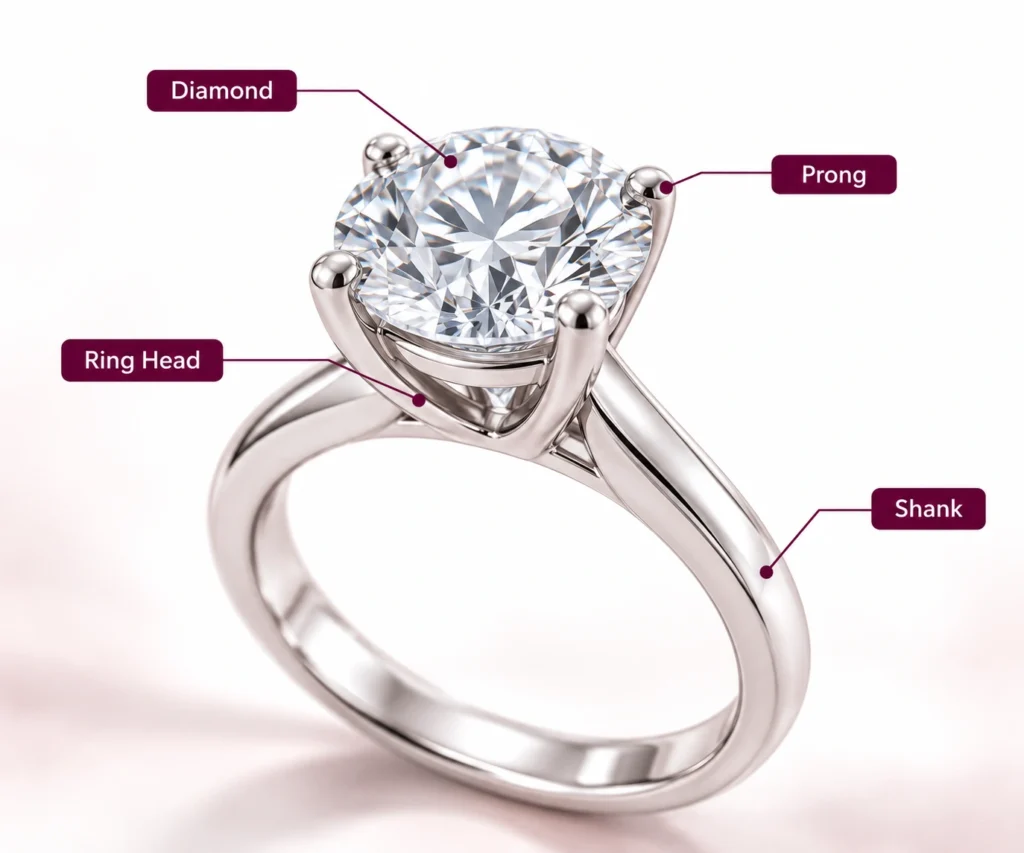
Yes. The prongs work together to keep the diamond seated securely in its setting. If one becomes compromised, the remaining prongs may still hold the stone temporarily, but the setting has less protection against movement and impact.
GIA specifically warns that a loose or damaged prong can cause a diamond to fall out of its mounting.
The risk depends on several factors, including:
- How loose or damaged the prong is
- How many prongs hold the diamond
- Whether other prongs are also worn
- The design of the setting
- How much the ring is worn
- Whether the ring experiences impacts or snagging
That is why a seemingly small prong problem should not be ignored.
How Does a Loose Prong Cause a Diamond to Fall Out?
A prong can become thinner, bend away from the diamond, crack, or break over time. Once it no longer sits properly against the stone, the diamond may have more room to move.
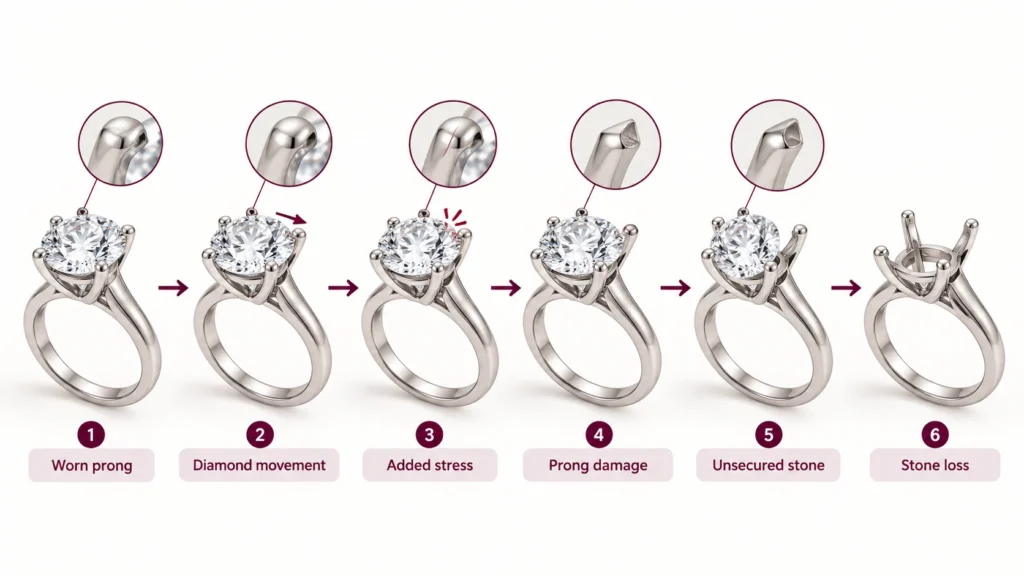
The sequence can look something like this:
Worn or loose prong → diamond movement → additional stress on the setting → prong bends or breaks → diamond becomes unsecured → stone falls out
The diamond does not necessarily drop out the moment a prong becomes loose. The problem is that the setting has lost part of the structure designed to keep the stone secure.
A ring that is worn every day can experience repeated contact with clothing, countertops, other jewelry, and everyday objects. A compromised prong can therefore become a bigger problem if it is left untreated.
What Are the Signs of a Loose Prong?
A loose prong is not always obvious. Look for changes in the setting rather than trying to force the diamond or prongs to move.
1. Your ring suddenly catches on clothing
If a prong repeatedly catches on sweaters, towels, hair, or other fabrics, it may have become bent, worn, or lifted.
Jewelers Mutual identifies snagging on clothing as a possible warning sign of bent, broken, or worn prongs.
2. A prong looks different from the others
Compare the prongs around the diamond.
One may appear:
- Lower than the others
- Thinner
- Bent outward
- Flattened
- Shorter
- More worn
A noticeable difference can indicate that the setting needs professional attention.
3. The diamond appears to move
If the stone appears to shift in its setting, take it seriously.
Do not repeatedly shake, tap, or press the diamond to confirm movement. Those actions can place additional stress on an already compromised setting.
Instead, stop wearing the ring and have a jeweler inspect it.
4. You notice a gap around the stone
A worn or displaced prong may no longer sit correctly against the diamond.
If you suddenly notice more space between a prong and the stone, that can be a sign that the prong has moved or worn down.
5. A prong is visibly broken
This is more urgent than a minor cosmetic imperfection.
A broken prong may leave part of the diamond exposed and can significantly reduce the security of the setting. Depending on the damage, the jeweler may need to rebuild the prong rather than simply bend it back into position.
For a broader explanation of prong problems, see the Engagement Ring Prong Guide.
What Should You Do If a Prong Is Loose?
The safest response is simple: stop wearing the ring until it has been inspected.
Do not try to push the prong back into place yourself. Avoid bending it with tweezers, pliers, or another tool. You could damage the setting or accidentally dislodge the diamond.
Instead:
- Remove the ring carefully.
- Place it somewhere secure.
- Avoid putting pressure on the diamond or prongs.
- Take it to a qualified jeweler for inspection.
- Ask them to check the prongs, diamond seat, and surrounding setting.
If you want to understand the warning signs before taking the ring in, read How to Know If a Prong Is Loose.
Can You Keep Wearing a Ring With One Loose Prong?
It is generally not worth taking the risk.
A diamond may remain in place with one compromised prong, particularly when other parts of the setting are still secure. But you cannot reliably determine the remaining security simply by looking at the ring from above.
Continued wear exposes the damaged prong to more friction, impacts, and snagging.
The safer choice is to have the ring checked before wearing it again.
How Does a Jeweler Fix a Loose Prong?
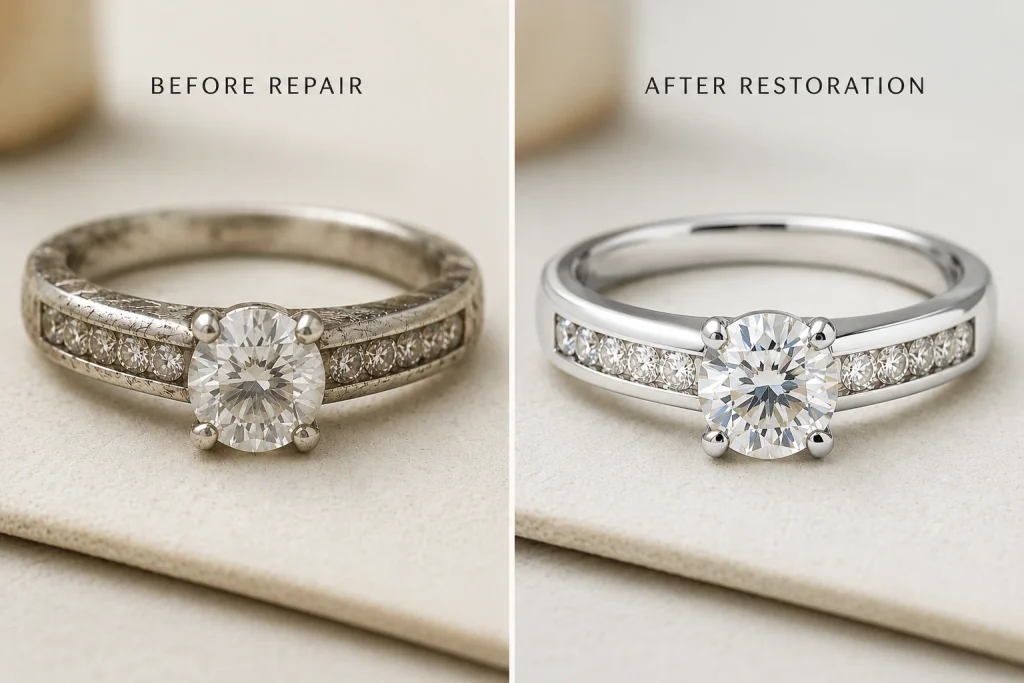
The repair depends on the condition of the prong and the surrounding setting.
Prong tightening
If the metal is still in good condition and the problem is primarily positioning, a jeweler may be able to carefully reposition or tighten the prong.
Prong retipping
If the end of the prong has worn down but the underlying structure remains sound, additional metal may be added to rebuild the worn tip.
Prong rebuilding
A severely damaged or broken prong may need to be rebuilt rather than simply adjusted.
Replacing the ring head
If several prongs are badly worn or the entire head of the setting has become structurally compromised, replacing the head may be more appropriate than repairing individual prongs.
The right repair depends on the actual condition of the ring, which is why an in-person inspection matters.
Does a Loose Prong Mean the Diamond Is Already Loose?
Not necessarily.
A loose prong and a loose diamond are related, but they are not exactly the same problem.
A prong can show signs of wear while the diamond remains firmly seated. On the other hand, a diamond may already have movement even when the damage is difficult to see.
That is why it is better to treat a suspicious prong as a potential security issue rather than waiting until the diamond visibly moves.
If you’re trying to identify the problem yourself, see How to Check Diamond Prongs at Home for a visual inspection approach.
Are Four-Prong Rings More at Risk of Losing a Diamond?

A four-prong setting has fewer individual prongs holding the center diamond than a six-prong setting, so the failure of one prong can have a more noticeable effect on the overall security of the stone.
However, that does not mean a four-prong ring is inherently unsafe.
The quality and condition of the setting matter enormously. A well-made four-prong setting with healthy prongs can securely hold a diamond, while a poorly maintained six-prong setting can still develop problems.
If you’re comparing different designs, see Four Prongs vs. Six Prongs for a closer look at the differences.
How Often Should Ring Prongs Be Checked?
There is no single inspection schedule that applies perfectly to every ring.
Daily wear, the type of metal, setting design, lifestyle, and previous repairs can all affect how quickly prongs wear.
GIA notes that jewelers commonly recommend having prongs checked at least once or twice a year.
A professional inspection can be particularly useful if:
- You wear the ring every day
- You have recently hit the ring against something
- A prong has started catching
- The setting looks different
- The ring has been repaired before
- The diamond appears to move
For more detail, see How Often Should Ring Prongs Be Checked?.
How Can You Prevent a Loose Prong From Becoming a Lost Diamond?
Regular inspection is one of the simplest ways to catch prong wear before it becomes a major problem.
You can also reduce unnecessary stress on the setting by:
- Removing the ring during activities where it could take hard impacts
- Avoiding situations where the ring repeatedly catches on fabric
- Having visible prong damage checked promptly
- Getting routine professional inspections
- Avoiding DIY prong repairs
- Keeping the ring clean enough that the setting can be inspected properly
The goal is not to eliminate every possible risk. It is to identify small setting problems before they become expensive or irreversible.
What If the Diamond Has Already Fallen Out?
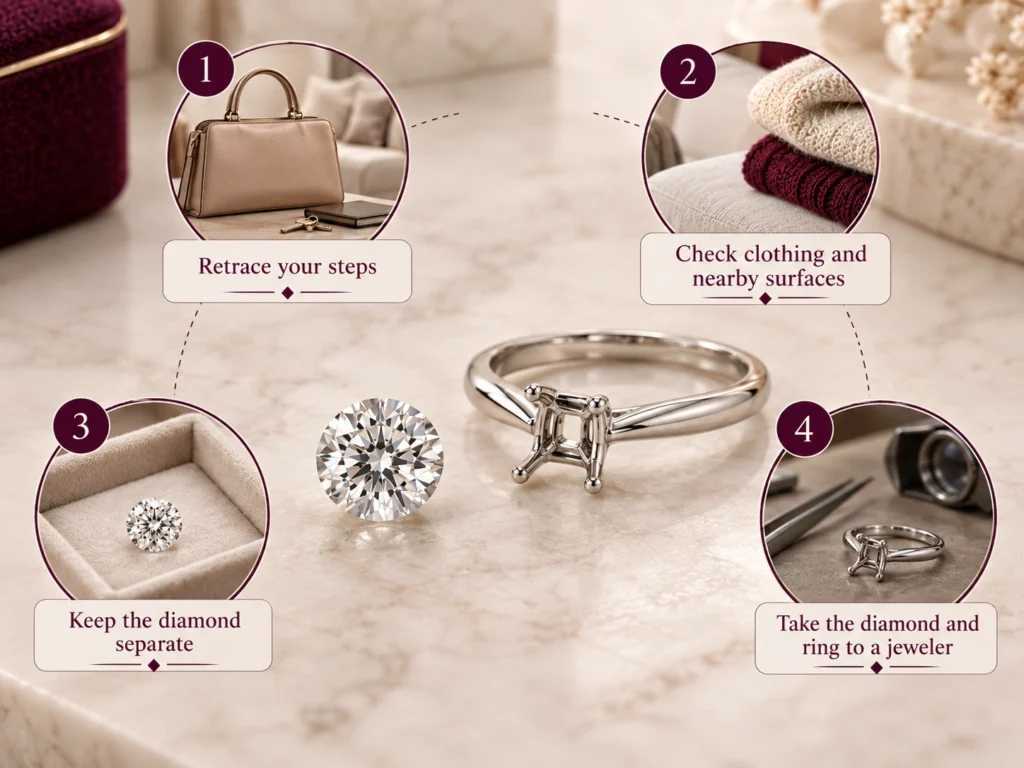
If the diamond has fallen out, stop handling the ring unnecessarily and retrace where you were wearing or removing it.
Check areas such as:
- Clothing
- Bedding
- Bathroom counters
- Floors
- Bags and pockets
- Cars
- Areas where you recently removed the ring
If you find the diamond, keep it separate and take both the stone and ring to a jeweler.
The jeweler can determine why the stone came out and whether the prongs, head, or another part of the setting needs repair before the diamond is reset.
Frequently Asked Questions
Can one loose prong make a diamond fall out?
Yes. A single compromised prong can reduce the security of a diamond, particularly if the stone experiences an impact or the prong becomes further bent or broken.
Should I stop wearing my ring if a prong is loose?
Yes. The safest approach is to stop wearing the ring until a jeweler has inspected and, if necessary, repaired the setting.
Can I tighten a loose prong myself?
DIY repair is not recommended. Trying to bend or tighten a prong yourself can damage the metal or dislodge the diamond.
How do I know if my diamond is loose?
Visible movement, unusual gaps around the stone, or changes in the position of a prong can be warning signs. Avoid deliberately tapping or pressing the diamond to test it. Have a jeweler inspect the setting instead.
Is a six-prong setting safer if one prong becomes loose?
Six prongs provide additional points of support, but they do not make a damaged setting risk-free. A loose or broken prong should still be inspected promptly.
Can a jeweler fix a worn prong?
Often, yes. Depending on the condition, a jeweler may tighten, retip, rebuild, or replace the damaged prong or setting head.
Final Takeaway
A loose prong can cause a diamond to fall out, so it should never be treated as a minor cosmetic problem.
If you notice a prong catching on clothing, looking thinner or bent, sitting differently from the others, or showing an obvious gap around the diamond, stop wearing the ring and have it professionally inspected.
Catching the problem early may allow for a relatively simple repair and, most importantly, can help prevent the much bigger problem of losing the diamond itself.