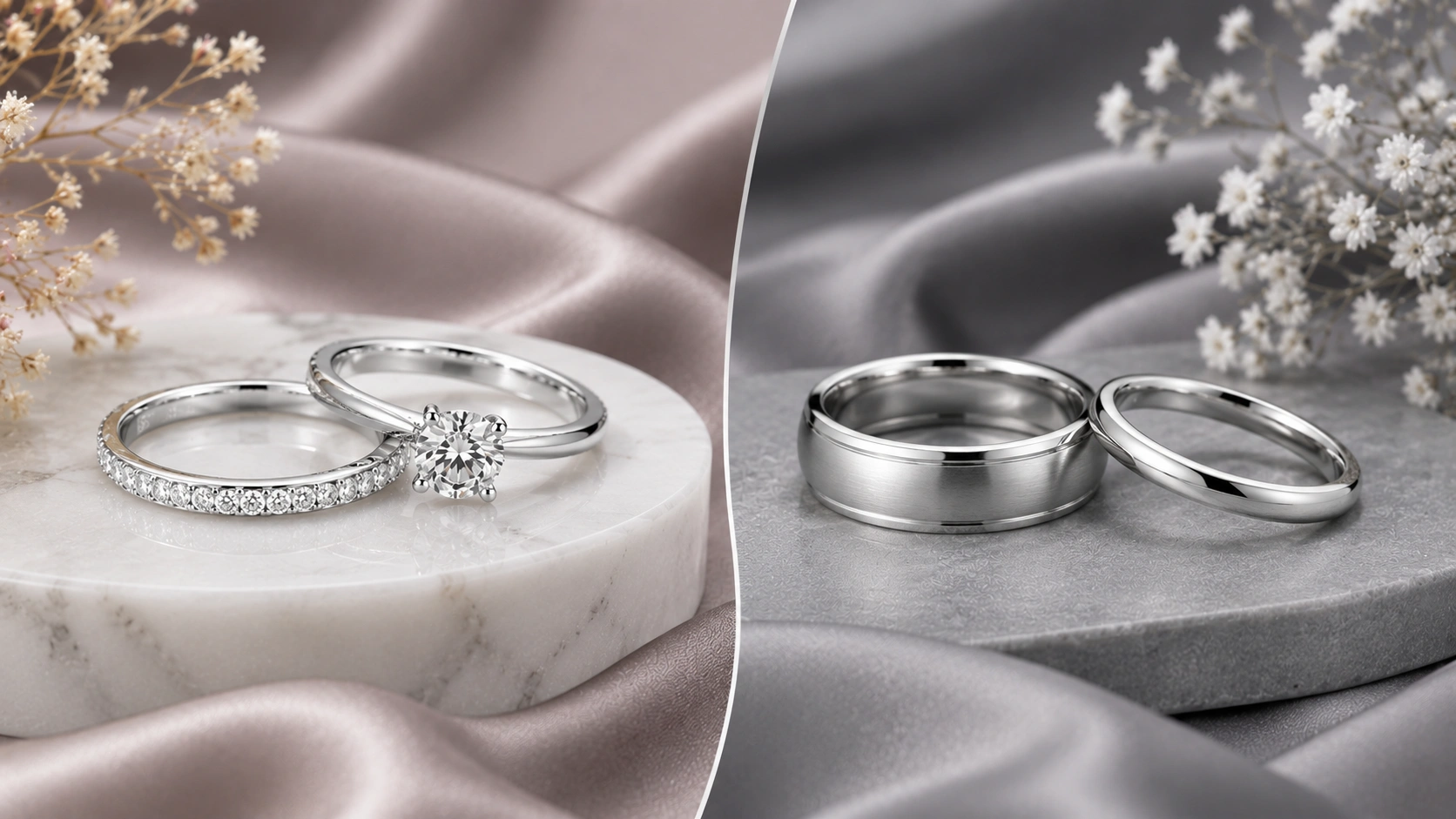
Choosing between white gold vs platinum is one of the most important decisions to make when selecting an engagement ring. Both metals offer a clean, white appearance that pairs beautifully with diamonds, but they behave differently over time.
White gold can offer an attractive combination of appearance, durability and affordability. Platinum, meanwhile, is known for its high purity, natural white colour and dense feel.
So, which one should you choose?
The answer depends on your budget, lifestyle, maintenance preferences and the type of engagement ring you want. This guide compares white gold and platinum across appearance, durability, maintenance, price, diamond compatibility and everyday wear.
White Gold vs Platinum at a Glance
| Feature | White Gold | Platinum |
|---|---|---|
| Colour | Bright white when rhodium plated | Naturally white |
| Common purity | 14K or 18K | Commonly 950 platinum |
| Rhodium plating | Usually required for a bright finish | Not required |
| Weight | Lighter | Heavier |
| Durability | Excellent for everyday jewellery | Excellent for everyday jewellery |
| Surface wear | Can lose rhodium finish over time | Can develop a natural patina |
| Maintenance | May require replating | Generally less surface maintenance |
| Initial price | Usually lower | Usually higher |
| Best for | Value-conscious buyers | Buyers prioritising purity and longevity |
What Is White Gold?
White gold is an alloy created by combining gold with other metals. Pure gold is naturally yellow and relatively soft, so alloying it with other metals makes it more suitable for jewellery.
White gold is commonly available in 14K and 18K.
According to the U.S. Federal Trade Commission, 18K gold contains 18 parts pure gold out of 24, while 14K contains 14 parts pure gold out of 24.
White gold is also commonly coated with rhodium, a bright white metal that gives the surface its highly reflective appearance. GIA explains that rhodium plating can gradually wear away with use and may need to be reapplied.
Benefits of White Gold
White gold can be a good choice if you want:
- A bright white appearance
- A modern engagement-ring look
- A lighter feel than platinum
- A generally lower initial cost
- Plenty of design options
- A versatile metal for different diamond shapes
It works especially well with classic engagement-ring designs, including solitaire, halo and pavé settings.
If you are considering a ring designed for everyday use, you may also want to compare low-maintenance engagement rings.
What Is Platinum?
Platinum is a naturally white precious metal used extensively in fine jewellery.
Unlike white gold, platinum does not need rhodium plating to create its naturally white appearance.
Platinum jewellery is also typically made with a high percentage of platinum. The FTC states that an item can be labelled simply as “platinum” when it contains at least 95% pure platinum under its guidance.
You may also see markings such as Pt950, indicating 950 parts platinum per 1,000 parts of the alloy. GIA describes Pt950 as 950 parts platinum per thousand.
Benefits of Platinum
Platinum is particularly attractive if you want:
- Naturally white colour
- High precious-metal content
- A heavier, substantial feel
- Excellent durability
- A long-term engagement ring
- A metal that does not rely on rhodium plating
Its density also gives platinum jewellery a noticeably heavier feel compared with white gold.
White Gold vs Platinum: Appearance
When both rings are brand new, the difference can be surprisingly subtle.
A rhodium-plated white gold ring can have an exceptionally bright white appearance, while platinum has a naturally white colour that tends to be slightly softer in tone.
The bigger difference appears with long-term wear.
White gold’s rhodium coating can gradually wear away. Once this happens, the underlying white-gold alloy may show a slightly warmer tone.
Platinum does not have this issue because its white colour comes from the metal itself.
Instead, platinum can develop a soft surface patina as it is worn.
Some buyers prefer the polished appearance of new platinum, while others like the character that develops naturally over time.
Does White Gold Turn Yellow?
White gold does not suddenly turn yellow.
However, many white gold rings have a rhodium coating over the underlying alloy. As that coating wears, the warmer colour of the white-gold alloy can become more noticeable.
This is one of the main maintenance differences between white gold and platinum.
GIA notes that rhodium plating gradually wears and may need occasional replating.
White Gold vs Platinum: Durability
Both metals can be excellent choices for an engagement ring.
However, they respond differently to everyday wear.
White Gold
White gold is durable enough for everyday engagement and wedding rings. GIA describes white gold as durable and long-wearing, although the rhodium finish can gradually wear away.
The ring’s construction also matters.
A well-designed setting with properly secured prongs can make a major difference to the long-term security of your diamond.
For that reason, it is worth understanding why engagement rings have prongs before choosing a setting.
Platinum
Platinum is dense and strong, making it particularly suitable for engagement rings and diamond settings.
GIA notes that platinum’s strength makes it an excellent choice for diamond settings and that platinum prongs are less likely to break than those made from more brittle gold alloys.
That makes platinum especially appealing if your priority is a ring designed for decades of regular wear.
White Gold vs Platinum: Scratches
This is an area where platinum behaves differently from what many shoppers expect.
Platinum can still scratch.
However, when platinum is scratched, the metal tends to move across the surface rather than being removed in the same way that material can be lost from some other metals.
Over time, this can create the soft patina associated with older platinum jewellery.
White gold can also scratch, and repeated polishing can affect the surface over time. If the ring has rhodium plating, maintaining that bright finish may eventually require professional replating.
So, if you want a brand-new bright finish, white gold may appeal to you.
If you like the idea of a ring developing character as it ages, platinum may be more appealing.
White Gold vs Platinum: Maintenance
Maintenance is one of the biggest practical differences between these metals.
White Gold Maintenance
White gold may eventually need:
- Professional cleaning
- Polishing
- Rhodium replating
- Prong inspection
- General setting maintenance
The exact frequency depends on how often you wear the ring and how much everyday wear it receives.
Platinum Maintenance
Platinum does not require rhodium plating to remain white.
You should still clean and inspect a platinum ring regularly, especially if it contains a diamond setting.
However, you do not have the same rhodium-plating requirement associated with many white gold rings.
For someone who wants to minimise recurring surface maintenance, this can make platinum attractive.
White Gold vs Platinum: Which Is More Expensive?
Platinum generally costs more upfront than white gold.
Part of the reason is that platinum jewellery typically contains a high percentage of platinum and the metal is denser, meaning more material is required to create the same design.
White gold can therefore be attractive if you want to put more of your engagement-ring budget toward the diamond.
However, don’t judge the total value of a ring purely by its initial price.
Consider:
- How long you plan to wear it
- Whether you want a heavier ring
- How you feel about replating
- Your preferred metal purity
- Your overall diamond budget
- The style and complexity of the setting
14K vs 18K White Gold
If you decide on white gold, you’ll usually encounter 14K and 18K options.
The main difference is gold content.
14K white gold contains 14 parts pure gold out of 24.
18K white gold contains 18 parts pure gold out of 24.
The FTC confirms these karat distinctions and explains that pure 24K gold is generally alloyed with other metals to increase hardness and durability for jewellery use.
For an engagement ring, the choice between 14K and 18K comes down to your preferred balance of gold content, durability, appearance and price.
Platinum vs 18K White Gold
If you’re specifically comparing platinum with 18K white gold, the differences become easier to understand.
18K white gold contains 75% pure gold, while Pt950 platinum contains 95% platinum.
18K white gold can provide a luxurious feel and beautiful white appearance when rhodium plated.
Platinum provides higher precious-metal content and does not require rhodium plating.
| 18K White Gold | Platinum | |
|---|---|---|
| Precious metal | 75% gold | Commonly 95% platinum |
| Natural colour | Warm white/yellowish underneath plating | Naturally white |
| Rhodium | Usually plated | Not required |
| Feel | Lighter | Heavier |
| Maintenance | May require replating | Generally simpler surface maintenance |
| Initial price | Lower | Higher |
Which Is Better for a Diamond Engagement Ring?
Both white gold and platinum can make excellent diamond settings.
The metal should complement the diamond rather than distract from it.
Your diamond’s shape, cut, colour and clarity will also influence the final appearance.
If you’re still comparing diamond quality, use the 4Cs of diamond quality to understand the four major factors that influence a diamond’s appearance and value.
You can also explore diamond shapes if you haven’t decided whether you prefer a round, oval, emerald, cushion, princess or another shape.
White Gold vs Platinum for Lab-Grown Diamonds
Both metals work well with lab-grown diamonds.
The metal does not change the fact that a lab-grown diamond is a diamond. Instead, your choice should focus on the appearance, durability, budget and overall design of the ring.
If you’re deciding between a lab-grown and natural diamond before choosing your setting, you can compare the two in lab-grown vs natural diamonds.
Once you know your diamond preference, you can make a more informed decision about how much of your budget to allocate to the metal.
Which Metal Makes a Diamond Look Whiter?
Both white gold and platinum create a neutral white background around a diamond.
A colourless or near-colourless diamond can look particularly crisp against either metal.
However, the setting does not completely determine the diamond’s colour appearance.
The diamond itself still has a colour grade, and the surrounding design can influence how noticeable any warmth appears.
This is why it’s better to evaluate the diamond and metal together rather than choosing a metal based solely on colour.
White Gold vs Platinum for Different Ring Styles
Solitaire Engagement Rings
Both metals work beautifully with solitaire rings.
White gold can create a clean, contemporary appearance, while platinum gives the same classic design a heavier and more substantial feel.
Halo Rings
White gold is a popular choice for halo designs because its bright finish can create a seamless appearance around the centre stone.
Platinum is equally suitable when durability and high precious-metal content are priorities.
Vintage Engagement Rings
Platinum is particularly well suited to vintage-inspired designs because of its historical association with intricate early-20th-century jewellery.
White gold can also work beautifully for vintage designs, particularly when combined with details such as milgrain or engraved patterns.
Minimalist Rings
For a simple engagement ring, either metal can work.
The decision often comes down to whether you prefer the lighter feel and lower upfront cost of white gold or the weight and longevity associated with platinum.
White Gold vs Platinum: Pros and Cons
White Gold Pros
- Lower initial cost
- Bright white appearance
- Lightweight
- Available in 14K and 18K
- Versatile for different ring designs
- Works well with virtually every diamond shape
White Gold Cons
- Rhodium plating may wear over time
- May require periodic replating
- Underlying alloy can appear warmer when plating wears
- Alloy composition should be checked if you have metal sensitivities
GIA specifically advises people with nickel allergies to avoid white gold alloyed with nickel.
Platinum Pros
- Naturally white
- High purity
- Dense and substantial
- Excellent durability
- No rhodium plating required
- Well suited to long-term jewellery
- Excellent choice for securing diamonds
Platinum Cons
- Higher initial cost
- Heavier feel
- Develops a patina with wear
- Professional platinum expertise may be needed for certain repairs
Is Platinum Better Than White Gold?
Not necessarily.
Platinum is often the better choice for someone who prioritises high purity, natural whiteness, durability and a substantial feel.
White gold may be the better choice for someone who wants a beautiful white-metal engagement ring at a lower initial cost.
The right answer depends on your priorities.
Choose White Gold If:
- You want a bright white finish
- You prefer a lighter ring
- You want to keep the initial cost lower
- You don’t mind occasional rhodium replating
- You want flexibility across different ring designs
Choose Platinum If:
- You want naturally white metal
- You prefer high precious-metal content
- You like a heavier ring
- You want to minimise rhodium-related maintenance
- You plan to wear the ring for decades
- You’re prioritising long-term durability
What Should You Check Before Buying?
Before ordering your engagement ring, check more than just the metal’s colour.
1. Check the Metal Purity
Look for markings such as 14K, 18K or Pt950 and make sure you understand what they mean.
2. Ask About the Alloy
If you have concerns about metal allergies, ask the jeweller what metals are used in the alloy.
3. Understand Rhodium Plating
If you’re buying white gold, ask whether the ring is rhodium plated and what maintenance is recommended.
4. Check the Setting
The metal is only one part of the ring’s durability. Pay attention to the setting and prongs that hold the diamond.
5. Choose the Diamond Carefully
Compare the diamond’s cut, colour, clarity and carat weight separately from the metal.
6. Get the Correct Ring Size
A well-fitting ring is essential for everyday comfort.
If you’re unsure about your size, use the engagement ring size guide before ordering.
7. Consider Your Lifestyle
If you work with your hands frequently or want a ring that requires minimal surface maintenance, your lifestyle should influence your choice.
Frequently Asked Questions
Is platinum better than white gold?
Platinum can be better if durability, high purity, natural whiteness and long-term wear are your main priorities. White gold can be better if you prefer a lower initial price and lighter feel.
Does white gold turn yellow?
White gold itself is made from gold alloyed with other metals, so its underlying colour can be warmer than the bright finish seen on a new rhodium-plated ring. As rhodium wears away, that warmer tone may become more visible.
Does platinum stay white?
Yes. Platinum is naturally white and does not require rhodium plating to create its colour. It can develop a soft patina from everyday wear.
Does platinum scratch more easily than white gold?
Platinum can develop visible surface marks, but the metal tends to move rather than being removed from the ring. This contributes to its characteristic patina.
Is white gold or platinum better for everyday wear?
Both can work well for everyday wear. Platinum has an advantage for shoppers who prioritise long-term wear resistance and want to avoid periodic rhodium replating.
Is platinum worth the extra money?
It can be, particularly if you value high purity, natural whiteness, durability and a substantial feel. However, white gold can provide excellent performance at a lower initial cost.
Which is better for a lab-grown diamond ring?
Both are excellent choices. Your decision should depend on your preferred appearance, budget, weight, maintenance requirements and long-term priorities.
Final Words
So, white gold vs platinum: which is better?
There isn’t one universal winner.
White gold is an excellent choice if you want a bright, modern appearance, lighter feel and lower initial cost. It offers a lot of flexibility and works beautifully with almost every engagement-ring design.
Platinum is a strong choice if you prioritise natural whiteness, high purity, durability and a substantial feel. It can also be particularly appealing if you want an engagement ring designed to become a long-term heirloom.
Ultimately, the best metal is the one that fits your budget, lifestyle, maintenance preferences and ring design.
And remember, the metal is only one part of the decision. Your diamond shape, cut quality, setting and ring size all contribute to how the finished engagement ring looks and feels.
Trusted External References
For additional information about precious-metal standards and jewellery materials:
- GIA: White Metal Options for Your Engagement Ring – useful background on white gold, rhodium plating and platinum.
- GIA: Best Ring Material for Everyday Wear – compares characteristics of platinum and other ring metals.
- FTC: Buying Platinum, Gold, and Silver Jewelry – explains precious-metal markings, purity and buying considerations.