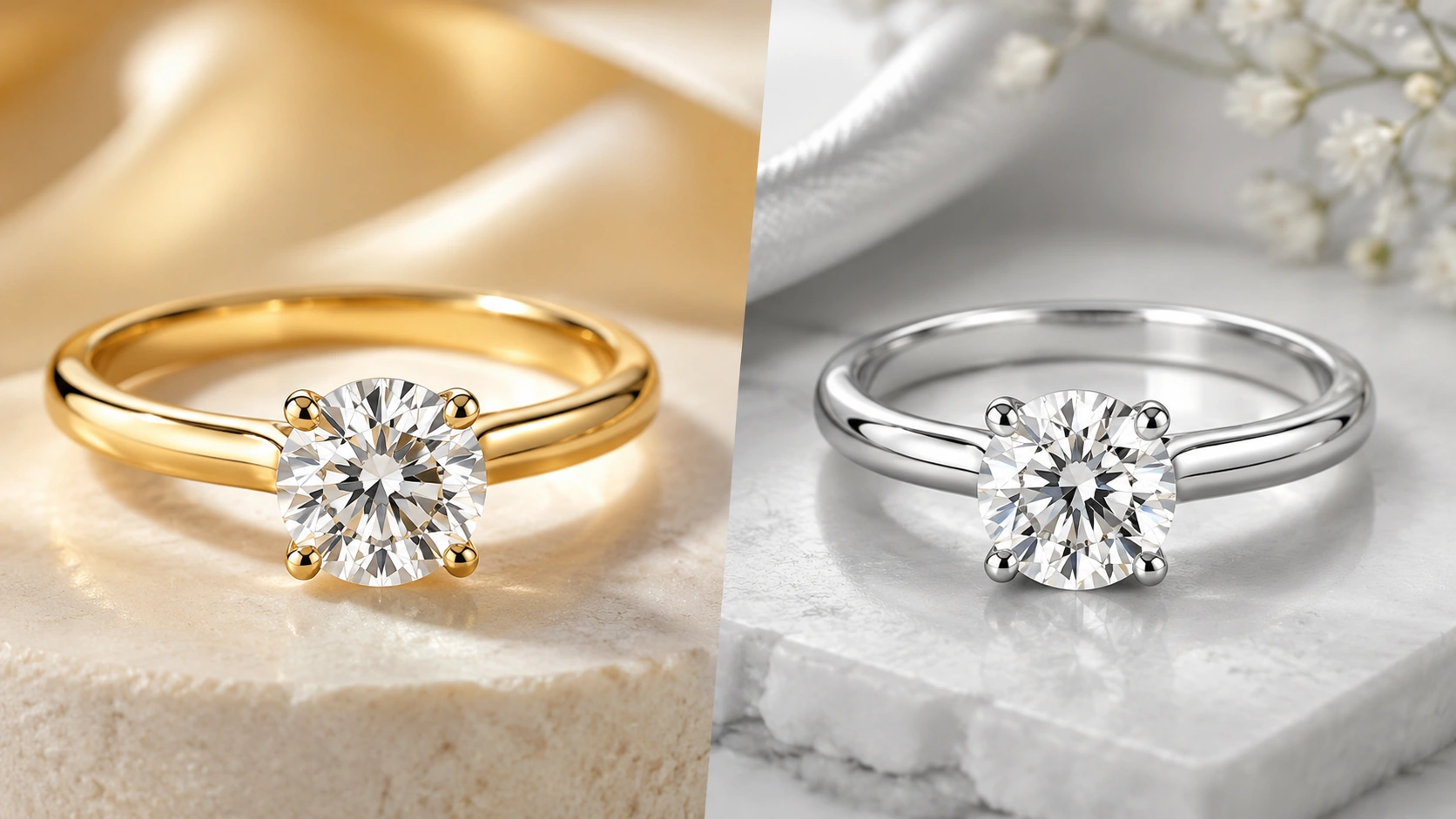
Choosing the metal for an engagement ring can be almost as important as choosing the diamond. Gold and platinum are both popular choices, but they differ in price, appearance, weight, maintenance, and how they wear over time.
So, which is better for an engagement ring?
Gold is usually the better choice if you want more color options, a lighter ring, or a lower upfront cost. Platinum is often the better choice if you prefer a naturally white metal, a heavier feel, and minimal color maintenance.
Neither is automatically better. The right choice depends on what matters most to you.
Gold vs Platinum Engagement Rings at a Glance
| Feature | Gold | Platinum |
|---|---|---|
| Color options | Yellow, white, and rose | Naturally white |
| Common purity | 14K or 18K | Usually 90% to 95% platinum |
| Weight | Lighter | Heavier |
| Upfront price | Usually lower | Usually higher |
| White appearance | White gold needs rhodium plating | Naturally white |
| Scratches | Can lose small amounts of metal through wear | Metal is displaced rather than removed |
| Maintenance | Depends on gold type | Generally low maintenance |
| Skin sensitivity | Depends on alloy | Often a good choice for sensitive skin |
| Best for | Budget flexibility and color variety | Natural white color and long-term wear |
What Is Gold for an Engagement Ring?
Gold is an alloyed metal when used for engagement rings. Pure 24K gold is too soft for most ring applications, so it is combined with other metals to make it more durable.
The most common choices include 14K and 18K gold.
The karat affects the amount of pure gold in the alloy. 14K gold contains about 58.3% pure gold, while 18K gold contains 75% pure gold.
Gold also comes in different colors.
Yellow Gold
Yellow gold has the warm, traditional appearance most people associate with gold. It can create a strong contrast with a colorless or near-colorless diamond and works particularly well for classic and vintage-inspired designs.
White Gold
White gold is alloyed to produce a pale color and is commonly finished with rhodium plating for a brighter, whiter appearance.
That plating does not last forever. With regular wear, it can gradually wear away, meaning the ring may eventually need to be replated.
Rose Gold
Rose gold gets its pinkish color from the metals used in the alloy, particularly copper. It offers a warmer and more distinctive appearance than white or yellow gold.
The main advantage of gold is flexibility. You can choose the color and karat that best fit your style and budget.
What Is Platinum?
Platinum is a naturally white precious metal that is commonly used in high-end engagement rings.
Unlike white gold, platinum does not rely on rhodium plating to produce its naturally white appearance. Its color remains white as the ring ages, although the surface can develop a softer, grayish patina from everyday wear.
Platinum is also much denser than gold. As a result, a platinum version of the same ring can feel noticeably heavier on the finger.
That weight is either an advantage or a disadvantage depending on the wearer. Some people love the substantial feel, while others prefer a lighter ring.
Gold vs Platinum: The Biggest Differences
1. Price
Gold is generally less expensive than platinum for a comparable engagement ring.
Platinum rings typically require more metal because platinum is dense, and platinum jewelry is also made with a high percentage of platinum. These factors contribute to its higher price.
For buyers working within a fixed engagement ring budget, choosing gold can leave more money available for the diamond or setting.
That does not mean gold is a lower-quality choice. It simply allows you to allocate your budget differently.
2. Durability
Both gold and platinum can be excellent choices for an engagement ring worn every day.
The important difference is how they respond to wear.
Gold can scratch and gradually lose tiny amounts of metal as it wears. The exact durability depends on the karat and alloy.
Platinum can also scratch, but the metal tends to move rather than being removed from the ring. Over time, this can create the soft patina associated with older platinum jewelry.
This is why platinum is often appealing to buyers who want an engagement ring that can develop character without relying on a bright polished finish forever.
3. Scratching and Patina
A common misconception is that platinum never scratches.
It does.
The difference is what happens when it scratches.
With platinum, the surface metal is generally displaced. With gold, scratching can remove some metal from the surface.
A platinum ring can therefore develop a patina that looks softer and less reflective than its original polished finish.
Some people love this aged appearance. Others prefer the bright, freshly polished look of a new ring.
If you prefer a highly polished appearance, either metal can be professionally polished, although frequent polishing is not necessarily desirable for every ring.
4. Color
This is one of the easiest differences to see.
Gold gives you three major color choices:
- Yellow gold
- White gold
- Rose gold
Platinum is naturally white.
If you want a warm yellow or pink ring, platinum is not an alternative. Gold is the obvious choice.
If you want a white metal, however, the decision becomes more interesting because white gold and platinum can look quite similar when new.
The difference becomes more noticeable over time because white gold’s rhodium coating can wear down.
5. Weight
Platinum is denser than gold, so platinum engagement rings generally feel heavier.
For some buyers, that weight makes the ring feel substantial and luxurious.
For others, especially people who are not accustomed to wearing jewelry, a lighter gold ring may feel more comfortable.
This is one difference that is difficult to judge from photographs. If possible, try rings made from both metals before making your decision.
You can also use Our Ring metal weight calculator
6. Maintenance
The amount of maintenance you need depends heavily on the type of gold.
Yellow and rose gold do not need rhodium plating.
White gold is different. Its bright white appearance typically comes from rhodium plating, which can wear away with regular use and eventually needs to be renewed.
Platinum does not need rhodium plating because its white color comes from the metal itself.
That does not mean platinum is maintenance-free. Prongs and settings still need periodic inspection, and the surface can still become scratched.
Read: How to Care for Platinum Rings
7. Skin Sensitivity
Platinum is often a strong choice for people concerned about metal sensitivity because platinum jewelry is typically made with a high percentage of platinum.
Gold requires more attention to the specific alloy.
Some white gold alloys contain nickel, which can cause reactions in people with nickel sensitivity. If this is a concern, ask the jeweler exactly which metals are used in the alloy.
Do not assume that every gold or white gold ring has the same composition.
14K vs 18K Gold for Engagement Rings
If you decide on gold, you still have another choice to make: 14K or 18K.
14K gold contains less pure gold and a higher percentage of alloy metals. It is generally a practical choice for everyday jewelry and is usually less expensive than 18K gold.
18K gold contains 75% pure gold. It has a richer gold content and is often chosen for its more luxurious appearance.
Neither is automatically the right answer.
If everyday practicality and budget are priorities, 14K can make sense.
If you prefer a higher gold content and richer appearance, 18K may be more appealing.
Also Read: 14K vs 18K Gold
White Gold vs Platinum
White gold and platinum are often compared because both can provide a cool, white appearance around a diamond.
The main difference is that white gold’s bright appearance generally depends on rhodium plating, while platinum is naturally white.
White gold is usually the more budget-friendly option.
Platinum generally costs more but eliminates the need for rhodium replating.
This makes the choice less about which metal looks better and more about whether you prefer a lower initial cost or less color-related maintenance over time.
Also Read: White Gold vs Platinum
Which Is Better for an Active Lifestyle?
Both metals can work for everyday wear, but your ring’s design matters too.
Someone who works with their hands, exercises frequently, or regularly exposes their ring to impact should consider more than just the metal.
The setting, band thickness, prongs, and overall construction all affect how well an engagement ring handles everyday wear.
Platinum can be attractive for buyers who prioritize long-term wear and want a naturally white metal.
Gold can also be an excellent everyday choice, particularly when the appropriate karat and ring construction are selected.
Regardless of the metal, removing an engagement ring during activities that could damage it is often the safest approach.
Also Read: Low Maintenance Engagement Rings
Is Platinum Worth the Extra Cost?
Platinum can be worth paying more for if its specific advantages matter to you.
The premium may make sense if you:
- Want a naturally white metal
- Do not want rhodium plating
- Prefer a heavier ring
- Like the way platinum develops a patina
- Want a high-purity precious metal
- Plan to wear the ring every day for decades
Gold may be the better value if you:
- Want to spend less on the setting
- Prefer yellow or rose gold
- Want a lighter ring
- Like having multiple gold colors to choose from
- Want more of your budget available for the diamond
The key point is that platinum’s higher price does not make it universally better.
You are paying for a different combination of characteristics.
Gold vs Platinum: Pros and Cons
Gold Pros
- Usually costs less than platinum
- Available in yellow, white, and rose
- Available in different karats
- Lighter than platinum
- Offers substantial design flexibility
- Works with a wide range of engagement ring styles
Gold Cons
- Can lose metal through long-term wear
- White gold may require rhodium replating
- Durability varies by karat and alloy
- Some gold alloys may cause skin sensitivity
Platinum Pros
- Naturally white
- Does not require rhodium plating
- High purity
- Dense and substantial
- Develops a distinctive patina
- Often a good option for people concerned about certain metal allergies
Platinum Cons
- Usually more expensive
- Heavier than gold
- Can still scratch
- The patina may not appeal to everyone
Gold vs Platinum: Which Should You Choose?
The easiest way to decide is to start with your priorities.
Choose gold if budget, color choice, and lighter weight matter most.
Gold is especially attractive if you love yellow or rose gold. It also gives you the option of choosing 14K or 18K gold based on your preferences.
Choose platinum if natural white color, high purity, weight, and minimal color maintenance matter most.
Platinum is particularly compelling for someone who likes the feel and appearance of a substantial white-metal ring and does not mind paying more upfront.
If you are still undecided, compare the same ring design in both metals. Seeing the difference in person can make the decision much easier.
Ultimately, the best engagement ring metal is not necessarily the most expensive one. It is the one that fits the wearer’s style, lifestyle, budget, and expectations for how the ring will age.
Frequently Asked Questions
Is platinum better than gold for an engagement ring?
Not necessarily. Platinum offers a naturally white color, high purity, and a heavier feel, while gold is generally more affordable and offers more color choices. The better option depends on your priorities.
Is gold or platinum more durable?
Both can be durable enough for everyday engagement ring wear. They simply wear differently. Gold can gradually lose small amounts of metal through scratching and abrasion, while platinum tends to displace metal when scratched.
Is platinum more expensive than gold?
Usually, yes. Platinum engagement rings generally cost more than comparable gold rings because of platinum’s purity, density, and the amount of metal used.
Does platinum turn yellow?
Platinum does not turn yellow like a rhodium-plated white gold ring can appear when the plating wears away. Platinum remains naturally white, although its surface can develop a grayish patina.
Does white gold need more maintenance than platinum?
Generally, yes. White gold commonly needs periodic rhodium replating to maintain its bright white appearance. Platinum does not require this type of color maintenance.
Which is heavier, gold or platinum?
Platinum is heavier because it is denser. Two rings with the same design and dimensions will generally feel heavier when made from platinum.
Is 14K or 18K gold better for an engagement ring?
Neither is universally better. 14K gold contains more alloy metals and is commonly chosen for its practicality and lower price. 18K gold contains 75% pure gold and offers a richer gold content.
Can you mix gold and platinum in an engagement ring?
Yes. Some ring designs use different metals together. A mixed-metal design can give you the appearance or color you want while using platinum and gold where their individual characteristics are most useful.